Ionian to Aegean via the Corinth Canal: A Delivery Route
Published
A practical guide to sailing from the Ionian to the Aegean via the Corinth Canal: canal booking, paperwork, day-by-day routing, weather windows, and how to find discounted delivery charter slots by contacting operators directly and staying flexible on dates.
On this page

The passage from the Ionian Sea to the Aegean through the Corinth Canal is one of the most iconic routes in European sailing. It connects two distinct sailing worlds (the lush, wind-sheltered anchorages of the Ionian and the bright, meltemi-swept islands of the Aegean) through one of the most dramatic man-made waterways on earth. For many sailors, it's a bucket-list transit. For charter companies, it's a logistical necessity.
Whether you're delivering a vessel between charter bases, picking up a one-way charter at a discounted rate, or plotting your own blue-water exploration of Greece, understanding how this passage actually works (paperwork, timing, canal logistics, and day-by-day planning) is the difference between a smooth transit and a frustrating one.
Why Sailors Make This Crossing
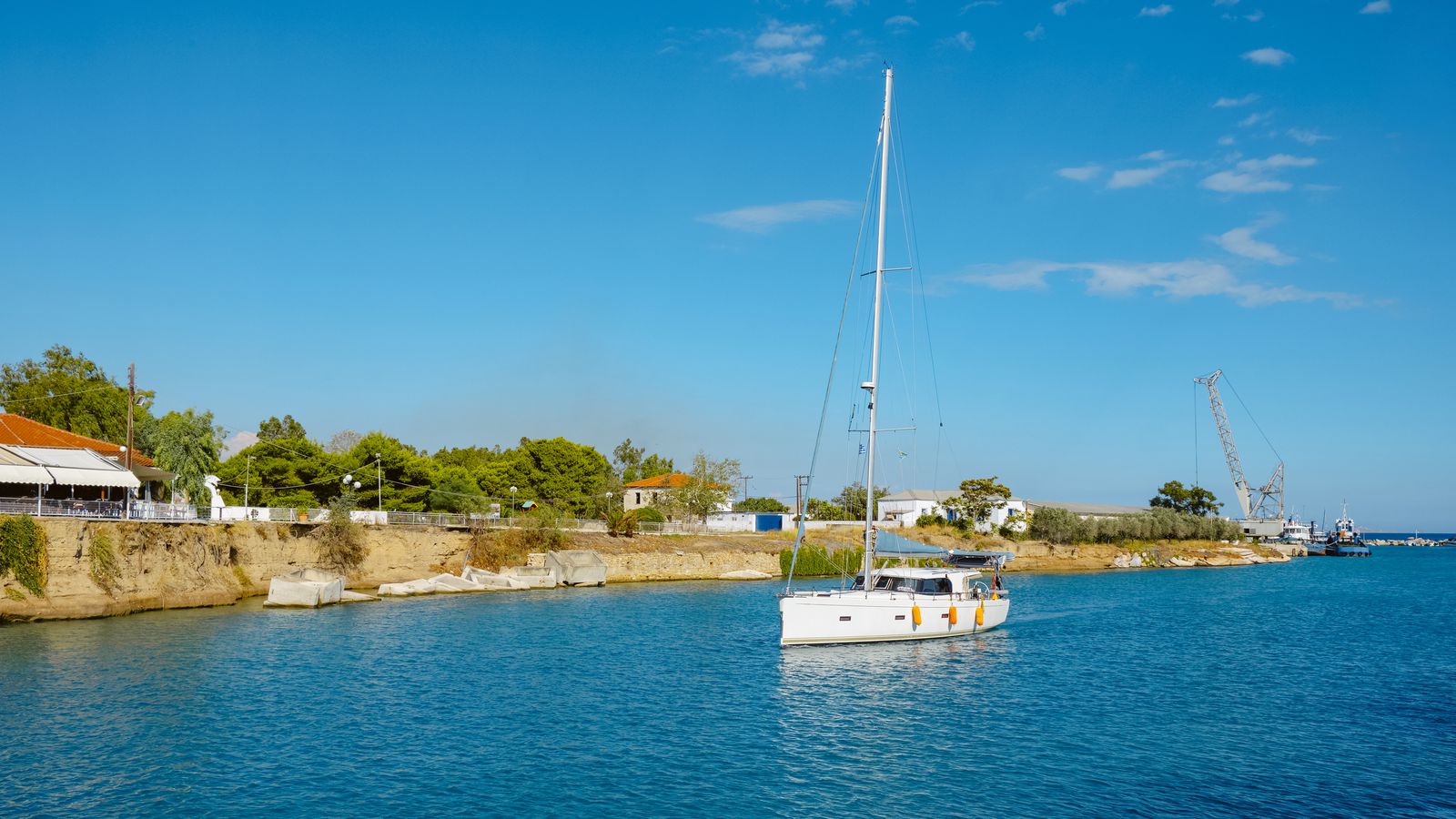
The Corinth Canal cuts 3.5 nautical miles (6.4 km) through the narrow isthmus that separates the Greek mainland from the Peloponnese, saving vessels the long passage around Cape Malea (about 185 nautical miles of additional sailing, including one of the most notoriously rough headlands in the Mediterranean). It connects the Gulf of Corinth on the western side to the Saronic Gulf on the eastern side, giving sailors direct access between the Ionian and the Aegean.
There are three main reasons sailors tackle this route:
Delivery passages: Charter companies that operate in both the Ionian (typically based out of Lefkada, Kefalonia, or Corfu) and the Aegean (typically based out of Athens/Alimos, Lavrion, Paros, or Rhodes) need to reposition boats between seasons or after one-way charters. Professional deliveries, or semi-professional ones by experienced sailors hired for the purpose, regularly run this canal transit.
One-way charters: Sailors wanting to explore both seas on a single trip can charter from a Ionian base, transit the canal, and drop the boat at an Aegean base (or vice versa). This is a genuinely spectacular itinerary.
Blue-water passage-making: Private owners transiting between Mediterranean cruising grounds, or heading east toward Turkey, Cyprus, or the Red Sea, regularly use the canal to avoid Cape Malea.
The Discount Opportunity: Delivery and Repositioning Charters
Here's something many sailors don't know: charter companies sometimes offer significantly discounted rates on one-way charters when they need to reposition a boat from one base to another. If a company has too many boats sitting in Lefkada and not enough in Athens heading into peak season, they'd rather have a paying crew move the boat than pay for a professional delivery. The boat gets moved; you get a yacht at a fraction of the normal cost.
To access these deals, you need to be proactive and flexible:
Contact multiple charter companies directly. The discounted repositioning slots rarely appear on standard booking platforms. Call or email the operations departments of major international charter operators as well as smaller local independents. Ask specifically whether they have any repositioning passages or one-way deliveries available during your window.
Be genuinely flexible with your dates. Repositioning needs are driven by the charter company's schedule, not yours. If you can say "we're available any two-week window between April 15 and May 31," you're a far more attractive option than someone locked into specific dates. The more flexibility you offer, the better your chances of landing a deal.
Have your credentials ready. Companies offering discounted delivery charters will want to see your sailing experience: RYA qualifications, logbook hours, and offshore experience carry weight. A crew of competent sailors is far more reassuring than a group of enthusiastic beginners.
Understand what "discounted" means in context. You may still pay 30 to 50% of normal charter cost, plus the canal transit fees, fuel, and marina costs. But you'll be sailing a well-maintained yacht through one of Greece's most spectacular routes at a significant saving.
Logistics & Paperwork
Departure Points
Most Ionian-to-Aegean transits begin from one of the following marinas:
Lefkada Town Marina: the major charter hub for the southern Ionian, with excellent facilities and good fuel availability.
Kefalonia (Argostoli or Fiscardo): popular starting points that add a day or two of island sailing before heading east.
Arrival Points
On the Aegean side, most charters terminate at:
Alimos Marina (Athens): the largest marina in Greece and the main hub for Aegean charter companies.
Lavrion: a quieter alternative south of Athens with good charter infrastructure.
One-Way Drop-Off Fees
One-way charters almost always incur a drop-off fee, which covers the cost of positioning the boat back or offsetting charter company logistics. Fees vary widely: expect anywhere from €300 to €1,500+ depending on the company, the distance between bases, and the season. When negotiating a repositioning deal, the drop-off fee is sometimes waived entirely (since you're solving the company's problem), but confirm this explicitly in writing before signing anything.
Cabotage Rules
Greece applies EU cabotage rules. Foreign-flagged charter yachts (i.e., boats registered outside Greece/EU) may face restrictions on carrying paying passengers between Greek ports. EU-flagged vessels have more freedom. For most charter company boats, this is handled at the corporate level and won't affect you directly, but if you're on a private vessel, check your registration and any commercial permit requirements before carrying paying crew.
Documentation You'll Need
Ship's papers: Registration certificate, insurance documents, safety equipment certificates.
Transit log (DEKPA): Greece's transit log for pleasure craft. Obtain this on arrival in Greek waters if you haven't already. It's checked at marinas and by coast guard.
Crew list: A formal crew list is required and should be filed with the port authority (Capitaneria) at your departure port and updated at each port of call. Keep multiple copies.
Passports: All crew must carry valid passports. Greece is Schengen, so EU citizens can use national ID cards.
Canal booking confirmation: You'll need this when you arrive at the canal entrance.
The Canal Transit: Booking & Fees
The Corinth Canal is managed by Corinth Canal S.A. First things first: check that the canal is open. It has a recent history of closures for slope-stabilisation works (most recently it closed in November 2025 after a series of rockfalls and reopened on 17 June 2026), and the pattern of off-season closures may repeat while the modernisation programme continues. Current status and announcements are on the official site, corinthcanal.com, and the operator answers around the clock on +30 27410 30886.
You cannot simply sail up and transit on demand: booking ahead is strongly recommended, especially in peak season (June to August). Transits are done in one-directional convoys, and scheduling is tighter than many sailors expect.
Book ahead via the official site, by email or by phone, at least 24 to 48 hours in advance (earlier in summer). The canal office is based at Isthmia on the eastern end. The canal operates day and night through the season, though it has traditionally closed one weekday (usually Tuesday daytime) for maintenance; confirm the schedule when you book.
Call "Isthmia Pilot" on VHF channel 11 as you approach either entrance. The controllers speak English and will tell you where to wait and when your convoy leaves. Tolls are settled at the control station at Isthmia on the Saronic side: cash and cards (Visa/Mastercard) are accepted, and fees can also be arranged in advance online.
Maximum beam: The channel is about 79 feet (24 m) wide at the waterline and around 69 feet (21 m) at the bottom. Most monohull sailboats pass easily; wide catamarans can be tight; check your beam before booking.
Staging port (western end): Anchor at Corinth town anchorage or pick up a berth at the small quay near Poseidonia. Await your convoy time.
Staging port (eastern end): Isthmia has a small harbour and anchorage for post-transit staging.
The official tariff for private pleasure boats is based on length overall. Enter your boat's LOA to see the one-way fee:
Corinth Canal transit fees
- up to 6 m€70
- 6–9 m€100
- 9–15 m€100 + €29/m over 9 m
- 15–25 m€100 + €33/m over 9 m
- 25–45 m€100 + €39/m over 9 m
- over 45 m€100 + €42/m over 9 m
That puts a typical 40-foot (12 m) charter monohull at about €187 one-way, a 46-foot (14 m) boat at about €245, and a 49-foot (15 m) yacht at about €274. Note that towing or pilotage, where required, is charged on top, and surcharges can apply outside normal hours. For the full walkthrough of a transit (VHF procedure, paying at Isthmia, and what to expect between the walls), see our Corinth Canal transit guide.
Weather & Difficulty
Gulf of Corinth
The Gulf of Corinth has its own weather system, largely sheltered from open Mediterranean swells but subject to funnelling winds from east and west. Thermal breezes are common in summer, building to 15 to 20 knots in the afternoon and dying overnight. Westerlies dominate in summer; easterlies can bring stronger conditions. The gulf rarely produces dangerous sea states for a passage-making vessel, though the fetch can build chop quickly.
The Saronic Gulf (Aegean Approach)
Once through the canal, you're in the northern Saronic Gulf, which feeds into the Aegean. Here the famous meltemi, the powerful north-to-northwesterly wind that dominates the Aegean from mid-June through August, becomes a factor. In summer, the meltemi can blow 25 to 35 knots for days at a stretch across the central Aegean, creating significant sea states. On the Saronic, it's moderated slightly, but planning around it is essential.
Best Windows by Month
April: Variable winds, occasional gales, cooler temps. The Ionian can be boisterous. Possible but watch forecasts carefully; good for experienced crews.
May: Settling conditions, meltemi not yet established. Some of the best sailing in Greece. Excellent window; highly recommended for this passage.
Early June: Warm, reliable winds, meltemi starting to establish but not at full strength. Very good; ideal for a leisure-pace transit.
July and August: Meltemi fully established. Hot. Canal and marinas at maximum congestion. Manageable but requires flexibility and patience; book everything far ahead.
September: Meltemi easing. Warm, lighter winds, fewer crowds. Outstanding; often the best month for Greek sailing generally.
October: Unsettled, first autumn gales possible. Cooler evenings. Possible for experienced crews; watch forecasts closely.
Difficulty Rating
Overall: Intermediate. This is not an offshore passage in the open-ocean sense (you're rarely more than a few miles from shelter), but it requires solid coastal sailing skills, experience navigating in mixed weather, the ability to handle the canal transit calmly, and confidence handling a vessel in the often-boisterous Ionian. The approach to Cape Malea (if you detour that way) is advanced territory. A minimum of an RYA Day Skipper (or equivalent) is appropriate; Coastal Skipper experience is recommended if you're planning to push toward the Cyclades.
Day-by-Day Passage Plan
Total distance (Lefkada to Alimos, via canal): approximately 230 to 270 nautical miles depending on routing.
Realistic sailing days: 6 to 9 days at a comfortable cruising pace.
Day 1: Lefkada Marina to Astakos or Mytikas
Depart Lefkada heading south and east, crossing the Lefkada canal (a short, managed transit) and rounding into open water. Head toward the mainland Greek coast. Anchor at Astakos (good tavernas, fuel available) or the small village quay at Mytikas. Distance: approximately 25 to 35nm.
Day 2: Astakos to Mesolongi or Nafpaktos
Enter the entrance to the Gulf of Corinth. Mesolongi is a historic town with a lagoon anchorage (approach with care: shallow and unmarked channels require a careful eye on the chart). Alternatively, push further east to Nafpaktos, a beautiful fortified harbour with good shelter. Distance: 30 to 45nm.
Day 3: Nafpaktos to Galaxidi or Itea
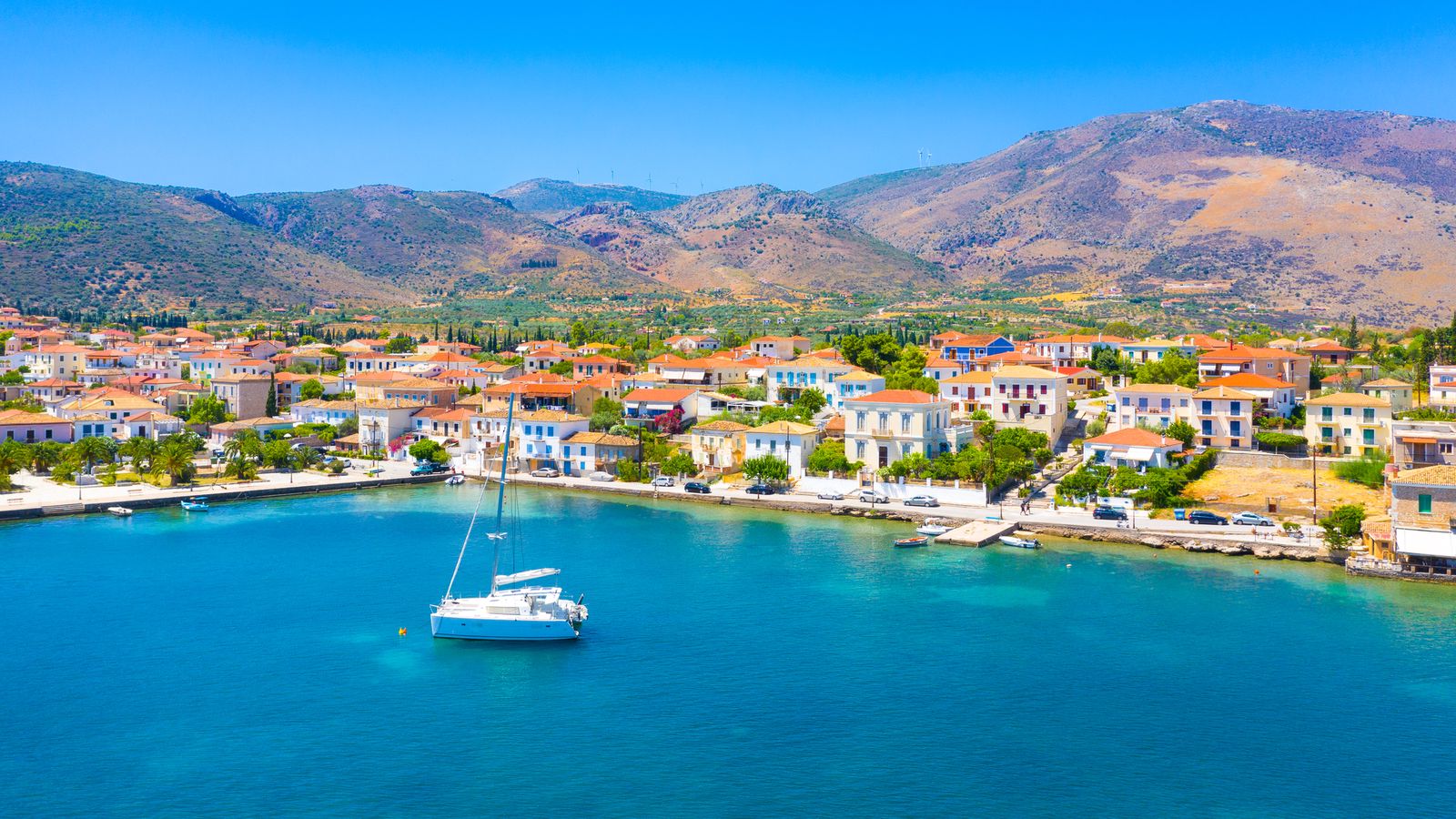
A comfortable day sail east along the gulf with the mountains of central Greece rising to the north. Galaxidi is one of the most beautiful small harbour towns in Greece: whitewashed captains' houses, excellent food, very pleasant overnight stop. Itea (near Delphi) has a marina and is a popular excursion base. Distance: 25 to 35nm.
Day 4: Galaxidi to Corinth Anchorage (Canal Staging)
The long push to the eastern end of the Gulf of Corinth. Pass under the spectacular Rio-Antirrio suspension bridge. Anchor off Corinth town or find a berth near the canal western entrance. Confirm your canal transit booking and convoy time; you'll likely be assigned a slot for the following morning. Check into the port authority and update your crew list. Distance: 50 to 65nm (a longer day; depart early).
Day 5: Canal Transit and Isthmia to Poros
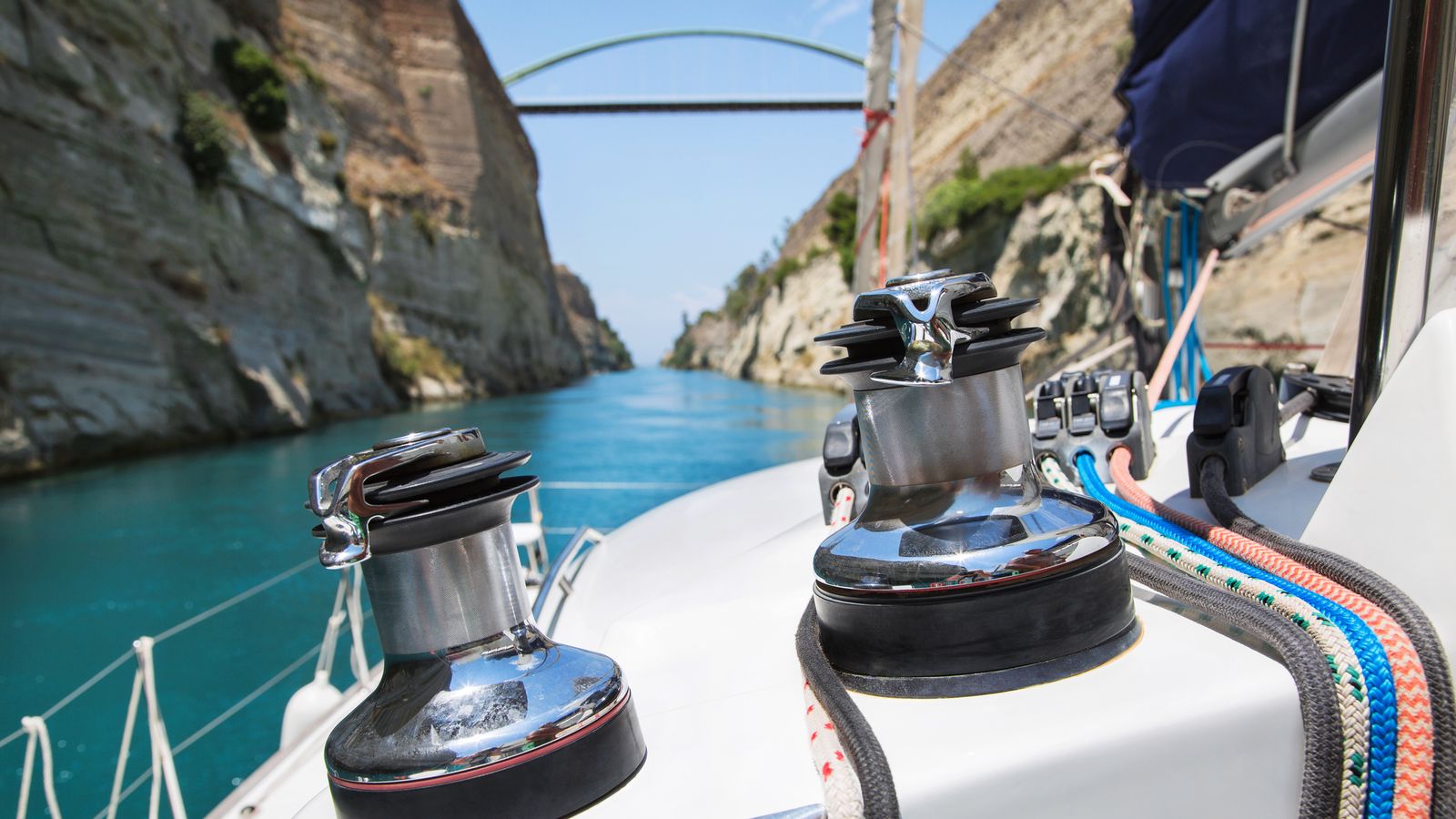
The transit itself takes 30 to 45 minutes under motor at around 6 knots (sailing is not permitted in the canal, and there's no overtaking). Arrive at the western entrance for your convoy time, follow pilot instructions precisely, and emerge on the Saronic side at Isthmia. This is a moment worth savouring: the walls rise nearly 260 feet (80 m) above you. Clear Isthmia, then sail south into the Saronic Gulf and make for Poros, a lovely, bustling harbour with good facilities. Distance post-canal: approximately 30nm to Poros.
Day 6: Poros to Hydra
A short, beautiful sail to Hydra, the famously car-free island with a spectacular natural harbour. Anchor in the outer roads or take a berth along the quay (busy in summer; arrive early). Hydra is an excellent overnight stop and a highlight of the Saronic. Distance: 12 to 18nm.
Day 7: Hydra to Spetses or Ermioni
Continue southwest toward Spetses (another car-free island, excellent tavernas) or anchor in the sheltered bay at Ermioni on the Argolid coast. Both are comfortable overnight stops. Distance: 15 to 25nm.
Day 8: Return north toward Athens: Aegina or Agistri
Head north again, stopping at the pine-covered island of Aegina or neighbouring Agistri for a final island night. Aegina has a beautiful ancient temple visible from the anchorage. Distance: 20 to 30nm.
Day 9: Aegina to Alimos Marina, Athens
The final leg into Athens. Alimos (Marina Flisvos) is well-signed and easily approached. Complete check-out formalities with the charter company and port authority. Surrender the boat and catch a taxi to Athens city centre; you're approximately 20 minutes from the Acropolis. Distance: 15 to 20nm.
Backup Plan & Practical Tips
If Weather Closes In
Gulf of Corinth refuge ports: Patras (large commercial port with anchorage), Egio and Kiato all offer shelter from westerlies. If a strong easterly builds, Nafpaktos and Galaxidi are well-sheltered boltholes.
Canal delay contingency: The canal occasionally closes for maintenance or high winds (the funnel effect can make conditions inside dangerous). Build a full extra day into your schedule around the transit. There is no cost-free workaround: if the canal is closed, you wait.
Saronic storm anchor: If a meltemi spike hits after the canal transit, Poros is arguably the best shelter in the Saronic: the strait between Poros and the mainland is well-protected and has multiple anchoring options.
General Tips
Fuel up at Lefkada and again at Corinth. The canal transit is entirely under engine; you'll be motoring for several hours and want full tanks.
Fenders and lines ready before the canal. You may need to raft alongside other vessels in the convoy or tie briefly to the canal walls. Have six fenders deployed and long lines ready fore and aft.
Check the Poseidon weather service (poseidon.hcmr.gr), Greece's national marine forecasting system, for detailed Gulf of Corinth and Saronic forecasts. It's more granular than Windy for this area.
Respect port authority procedures. Greek port authorities (Limenarcheia) take crew lists and check-in/check-out seriously. Always check in on arrival at a new port and keep your documentation accessible.
Don't rush the Saronic. Sailors who blast through to Athens miss some of the best anchorages in Greece. If your charter window allows, the southern Saronic (Hydra, Spetses, Dokos, Poros) deserves at least three or four days.
Summary
The Ionian-to-Aegean transit via the Corinth Canal is not a casual day sail: it's a properly planned passage of 230+ nautical miles through two distinct weather systems, involving a unique canal logistics challenge and meaningful paperwork. Done well, with proper preparation and some flexibility around timing, it's one of the finest sailing experiences in Europe. For sailors willing to shop around charter companies and hold their dates loosely, it may also be one of the most affordable.


