Sailing Zakynthos: Two-Week Loop from Lefkada or a Direct Island Charter
Updated
Zakynthos rewards the sailors willing to push south past Kefalonia — a two-week loop from Lefkada covers sheer limestone cliffs, the famous Shipwreck Beach, and turtle nesting bays with noticeably fewer boats than the northern Ionian.
On this page

Zakynthos sits at the southern end of the Ionian chain, and for most sailors it stays stubbornly out of reach — a dash down from Lefkada feels too long, too rushed, or too exposed to the open Ionian fetch that builds south of Kefalonia. The result is a slightly quieter island than its northern neighbors, a more authentic sailing experience, and some of the most dramatic cliff scenery in Greek waters. If you can commit to a two-week loop from Lefkada, or position a boat directly from Zakynthos Town, this corner of the Ionian rewards the effort.
Why Sail to Zakynthos
The honest reason most sailors skip Zakynthos is convenience. The charter hub at Lefkada is 70-plus nautical miles away, which puts Zakynthos at the edge of a typical one-week itinerary and well outside a safe overnight return margin for novice crews. That friction keeps the anchorages less crowded than Fiskardo or Sivota, and it means the locals are genuinely pleased to see you rather than habituated to a parade of charter boats.
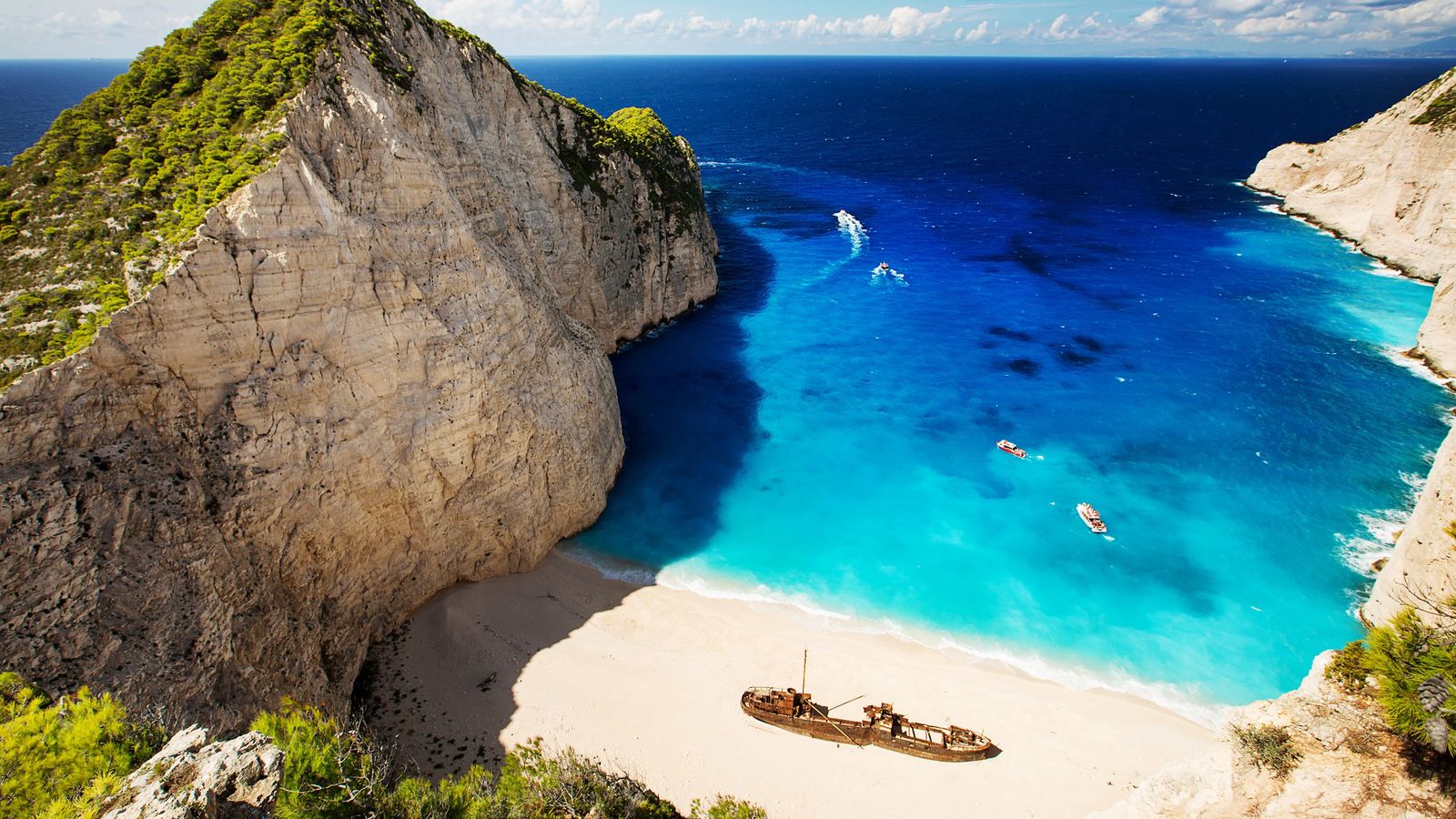
The sailing itself is compelling. The west coast cliffs are sheer limestone walls dropping straight into deep water. Navagio (Shipwreck Beach) is inaccessible by road — you anchor off and swim in or take the dinghy to the beach where a rusting freighter lies half-buried in white pebbles. The east coast has calmer conditions and a series of small bays south of the main town, useful for waiting out an Ionian afternoon meltemi. And the island is large enough that you can spend four or five days exploring without repeating an anchorage.
Weather Windows and Difficulty
The Ionian summer regime is relatively benign compared with the Aegean, but the stretch of open water between Kefalonia and Zakynthos, and more particularly the western side of Zakynthos, deserves respect. The main hazard is the fetch that develops across the open Ionian when the northwesterly maestro (the local version of the meltemi) pipes up. On the west coast, there is no shelter — if the wind builds above 20 knots from the northwest, the swell against the cliffs makes anchoring dangerous and landing a dinghy impossible.
May and early June are the calmest months, with light and variable winds, minimal swell, and comfortable temperatures. This is the best time to explore the west coast anchorages. July and August bring more reliable northwesterlies in the afternoons, typically Force 3-4 but capable of reaching Force 5-6 in a strong spell. West coast exploration is best done in morning calm windows. September is excellent — the tourist crowds thin, winds moderate, and the sea temperature is at its peak. October sees the first autumn depressions arriving from the Adriatic; manageable but less predictable.
Difficulty rating: Intermediate. The passage south from Kefalonia to Zakynthos requires confident open-water sailing, an understanding of lee shores on the west coast, and the ability to read weather forecasts and act conservatively. It is not a passage for complete beginners on their first bareboat week. Sailors with two or more previous Ionian charters, or equivalent offshore experience, will find it very manageable.
Minimum recommended experience: RYA Day Skipper practical (or equivalent), at least two previous bareboat charters, and confidence navigating in 20-25 knots of wind and 1-1.5 meter swell.
Two-Week Loop from Lefkada: Day-by-Day Plan
This plan assumes departure from Nidri or Vliho on Lefkada. Total distance for the full loop is approximately 220-250 nautical miles depending on diversions. Adjust for your boat's speed and your crew's appetite for passages versus exploration.
Days 1-2: Lefkada to Ithaka
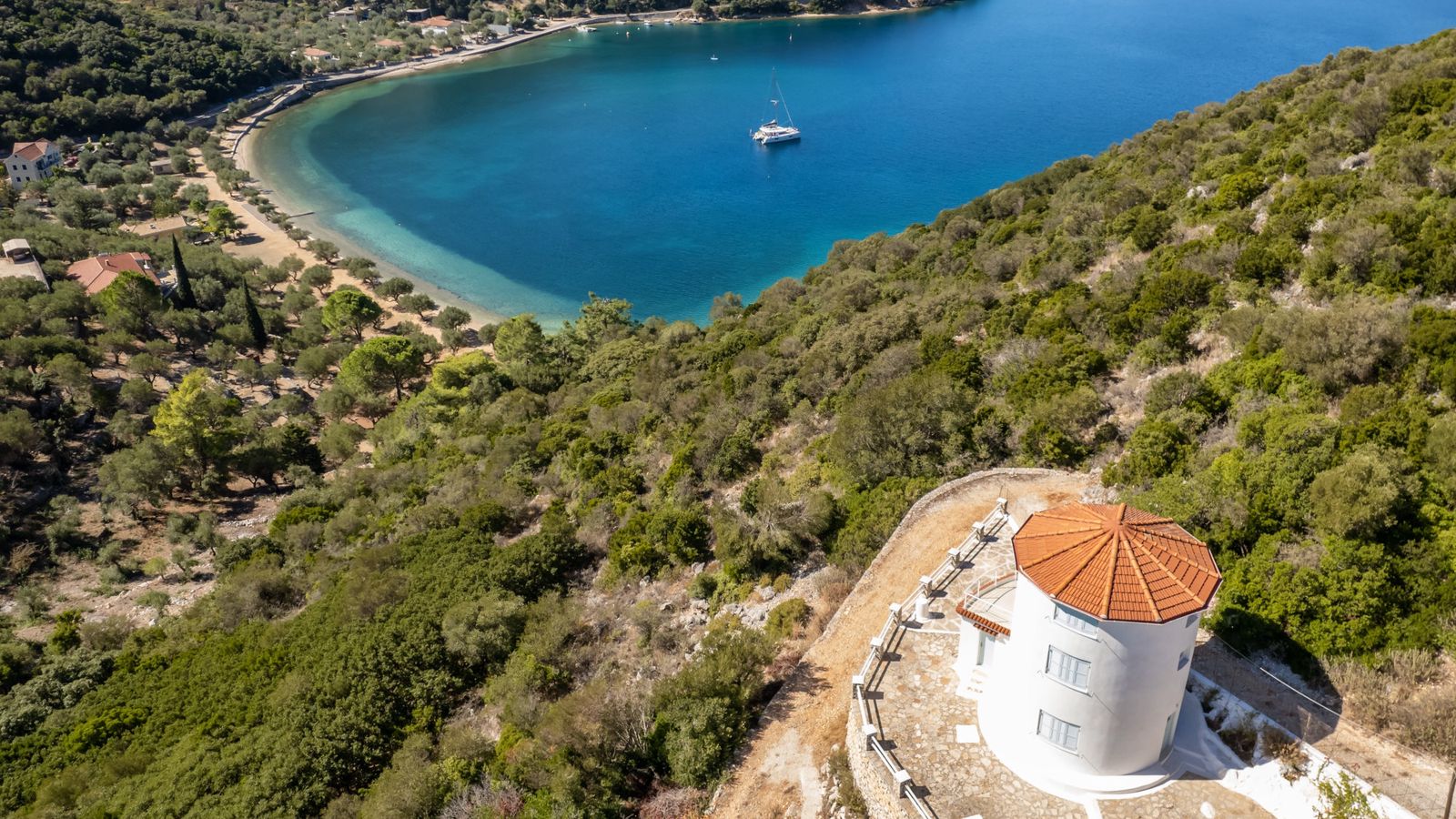
Depart Nidri and head south through the Meganisi channel. Overnight at Vathy (Ithaka's main town) — a beautiful deep harbor with a good taverna quay and space to stern-to alongside. Day 2 is a rest and explore day on Ithaka, which most crews rush past. The north of the island has excellent swimming bays reachable by dinghy from anchor.
Days 3-4: Ithaka to Kefalonia (Fiskardo and south)
Cross to Fiskardo for a morning coffee stop — it will be busy in July-August but the architecture is worth it. Continue south along Kefalonia's east coast to Agia Efimia or push further to Sami. Day 4, continue to Argostoli (the capital) if you want a proper provisioning stop before heading south. Argostoli has a large supermarket within walking distance of the quay and good fuel.
Day 5: Kefalonia to Zakynthos — the main passage
Distance: approximately 30 nautical miles from Argostoli to Zakynthos Town, or 20 miles from the southern tip of Kefalonia. Depart early — ideally before 0800 — to complete the crossing before the afternoon northwesterly builds. The passage is open and straightforward in settled conditions. Watch for commercial ferry traffic on the Kefalonia-Zakynthos route. Arrive Zakynthos Town marina and check in; this is a commercial port and the harbor authority office is clearly marked on the quay.
Days 6-7: Zakynthos Town and the East Coast
Spend one night in town for provisioning, the excellent morning market, and the handsome Venetian-influenced architecture (partly reconstructed after the 1953 earthquake). Day 7, move south along the east coast to Laganas Bay or the anchorages near Gerakas. Note that Laganas Bay is the main nesting ground for Mediterranean loggerhead turtles (Caretta caretta); there are strictly enforced no-anchor zones marked on the current charts. Respect these — enforcement is genuine, and the wildlife is genuinely remarkable.
Days 8-9: South Cape and Keri
Round Cape Marathia at the southern tip and anchor in Keri Bay. This is a beautiful and relatively uncrowded anchorage under high cliffs with a small village above. Day 9 is a short sail to the Keri Caves — a series of sea caves and arches accessible by dinghy or by swimming. This is one of the most memorable spots on the island. Anchor in the bay north of the caves in settled conditions.
Days 10-11: West Coast — Navagio and the Cliffs
The west coast run is the most dramatic sailing on this itinerary and requires a settled weather window. Check the forecast carefully the night before. Depart Keri early, motor or sail north along the towering limestone cliffs. Navagio (Shipwreck Beach) is approximately 12 miles north of Keri — a narrow cove with no all-weather anchorage. In calm conditions you can anchor in 10-12 meters on sand and take the dinghy ashore. Do not plan to spend the night here; the anchorage is open to the northwest. Continue to the northern tip of Zakynthos and round into the calmer eastern waters for the night — Porto Vromi is an option, or push to Agios Nikolaos on the northeast tip, which has a small quay and a taverna.
Days 12-13: Return North — Zakynthos to Kefalonia
Depart early and cross back to southern Kefalonia. Skala on Kefalonia's southeast coast is a pleasant overnight stop with a small harbor and good beach tavernas. Day 13, work north along Kefalonia — Poros or Sami — and position for the return to Ithaka or directly to Lefkada.
Day 14: Return to Lefkada
Final passage north. If time allows, a last stop at Ithaka or the south Lefkada anchorages (Sivota, Vasiliki) before returning the boat to base.
Starting Directly from Zakynthos
If you fly into Zakynthos International Airport (ZTH) and charter from there, the itinerary logic reverses: spend the first two or three days exploring the east coast and south, make the west coast run midweek when the weather is most predictable, then use the final days to explore at leisure before returning back to town. A Zakynthos-based charter of seven or ten days is genuinely satisfying without any need to go north at all — the island is large enough and varied enough to fill the time.
The small charter operators based in Zakynthos Town tend to offer older but well-maintained boats. Inspect carefully and establish a clear emergency contact protocol since there will be no flotilla support boat nearby.
Backup Plan and Practical Tips
If the west coast passage is not possible due to wind or swell, do not attempt it. The east coast and south bays offer a completely satisfying itinerary on their own. Navagio is spectacular but not worth a dangerous approach in 2-meter swell.
Backup anchorages if Zakynthos Town marina is full (it rarely is outside peak August): the anchorage north of town near the ferry terminal has room for several yachts in settled conditions, though it is exposed to the north. Porto Zoro on the southeast coast is a popular day-trip anchorage that empties out by evening.
Turtle awareness matters throughout Zakynthos. Beyond the no-anchor zones in Laganas, there are restricted swimming zones and no-go areas marked with yellow buoys. These change slightly year to year — check the latest HCMR (Hellenic Centre for Marine Research) or WWF Greece notices before departure. The turtles come ashore between June and August; September visitors often see hatchlings in the water near the beach.
Provisions: Zakynthos Town has the best provisioning on the island. Beyond that, expect small village shops with limited stock. Carry more water and food than you think you need for the west coast days.
VHF: Monitor Channel 16. The port authority in Zakynthos Town is responsive. Weather forecasts via Poseidon (the Greek national meteorological service maritime app) are reliable for this area and updated twice daily.
Frequently asked questions
How long do I need for a sailing trip to Zakynthos from Lefkada?
A two-week charter gives you the most flexibility for a Lefkada-to-Zakynthos loop, covering roughly 220-250 nautical miles. A dedicated Zakynthos-based charter of seven to ten days is also viable if you fly directly into Zakynthos (ZTH) and charter from a local operator in Zakynthos Town, since the island has enough anchorages and variety to fill the time without going north.
Is sailing around Zakynthos suitable for beginners?
Zakynthos is rated intermediate difficulty. The passage south from Kefalonia is open water with potential for afternoon northwesterly swell, and the west coast has no shelter once conditions deteriorate. Sailors with RYA Day Skipper qualification (or equivalent) and at least two previous bareboat charters will find it comfortable. Complete beginners should not attempt the west coast passages.
What is the best time of year to sail on the west coast of Zakynthos?
The best time to sail the west coast of Zakynthos is May, early June, or September. In July and August the afternoon maestro (northwestern wind) regularly reaches Force 4-5 and makes the open, cliff-lined west coast uncomfortable or unsafe. Morning windows are usually calm enough, but overnight anchorages on the west coast are not all-weather. September combines settled conditions with thinner tourist crowds.
Can you anchor at Navagio (Shipwreck Beach) Zakynthos by sailboat?
Navagio has no all-weather anchorage. In calm conditions you can anchor in 10-12 meters on sand and take the dinghy to the beach, but the cove is fully open to the northwest. Do not plan to spend the night there. Approach in the morning before any sea breeze develops, spend an hour or two, and move on to a sheltered overnight spot on the northeast coast of the island.
Are there sailing restrictions around Zakynthos for turtle protection?
There are strictly enforced no-anchor zones in Laganas Bay, which is the primary nesting ground for Mediterranean loggerhead turtles (Caretta caretta). These zones are marked on current Greek charts and with yellow buoys on the water. Violations carry real fines. Outside the marked zones, normal anchoring rules apply, but sailors should also avoid the restricted swimming areas near the main nesting beaches between June and August.
Do I need special paperwork to sail from Lefkada to Zakynthos?
Zakynthos is a domestic Greek destination, so no border formalities apply for boats already sailing within Greece. You need a valid transit log (DEKPA) stamped at your departure port and periodically thereafter. If chartering from a Lefkada base, confirm with your operator that the contract permits sailing as far south as Zakynthos — some operators require a signed acknowledgment or charge a small supplement for passages south of Kefalonia.


