Boat Charter in the British Virgin Islands: The Complete Guide
Updated
Discover why the British Virgin Islands are the world's premier sailing destination — from the sheltered Sir Francis Drake Channel to hidden anchorages at Jost Van Dyke and Virgin Gorda. This complete guide covers BVI yacht charter costs, a 7-day sample itinerary, licensing requirements, and expert tips for the perfect boat rental in BVI.
On this page

Few destinations on Earth combine pristine sailing conditions, jaw-dropping scenery, and world-class anchorages quite like the British Virgin Islands. Nestled in the northeastern Caribbean, the BVI has long been considered one of the premier sailing destinations in the world — and for good reason. Whether you're a seasoned bluewater sailor or stepping aboard a bareboat for the first time, a boat rental in BVI delivers an experience that's almost impossible to replicate anywhere else on the planet.
This complete guide covers everything you need to know before you cast off the dock lines: the best sailing regions, seasonal weather patterns, costs, a sample 7-day itinerary, licensing requirements, and practical tips to make your charter seamless from start to finish.
Why the British Virgin Islands Are Ideal for Sailing
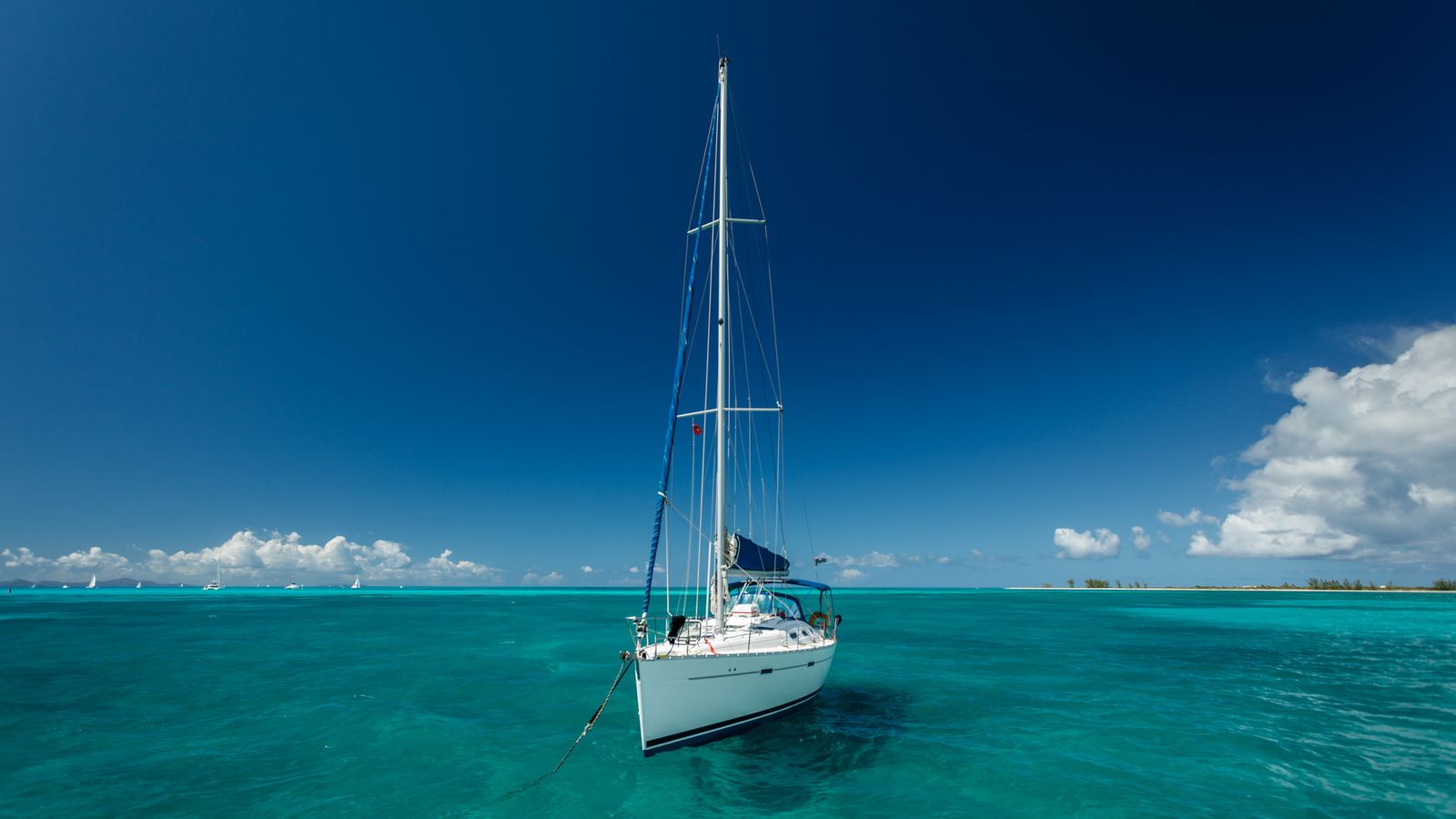
The BVI is practically purpose-built for sailing. Here's what makes it so special:
Calm, protected waters: The islands are arranged in two parallel chains — Tortola and the northern islands, and the southern chain including Norman, Peter, Salt, and Cooper Islands — forming the Sir Francis Drake Channel. This natural corridor provides sheltered sailing with relatively flat seas, making it ideal for beginners and families.
Consistent trade winds: The northeast trade winds blow at a steady 15–25 knots almost year-round, providing reliable sailing conditions without the need for a motor on most passages.
Short passages: Distances between islands are rarely more than 5–10 nautical miles, so you can visit multiple anchorages in a single day without exhausting your crew.
World-class anchorages and mooring fields: The BVI National Parks Trust maintains hundreds of moorings across the islands, protecting coral reefs and making overnight stays easy and eco-friendly.
Vibrant sailing culture: From the legendary Soggy Dollar Bar to the Baths at Virgin Gorda, the BVI has a rich, sailor-focused culture with beach bars, provisioning stops, and sailing events woven into everyday island life.
Best Sailing Regions in the BVI
The BVI encompasses roughly 60 islands, cays, and rocks spread across approximately 150 square miles of ocean. Here's a brief overview of the key sailing regions:
Road Town, Tortola
The capital and main charter hub. Most BVI yacht charters begin and end here, as Tortola is home to the largest concentration of charter bases, provisioning stores, fuel docks, and marinas. Road Town Harbour is busy but functional, and nearby Nanny Cay and Wickhams Cay offer first-class marina facilities.
Sir Francis Drake Channel
The beating heart of BVI sailing. This broad channel between the two island chains offers open reaching in steady trades, with anchorages on both sides. Cooper Island, Salt Island (home of the famous wreck of the Rhone), Peter Island, and Norman Island are all easily accessible from here.
Virgin Gorda
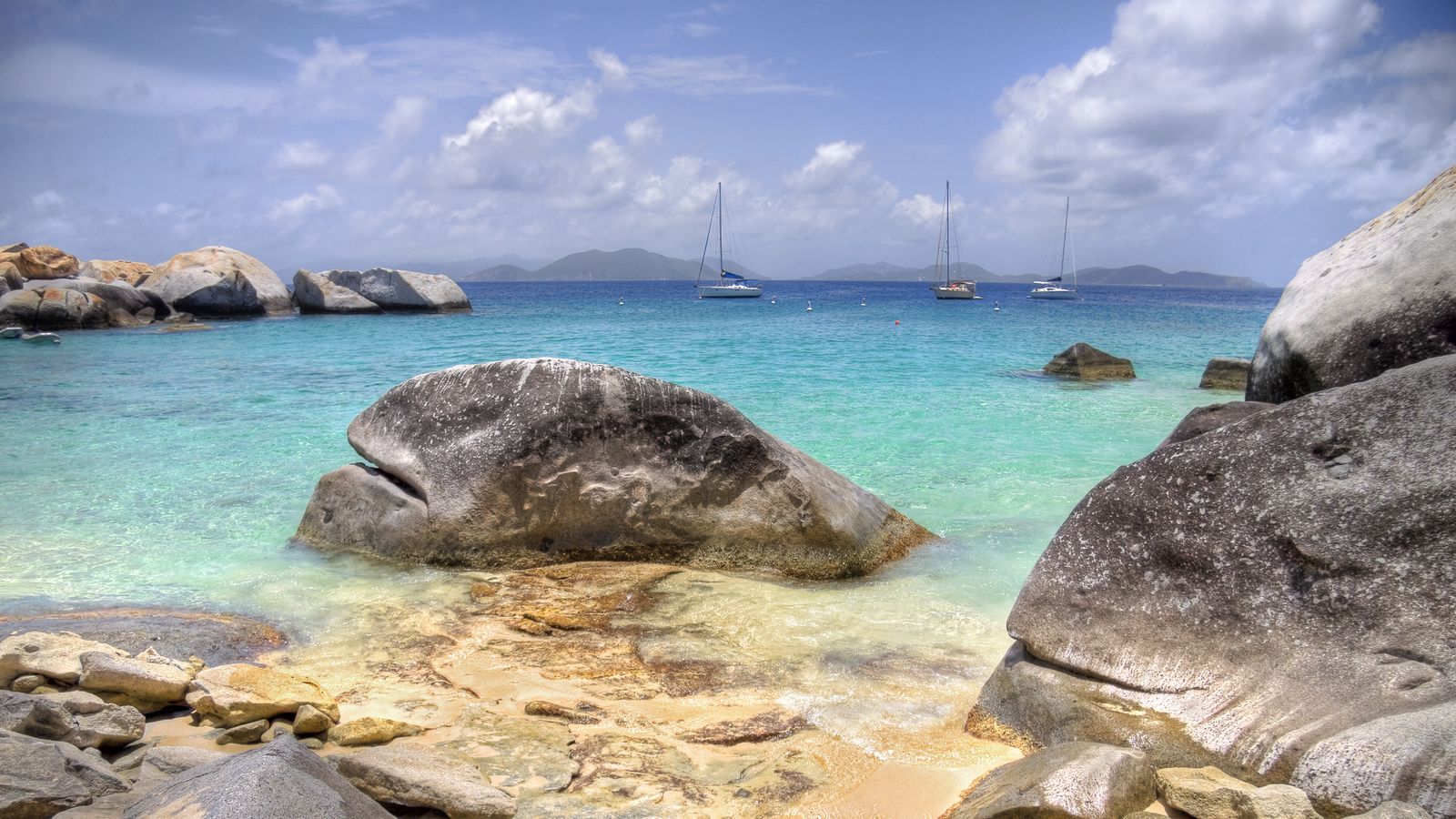
The second-largest island in the BVI is home to The Baths — a geological wonderland of giant granite boulders forming sea caves and grottoes. The North Sound, also on Virgin Gorda, is a large protected lagoon with several beach bars, resorts, and anchorages. It's a must-visit stop on any BVI charter.
Jost Van Dyke
Famous for its laid-back vibe, Jost Van Dyke punches well above its tiny size in terms of character. Great Harbour is home to the iconic Foxy's bar, while White Bay is where you'll find the legendary Soggy Dollar Bar — birthplace of the Painkiller cocktail. This island is a highlight of any BVI yacht charter.
Anegada
The only coral atoll in the BVI, Anegada sits about 15 nautical miles north of Virgin Gorda and requires a day trip commitment. With its powder-white beaches, lobster beach shacks, and shallow reef-fringed anchorage, it's well worth the extra miles. Note that Anegada requires careful navigation due to the reef system — most charter companies will brief you thoroughly.
Weather and Best Time to Visit the BVI
The BVI enjoys a tropical climate moderated by the northeast trade winds, making it a year-round destination. That said, different seasons offer distinct advantages:
High Season: December to April
This is the prime sailing season. Trade winds blow consistently at 15–25 knots from the northeast, temperatures range from 75°F to 85°F (24°C–29°C), and rainfall is minimal. Seas are calmer and visibility for snorkeling and diving is at its peak. Expect the highest charter prices and busiest anchorages during this period, particularly around Christmas, New Year's, and Presidents' Weekend.
Shoulder Season: May to June
An excellent time to visit. Temperatures tick up slightly, crowds thin out significantly, charter rates drop, and the trade winds remain fairly reliable. A great value window for experienced sailors.
Hurricane Season: July to November
The Atlantic hurricane season officially runs from June 1 to November 30, with the peak risk between August and October. While the BVI can be visited during the shoulder of this season (June–July), most experienced sailors avoid the area from August through October. Charter companies often offer significant discounts during this period, but travel insurance is absolutely essential. The BVI was severely impacted by Hurricane Irma in 2017 and has since made a remarkable recovery.
Tip: The BVI Spring Regatta & Sailing Festival (late March/early April) and the Round Tortola Race (February) are highlights for racing enthusiasts — book well in advance if you plan to participate.
Costs Overview: BVI Boat Rental
Charter costs in the BVI vary widely depending on the type of vessel, time of year, and whether you choose a bareboat or crewed arrangement. Here's a general breakdown:
Bareboat Charter Costs
Monohull sailboat (38–45 ft): $3,500–$7,500 per week (low season); $5,500–$12,000 per week (high season)
Catamaran (40–46 ft): $5,000–$9,500 per week (low season); $8,000–$18,000 per week (high season)
Power catamaran (40–48 ft): $7,000–$14,000 per week (varies by season)
Crewed Charter Costs
Crewed monohull or catamaran: $12,000–$35,000+ per week, all-inclusive or on an MYBA-style agreement (Advance Provisioning Allowance applies separately)
Captain-only charters (you provide your own crew): add approximately $150–$250/day for a licensed captain
Additional Costs to Budget For
BVI Cruising Permit: Required for all visiting foreign-flagged vessels — typically $75–$150 depending on vessel size and duration
Mooring fees: $30–$50 per night at National Park moorings (required in many areas — anchoring is prohibited near reefs)
Provisioning: Budget $75–$150 per person per week for a self-provisioned bareboat
Fuel: $100–$400+ per week depending on motoring vs. sailing
Dining out: Beach bar meals run $20–$50 per person; plan for at least a few memorable nights ashore
Travel insurance: Strongly recommended — budget 5–10% of total charter cost
Sample 7-Day BVI Yacht Charter Itinerary
This itinerary departs from Tortola and loops through the BVI's greatest hits. It's designed for a moderate pace suitable for families and first-time charterers, with flexibility built in for weather and personal preference.
Day 1: Road Town, Tortola → The Bight, Norman Island
After provisioning and the charter briefing, cast off mid-morning and sail southeast down the Sir Francis Drake Channel. The Bight on Norman Island (said to be the inspiration for Robert Louis Stevenson's Treasure Island) offers excellent snorkeling at the famous Caves and a lively beach bar scene at William Thornton's floating restaurant. Grab a mooring by mid-afternoon and snorkel before sundowners on deck.
Day 2: Norman Island → Peter Island → Cooper Island
Spend the morning exploring the Caves at Norman, then sail east to drop anchor at Deadman's Bay on Peter Island — one of the most gorgeous beaches in the entire Caribbean. After lunch, continue to Cooper Island Beach Club, a sailor's favorite with an excellent beach bar, craft rum shop, and well-maintained moorings.
Day 3: Cooper Island → Salt Island (RMS Rhone) → Virgin Gorda, The Baths
Morning dive or snorkel on the RMS Rhone, a famous 310-foot Royal Mail Ship that sank in an 1867 hurricane — now one of the Caribbean's premier wreck dives. Then sail northeast to Virgin Gorda. Secure a mooring at The Baths National Park in the afternoon and spend a couple of hours exploring the incredible boulder formations and sea grottoes.
Day 4: Virgin Gorda North Sound
Spend the morning at The Baths, then motor-sail north around the tip of Virgin Gorda and enter the North Sound via the Anguilla Point channel. Anchor or pick up a mooring near Leverick Bay or Saba Rock. The North Sound is a protected, calm lagoon perfect for kayaking, paddleboarding, and relaxing. Dinner at Saba Rock resort is a must.
Day 5: Virgin Gorda → Jost Van Dyke (White Bay)
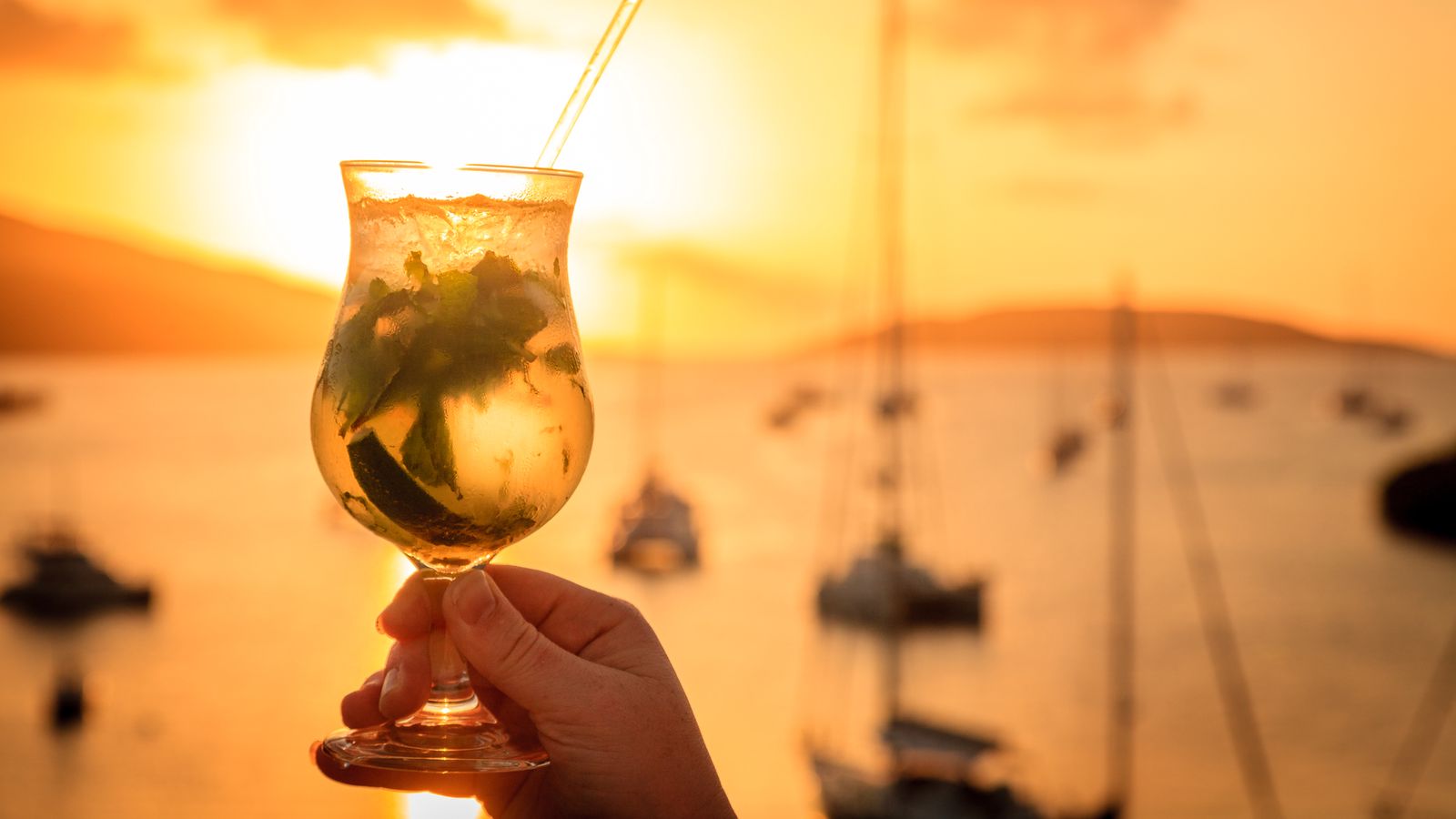
An early departure gives you a lovely beam reach across the channel to Jost Van Dyke. Aim for White Bay, where the Soggy Dollar Bar awaits — order a Painkiller, wade ashore, and settle in for one of the best beach bar experiences in the world. Moorings fill up fast, so arrive by midday. Stay overnight here; the evenings are magical.
Day 6: Jost Van Dyke (Great Harbour) → Sandy Cay → Sandy Spit
Walk the hill to Great Harbour for breakfast, then swing by the tiny uninhabited jewel of Sandy Cay — a perfect coral-ringed island ideal for a morning swim and beach walk. Continue to Sandy Spit, another postcard-perfect islet just off Green Cay. Sail back toward Tortola in the late afternoon, stopping at Cane Garden Bay for a final night out at Quito's bar and restaurant.
Day 7: Cane Garden Bay → Road Town, Tortola
Enjoy a slow morning swim and breakfast in one of Tortola's most beautiful bays before the short sail back to Road Town for checkout. Most charter companies require return by 9:00 AM, so plan your final night accordingly.
Travel Requirements and Sailing Licenses for a BVI Yacht Charter
Entry Requirements
The BVI is a British Overseas Territory. U.S. citizens need a valid passport (or passport card for sea entry from the USVI). Nationals of most countries are granted entry without a visa for stays up to 30 days.
On arrival by charter boat, you must clear customs and immigration at an official port of entry: Road Town, Virgin Gorda (Spanish Town), Jost Van Dyke (Great Harbour), or Anegada. The process typically takes 30–60 minutes.
A BVI Cruising Permit is required for all vessels and is issued at customs. Fees vary by boat size and length of stay.
Sailing License Requirements
The BVI does not require sailors to hold a specific government-issued license to bareboat charter. However, charter companies set their own competency requirements, which typically include:
A recognized sailing certification (ASA 101/103/104, RYA Day Skipper/Coastal Skipper, or equivalent) and/or
A logbook demonstrating sufficient offshore experience (typically 50–100 nautical miles as skipper on a similar-sized vessel)
Some companies require a checkout sail on the day of departure, where a company instructor accompanies you for 30–60 minutes to assess boat-handling competency
If you don't meet the bareboat requirements, or simply prefer not to skipper, you can hire a licensed captain through your charter company — an excellent option that adds local knowledge to your trip.
Connecting via the USVI
Many charterers fly into St. Thomas (STT) in the US Virgin Islands and ferry or sail across Pillsbury Sound to Tortola. The ferry from Charlotte Amalie or Red Hook to Road Town takes approximately 45–75 minutes. Be aware that crossing between the USVI and BVI requires a customs clearance in each direction.
5 Practical Tips for Your BVI Boat Rental
Book early — especially for high season. The BVI charter market is competitive, and the best catamarans and monohulls are snapped up months in advance for the December–April season. If you're targeting Christmas week or New Year's, start planning 9–12 months ahead. Shoulder season offers better availability and rates.
Always use moorings where available. The BVI National Parks Trust has installed mooring fields throughout the island chain to protect fragile coral ecosystems. In many National Park zones (The Baths, The Caves, Rhone Marine Park), anchoring is prohibited. Carry plenty of small bills (USD) to pay mooring fees to the boat boys who collect in the mornings.
Provision smartly in Road Town. Bobby's Marketplace and Riteway in Road Town are well-stocked supermarkets where you can provision for the week before departure. Prices are higher than the continental U.S. (most goods are imported), so plan your meals and budget accordingly. Many charter companies offer provisioning packages — compare costs before deciding.
Respect the customs crossing between USVI and BVI. If your itinerary includes visiting the USVI (St. John, St. Thomas, or St. Croix), be aware that you must clear customs in both directions. Entering the BVI from the USVI without clearing is illegal and carries heavy fines. Most charter companies restrict vessels to the BVI only — check your charter agreement carefully.
Download the right apps before you leave the dock. Navionics or Garmin ActiveCaptain for charts, PredictWind or Windy for weather forecasting, and the Cruising Guide to the Virgin Islands by Simon Scott (also available in digital format) are invaluable planning tools. The BVI has patchy cell coverage in anchorages, so download offline maps and guides before departure.
Final Thoughts
A BVI yacht charter is, without exaggeration, a bucket-list sailing experience. The combination of protected trade-wind sailing, stunning anchorages, vibrant beach culture, and manageable passages makes it the perfect destination for everyone from novice charterers to veteran offshore sailors. Whether you're sipping a Painkiller at the Soggy Dollar Bar, diving the Rhone by morning light, or watching the stars from your cockpit in the North Sound, the British Virgin Islands have a way of getting into your soul — and bringing you back again and again.
Start planning your boat rental in BVI today, and get ready for a week you'll be talking about for years to come.


