Boat Charter in Croatia: The Complete Guide to Sailing the Adriatic
Updated
Discover everything you need to plan the perfect boat charter in Croatia — from the best sailing regions and weather windows to costs, a 7-day sample itinerary, license requirements, and expert tips for navigating the Adriatic.
On this page

Croatia has firmly established itself as one of the world's premier sailing destinations, and it's easy to see why. With over 1,200 islands, islets, and reefs scattered along the stunning Adriatic coastline, the country offers an almost infinite variety of sailing experiences — from secluded bays and ancient walled cities to vibrant beach bars and pristine national parks. Whether you're a seasoned skipper or a first-time sailor, a boat rental in Croatia opens up a world that simply cannot be accessed any other way.
Why Croatia Is Ideal for Sailing
Croatia's geography is tailor-made for sailing. The Dalmatian coast runs for more than 1,700 kilometers, with hundreds of natural harbors, sheltered channels between islands, and deep, crystal-clear waters that average visibility of up to 40 meters. The country boasts a Mediterranean climate, well-maintained marinas (over 140 of them), an extensive network of nautical services, and a centuries-old maritime culture that makes every port of call feel welcoming.
Beyond the water itself, sailing Croatia means weaving through a tapestry of UNESCO World Heritage Sites, ancient Roman ruins, Venetian architecture, and some of the best seafood in Europe. Stopping in a small fishing village for freshly grilled branzino or pulling into Dubrovnik's harbor at sunset are experiences that leave lasting impressions. The country has invested heavily in its nautical infrastructure, making it equally attractive for bareboat charters, skippered cruises, and luxury Croatia yacht charter voyages.
Best Sailing Regions
Split & Central Dalmatia
Split is Croatia's most popular charter base and for good reason. From here, sailors can reach the islands of Brač, Hvar, Vis, Šolta, and Korčula within a day's sail. Hvar Town is arguably the most glamorous stop on the Croatian sailing circuit, while the remote island of Vis — only recently opened to tourism — retains an authentic, unspoiled character. The legendary Blue Cave (Modra špilja) on nearby Biševo island is an unmissable natural wonder.
Šibenik & the Northern Dalmatia Islands
The waters around Šibenik offer a more relaxed pace. The Kornati Archipelago — a national park comprising 89 islands — is a sailor's paradise of barren limestone landscapes and brilliant blue coves. The fortified old town of Šibenik itself is a UNESCO-listed gem, and the nearby Krka waterfalls are worth a day trip from your berth.
Dubrovnik & Southern Dalmatia
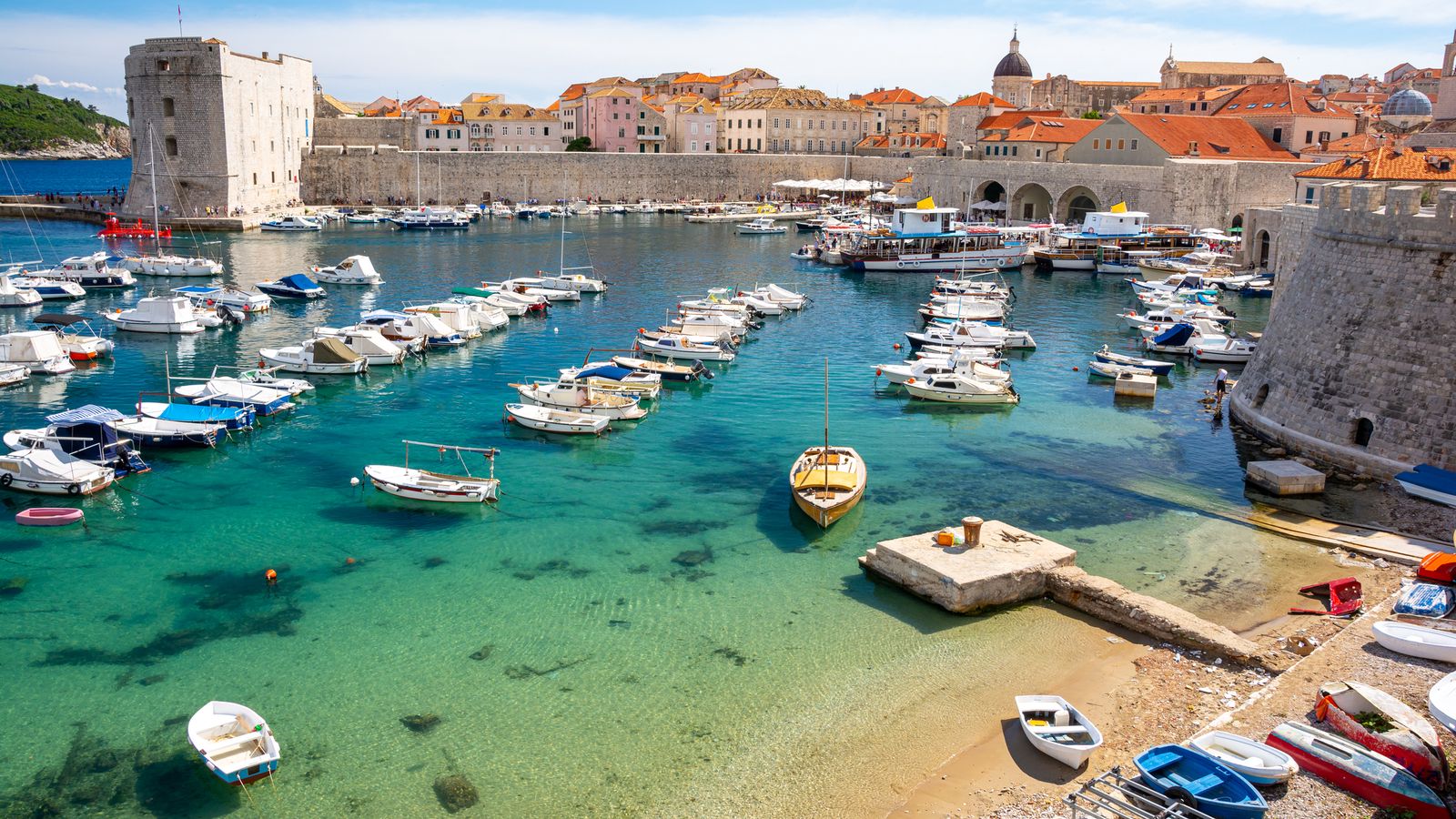
Sailing south toward Dubrovnik brings you through the Elafiti Islands and past the wine-producing island of Korčula, said to be the birthplace of Marco Polo. Dubrovnik's ancient walls glowing gold at sunset, viewed from the cockpit of your yacht, is one of sailing's truly iconic moments. The Pelješac Peninsula also offers exceptional red wines and oyster farms in Ston Bay.
Zadar & Northern Dalmatia
Zadar is an increasingly popular charter hub with superb connections to the Zadar Archipelago, the Kornati islands from the north, and the beautiful Telašćica Nature Park on Dugi Otok. The city itself — with its famous Sea Organ and Sun Salutation installation — is one of Croatia's most underrated cultural destinations.
The Kvarner Gulf & Istria
In the far north, the Kvarner Gulf is home to the dramatic islands of Cres, Lošinj, Krk, and Rab. Conditions here can be more challenging due to the strong Bora wind, but the scenery is spectacular and the area far less crowded than the south. Istria, just to the northwest, offers a unique Austro-Hungarian and Italian cultural fusion, with the stunning amphitheater at Pula as its crown jewel.
Weather and Best Time to Visit
Croatia enjoys a classic Mediterranean climate along the coast, with hot, dry summers and mild, wet winters. The main sailing season runs from April through October, with peak season falling between mid-June and mid-September.
April–May: Pleasantly warm (18–24°C), fewer crowds, lower charter prices, and lush green landscapes. Winds can be variable, which actually makes for interesting sailing. Ideal for experienced sailors who prefer quieter anchorages.
June & September: The sweet spot for most sailors. Temperatures are warm (25–28°C), the Maestral (summer westerly breeze) is reliable, and marinas are busy but not overwhelmed. This is widely considered the best time for a boat rental in Croatia.
July–August: Peak season. Scorching temperatures (30°C+), the most reliable winds, and a buzzing social atmosphere. Expect the highest charter prices and crowded anchorages. Book well in advance — some popular berths need to be reserved months ahead.
October: A wonderful shoulder season with warm sea temperatures (still around 20°C), dramatic light, and significantly fewer tourists. Autumn storms can occasionally roll in, so keep an eye on forecasts.
The dominant local winds are the Maestral (a pleasant afternoon sea breeze from the west/northwest, 10–20 knots), the Bora (a violent cold northeasterly that can exceed 50 knots, most common in winter and spring), and the Jugo (a warm southeasterly that brings swell and can last several days). Most summer sailors will encounter primarily the Maestral, making conditions ideal for beginners and intermediates.
Costs Overview
Croatia yacht charter costs vary widely depending on the vessel type, season, and whether you hire a skipper. Here is a general price guide in Euros:
Vessel Type Low Season (per week) High Season (per week) Small sailing boat (30–35 ft) €800 – €1,500 €1,500 – €2,800 Mid-range monohull (38–45 ft) €1,500 – €3,000 €3,000 – €6,000 Catamaran (40–48 ft) €2,500 – €4,500 €4,500 – €9,000 Luxury motor yacht €4,000+ €10,000+
Additional costs to budget for:
Skipper hire: €150–€250/day (required if you don't hold a recognized sailing license)
Marina berth fees: €30–€150/night depending on size and location (Dubrovnik and Hvar are the most expensive)
Fuel: €80–€300/week depending on how much motoring you do
Provisioning & dining: €50–€100/day per couple
Tourist tax: Approximately €1.50–€3 per person per night
Security deposit: Typically €1,000–€3,000, refundable at the end of the charter
Sample 7-Day Itinerary: The Hvar & Vis Loop from Split
This classic route departing from Split is one of the most beloved circuits in Croatian sailing, offering a perfect balance of history, nature, and nightlife.
Day 1 — Split to Milna (Brač Island)
Depart from ACI Marina Split after provisioning at the Billa supermarket nearby. Sail approximately 20 nautical miles southwest to the sheltered bay of Milna on the western tip of Brač. A compact, charming fishing harbor ideal for a relaxed first evening. Explore the Baroque church and enjoy dinner at a konoba (traditional tavern).
Day 2 — Milna to Hvar Town
An easy 18-nautical-mile sail through the Hvar Channel. Arrive in Hvar Town and secure a berth on the town quay or at the ACI Marina. Spend the afternoon exploring the Renaissance loggia, the fortress Fortica, and the lavender-scented old town. Evening: join the famous Hvar nightlife scene — or find a quieter restaurant in a side alley.
Day 3 — Hvar Town to Vis Town
Set sail for the remote island of Vis, approximately 20 nautical miles south. Visit Vis Town in the afternoon — a remarkably authentic Dalmatian town with a Roman-era cemetery, Venetian palaces, and excellent wine bars. Don't miss the local Vugava white wine.
Day 4 — Biševo (Blue Cave) & Komiža
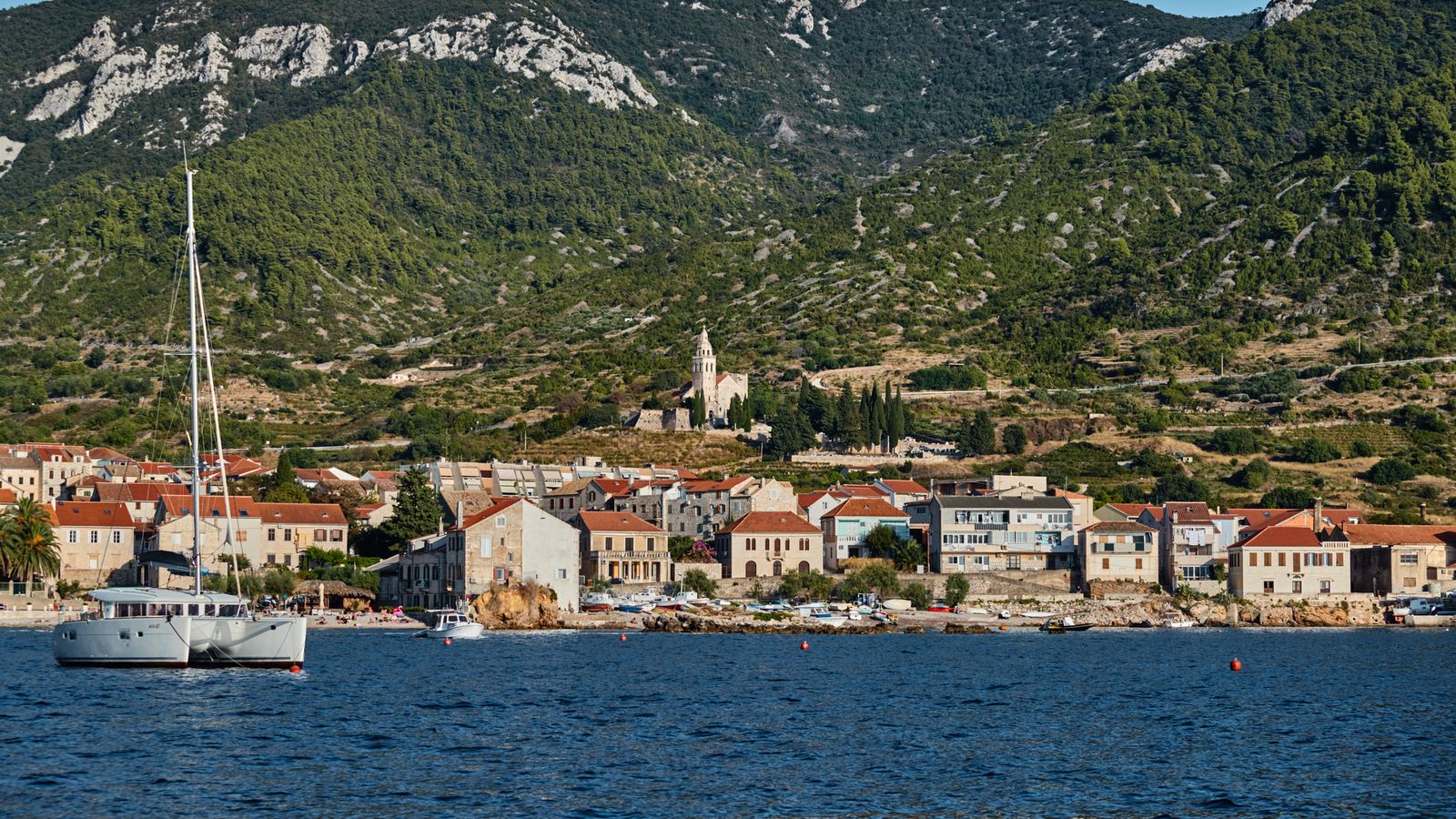
An early morning departure for the Blue Cave on Biševo island (arrive before 10 AM to avoid queues — a dinghy excursion is needed for the cave itself). Afterward, sail to Komiža on Vis's western coast — a beautifully unspoiled fishing village with colorful boats and excellent seafood. Anchor in the bay overnight.
Day 5 — Komiža to Stari Grad (Hvar Island)
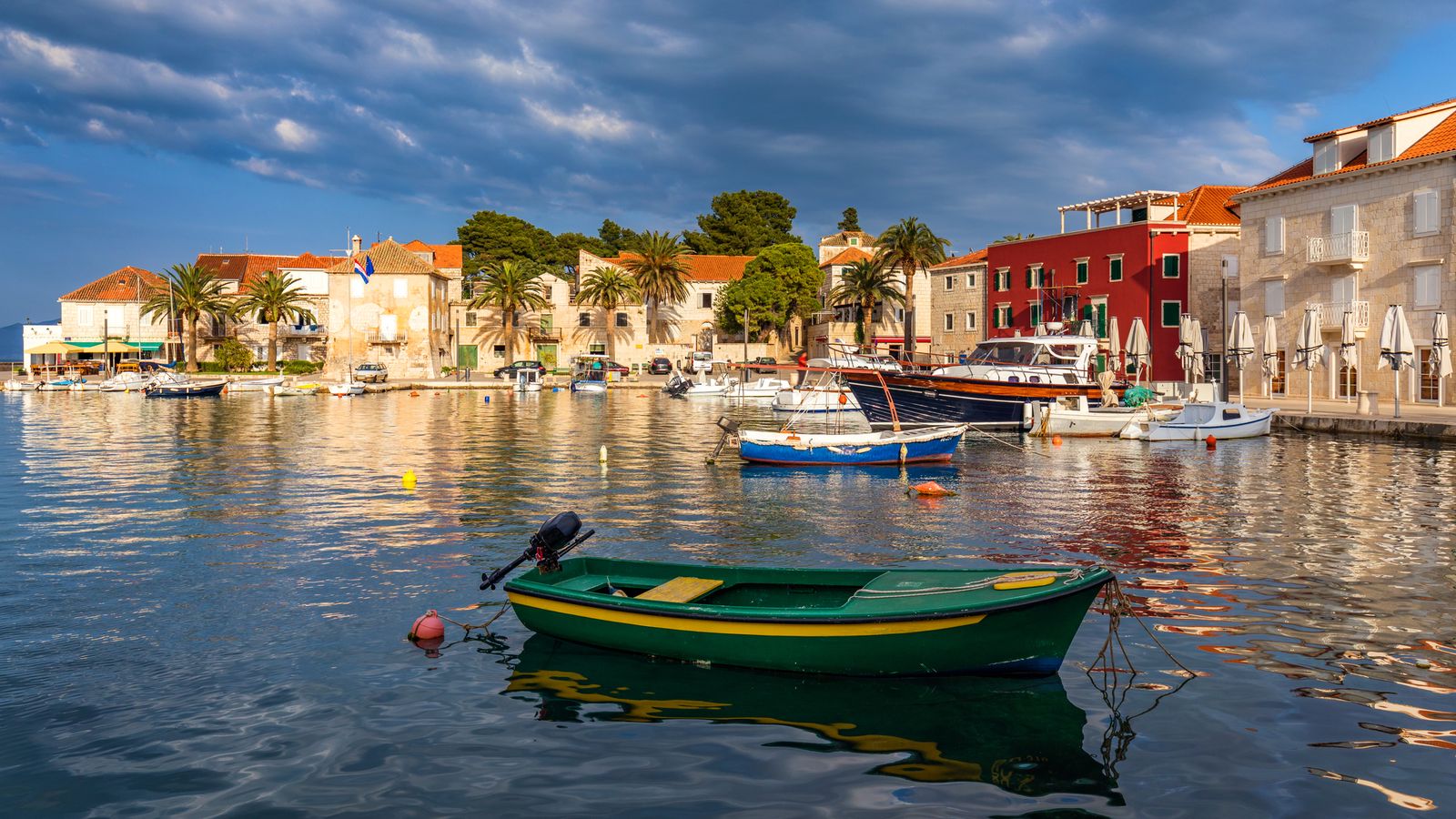
Sail northeast to Stari Grad, one of the oldest continuously inhabited towns in Europe (founded by Greeks in 384 BC). The Stari Grad Plain — a UNESCO World Heritage Site — is a remarkable ancient agricultural landscape. The town itself is quieter and more cultured than Hvar Town. Berth in the marina or on the long town quay.
Day 6 — Stari Grad to Bol or Sutivan (Brač Island)
Cross the Hvar Channel northward to Brač. If wind conditions allow, stop at the famous Zlatni Rat (Golden Horn) beach near Bol — one of Croatia's most photographed spots — for a swim and lunch. Continue to the pretty village of Sutivan for the night.
Day 7 — Sutivan back to Split
A short 12-nautical-mile morning sail back to Split. Return the boat by noon (standard charter return time). Spend your final afternoon exploring Diocletian's Palace — a sprawling Roman complex now filled with shops, restaurants, and apartments — before heading home.
Travel Requirements & Sailing Licenses
Entry Requirements
Croatia joined the European Union in 2013 and became part of the Schengen Area in January 2023. EU and EEA citizens can enter visa-free with a valid ID or passport. Citizens of the USA, Canada, Australia, and many other countries can visit Croatia visa-free for up to 90 days within a 180-day period. Citizens of countries not covered by these arrangements should check with the Croatian embassy in their home country.
Croatia uses the Euro (€) as its currency since January 2023, making it seamless for eurozone travelers.
Sailing License Requirements
To charter a bareboat yacht in Croatia, you are required to hold a valid ICC (International Certificate of Competence) or an equivalent recognized national sailing license. Croatia is one of the stricter EU nations when it comes to license enforcement, and the Harbour Master's Office (Lučka Kapetanija) does conduct checks.
For sailing monohulls and catamarans: An ICC or equivalent (such as the RYA Coastal Skipper, ASA 104, or national licenses from most EU countries) is required.
For motorboats over 5 hp: A motorboat license (or ICC with a motor endorsement) is needed.
VHF radio license: A Short Range Certificate (SRC) or equivalent is required to operate the marine VHF radio on board.
No license? You can hire a professional skipper through your charter company. This is also an excellent option for less experienced sailors who want to learn while exploring Croatia.
Required Documents on Board
The harbour master may request to see: the vessel's registration papers, proof of third-party liability insurance, the charter contract, and all crew members' passports. Keep these in a waterproof folder and accessible at all times.
5 Practical Tips for Sailing Croatia
1. Book Early — Especially for Peak Season
The best boats in the most popular bases (Split, Trogir, Dubrovnik) sell out months in advance for July and August. If you have specific dates or a particular vessel in mind, aim to book your Croatia yacht charter at least 6 months ahead for peak season. Shoulder season bookings can usually be secured 1–3 months out.
2. Pre-Reserve Key Anchorages and Marina Berths
Croatia's most popular stops — ACI Hvar, Vis Town, Korčula, and the Kornati buoys — can get booked up in high season. Call ahead on the VHF radio (Channel 17 for most ACI marinas) or use apps like Navily or Anchor to check availability and pre-book. Arriving early (before 2 PM) in peak season is always advisable.
3. Respect the Bora Wind
The Bora (Bura in Croatian) can arrive with little warning, especially in spring, autumn, and near the Velebit channel in the north. Always check multiple weather forecasts (Windguru, Meteo Adriatic, and Windy are all excellent) before setting out. If a Bora is forecast, stay in a well-protected harbor and wait it out — experienced sailors treat it with great respect.
4. Carry Cash for Small Anchorages
While most marinas and larger restaurants accept cards, many of the smaller bays, private buoy operators, and roadside fruit stalls only accept cash. Keep a supply of Euros on hand. ATMs are widely available in all towns but rare on small islands.
5. Protect the Sea — and Your Safety
Croatian marine authorities take environmental protection seriously. Pumping waste overboard within three nautical miles of shore is strictly prohibited. Use the pump-out facilities available at all larger marinas. Equally important: always wear life jackets when conditions are rough, carry an updated first aid kit, and ensure your flares are within their expiry date before departing. Croatian waters are safe, but the sea always demands respect.
Final Thoughts
A boat rental in Croatia is more than just a holiday — it's an experience that fundamentally changes how you relate to the sea, to history, and to the simple pleasure of waking up in a new place every morning. Whether you're threading through the Kornati's surreal moonscape, sipping a glass of Plavac Mali on Hvar's waterfront, or watching dolphins play in the bow wave off Vis, Croatia has a way of leaving every sailor hungry to come back.
With superb infrastructure, reliable summer winds, an extraordinary variety of anchorages, and one of the richest maritime cultures in the Mediterranean, Croatia consistently earns its place at the top of every serious sailor's bucket list. Now all that's left is to choose your boat and cast off the lines.
Fair winds and following seas — sretan put!


