Boat Rental in Greece: The Complete Guide to Greek Yacht Charters
Updated
Discover everything you need to know about boat rental in Greece — from the best sailing regions and seasonal weather to costs, licensing requirements, and a complete 7-day Ionian island itinerary for your Greece yacht charter.
On this page

Greece is, without question, one of the world's greatest sailing destinations. With over 6,000 islands and islets scattered across the Aegean, Ionian, and Mediterranean Seas, a labyrinth of crystal-clear turquoise waters, and a climate that delivers reliable sunshine for most of the year, Greece offers an unrivaled backdrop for anyone seeking the freedom of a boat rental. Whether you're a seasoned skipper or a first-time charterer, this complete guide will walk you through everything you need to know about boat rental in Greece.
Why Greece Is Ideal for Sailing
Few countries in the world can match Greece when it comes to sailing. Here's why:
Extraordinary island diversity: From the cosmopolitan energy of Mykonos to the volcanic drama of Santorini and the lush green forests of the Ionian islands, no two islands feel the same.
Sheltered sailing routes: The Aegean and Ionian Seas offer a mix of open passages and well-protected channels, making Greece suitable for all experience levels.
Rich culture and history: Ancient ruins, Byzantine churches, and centuries-old fishing villages are accessible directly by sea.
World-class cuisine: Every port brings fresh octopus, grilled fish, and local wines enjoyed right at the water's edge.
Well-developed charter infrastructure: Greece has one of Europe's most developed sailing charter industries, with hundreds of reputable companies and thousands of boats available for hire.
Consistent winds: The famous Meltemi winds of summer give sailors exhilarating passages, while the Ionian Sea offers gentler, more predictable breezes.
Best Sailing Regions in Greece
Greece's sailing grounds can be broadly divided into several key regions, each with its own distinct character:
The Ionian Islands
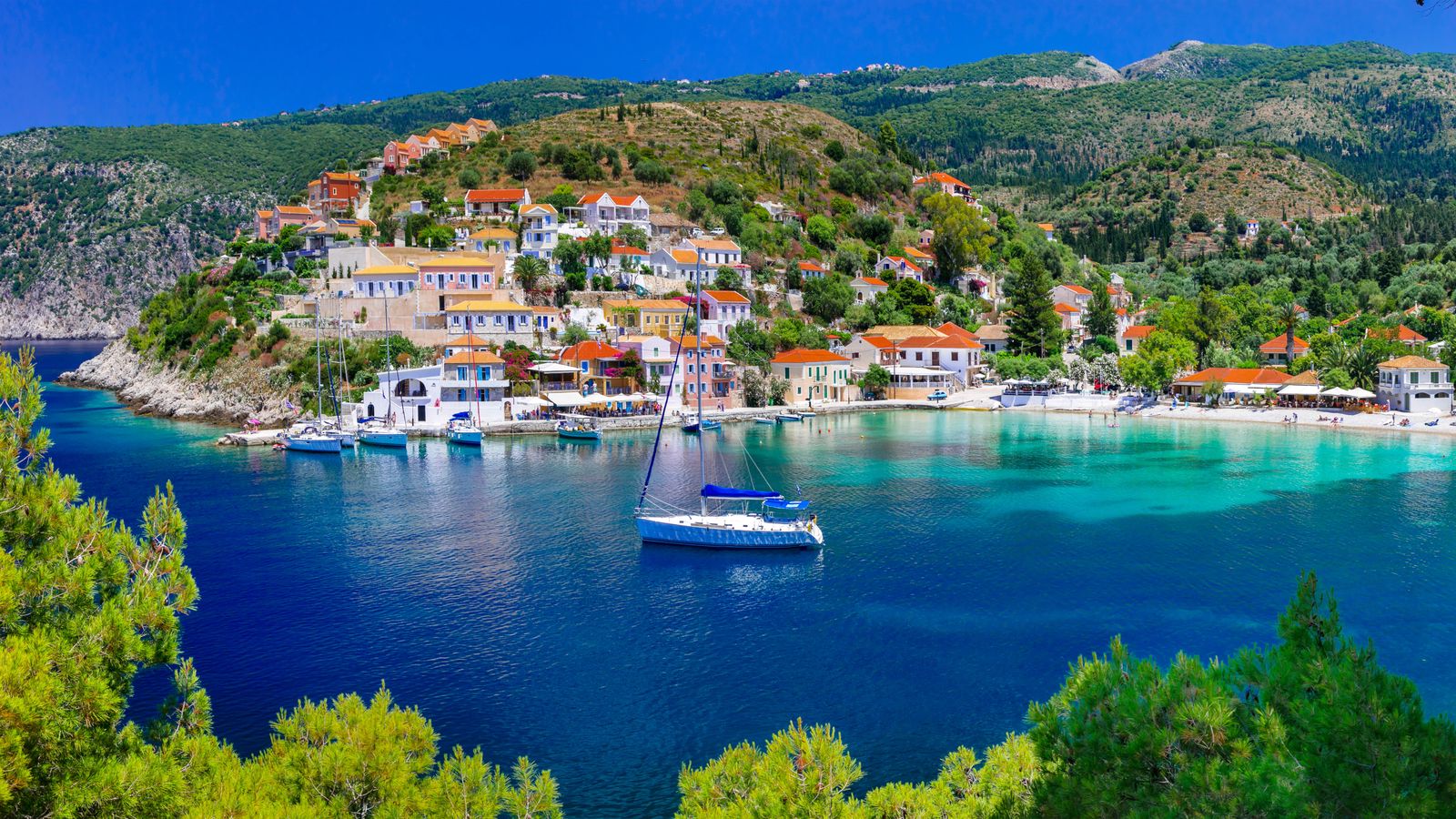
Stretching along the western coast of mainland Greece, the Ionian Islands — including Corfu, Lefkada, Kefalonia, Ithaca, Zakynthos, and Paxos — are widely considered the best region for beginners and families. The winds here are moderate and predictable (the Maistro blows gently from the northwest each afternoon), the seas are calmer, and the anchorages are sheltered. The scenery is strikingly green and lush compared to the drier Aegean islands.
The Cyclades
The iconic whitewashed villages and blue-domed churches of the Cyclades — including Mykonos, Santorini, Naxos, Paros, Milos, and Syros — make this the most photographed sailing region in Greece. The summer Meltemi winds blow strongly from the north, creating fast and exciting sailing conditions that are better suited for experienced sailors. The combination of dramatic landscapes, vibrant nightlife, and archaeological sites makes this region endlessly compelling.
The Dodecanese
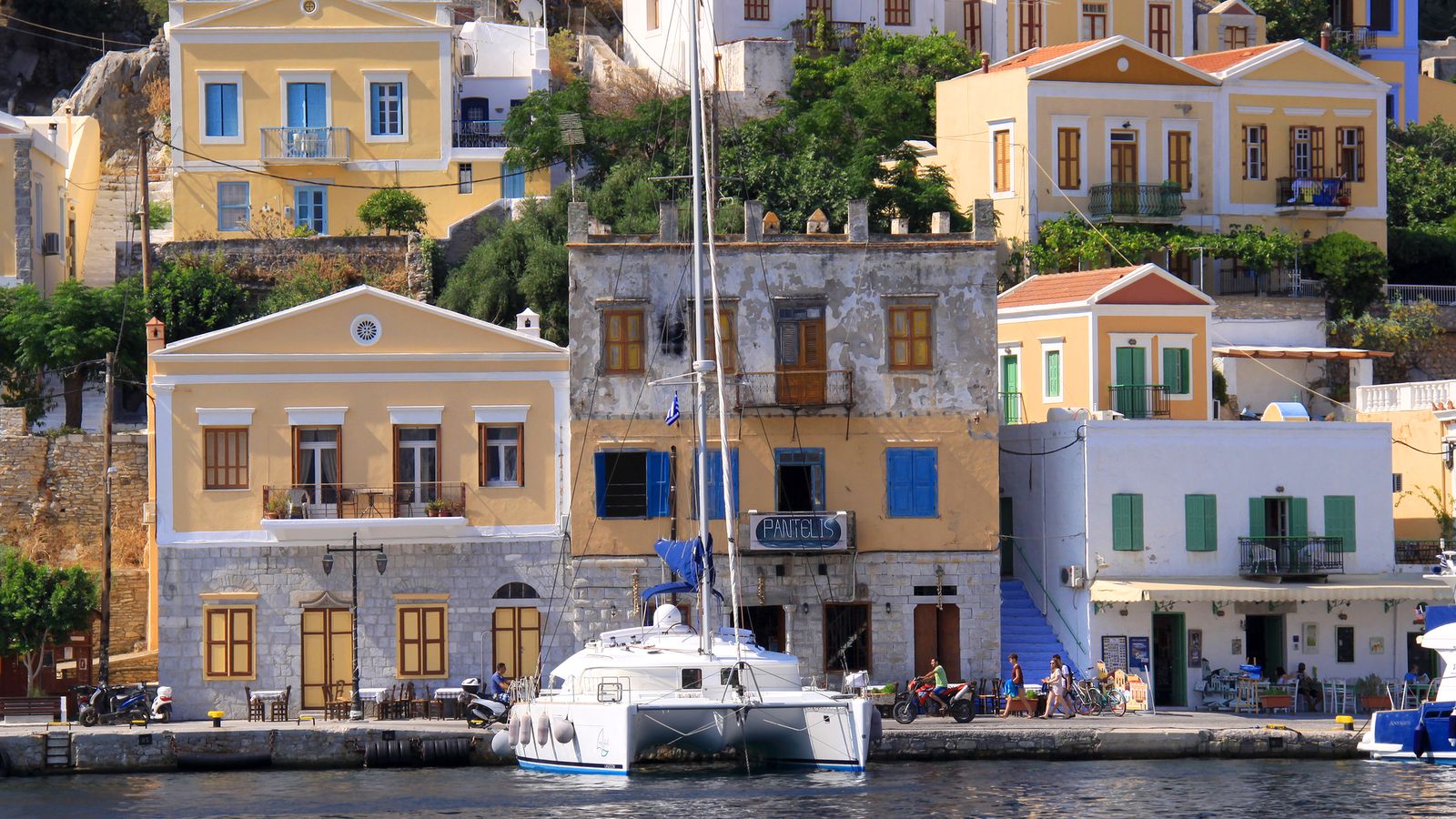
Located in the southeastern Aegean near the Turkish coast, the Dodecanese chain includes Rhodes, Kos, Patmos, Symi, and Leros, among others. This region blends Greek culture with strong Ottoman and Italian architectural influences. The sailing here is excellent, with warm, calm waters in summer and easy hopping between Greek islands and Turkey if your itinerary allows.
The Saronic Gulf
Just a short sail from Athens, the Saronic Gulf — encompassing Aegina, Hydra, Poros, and Spetses — is perfect for shorter charters or those flying into Athens. It's one of the most accessible sailing areas in the country and a favorite for weekend escapes. Hydra, with its ban on motor vehicles, is a particular highlight.
The Sporades & Northern Aegean
The Sporades (Skiathos, Skopelos, Alonnisos) offer pine forests, sandy beaches, and calm sailing conditions. Further north, the Halkidiki peninsula and the islands of Thassos and Samothraki offer a more off-the-beaten-track experience for adventurous sailors.
Weather and Best Time to Visit
Greece enjoys a classic Mediterranean climate with hot, dry summers and mild, wetter winters. Here's a seasonal breakdown for sailing:
May – June (Shoulder Season — Highly Recommended)
Spring sailing in Greece is arguably the best kept secret. Temperatures are warm (22–28°C / 72–82°F), the seas are calm, the anchorages are uncrowded, and the landscape is fresh and green. Winds are moderate, and prices are lower than peak summer. This is an excellent time for first-time charterers.
July – August (Peak Season)
The height of summer brings guaranteed sunshine, warm sea temperatures (around 25–27°C / 77–81°F), and the full energy of Greek island life. However, the Meltemi winds in the Aegean can blow Force 5–7 (and occasionally stronger), making conditions challenging. This is the most expensive period, and popular anchorages and marinas fill up quickly. Book well in advance.
September – October (Shoulder Season — Highly Recommended)
September and early October are often considered the ideal sailing months. The Meltemi calms down, sea temperatures remain warm, the crowds thin out, and the golden light is spectacular. Prices begin to drop from their August peaks. Many experienced sailors consider this the sweet spot of the Greek sailing season.
November – April (Off Season)
Most charter companies reduce their fleets significantly over winter. While some operators do offer winter charters, conditions can be unpredictable, with rain and strong gales. This period is generally not recommended for leisure sailing.
Overall best months to sail in Greece: May, June, September, and October.
Types of Boats Available for Rental in Greece
The Greek charter market offers one of the widest selections of boats in the Mediterranean:
Bareboat Sailing Yachts
The most popular choice. Monohull sailing yachts ranging from 32 to 55 feet are available throughout Greece. You skipper the boat yourself (subject to license requirements), giving you total freedom. Sizes most commonly chartered range from 38–45 feet, which comfortably sleep 6–8 people.
Catamarans
Sailing catamarans have surged in popularity for family and group charters. They offer more living space, stability, and shallow draft (allowing access to more anchorages), though they are typically 30–50% more expensive than comparable monohulls. Popular models include the Lagoon 380, 42, and 450, and the Fountaine Pajot Lucia 40.
Skippered Charters
If you don't hold a sailing license or simply prefer to relax, you can hire a professional skipper for an additional cost (typically €100–€200 per day). The skipper handles navigation and boat management while you enjoy the journey.
Motor Yachts
For those who prefer speed and luxury over sailing, motor yachts are widely available in Greece, ranging from sporty day-cruisers to full-luxury superyachts. These are particularly popular in the Saronic Gulf and Cyclades.
Gulet Charters
Traditional wooden Turkish-style gulets, with their wide beams and spacious decks, are popular for group charters in the Dodecanese and eastern Aegean. They typically come fully crewed.
Flotilla Holidays
For less experienced sailors, flotilla sailing — where a group of yachts sails together under the guidance of a lead boat and experienced crew — is an excellent, sociable, and supported way to explore Greek waters.
Costs Overview
Boat rental prices in Greece vary widely depending on boat type, size, season, and departure port. Here is a general guide:
Boat Type Low Season (May, Oct) High Season (Jul–Aug) Bareboat Monohull 38–40ft €900 – €1,400/week €1,500 – €2,500/week Bareboat Monohull 44–48ft €1,400 – €2,200/week €2,500 – €4,000/week Catamaran 40–45ft €2,000 – €3,500/week €4,000 – €7,000/week Skipper (add-on) €100 – €180/day €150 – €200/day Motor Yacht 40–50ft €2,500 – €5,000/week €5,000 – €12,000/week
Additional costs to budget for:
Security deposit: Typically €1,000–€3,000, held on your credit card and returned on check-out.
Provisioning: Supermarkets are available in most major ports. Budget around €30–€50 per person per day for food and drinks if shopping locally.
Marina fees: €20–€80 per night depending on the marina. Many anchorages are free.
Fuel: Diesel costs around €1.70–€2.00/liter. Motoring-heavy routes can add €100–€300 to your fuel bill for the week.
End cleaning fee: Usually €100–€200 if not returning the boat cleaned.
Outboard fuel for dinghy: Small additional cost.
Sample 7-Day Sailing Itinerary: The Ionian Islands
This itinerary departs from Lefkada (Nidri or Lefkada Town), the most popular charter base in the Ionian Sea, and loops through the southern Ionian islands. It's ideal for families or first-time charterers.
Day 1 — Lefkada to Meganisi (15 nm)
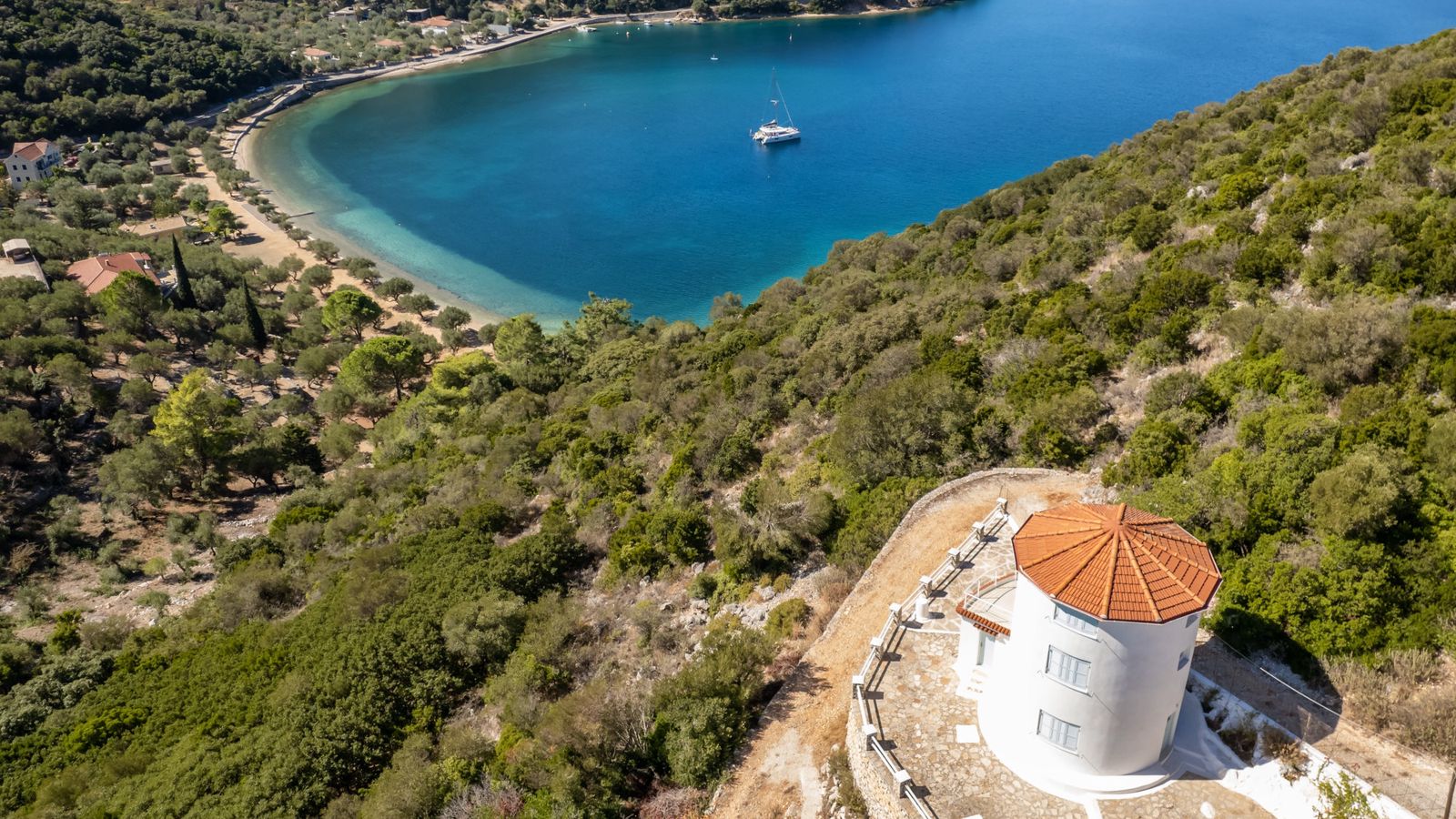
Depart from Nidri and make the short sail across to the beautiful island of Meganisi. Anchor in the stunning Abelike Bay or take a berth in Spartochori or Vathy harbor. Enjoy dinner ashore at a traditional taverna.
Day 2 — Meganisi to Ithaca (20 nm)
Head south to Ithaca, legendary home of Odysseus. Anchor in the beautiful Frikes bay in the north or continue to the charming capital, Vathy, a classic horseshoe-shaped harbor. Explore the island's Homeric mythology.
Day 3 — Ithaca to Kefalonia (Fiskardo) (15 nm)
Sail across to Fiskardo on the northern tip of Kefalonia — arguably the most beautiful village in the Ionian. The pastel-colored Venetian houses are perfectly preserved. Arrive early to secure a berth on the quay.
Day 4 — Kefalonia to Paxos (40 nm)
An early start for the longest leg of the itinerary. Sail north to the tiny island of Paxos, famous for its impossibly blue sea caves and the stunning Antipaxos beaches (among the finest in Greece). Anchor at Lakka or Loggos.
Day 5 — Paxos to Anti-Paxos & back to Lefkada (30 nm)
Spend the morning swimming at Voutoumi beach on Antipaxos — a beach that rivals the Caribbean. Then set sail back north toward Lefkada, stopping for a swim at the remote Mourtemeno beach on the Lefkada mainland coast.
Day 6 — Lefkada West Coast & Vassiliki (20 nm)
Round the spectacular southern cape of Lefkada and sail up the island's dramatic western coastline, with its towering white cliffs. Stop at Porto Katsiki beach (one of Greece's most photographed) before arriving at Vassiliki, the windsurfing capital of Greece.
Day 7 — Return to Lefkada / Nidri (15 nm)
A leisurely final morning sail back to Nidri or Lefkada Town. Check in by the agreed time (usually noon). Celebrate your week on the water with a final meal at one of the waterfront restaurants in Lefkada Town.
Total distance: approximately 155 nautical miles. Suitable for beginner to intermediate sailors.
Travel Requirements and Sailing Licenses
Who Needs a License?
To charter a bareboat yacht in Greece, at least one person on board must hold a recognized sailing qualification. Greece officially recognizes the following:
ICC (International Certificate of Competence) — Widely accepted for coastal sailing up to 12 nautical miles offshore.
RYA Coastal Skipper / Day Skipper — UK Royal Yachting Association certificates are well recognized.
ASA (American Sailing Association) certificates — Generally accepted by most Greek charter companies.
USCG (US Coast Guard) license — Accepted.
National licenses from EU member states — Generally accepted.
IYT (International Yacht Training) certificates — Widely recognized.
For larger or offshore passages, charter companies may require a Yachtmaster Offshore qualification or equivalent. Always check specific requirements with your charter company when booking.
Visa Requirements for Greece
EU/EEA citizens: No visa required. Valid national ID or passport needed.
US, Canadian, Australian, UK citizens: No visa required for stays up to 90 days in the Schengen Area.
Other nationalities: Check with the Greek embassy or consulate in your home country.
Entry into Greek Ports
All boats entering Greek waters must complete a Transit Log (DEKPA) — a document issued by Greek port authorities that allows you to sail freely between Greek ports for the duration of your charter. Your charter company will typically arrange this for you or guide you through the process. Non-EU flagged vessels may also need to complete customs formalities upon first entry.
Required Safety Equipment
Greek regulations require all charter boats to carry:
Life jackets for all crew
Flares and emergency signaling equipment
Life raft
Fire extinguishers
First aid kit
EPIRB or PLB
Reputable charter companies will ensure all boats are fully equipped to legal standards. Always check equipment during the handover briefing.
5 Practical Tips for Boat Rental in Greece
1. Book Early, Especially for Peak Season
The most desirable boats for July and August are often booked 6–12 months in advance. If you have a specific boat type, size, or departure base in mind, don't delay. Shoulder-season charterers have more flexibility, but even May and September departure slots fill up quickly for popular routes like the Cyclades.
2. Get the Right Insurance Coverage
All charter boats come with third-party liability insurance, but the security deposit leaves you exposed to damage costs. Consider purchasing Damage Waiver Insurance (also called CDW — Collision Damage Waiver), which covers or significantly reduces the security deposit in the event of an accident. It typically costs €100–€250 for the week and is well worth it for peace of mind.
3. Download the Right Apps Before You Leave
Several apps are invaluable for sailing in Greece:
Navionics or iSailor — Digital charts for Greek waters.
Windfinder or PredictWind — Detailed wind and weather forecasts.
Noforeignland or Anchor — Anchorage guides and reviews from other sailors.
Google Translate (Greek keyboard) — Useful for menus and signs in smaller villages.
4. Respect the Meltemi — Plan Passages Wisely
If sailing in the Aegean during July or August, the Meltemi wind deserves respect. It typically picks up mid-morning and dies around sunset. Plan any longer passages for early morning departures before the wind builds. Always check the forecast the evening before a planned passage, and never be too proud to stay in port for a day if conditions are deteriorating.
5. Arrive at Anchorages Early
The best anchorages in Greece — particularly in the Cyclades during peak season — fill up fast. Aim to arrive at your chosen stop by early-to-mid afternoon (2:00–3:00 PM) to secure a good spot. Have a backup anchorage in mind in case your first choice is full. In busy marinas like Fiskardo or Hydra, calling ahead on VHF Channel 12 or via phone is highly recommended.
Final Thoughts: Is Greece the Right Sailing Destination for You?
The answer is almost certainly yes. Whether you're dreaming of lazy afternoons anchored in a hidden cove, exhilarating downwind reaches through the Cyclades, or dining on freshly caught fish in a candlelit harborside taverna, a Greece yacht charter delivers all of this and more. The combination of extraordinary natural beauty, a rich and ancient culture, excellent sailing conditions, and a world-class charter industry makes Greece a destination that sailors return to year after year — and one that tends to ruin you for anywhere else.
From the beginner-friendly waters of the Ionian to the challenging and dramatic passages of the Cyclades, there is a Greek sailing adventure perfectly suited to your experience level, budget, and sense of adventure. All you need to do is pick your region, choose your boat, and point the bow toward the horizon.
Fair winds and following seas.


