Your First Charter Handover: What to Check Before You Leave the Marina
Updated
A complete first-timer's guide to the charter handover: paperwork, boat inspection, safety briefing, and the common day-one mistakes to avoid before leaving the marina.
On this page

The handover is the most important hours of your charter week. Done well, it sets you up for seven days of confident sailing. Done poorly, it leaves you discovering problems at sea, far from anyone who can help. If this is your first time chartering, the sheer amount of information thrown at you can feel overwhelming, but with a clear checklist and the right mindset, you'll leave the marina ready for anything.
This guide walks you through the full timeline of a charter day one, from the moment you arrive at the office to the moment you cast off the lines. It covers what to inspect, what to ask, and the common mistakes that catch first-timers off guard.
Step One: The Office Check-In
Your first stop is always the charter company's office. This is where the paperwork happens, and it's worth arriving prepared so you're not scrambling.
You'll need to bring:
Your sailing license (and any required radio license, depending on the country)
A logbook, if the charter requires one to verify experience
The security deposit, either as cash or blocked on a credit card
Your booking confirmation and ID
The deposit is often the part that surprises first-timers. Depending on the boat, it can be several thousand euros. If you've booked deposit insurance or a damage waiver through the charter company, the amount may be reduced or waived entirely. Double-check this before you arrive so there are no awkward surprises at the desk.

Step Two: Boarding and Stowing
Once the paperwork is done, you usually don't have to wait for the handover to begin before getting on board. Most charter companies will let you board, stow your bags, and even start on provisioning while you wait for a representative to come and walk you through the boat.
This is a good time to:
Claim cabins and unpack soft bags (hard suitcases rarely fit in lockers)
Stow provisions in the fridge and lockers
Get a feel for the layout of the boat
Use this window wisely. Once the handover starts, you'll want your full attention on the representative.
Step Three: The Handover Walkthrough
This is the heart of day one. A representative from the charter company will take you through the boat system by system. Their job is to show you where everything is and how it works. Your job is to pay attention and ask questions.
What They Should Show You
Safety equipment: life jackets, life raft, flares, fire extinguishers, first aid kit, EPIRB, jacklines, and harnesses
Through-hulls and seacocks: where they are and how to close them in an emergency
Fuse panel and electrical system: battery switches, shore power, inverter, and how to reset breakers
Engine access: how to check oil, coolant and belts
Fuel and water tanks: capacity, gauges, and fill points
Heads and holding tanks: proper use and pump-out procedures
Gas system: how to turn the propane on and off safely
Bilge pumps: manual and electric, and where the bilges are
If something isn't clear, stop and ask. There are no stupid questions during a handover. The representative would much rather explain something twice now than get a panicked phone call from you at anchor three days later.
Sail Inspection
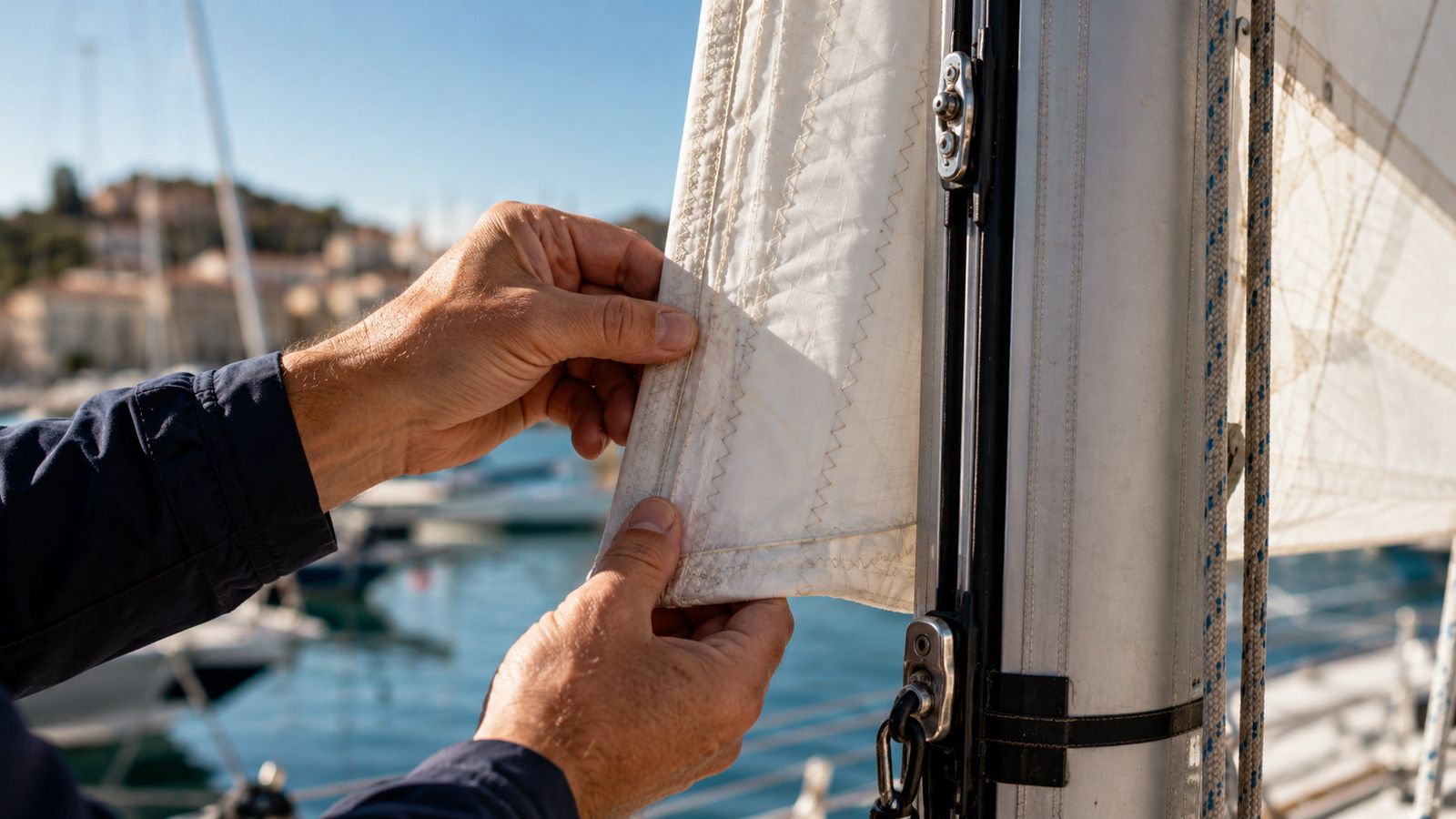
The representative should pull out both sails for you to inspect. Look carefully for:
Tears, frayed stitching, or worn patches
Damage near the head, tack, and clew
Weak points on the main sail near the mast track and battens
UV strip condition on the genoa
If you spot anything questionable, point it out and have it noted on the inventory list. This protects you from being charged for damage you didn't cause.
Engines and Electronics
Start the main engine and let it run. Check that cooling water is coming out of the exhaust. Then start the dinghy outboard, ideally in a bucket of water or once it's in the water. A dinghy engine that won't start on day seven is a small disaster you can prevent on day one.
Run through the electronics:
Chartplotter and GPS
VHF radio (do a radio check)
Wind instruments
Depth sounder
Autopilot
Navigation lights and anchor light
The one thing you typically can't verify at the dock is the log (the speedometer through the water), since the paddle wheel only spins when you're moving. Make a mental note to check it once you're underway.
Docking and Communication Procedures
Before the representative leaves, ask two practical questions that often get forgotten:
What is the procedure for returning to the marina? Which side do you dock on, are there lazy lines or anchor-out mooring, and is there a specific berth assigned?
Which VHF channel does the marina monitor? Who to call to request docking or undocking at the marina?
Common Mistakes First-Timers Make on Day One
Even with a thorough handover, there are predictable traps that catch new charterers. Watch for these:
Rushing the handover. If you're eager to leave the dock, you'll nod along to things you don't actually understand. Slow down.
Not noting existing damage. Every scratch, scuff, and stain should be on the inventory before you sign. Take photos with timestamps.
Skipping the dinghy test. Outboards are notoriously moody. Test it now.
Forgetting to check the bilge. A wet bilge on handover can mean a leak you'll inherit.
Leaving too late in the day. First-day departures often slip into late afternoon. Plan a short, easy first leg so you arrive before dark.
Pros and Cons of a Long Handover
Pros: You catch problems before leaving, you understand the boat's quirks, and you build a relationship with the base in case something goes wrong later.
Cons: It can eat two or three hours of your first day, and information overload is real. Take notes or photos of anything technical so you can review it later.
Planning Your First Day
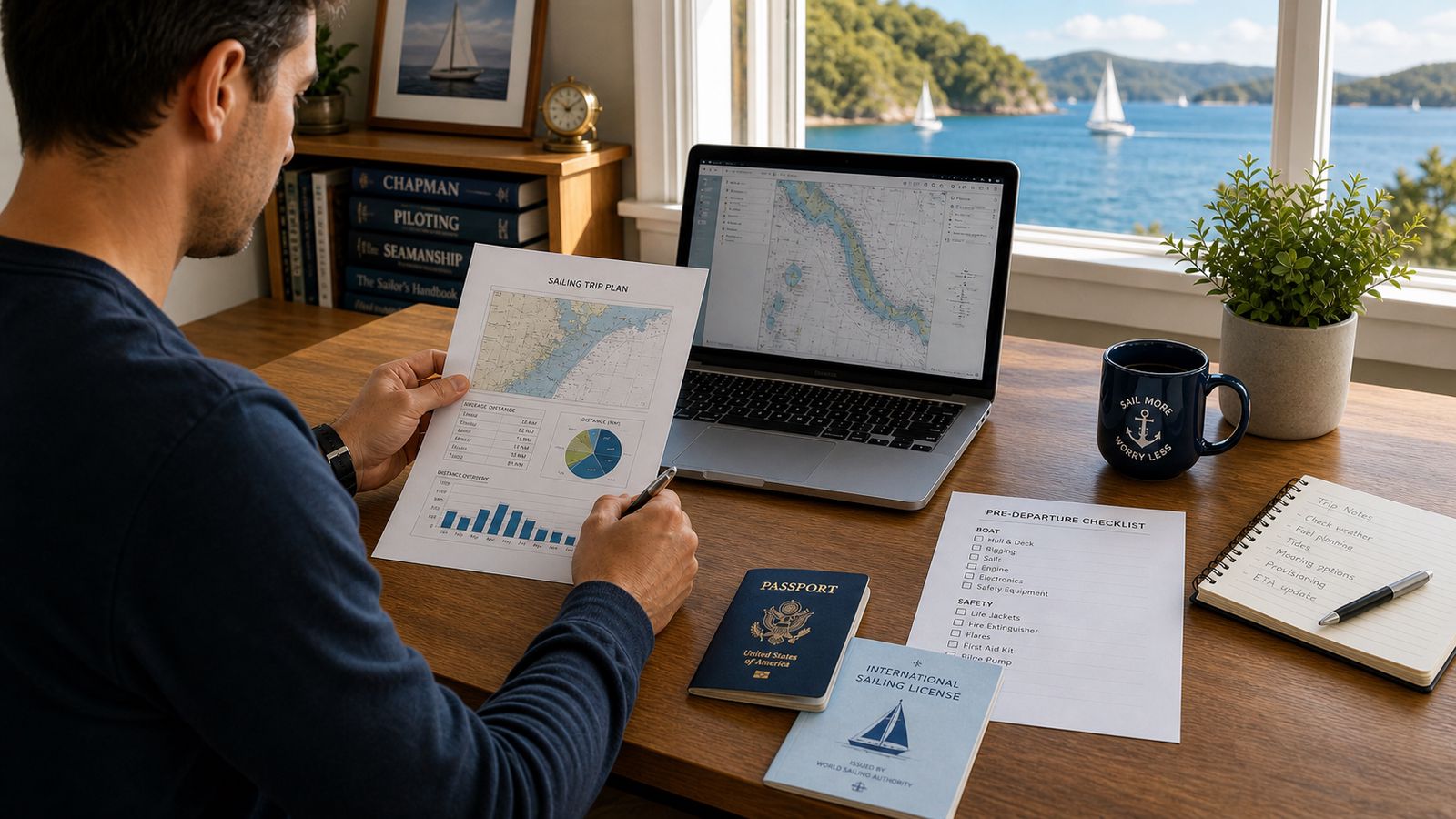
Once the handover is complete and the representative has signed off, take fifteen minutes before you leave to plan properly. A good plan includes:
A primary destination within comfortable sailing distance (shorter is better on day one)
A backup anchorage or marina in case wind, weather, or crew fatigue changes the plan
An updated weather check, including wind direction, strength, and any forecast changes
A rough timing plan so you arrive with daylight to spare for anchoring or docking
First-day legs are not the time to be ambitious. A two to three hour sail to a calm anchorage will do more for crew morale than pushing for a distant harbor.
A Real Scenario
Imagine this: You arrive at the marina at 10am, hand over your paperwork, and board the boat by 11. The handover starts at noon and runs until 2pm. By the time you've stowed provisions, briefed the crew on safety, and finalized the route, it's 3:30pm. You cast off at 4, and your planned anchorage is four hours away.
That's a recipe for arriving in the dark, anchoring among unfamiliar boats, and a stressed-out crew. The fix is simple: pick a closer anchorage for night one, or accept that you'll spend the first night in the marina and start fresh in the morning. There's no shame in either choice.
The Crew Safety Briefing
Before you leave the dock, gather your crew for a short safety briefing of your own. This is separate from the handover and is your responsibility as skipper. Cover:
Where life jackets are and when to wear them
How to use the VHF and the location of the MOB button
Man overboard procedures and who does what
The location of the life raft, flares, and first aid kit
Basic rules: one hand for you, one for the boat; tell someone before going forward; no stepping on the gunwale
Even if your crew has sailed before, every boat is different. Five minutes of briefing now prevents a bad moment later.
Summary
Your first charter handover sets the tone for the entire week. The formula is straightforward: handle the paperwork at the office, board early to stow your gear, give the handover your full attention, inspect everything carefully, and ask every question that comes to mind. Then plan a modest first day, brief your crew, and check the weather one last time before casting off.
The skippers who come back from charter relaxed and happy are almost always the ones who took the handover seriously. The ones with stress stories usually skipped a step. Take the extra hour now, and your future self at anchor with a cold drink in hand will thank you.


