Boat Charter in Spain: The Complete Guide
Updated
Spain offers sailors an almost unfair choice: sun-drenched Balearic calas in summer, volcanic Canary Island trade winds in winter, and rugged Catalan coastline in between. Here is everything you need to plan a charter, wherever in Spain the wind takes you.
On this page

Spain is one of the most diverse sailing destinations on the planet. From the glittering Balearic Islands in the western Mediterranean to the volcanic anchorages of the Canary Islands floating off the African coast, the country offers sailors an almost embarrassing variety of cruising grounds — all backed by reliable infrastructure, excellent marina networks, and some of the best food and wine in the world.
Whether you want to drift between whitewashed villages on a bareboat catamaran, hop clubs in Ibiza on a skippered motor yacht, or chase the trade winds from Lanzarote, Spain has a charter product for every sailor and every budget. This guide covers the entire country — the regions, the seasons, the costs, and everything you need to plan your trip.
Why Spain Is One of Europe's Top Charter Destinations
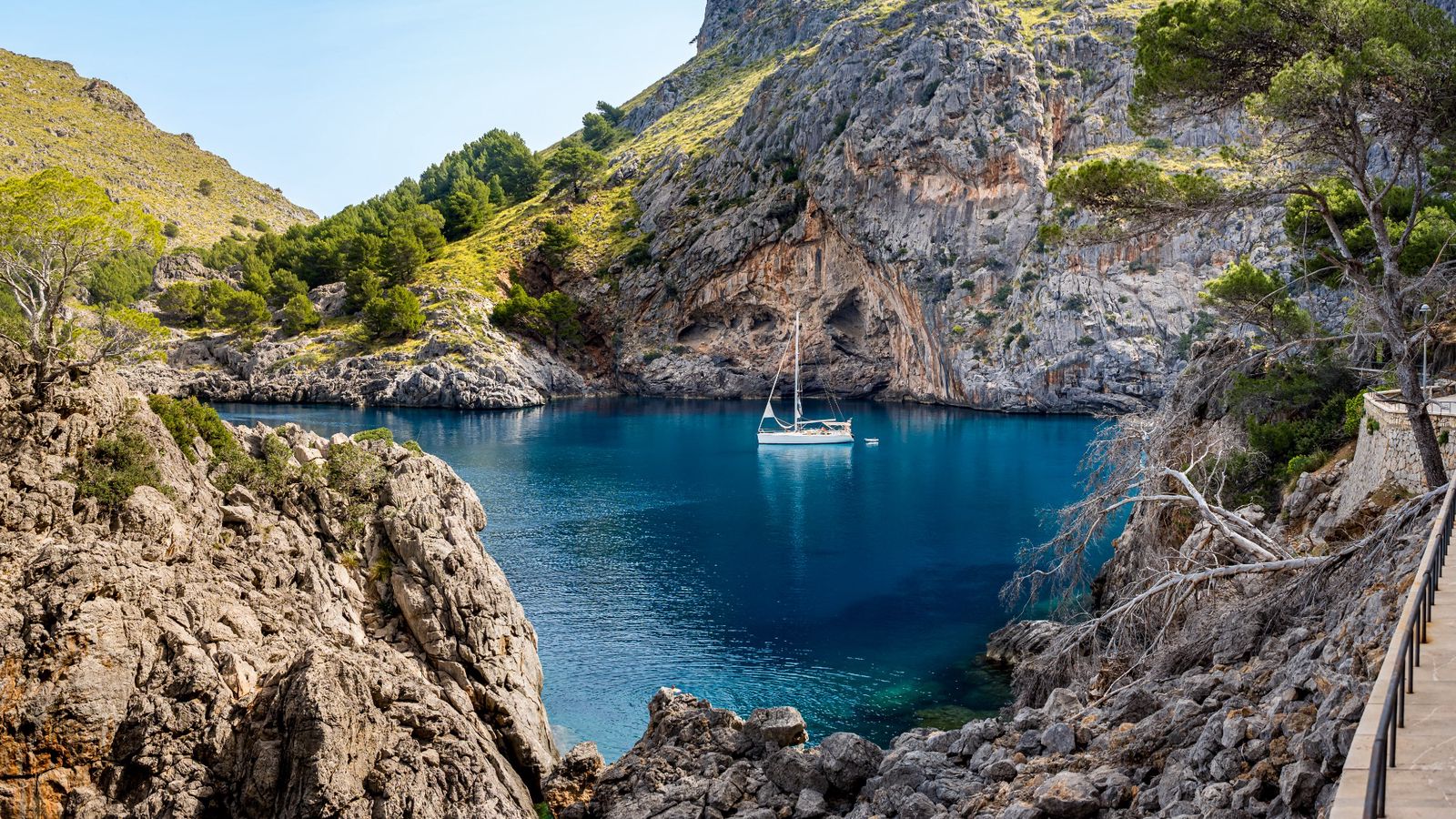
Spain offers something that most Med destinations can't: year-round sailing. The Canary Islands deliver reliable trade-wind conditions through winter, while the Balearics and Costa Brava peak in summer. That seasonal spread, combined with the sheer geographic variety, makes Spain a charter market with few equals in Europe.
Practically speaking, Spain is an easy country to sail. Marinas are well-maintained and plentiful — particularly in the Balearics, which functions as one of the largest charter bases in the Mediterranean. English is widely spoken in all major ports and charter bases. Provisions are excellent and affordable. And unlike some busier parts of the Med, you can still find genuinely quiet anchorages if you're willing to move early and go off the main circuit.
Spain also benefits from strong charter industry infrastructure. Major international operators maintain large fleets here, which drives competitive pricing and keeps vessel quality high. Whether you're booking a 38-foot bareboat or a luxury gulet with crew, the breadth of available product is exceptional.
Best Sailing Regions in Spain
Mallorca and Menorca — The Heart of the Med Charter Market
The Balearic Islands are the single biggest reason Spain sits at the top of most sailors' bucket lists, and Mallorca is the undisputed hub of the whole operation. Palma de Mallorca hosts one of the Med's most active charter fleets, with hundreds of vessels ranging from bareboat monohulls to crewed superyachts. The island itself is remarkable — the dramatic Serra de Tramuntana mountains drop to the sea on the northwest coast, creating a series of deep coves (calas) that rank among the most beautiful anchorages in the Mediterranean.
Menorca, 45 nautical miles to the northeast, is the quieter, more unspoiled sister island. Its southern coast is riddled with sandy-floored calas that cut far inland between limestone cliffs. The north coast, exposed to the Tramuntana wind, is wilder and less visited. Menorca is a UNESCO Biosphere Reserve, and the island's relative lack of commercial development is its greatest asset. A circuit combining both islands — Mallorca's marinas and beaches, then Menorca's empty anchorages — is one of the classic Mediterranean itineraries.
Ibiza and Formentera — Energy and Escape in Equal Measure
Ibiza has a reputation that precedes it, and for charter sailors, that reputation is mostly well-earned. The marinas — particularly Marina Botafoch and Santa Eulalia — pulse with activity in July and August. The island's northwest coast is dramatically beautiful, with red cliffs dropping to clear water and a series of excellent anchorages that feel a long way from the clubs. The old town, Dalt Vila, is a UNESCO World Heritage Site and worth a full evening ashore.
Formentera lies just 3 nautical miles south of Ibiza — a short sail that crosses the Freus channel — and the contrast is striking. The island is flat, rural, and almost entirely undeveloped. Ses Illetes, on the northern tip, consistently ranks among the best beaches in Europe, and the water over the Posidonia seagrass meadows is an extraordinary shade of transparent green. Many sailors split their Balearics charter between Ibiza's energy and Formentera's escape, and it's a pairing that works beautifully.
The Canary Islands — Year-Round Sailing on the Trade Winds
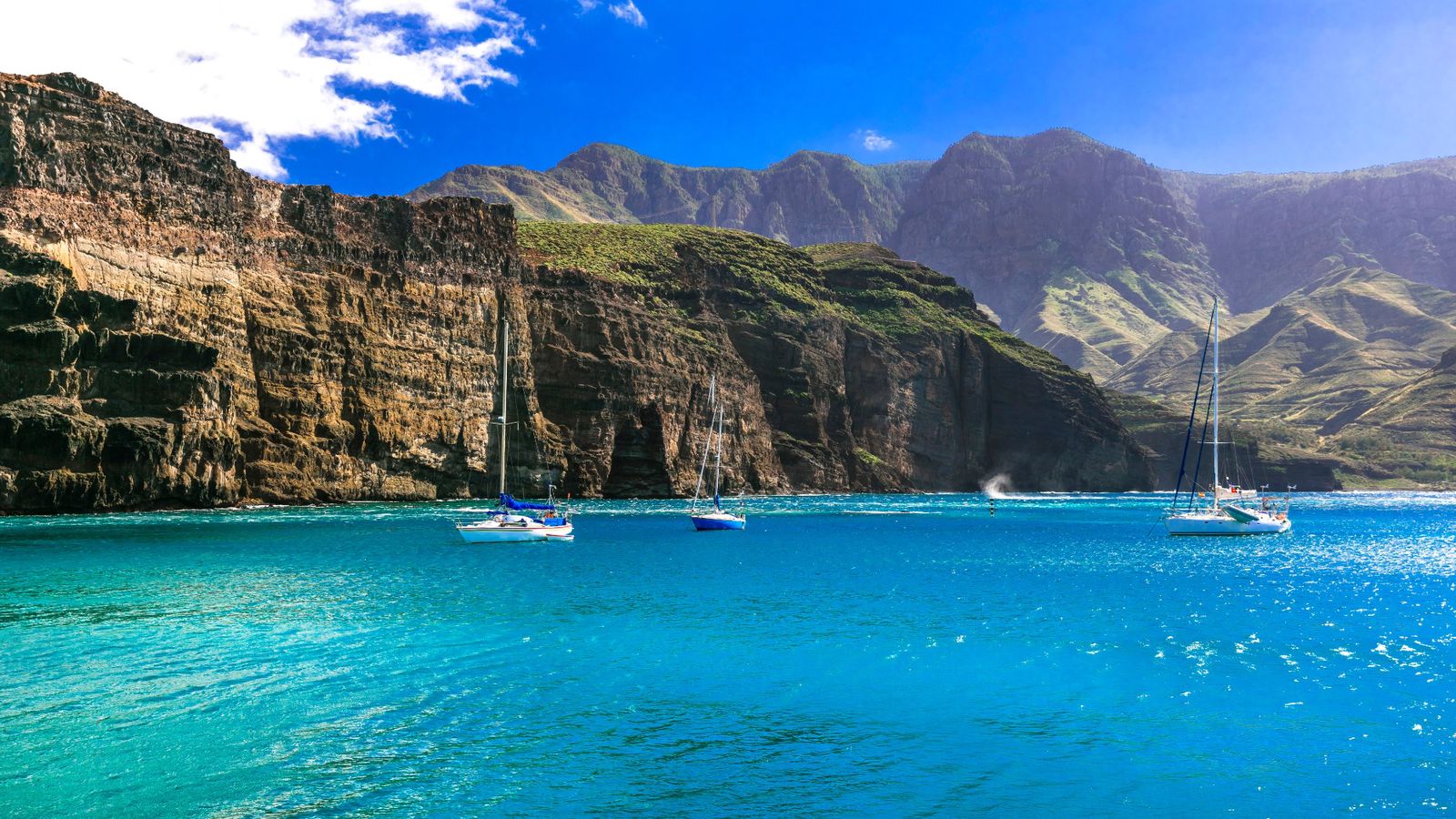
The Canaries sit in the Atlantic, roughly 100 km off the southern Moroccan coast and at the same latitude as the Western Sahara. That position puts them squarely in the path of the northeast trade winds, and it gives them a climate that is genuinely year-round — mild summers, warm winters, and reliable breeze for most of the season. This is what differentiates the Canaries from every other Spanish sailing destination: when the Mediterranean goes quiet and cold in November, the Canaries are just warming up.
The main charter bases are Las Palmas de Gran Canaria and Arrecife on Lanzarote. Each island has a distinct personality — Gran Canaria has beaches and dunes; Lanzarote is volcanic, almost lunar, and extraordinarily beautiful; Tenerife has El Teide, a volcanic peak that you can see from 50 miles at sea; Fuerteventura has the longest sandy beaches in Spain. The inter-island passages are proper offshore sailing, ranging from 25 to 60 nautical miles, with wind and swell to manage. This is not protected-water sailing — it rewards competence and rewards it generously.
Costa Brava — Mainland Catalonia's Rugged Coast
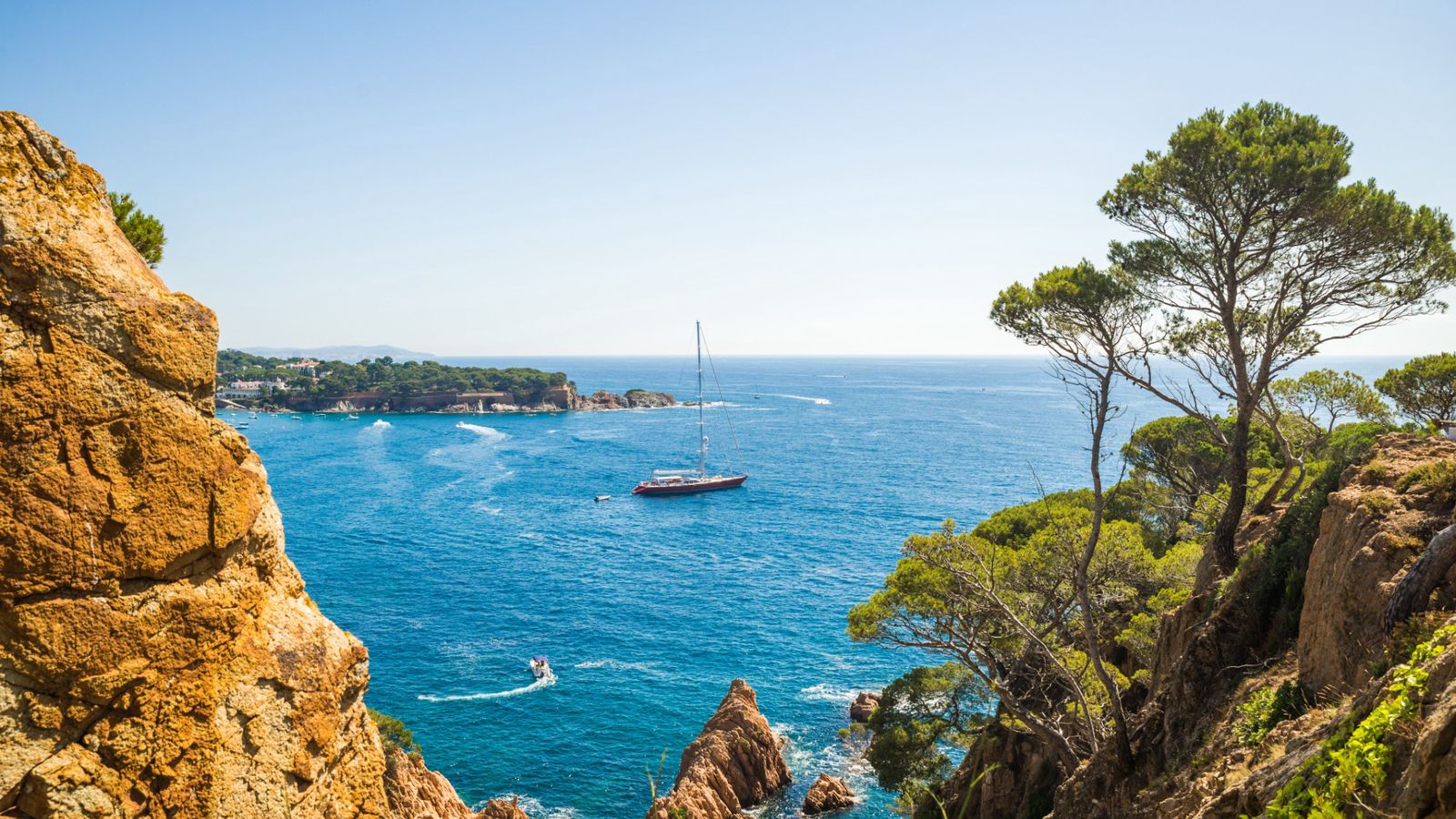
The Costa Brava stretches from the French border south to Blanes, north of Barcelona. The name translates as "wild coast," and the northern section — particularly around Cap de Creus and the Natural Park of the same name — earns that description. The coastline here is rocky and deeply indented, with clean clear water and a series of small anchorages backed by cork oak forests. The historic villages of Cadaqués and L'Escala are outstanding lunch stops.
The Costa Brava is a natural secondary destination for sailors flying into Barcelona, and many charters combine the Costa Brava with a crossing to the Balearics. The main charter bases are Barcelona, Empuriabrava (which has an extraordinary network of inland waterways), and Port de la Selva. The Tramontane, the strong north wind that funnels down from the Pyrenees, is the regional weather hazard — respect the forecast and you'll have excellent sailing.
Weather and the Best Time to Sail in Spain
Spain's size and geographic spread mean there is no single "best time" that covers the entire country. The right answer depends entirely on where you're sailing.
In the Balearic Islands, the prime charter season runs from late May through early October. July and August are the busiest months — warm, reliably sunny, and with enough afternoon sea breeze to make sailing genuinely pleasurable. The downside is price and crowds. June and September are widely regarded as the sweet spot: the summer heat without the peak-season premium, and marinas that are busy but not overwhelmed. Spring sailing in April and May is possible but variable — the sea is cool and the weather less predictable.
The dominant summer wind in the Balearics is the Mistral (when it funnels down from the Gulf of Lion and sweeps the northwest) and the local afternoon Embat sea breeze, which typically builds to 12–18 knots by early afternoon — perfect sailing conditions. The Tramontane affects the northern areas near the Costa Brava more than the Balearics, but both winds can escalate rapidly. Always check forecasts for the Tramontane and Mistral before committing to a passage toward exposed coastline.
The Canary Islands invert the normal Med logic. The peak charter season here runs from November through April — the Mediterranean's off-season. The northeast trade winds blow consistently throughout this period, typically at 15–25 knots, and temperatures sit comfortably in the low-to-mid 20s Celsius. Summer in the Canaries is actually the calmer, hotter period, with lighter winds and more haze. The islands are the traditional embarkation point for the ARC (Atlantic Rally for Cruisers) in late November, which gives Las Palmas a particularly lively atmosphere at that time of year.
The Costa Brava follows the same broad seasonal pattern as the Balearics, with May through September being the comfortable sailing window. However, the Tramontane can blow hard here even in summer, and spring is notoriously variable. Sailors who know the coast well often rank September as the finest month — settled weather, warm sea, and a coastline that has calmed down after the July–August rush.
How Much Does a Boat Charter in Spain Cost?
Charter costs in Spain span an enormous range depending on the vessel type, size, season, and region. The figures below are broad weekly benchmarks to orient your planning — always request current quotes from operators, as pricing fluctuates with fleet availability and demand.
Bareboat monohull (38–45 ft): Expect to pay in the range of €1,500–€3,500 per week in shoulder season (May–June, September–October) for a Balearics or Costa Brava charter. Peak season (July–August) pushes that to €2,500–€5,000+. The Canaries in high season (January–March) typically sit in the €1,800–€3,800 range.
Bareboat catamaran (40–45 ft): Catamarans attract a significant premium over comparable monohulls. Shoulder season Balearics: €3,000–€5,500. Peak: €5,000–€9,000. Demand for cats in the Balearics is extremely high, and popular models book out months in advance.
Skippered/crewed charters: A skipper adds roughly €150–€250 per day to your bareboat cost. Full-service crewed yachts (skipper plus hostess/cook) are a different product category and typically start at €5,000–€8,000 per week for a well-found 45-foot yacht with crew in peak season. Luxury crewed yachts in Ibiza can run multiples of this.
Flotilla sailing: A cost-effective entry point, particularly for less experienced sailors. Spain has several well-run flotilla operators in the Balearics and Costa Brava. Prices per couple for a flotilla berth typically run €1,200–€2,200 per week including the flotilla lead boat, briefings, and basic support.
Beyond the charter fee itself, budget for: fuel (significant in the Balearics if motoring between islands), marina fees (€30–€120 per night depending on port and vessel size), provisioning (Spain is excellent value for food and wine), and a security deposit (typically €1,500–€3,000, held on a credit card and returned after the vessel inspection).
Sample 7-Day Itinerary: Mallorca and Menorca Circuit
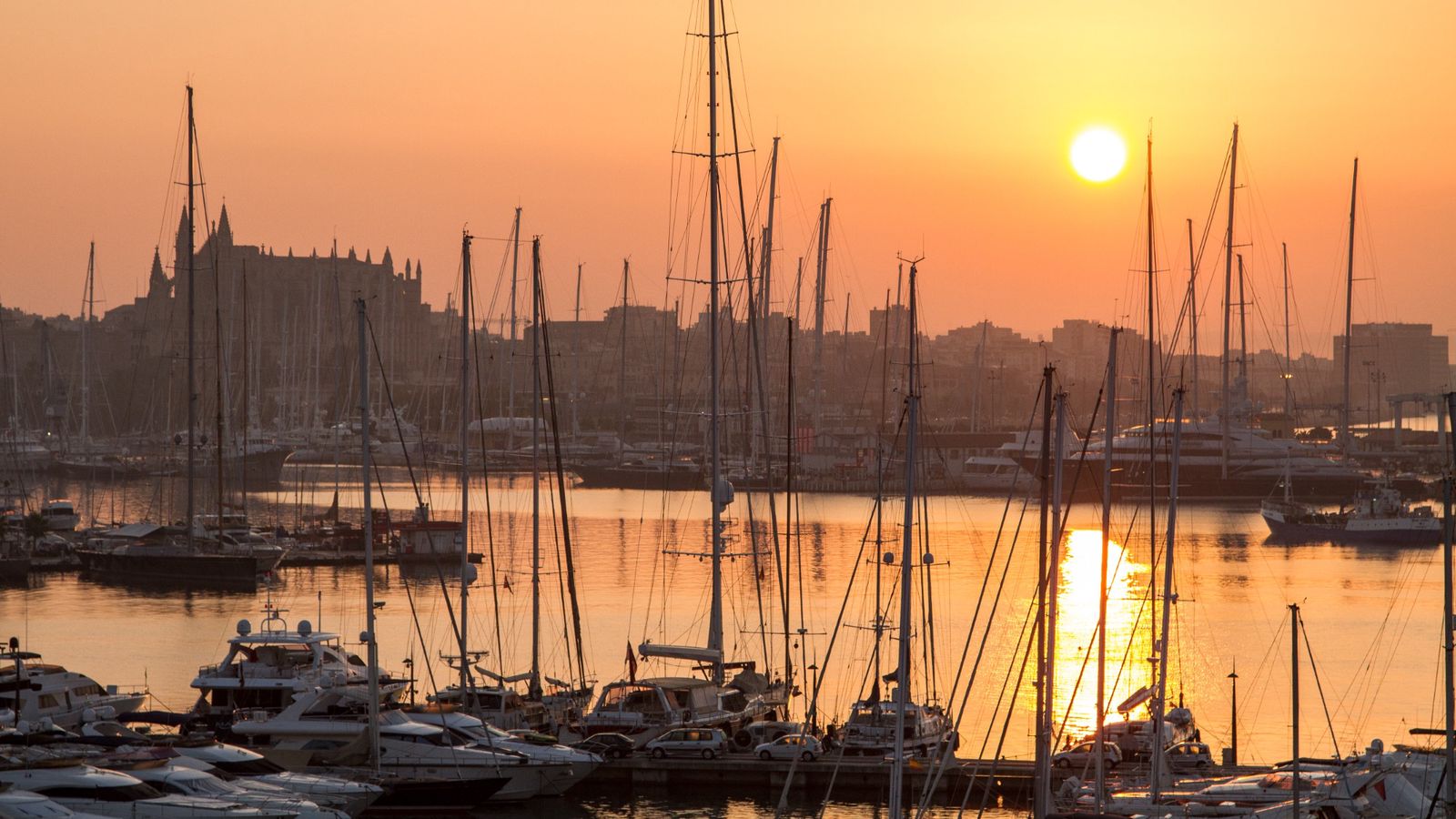
This itinerary starts and ends in Palma de Mallorca, covers the best of both islands, and is designed for a competent bareboat crew sailing a 40–46 ft monohull. Daily distances are modest, leaving plenty of time for swimming, exploring, and eating.
Day 1 — Palma de Mallorca to Port d'Andratx (18 NM)
Clear marina formalities in the morning and sail southwest along Mallorca's southern coast. Port d'Andratx is a beautiful natural harbor tucked behind rocky headlands — anchor in the outer bay or take a marina berth. Dinner ashore at one of the harbourfront restaurants.
Day 2 — Port d'Andratx to Puerto Soller (28 NM)
A spectacular coastal passage around the northwest tip of the island, beneath the Serra de Tramuntana mountains. Puerto Soller is one of Mallorca's most distinctive ports — a narrow inlet with a vintage tram running to the mountain village of Soller. Overnight on the town quay or anchor in the bay.
Day 3 — Puerto Soller to Cala Mezquida or Coves d'Artà, east Mallorca (50 NM)
A longer day to transit around the northeast corner of the island. If wind allows, carry sail past Cap Formentor and down the east coast to anchor in one of the limestone coves. Cala Agulla or the sheltered inlet near the Coves d'Artà offer beautiful overnight spots.
Day 4 — East Mallorca to Ciutadella, Menorca (40 NM)
Cross the Canal de Menorca — a passage that can be brisk in northerly conditions, so check the forecast. Ciutadella is Menorca's old capital and one of the most beautiful harbor towns in the Mediterranean. The narrow entrance opens into a cathedral-like natural harbor flanked by historic buildings. Spend the night and the evening ashore exploring the old town.
Day 5 — Ciutadella to Cala Turqueta and Cala Macarella (10 NM)
A short day exploring Menorca's spectacular south coast. Cala Turqueta and Cala Macarella are two of the finest calas in the Balearics — sandy-floored, pine-fringed, with water color that looks computer-generated. Anchor in Macarella for the night if the wind is from the north; it's well sheltered.
Day 6 — South Menorca to Mahon (20 NM)
Work along the south coast, stopping at Cala Trebalúger if it's a calm day, then sail around the east end of the island to Mahon. Mahon has one of the longest and deepest natural harbors in the Mediterranean — the approach alone is worth the trip. Pick up a mooring or take a berth in the town marina. The gin distillery visit is obligatory.
Day 7 — Mahon to Palma de Mallorca (100 NM)
A full offshore day passage or an early start with an overnight option. Most crews will motor-sail for part of this leg depending on wind angle. Arrive Palma for final night, boat return the following morning.
5 Practical Tips for Chartering in Spain
1. Book the Balearics early — very early. The Balearic charter market is one of the most competitive in the world. Popular vessel types (catamarans especially) in peak season (July–August) are routinely booked 6–12 months in advance. If you have fixed holiday dates, start talking to operators or a broker as soon as those dates are confirmed. Shoulder season is more forgiving, but the best boats still go quickly.
2. Get an International Certificate of Competence if you don't already have one. Spain requires qualified competency documentation for bareboating. The ICC (or an equivalent national license recognized by Spain) is the standard accepted qualification for EU and non-EU sailors. Check the specific requirements with your charter company before travel — some operators require a VHF radio operator's license as well.
3. Understand the anchoring rules in protected areas. The Balearics have extensive marine protected areas where anchoring is restricted or prohibited to protect Posidonia seagrass meadows. Buoyed mooring fields have been installed in many of the most popular calas, and these must be used when available. Fees apply (typically €15–€30 per night). Download the up-to-date regulations from the Balearic Islands Government marine environment portal before departure.
4. Plan for the afternoon sea breeze — and the afternoon crowds. In summer, popular anchorages in the Balearics fill rapidly between 11am and 2pm. Sailors who arrive before noon typically find space; those who arrive mid-afternoon do not. Move early, explore at leisure, and arrive at your intended overnight anchorage well before the afternoon peak. The same rule applies to popular marina berths in Menorca and Formentera.
5. Don't skip the Canaries in winter. The Canary Islands remain significantly underrated as a charter destination relative to the Balearics, partly because of the flying distance from Northern Europe. But the combination of year-round sun, reliable trade winds, dramatic volcanic scenery, and shoulder-season pricing makes them one of the best-value sailing destinations in the entire Atlantic region. If your schedule is flexible and you can travel between November and March, the Canaries deserve serious consideration over the closed-season Mediterranean.
Ready to Plan Your Spain Charter?
Spain's diversity is its defining strength as a sailing destination. No other country in Europe gives you the same combination of world-class Mediterranean island sailing, rugged mainland coast, and year-round Atlantic cruising grounds. Whether your priorities are the iconic Balearic circuit, a winter escape on the trade winds, or a low-key coastal cruise along the Costa Brava, Spain has a version of charter sailing that fits.
The best starting point is to be clear about your priorities — season, experience level, budget, and the kind of sailing experience you're after — and then match a region and a boat type to those priorities. A specialist charter broker with Spain experience can make that process significantly faster and more reliable than searching independently.
Frequently asked questions
What is the best sailing region in Spain for a charter holiday?
The best sailing region in Spain depends on what you are looking for. The Balearic Islands — particularly sailing from Palma de Mallorca — are the most popular and well-served, with a huge fleet choice and varied cruising grounds. Ibiza and Formentera suit sailors who want glamour combined with stunning coves. The Costa Brava offers dramatic clifftop scenery and a less crowded experience on the mainland. The Canary Islands are the top choice for winter sailing and those who want trade-wind Atlantic conditions.
When is the best time to charter a yacht in the Balearic Islands?
The best time for a boat charter in the Balearic Islands is May, June, or September. These shoulder months offer warm temperatures, good sailing winds, thinner crowds in marinas and anchorages, and charter prices that are typically 20–30% lower than the July–August peak. July and August are excellent in terms of weather but boats book up early and anchorages can be very busy.
How much does a boat rental in Spain cost per week?
A week-long bareboat charter in Spain for a standard 40-foot monohull typically costs between €2,500 and €4,500 in shoulder season and €4,500 to €8,000 in peak summer, based from Palma. Catamarans are significantly more expensive, ranging from around €5,000 to €16,000 per week depending on size and season. These base fees exclude fuel, marina charges, and provisioning, which can add 30–50% to the total trip cost.
Can you sail in Spain during winter, and where is best?
The Canary Islands are Spain's best year-round sailing destination because of their subtropical Atlantic climate. Temperatures average 20–25°C in winter and the northeast trade winds blow consistently from October through April, making them ideal when Mediterranean Spain is cold and quiet. The islands are popular for winter charter holidays and are the traditional departure point for Atlantic crossings.
Can you sail from Ibiza to Formentera on a charter yacht?
Yes, Formentera is reachable by charter from Ibiza in approximately 30–60 minutes of sailing, making it one of the most popular day trips or overnight stops on any Balearic itinerary. The most famous anchorage is Ses Illetes on the northwestern tip, known for its Caribbean-quality turquoise water and white sand. Mooring buoys and stern-to berthing at La Savina marina are available, though both become very busy in July and August.
What sailing licence do I need to charter a yacht in Spain?
You need a valid sailing licence to bareboat charter in Spain. The minimum accepted qualification is typically the RYA Day Skipper (practical) or the ICC (International Certificate of Competence), though many charter companies require at least RYA Coastal Skipper or equivalent for offshore passages and larger vessels. If you do not hold a qualifying licence, most operators can provide a licensed skipper as an addition to the charter for a daily fee.
What is the best region in Spain for a sailing charter?
The Balearic Islands — particularly Mallorca and Menorca — are the most popular sailing region in Spain and rank among the largest charter bases in the entire Mediterranean. Ibiza and Formentera are close by and pair naturally into a Balearics itinerary. The Canary Islands are the best choice for winter or year-round sailing, offering reliable northeast trade winds from November through April. The Costa Brava on the Catalan mainland is a strong secondary option, especially for sailors flying into Barcelona.
When is the best time of year to charter a boat in Spain?
The Balearic Islands are best sailed between late May and early October, with June and September widely considered the sweet spot — warm weather, good breeze, and lower prices than the July–August peak. The Canary Islands are the opposite: the best sailing season runs from November through April, when the northeast trade winds blow consistently. The Costa Brava follows a similar summer window to the Balearics, with September often the finest single month.
How much does it cost to rent a boat in Spain for a week?
A bareboat monohull (38–45 ft) in the Balearics typically costs €1,500–€3,500 per week in shoulder season and €2,500–€5,000+ in peak summer. Catamarans attract a significant premium, often €3,000–€9,000 depending on season and size. Budget separately for fuel, marina fees (€30–€120 per night), provisioning, and a refundable security deposit of around €1,500–€3,000. Adding a skipper typically costs €150–€250 per day on top of the bareboat rate.
What sailing qualifications do I need to bareboat charter in Spain?
Spain requires qualified competency documentation for bareboat charter. The International Certificate of Competence (ICC), issued through national sailing authorities in most European countries, is the standard accepted qualification. A VHF Short Range Certificate (SRC) is also commonly required. Non-EU nationals should check the specific recognition requirements with their charter company before travel, as requirements can vary slightly by region and operator.
Are there anchoring restrictions in the Balearic Islands?
In the Balearic Islands, anchoring is restricted or prohibited in many marine protected areas to protect the Posidonia oceanica seagrass meadows, which are legally protected under both Spanish and EU law. Buoyed mooring fields have been installed in the most popular calas — you must use these when available and pay the applicable fee (typically €15–€30 per night). Anchoring directly into seagrass is illegal and can result in significant fines. Always download the current regulations from the Balearic Islands Government before departure.
Is it worth chartering a boat in the Canary Islands in winter?
The Canary Islands offer year-round sailing and are at their best from November through April, making them the ideal destination when the Mediterranean is in its cold, unsettled off-season. The northeast trade winds blow consistently at 15–25 knots through the winter months, sea temperatures remain comfortable, and prices are generally lower than peak-season Balearics rates. The islands also offer dramatic volcanic scenery and offshore inter-island passages that suit competent sailors looking for more than protected coastal cruising.


