Boat Charter in Montenegro: The Complete Guide
Updated
Montenegro's Bay of Kotor is one of the most spectacular sailing grounds in the entire Mediterranean, and most visiting sailors have barely heard of it. Here is everything you need to plan a boat charter in Montenegro, from costs and weather to a ready-to-use 7-day itinerary.
On this page

Why Montenegro Is Perfect for Sailing
Montenegro punches well above its weight as a sailing destination. Tucked into the southeastern Adriatic, this small Balkan nation offers an extraordinary combination of dramatic coastal scenery, calm protected waters, historic walled towns, and a charming local culture that has not yet been overtaken by mass tourism. The Bay of Kotor, often called Europe's southernmost fjord, is one of the most visually striking anchorages on the entire Mediterranean. Add to that a rugged coastline stretching roughly 300 kilometers, crystal-clear Adriatic water, and a growing marina infrastructure, and you have all the ingredients for an unforgettable sailing vacation.
Compared to Croatia directly to the north or Greece to the south, Montenegro still offers relative tranquility. Anchorages that would be packed in peak season elsewhere are often peaceful here. Prices for food, fuel, and marina berths remain lower than in most Western European sailing destinations, and the locals are genuinely welcoming to visiting sailors. Whether you are after a luxurious crewed yacht or a budget bareboat charter, Montenegro delivers exceptional value for the experience on offer.
Best Sailing Regions in Montenegro
The Bay of Kotor
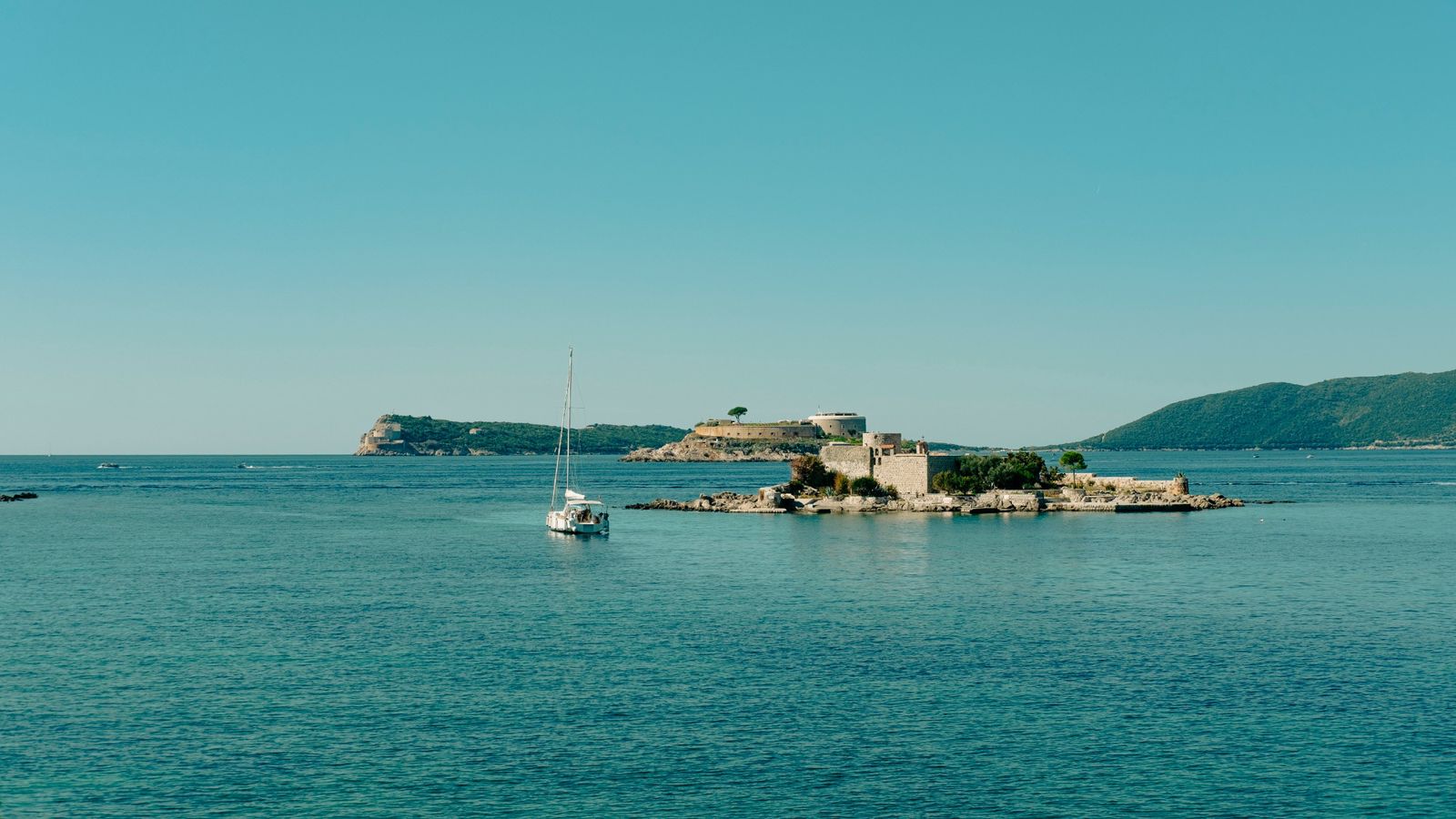
The Bay of Kotor is the crown jewel of Montenegrin sailing. This dramatic, winding inlet is divided into two inner bays and two outer bays, creating a network of sheltered waterways surrounded by limestone mountains that rise sharply from the water's edge. The medieval town of Kotor itself is a UNESCO World Heritage Site, and nearby Perast offers one of the most picturesque anchorages in the Adriatic. The bay is calm, well-charted, and easy to navigate, making it ideal for less experienced sailors while still rewarding to experienced ones.
The Open Adriatic Coast
South of the bay entrance, Montenegro's open Adriatic coastline runs from Herceg Novi down past Budva, Bar, and Ulcinj toward the Albanian border. This stretch offers livelier sailing conditions, more exposed anchorages, and excellent access to beach towns and nightlife. Budva is the most popular resort on this stretch and a good overnight stop. Further south, the beaches around Ulcinj are some of the longest in the Adriatic and feel distinctly different in character, with strong Ottoman and Albanian cultural influences.
The Lustica Peninsula
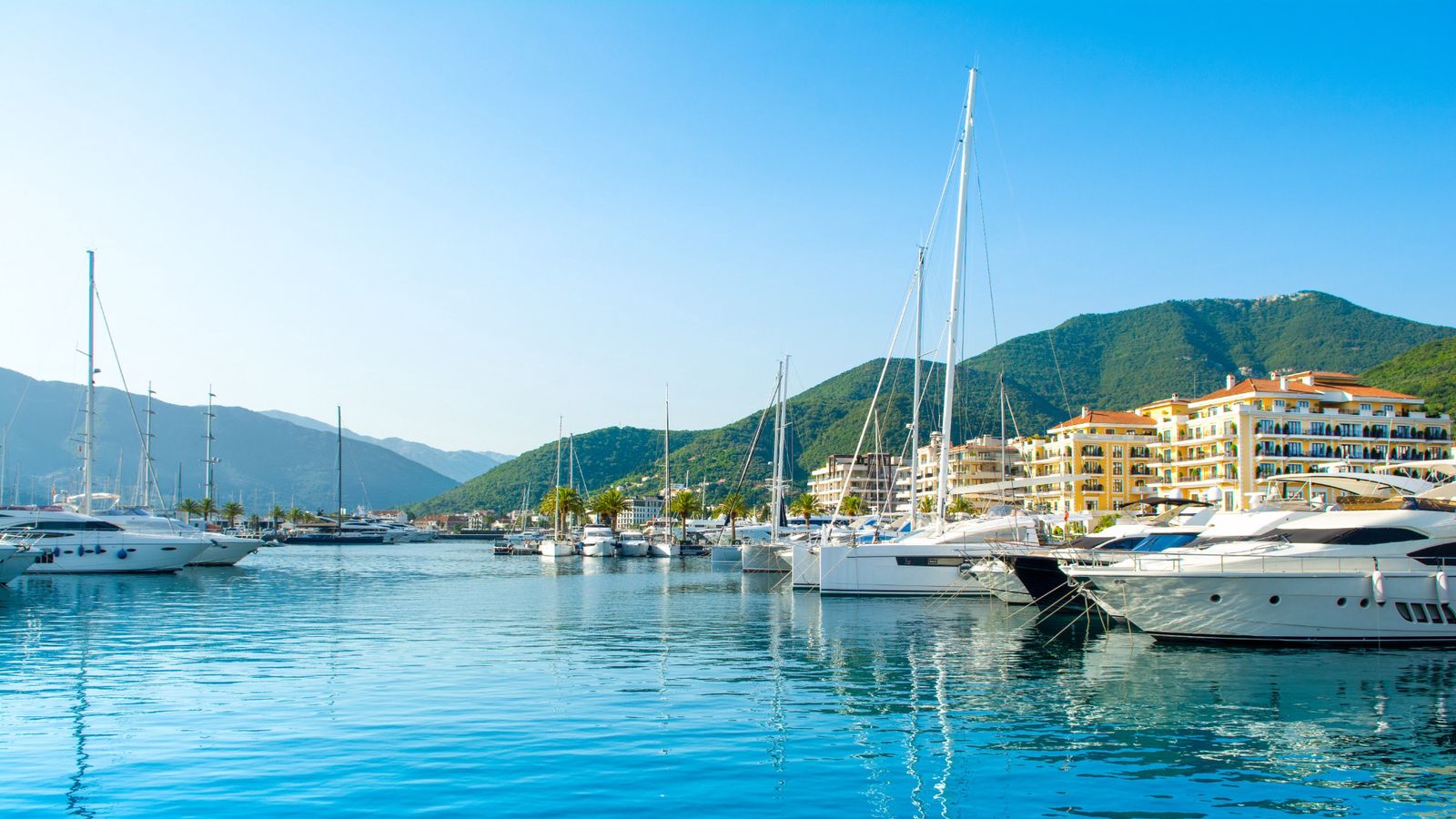
The Lustica Peninsula separates the outer Bay of Kotor from the open Adriatic and is one of the most rewarding areas to explore by boat. The peninsula is largely undeveloped, dotted with small villages, olive groves, and hidden coves that are only accessible by sea. Porto Montenegro at Tivat on the northern edge of the peninsula is the country's premier superyacht marina and a convenient base for provisioning and departure.
Weather and Best Time to Visit
Montenegro's sailing season runs from May through October. The Adriatic climate here is Mediterranean, with hot, dry summers and mild, wetter winters. Sea temperatures are comfortable for swimming from June onward, reaching their warmest in August at around 25 degrees Celsius.
The summer months of July and August bring the most reliably settled conditions, but they are also the busiest and most expensive. The predominant summer wind along the coast is the Maestral, a northwest sea breeze that typically builds in the afternoon and provides good sailing conditions without becoming threatening. The Bora, a powerful cold northeasterly, is more of a winter and spring phenomenon, but it can occasionally appear in May or October, so checking weather forecasts is always advised.
May, June, and September are widely considered the best months for a boat charter in Montenegro. Temperatures are pleasant, the water is warm enough for swimming, the winds are reliable for sailing without being excessive, and the coastal towns are far less crowded. June in particular offers an excellent balance of good weather, long daylight hours, and pre-peak prices. October remains viable, especially in the Bay of Kotor, though conditions can become more variable toward the end of the month.
Costs Overview for a Montenegro Yacht Charter
Montenegro is one of the more affordable yacht charter destinations in the Adriatic. A bareboat sailing yacht in the 35-40 foot range typically costs between 800 and 1,600 euros per week in the shoulder season (May, June, September) and between 1,400 and 2,800 euros per week in high season (July and August). Catamarans and larger yachts command proportionally higher rates. Crewed charter yachts start at around 3,500 euros per week and scale up significantly with vessel size and crew.
Beyond the boat itself, you should budget for the following: marina fees average 30-80 euros per night depending on the berth and season, and anchoring in bays is generally free. Diesel fuel is priced comparably to Western Europe. Eating out in Montenegro is excellent value, with a full dinner for two including wine often available for under 30 euros in local restaurants. Provisioning at supermarkets is also reasonably priced. A realistic all-in weekly budget for a couple on a bareboat charter, including the boat cost, marina fees, food, fuel, and activities, is roughly 2,000-4,500 euros depending on season and lifestyle choices.
Sample 7-Day Itinerary
This itinerary assumes you are based out of Tivat (Porto Montenegro), which is the most commonly used charter base in Montenegro. Most charter companies operate from here. The route explores both the Bay of Kotor and the open Adriatic coast.
Day 1: Tivat to Perast
Check aboard in Tivat, provision at the well-stocked marina supermarket, and motor or sail the short distance north into the inner Bay of Kotor. Anchor off Perast, one of the most atmospheric small towns on the entire Adriatic. Take the dinghy ashore to explore the Baroque palaces, climb the church tower for panoramic views, and take a water taxi out to Our Lady of the Rocks, the famous artificial island with its 17th-century church. Moor overnight in Perast or at the small marina in the bay.
Day 2: Perast to Kotor
It is a short sail to Kotor, but you will want a full day to do the old town justice. Arrive early to secure a berth at the town quay or the nearby Kotor Marina before the afternoon crowds. Walk the medieval walls up to the fortress of San Giovanni for extraordinary views over the bay. The old town itself is remarkably well preserved with narrow alleys, Venetian-era churches, and lively cafe squares. Overnight in Kotor.
Day 3: Kotor to Lepetane and Herceg Novi
Leave Kotor and head toward the narrow strait of Verige, which separates the inner and outer bays. This passage is only about 300 meters wide and is one of the most exciting moments in Montenegrin sailing. Continue to Herceg Novi at the entrance to the Bay of Kotor. This underrated town has a pleasant old town with excellent seafood restaurants and a lively waterfront promenade. Berth at the town quay or anchor nearby.
Day 4: Herceg Novi to Zanjice or Rose
Today you explore the Lustica Peninsula. Head around the peninsula to discover the hidden coves and tiny villages on its southern and western shores. Zanjice Bay is one of the most beautiful anchorages in Montenegro with a gorgeous pebble beach and a handful of restaurants that are only reachable by boat or on foot. The village of Rose at the tip of the peninsula is equally charming. Anchor overnight in Zanjice if conditions allow, or find a buoy in Rose.
Day 5: Lustica to Budva
Exit the bay and head south along the open Adriatic coast to Budva. This is likely your longest sailing passage of the week, roughly 20-25 nautical miles, and a good day to enjoy the Maestral breeze if it is blowing. Budva is Montenegro's most famous resort and worth an evening: the walled old town perched on a rocky peninsula is genuinely beautiful, the restaurant scene is excellent, and the nightlife is the liveliest on the coast. Berth at Budva City Marina.
Day 6: Budva to Sveti Stefan and the Islands
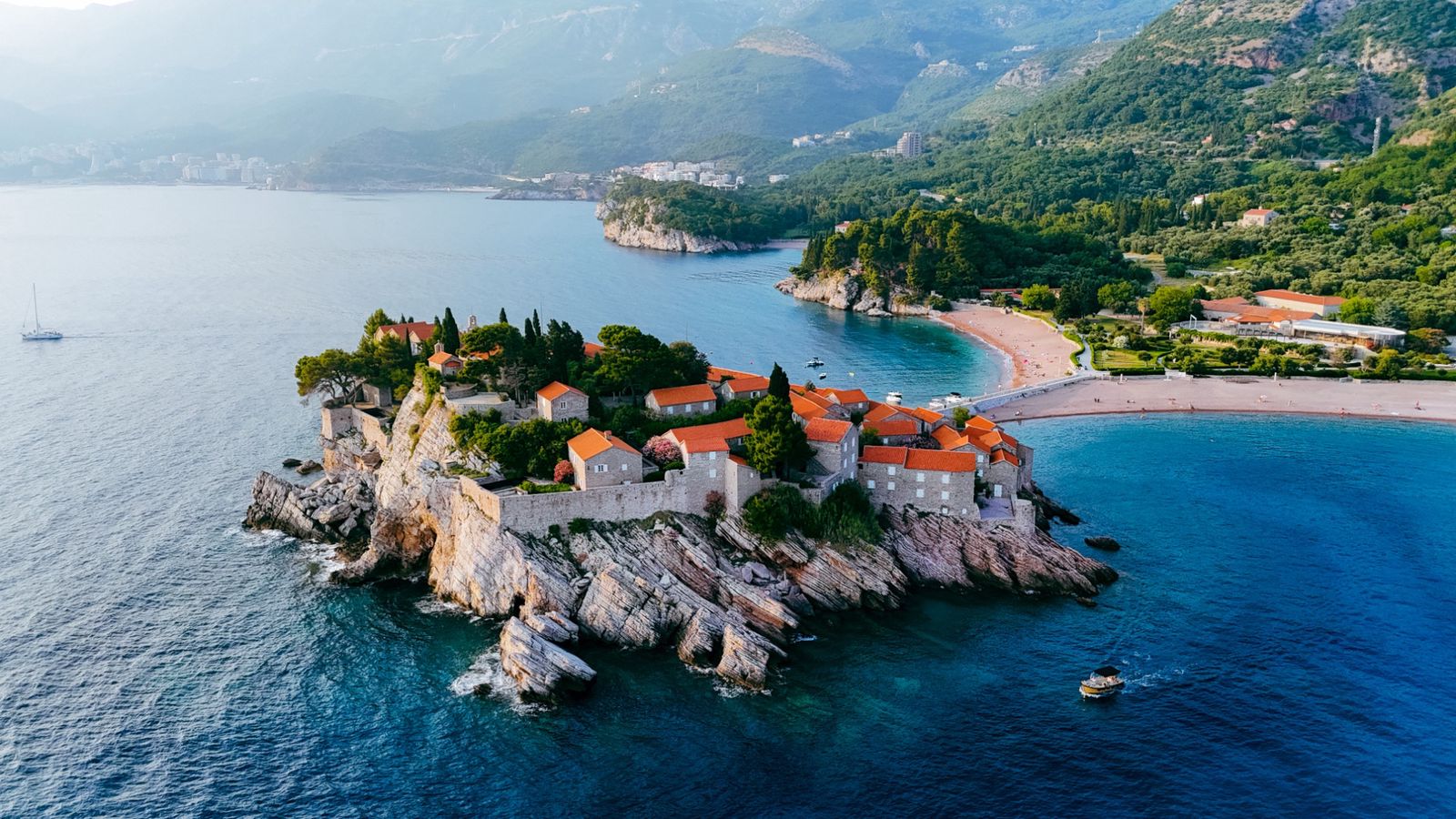
A short day of sailing. Head south from Budva to the iconic Sveti Stefan, a fortified island village connected to the mainland by a narrow causeway. The island is now a luxury resort, but the view from the water is free and utterly stunning. Anchor in the bay for a swim and lunch. Continue south to the small islands of Katici or anchor in one of the quiet bays near Petrovac, a charming low-key resort town with a good marina and excellent local fish restaurants. Overnight in Petrovac.
Day 7: Petrovac back to Tivat
On the final day, head back north toward Tivat. Depending on your departure time and wind conditions, you can sail directly or stop for a final swim in one of the coves along the Lustica Peninsula. Return the boat to Porto Montenegro by the agreed check-in time. If you have a late flight or departure, Tivat itself has a pleasant waterfront with good restaurants and a walkable marina village worth exploring.
5 Practical Tips for Chartering in Montenegro
1. Book Your Charter Early for Peak Season
The fleet of charter yachts in Montenegro is smaller than in Croatia or Greece. If you are planning a July or August trip, boats in the popular size ranges sell out months in advance. Aim to book by February or March at the latest for a summer charter. Shoulder season (June or September) offers much more flexibility and significantly lower rates.
2. Understand the Cruising Permit Requirements
Foreign-flagged vessels, including charter yachts, require a cruising permit (vignette) to sail in Montenegrin waters. Your charter company will typically handle this on your behalf and include it in the charter price or as a clearly listed additional fee. Confirm this before signing the contract. You will also need to check in with the Port Authority upon arrival if you are entering Montenegro for the first time by sea, or if crossing from Croatia.
3. Keep an Eye on the Weather in the Outer Bay and Open Coast
While the Bay of Kotor is almost always calm, the open Adriatic coast around Budva and further south can see stronger winds and choppier seas, especially in the afternoon when the Maestral builds. The Bora can also create difficult conditions at the bay entrance. Always check the weather forecast (Windy, PrediktWind, or the local DHMZ service) before heading into open water, and have a fallback anchorage in mind.
4. Carry Cash for Small Ports and Restaurants
Montenegro uses the euro despite not being an EU member. Major marinas and restaurants in Tivat and Kotor accept credit cards without any issue. However, in smaller anchorages, village restaurants, and some of the more remote fuel docks, cash is still king. Carry a reasonable supply of euros aboard, especially before heading to the Lustica Peninsula or smaller southern ports.
5. Respect the Local Environment and Anchoring Rules
Montenegro has been expanding its network of protected marine areas, and anchoring is prohibited in certain zones, particularly around sensitive seagrass beds. Always use marked anchor zones or legitimate moorings where they are provided. The Bay of Kotor is a UNESCO World Heritage Site, and environmental standards are being tightened. Pack your rubbish out, avoid pumping holding tanks in shallow enclosed bays, and take care not to drag your anchor across the seabed when setting it.
Ready to Sail Montenegro?
A boat rental in Montenegro offers one of the most rewarding sailing experiences in the Adriatic at a price point that still represents real value compared to its neighbors. Whether you are drawn by the fjord-like drama of the Bay of Kotor, the sun-drenched beaches of the southern coast, or simply the pleasure of uncrowded anchorages and honest food, a Montenegro yacht charter is hard to beat. With good infrastructure in Tivat and Porto Montenegro, a well-established charter industry, and a coastline that rewards exploration at a slow pace, Montenegro is a destination that sailors return to again and again.
Frequently asked questions
Where is the best place to base a boat rental in Montenegro?
The most popular charter base for a boat rental in Montenegro is Porto Montenegro in Tivat. It is the country's largest and best-equipped marina, with a full-service charter dock, provisioning supermarket, and easy access to both the Bay of Kotor and the open Adriatic coast. Some operators also offer pick-up and drop-off from Herceg Novi.
What is the best time of year for a yacht charter in Montenegro?
The best time for a Montenegro yacht charter is June or September. These shoulder-season months offer warm, stable weather, comfortable sea temperatures, reliable sailing winds (mainly the afternoon Maestral), and significantly lower costs and crowds than July and August. July and August are the peak of summer but the most expensive and busiest period on the water.
How much does a yacht charter in Montenegro cost?
A bareboat yacht charter in Montenegro costs roughly 800 to 1,600 euros per week in shoulder season and 1,400 to 2,800 euros per week in high season for a typical 35-40 foot sailing yacht. Catamarans and crewed yachts cost more. When you add marina fees, fuel, food, and activities, a realistic total weekly budget for a couple is around 2,000 to 4,500 euros.
Do I need a cruising permit for a yacht charter in Montenegro?
Yes, foreign-flagged vessels sailing in Montenegrin waters require a cruising permit, sometimes called a vignette. In practice, your charter company almost always arranges this for you and either includes it in the charter price or lists it as an additional fee on the contract. Always confirm this before signing. First-time arrivals by sea must also check in with the Port Authority.
Is Montenegro a good sailing destination for beginner sailors?
Yes, Montenegro is a good destination for beginner or intermediate sailors, especially inside the Bay of Kotor. The bay is calm, well-charted, and easy to navigate with short distances between stops. The passages are straightforward and the anchorages are largely sheltered. Less experienced sailors should plan to stay mostly within the bay and hire a skipper if they are not yet confident sailing on the open Adriatic coast.
What makes the Bay of Kotor special for sailing?
The Bay of Kotor is often called Europe's southernmost fjord, though it is technically a submerged river canyon (a ria) rather than a glacially formed fjord. Either way, it is one of the most dramatic and scenic anchorages in the Adriatic, surrounded by steep limestone mountains, and is a UNESCO World Heritage Site. It is considered one of the top sailing highlights in Montenegro.


