Anchoring and Mooring Buoys: How to Sleep Soundly in a Bay
Updated
Choosing the right bay for the forecast, setting the anchor so it holds, running a shore line, and lassoing a mooring buoy with or without crew. With a 10-question quiz to test yourself.
On this page

Every charter crew learns the same lesson eventually, usually at 3 am: the bay that felt like a millpond at sunset turns into a washing machine when the wind shifts onshore. Anchoring is not one skill but three: reading the forecast so the bay stays friendly all night, putting the anchor down so it actually holds, and, when a mooring buoy is on offer, catching it without a harbour audience forming. This guide covers all three, plus the long line ashore that Mediterranean sailors swear by.
Do your weather homework
The most important anchoring decisions happen before the anchor leaves its roller. Three things belong in your forecast check for the night. First, the wind: not just its strength and direction now, but whether it shifts overnight. A bay that shelters you from the afternoon breeze can become a lee shore by midnight. Second, the swell: check its direction separately from the wind, because swell built by earlier or distant winds keeps running long after the wind has changed, and it bends around headlands into bays that look protected on the chart. That is why an anchorage can roll miserably even with the wind blowing offshore. Third, gust and thunderstorm risk, which decides how much margin you leave everywhere else.
Pick a bay where the forecast wind blows offshore, from the land out to sea. The land flattens the water, and the boat rides head to wind in comfort. A bay open to the forecast wind direction is simply not a good choice, however pretty the beach. Before a night in an exposed spot, compare at least two forecast sources: if the models disagree, plan for the worse one. And always have a plan B: know in advance which protected bay you will move to if the wind shifts, and how long that trip takes in the dark. If the wind does turn onshore and swell starts rolling in, the seamanlike reaction is to move, re-anchor somewhere protected or leave, even if it costs a night of sleep. Extra chain and extra fenders do not fix a lee shore.
Choosing your spot
Inside the bay, look for a spot with room for your full swinging circle, clear of other boats, rocks and the shallows near the shore. The deepest water is not the prize; holding is. Sand and firm mud grip an anchor well. Thick seagrass holds poorly, and Posidonia meadows are protected in much of the Mediterranean, so stay off them anyway. A thin dusting of sand over a rock plate looks like sand on the depth sounder and holds like glass. And never drop close upwind of another boat: if you drag, you drag straight down onto them.
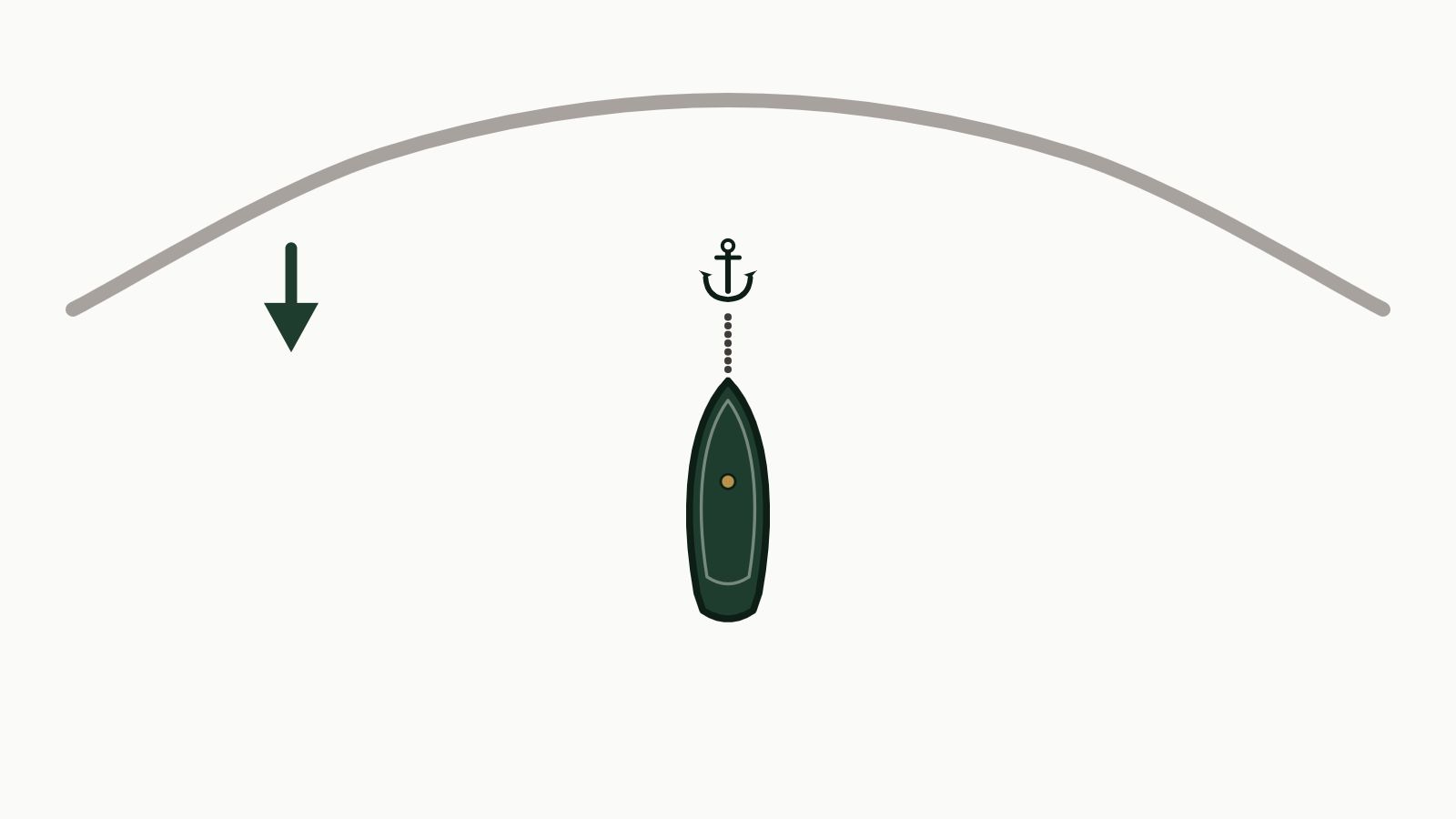
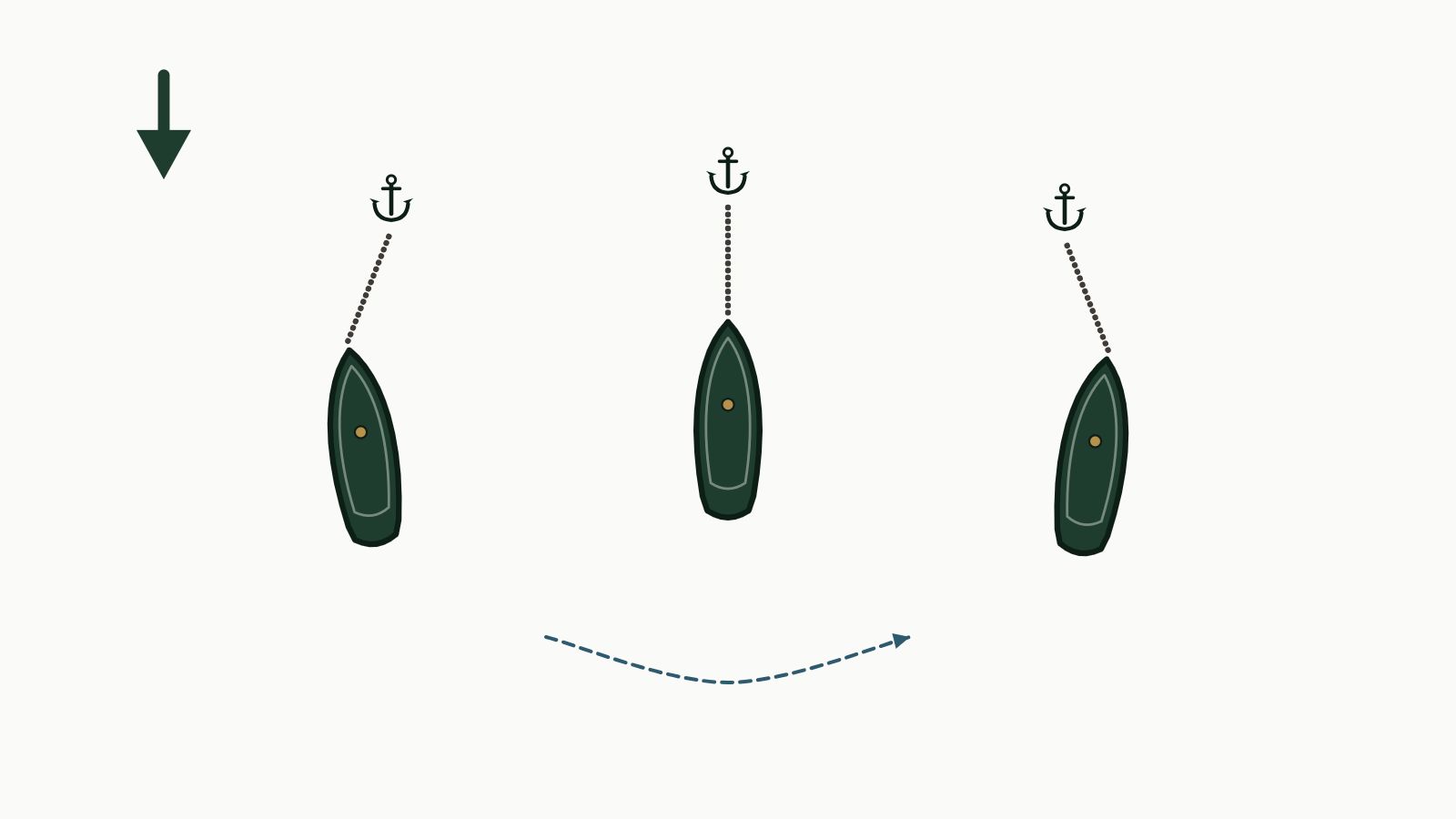
Then copy the neighbours. If every boat in the bay lies to a single bow anchor, do the same. You cannot be the only boat moored fore and aft while everyone else swings: when the wind shifts, they all rotate together and you stay put, and the polite distances between boats quietly disappear. Anchor the way the bay anchors, and you swing in step with everyone else.
Dropping and setting the anchor
The sequence is simple and worth doing in the same order every time:
Check depth, seabed and swinging room.
Stop the boat head to wind over the chosen spot.
Lower the anchor to the seabed.
Fall back slowly, paying out chain.
Set the anchor with gentle reverse.
The detail that separates a set anchor from a lucky one is step four. Keep the boat moving slowly astern while the chain runs out, so the chain lays along the bottom in a line. A stationary boat piles chain on top of the anchor; the pile can foul the flukes, or hold just long enough to fool you before letting go in the first gust.
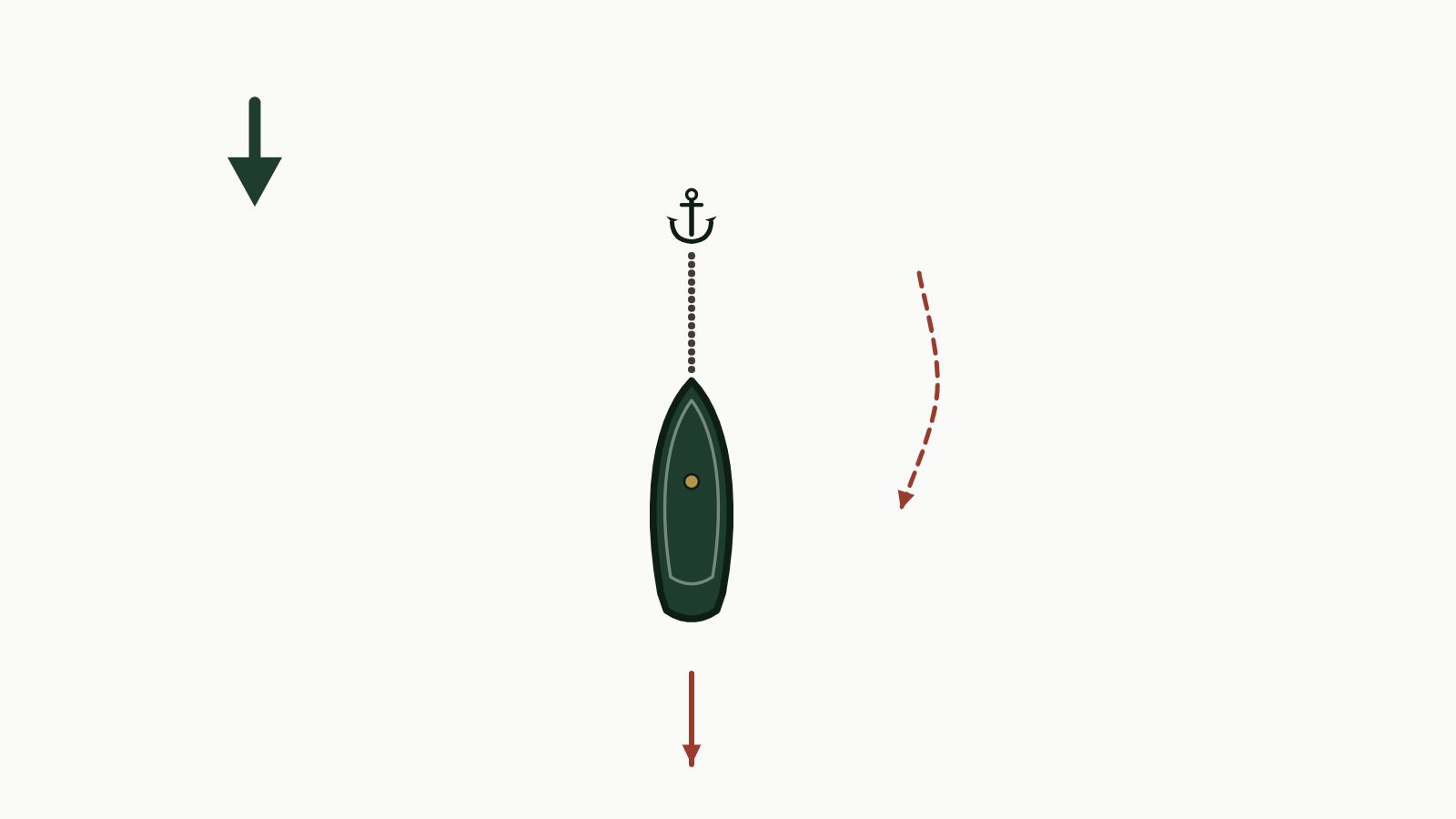
How much chain? At least 5 times the water depth: in 4 meters of water that means a minimum of 20 meters of chain. Treat that as the floor, not the target. The rule assumes good holding, sand or firm mud, and settled weather; poor holding, strong wind, swell or a rope rode all mean paying out more.
To set the anchor, let the boat straighten on the chain, then idle astern and slowly increase the revs. Rest a hand (or a bare foot) on the chain while you do: it works like a telegraph. Steady jolting and rumbling means the anchor is skipping across the bottom; a quiet chain that stretches out firm means it has dug in.
Will it still hold at 3 am?
A set anchor is a snapshot, not a guarantee. Before you settle in, check the depth all the way around your swinging circle: a wind shift can rotate you over a shallow patch or a rock that was safely off to the side when you dropped. Leave margin beyond the theoretical circles, too, because boats do not swing identically. Different hulls, rigs, keels and rode types make every boat lie to wind and swell in its own way, and a light catamaran and a heavy ketch will happily point in different directions on the same gust.
If the wind shifts 180 degrees during the night, the anchor may have to break out of the seabed and reset itself in the new direction. Usually it manages; sometimes it does not. Check your position after any big shift. And before the crew rows off to dinner ashore, take a bearing or a transit on the shore, and set an anchor alarm. Leaving a freshly anchored boat without any of that is how charter stories start.
The long line ashore
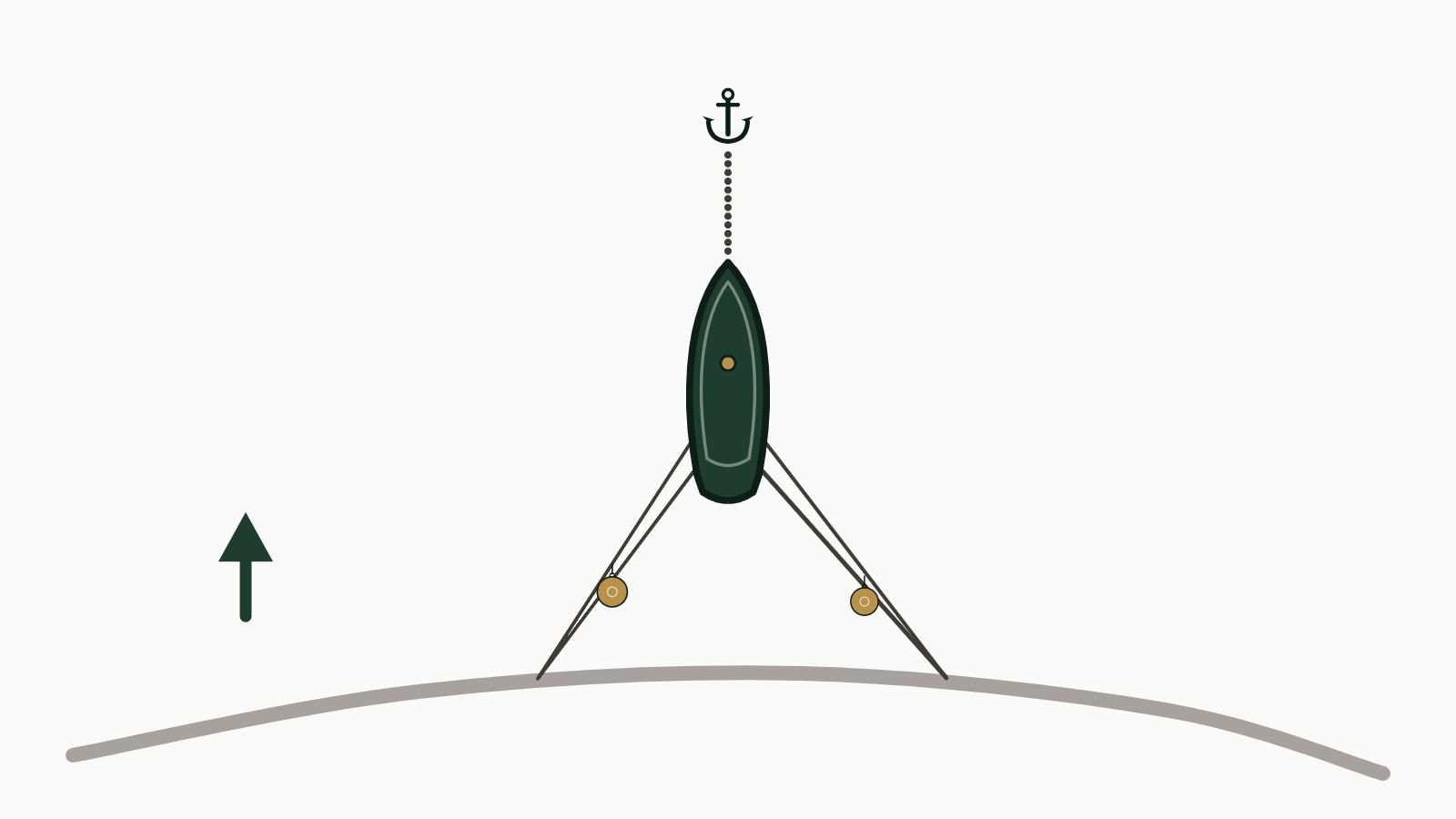
In a narrow bay with offshore wind and no room to swing, Mediterranean crews use shorelines: the anchor holds the bow toward the open water, and a long lines from the stern to a tree or rock on the shore holds the boat in place. The manoeuvre needs a stationary boat and a little coordination:
Drop the anchor and reverse toward the shore.
Reverse carefully to test that the anchor is set.
Hold the boat stationary while a crew member runs the lines ashore by dinghy or swimming.
Secure the lines around a tree or a large rock.
Make the lines fast on a stern cleat.
Three tips from crews who do this weekly. Double the shoreline, with both ends made fast on board: when you leave (possibly at 3 am, in the dark), you release one end and pull the whole line back aboard without anyone rowing ashore. Around sharp rocks, put a length of chain or solid chafe protection where the line touches, and make sure the loop cannot slip off; bare rope saws through on sharp rock surprisingly fast. And if dinghies or other traffic pass behind your boat, hang a fender on the line so the nearly invisible shore line becomes visible before someone drives into it at dusk.
Picking up a mooring buoy
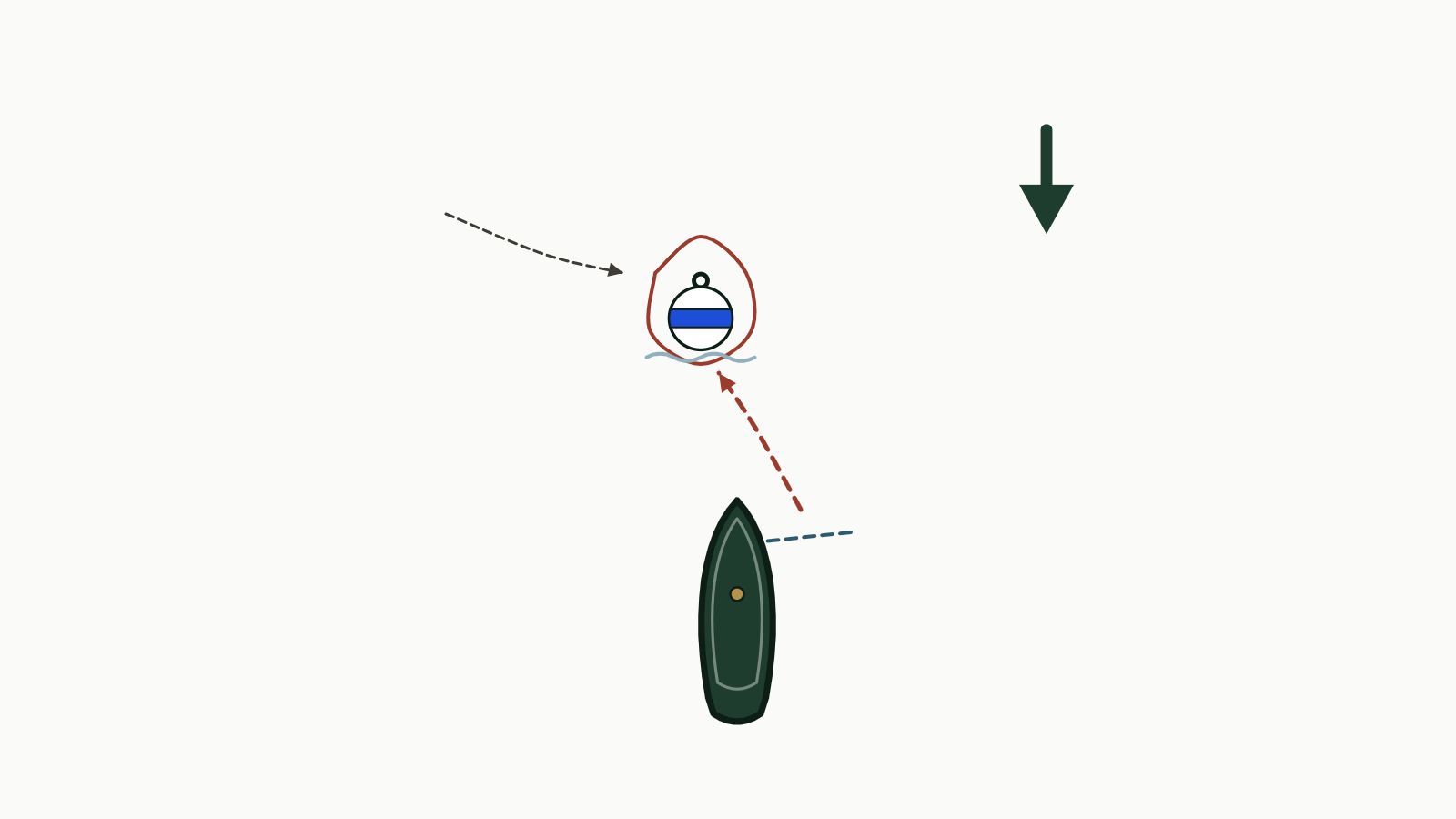
Where buoy fields exist, they spare you the anchor work, but a buoy deserves the same respect as a berth. Start with a test approach: pass the buoy slowly, look at its condition and its pennant, and feel how the boat drifts before you commit. Then make the final approach against the wind, with the gear ready at the bow before you start, not rummaged out of a locker mid-approach.
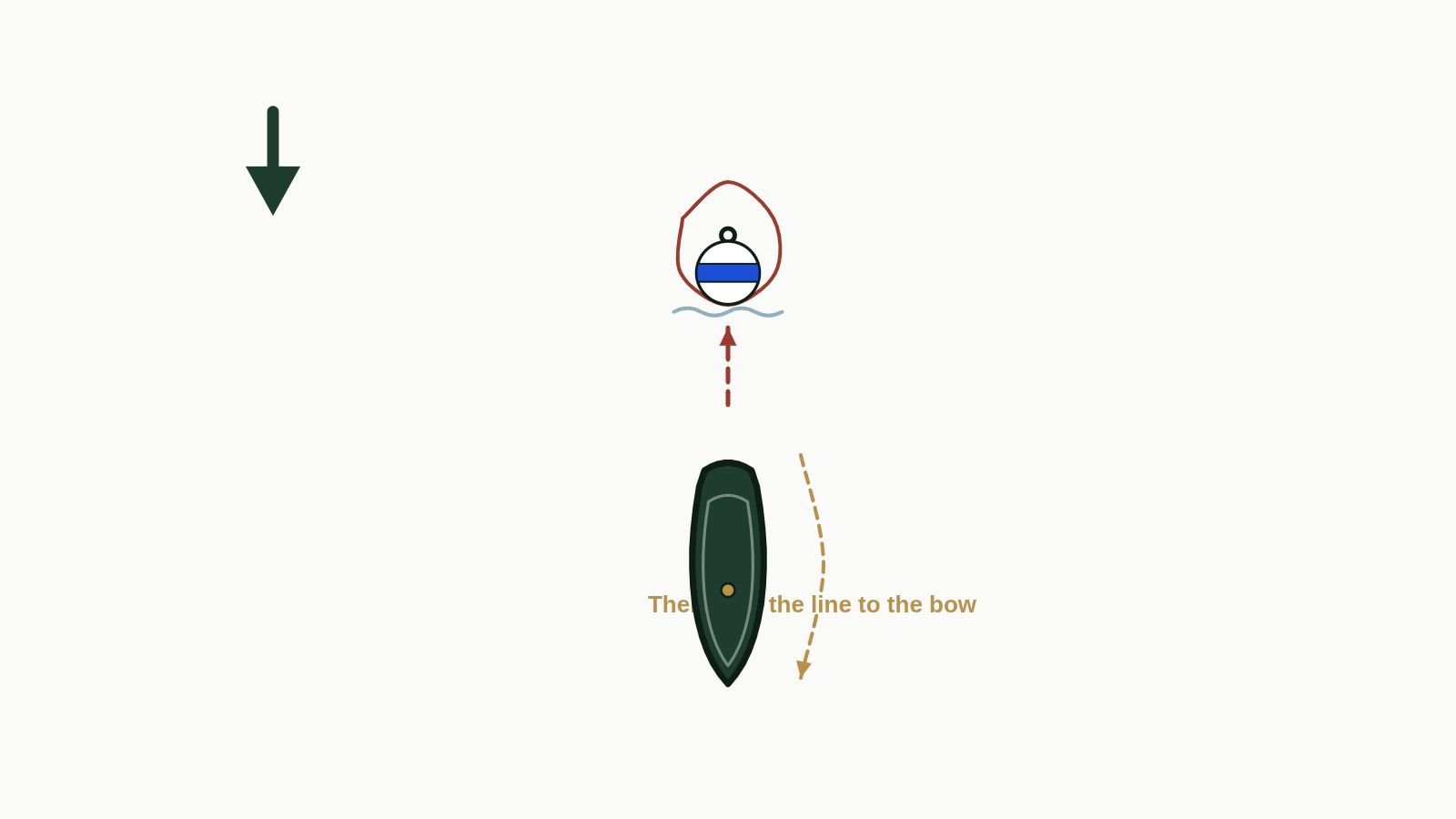
The most reliable catching tool is the lasso: make both ends of a long line fast at the bow and drop the middle as a wide loop over the buoy. The loop slides down and catches the buoy or its riser, and you are attached without having to thread anything through a ring on the first try. Pick the buoy up on its windward side. That gives you a built-in escape plan: miss, and the boat drifts away from the buoy, so you simply circle and set up again. Miss on the leeward side and you drift down onto the buoy and its tackle. One warning once you have caught it: do not tension the lasso lines. Under tension the loop can slip straight over the top of the buoy and let go. Leave the lasso slack until the boat settles, then rig a proper mooring line and take the lasso off duty.
On the last meters the helmsman loses sight of the buoy behind the bow. Put a crew member at the shrouds, pointing at the buoy and calling the remaining distance. It sounds ceremonial and it is the difference between stopping on the buoy and stopping somewhere near it. Practice it deliberately: the same pointer technique is essential in a man overboard situation, when stopping the boat exactly at a person in the water is the whole game.
Singlehanded? Turn the geometry around: reverse slowly against the wind and catch the buoy with the lasso from the stern, right next to the helm, where you can steer and throw at the same time. Once attached, walk the line forward and re-secure it at the bow. And a final note of caution that applies to every buoy, crewed or not: you rarely know when a mooring was last serviced. In settled weather a healthy buoy field is a gift; in a serious blow, do not trust an unknown buoy with your boat.
Test yourself
Ten random questions from our anchoring pool: weather homework, spot choice, dropping and setting, shore lines and buoy pickup. See what stuck before you next trust your night's sleep to a patch of sand.
Quiz
Open full quizAnchoring and Picking Up a Buoy: Will You Sleep Tonight?
Choosing the bay, setting the anchor, running shore lines, lassoing a mooring buoy, and reading the forecast so the wind does not surprise you at 3 am. 10 questions drawn at random each run.
Before you start
This quiz is just for fun and self-study. The answers may contain mistakes, and it is not a professional assessment, exam, or certification of any kind. If you don't feel confident to sail, please get proper guidance from a qualified instructor or skipper — at sea, real experience beats a quiz score every time.
None of this needs heavy weather to practice. Pick a quiet bay at lunchtime, drop the hook twice, run a line ashore once and lasso an empty buoy for fun. The night the forecast gets it wrong, your hands will already know the whole routine.
Frequently asked questions
How much anchor chain should I let out when anchoring in a bay?
The minimum recommendation is at least 5 times the water depth. For example, in 4 meters of water you should pay out at least 20 meters of chain. That figure assumes good holding ground such as sand or firm mud and settled conditions; poor holding, strong wind, swell, or a rope rode all mean paying out even more.
How do I know if my anchor is properly set?
To set an anchor, let the boat straighten on the chain, then idle astern and slowly increase revs while resting a hand or bare foot on the chain. Steady jolting and rumbling means the anchor is skipping across the bottom, while a quiet chain that stretches out firm means it has dug in and is holding.
What is the easiest way to pick up a mooring buoy on a sailboat?
Use the lasso technique: make both ends of a long line fast at the bow and drop the middle as a wide loop over the buoy. The loop slides down and catches the buoy or its riser without needing to thread anything through a ring on the first try. Once the boat settles, rig a proper mooring line and remove the lasso, making sure not to tension it before then, as tension can cause the loop to slip off the top of the buoy.
What weather should I check before anchoring overnight in a bay?
Before anchoring for the night, check three things in the forecast: wind strength and direction including any overnight shift, swell direction separately from wind direction since swell can bend into sheltered bays, and the risk of gusts or thunderstorms. A bay that shelters you from the afternoon breeze can become a lee shore by midnight if the wind shifts, so always have a backup anchorage in mind.
How does anchoring with shore lines work in a Mediterranean bay?
A Mediterranean shore line involves dropping the anchor from the bow, then reversing toward shore and running a doubled line from the stern to a tree or large rock. Having both ends of the line made fast on board means you can leave without rowing ashore: you release one end and pull the whole line back aboard from the boat.
What type of seabed is best for anchoring and what should I avoid?
Sand and firm mud provide the best holding for an anchor. Thick seagrass holds poorly, and Posidonia seagrass meadows are legally protected across much of the Mediterranean. A thin layer of sand over rock can look like sand on a depth sounder but holds as poorly as bare rock, so it is important to look for consistent sandy or muddy seabed rather than just checking depth.


