Lefkada Floating Bridge: Opening Times, History and Future Plans
Updated
The Lefkada floating bridge is the gateway between the northern and southern Ionian, and every charterer heading to or from Lefkas Marina will pass through it. Here's everything you need to know about how it works, when it opens, and what the future holds for this iconic crossing.
On this page

If you're sailing out of D-Marin Lefkas Marina or heading south from Preveza Marina, there's one landmark you'll cross every single time: the Lefkada floating bridge. It's less than a kilometre long, but understanding how it works and when it opens can make or break your departure schedule.
Current Opening Times
The bridge opens on a fixed schedule throughout the day, with additional openings during the busy summer sailing season. Times are subject to change, and local conditions or maintenance work can occasionally cause short-notice alterations. Always check the latest schedule before you depart.
Bridge opening times
- 08:00
- 10:00
- 14:00
- 17:00
- 19:00
- 21:00
- 22:00
- 08:00
- 10:00
- 12:00
- 14:00
- 16:00
- 18:00
- 20:00
What Is the Lefkada Floating Bridge?
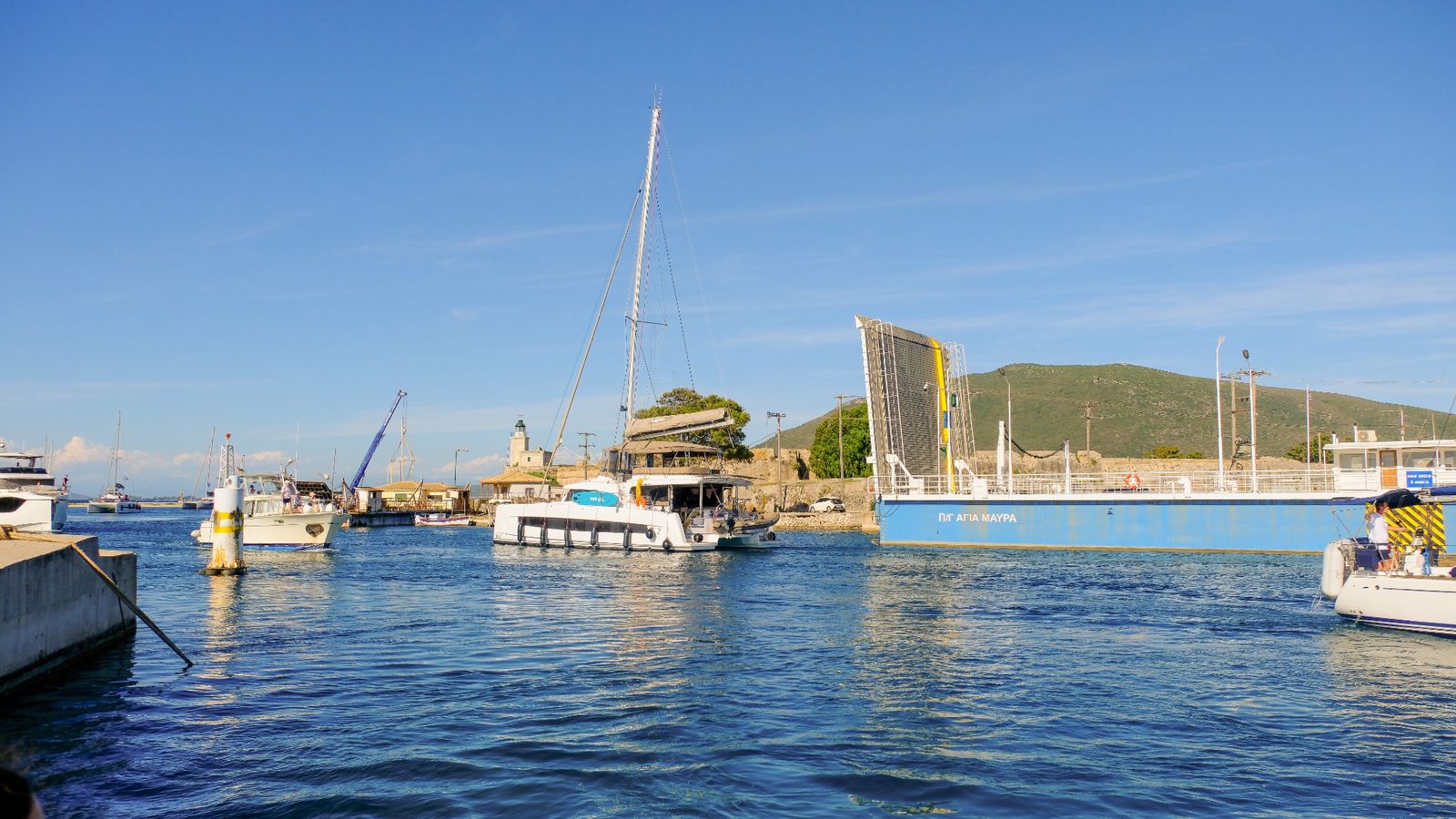
The Lefkada floating bridge spans the narrow channel that separates the island of Lefkada from the Greek mainland. Because Lefkada is technically connected to the mainland by a thin strip of land and a lagoon, it is the only Greek island you can reach by road without a ferry. The floating bridge sits at the northern end of this channel, allowing both vehicle traffic and boat traffic to pass.
The bridge is a swing-type pontoon bridge, meaning a section of it rotates open to create a gap wide enough for sailing yachts and motorboats to pass through. When it is closed, cars and pedestrians cross continuously. When it swings open for maritime traffic, road traffic stops and waits.
Why the Bridge Matters for Charterers
The channel beneath the bridge is the only navigable route between the southern Ionian islands and the northern Ionian. If you are sailing from D-Marin Lefkas Marina, which sits just south of the bridge on the eastern side of the island, you will pass through this channel every time you head north toward Corfu, Paxos, or the Albanian Riviera. Similarly, if you are based at Preveza Marina on the mainland side and want to reach the wider Ionian cruising grounds, the channel is your gateway.
Missing a bridge opening when you're running to a schedule, catching a flight, or trying to make a berth before dark is genuinely stressful. Knowing the opening times in advance lets you plan your day around the bridge rather than scrambling at the last minute.
A Brief History of the Bridge
The history of the Lefkada channel crossing stretches back to antiquity. The ancient Greeks are believed to have first cut a navigable channel through the narrow isthmus, recognising its strategic value for trade and military movement. The Romans later deepened and maintained it.
For most of the 20th century, the crossing was managed through a series of pontoon and floating bridge arrangements. The current floating bridge was constructed in its modern form to serve both growing road traffic connecting the island to the mainland and the expanding sailing tourism industry that developed from the 1970s onward. As charter sailing boomed across the Ionian, the bridge became one of the most recognised landmarks in Greek sailing, familiar to tens of thousands of charterers who pass through each summer.
The channel itself is shallow and requires some care in navigation. The markers should always be followed, and keelboats with deeper drafts should be aware that the deepest water is not always at the centre of the channel. Local knowledge and a careful eye on the depth sounder are always worthwhile here. For a broader introduction to the sailing grounds on either side of the bridge, see our guide to sailing the Ionian.
The Proposed Tunnel: What We Know
For several years, Greek transport authorities and regional planners have discussed replacing the floating bridge with a submerged road tunnel beneath the channel. The tunnel proposal has surfaced repeatedly in planning documents and local political discussion, driven by two main concerns: the bridge creates a bottleneck for road traffic in summer, and the opening schedule imposes delays on both drivers and mariners.
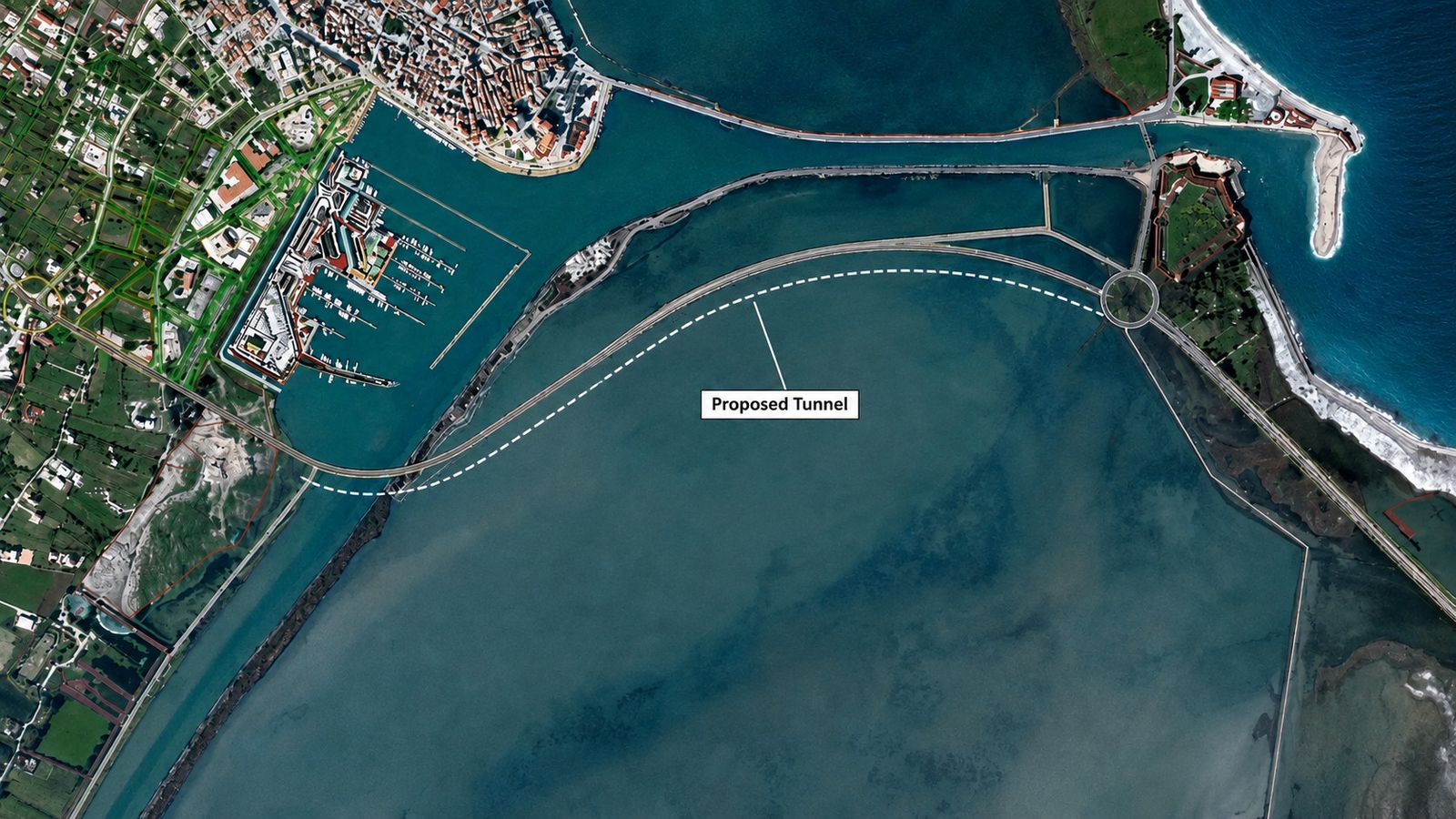
A tunnel would theoretically allow uninterrupted road traffic while keeping the channel permanently open for maritime use, removing the need for scheduled openings entirely. For sailors, this would be a significant practical improvement, eliminating the wait and the scheduling pressure altogether.
However, the project faces substantial challenges. The cost of a submerged tunnel suitable for the seabed conditions in the channel is considerable. Environmental assessments, funding approvals through EU infrastructure programmes, and local consultation have all extended the timeline significantly. As of the most recent publicly available information, the tunnel remains in the planning and feasibility stage, with no confirmed construction start date. The floating bridge is expected to remain in operation for the foreseeable future.
When the tunnel does eventually become a reality, it will reshape how charterers think about the Lefkada crossing entirely. Until then, the familiar routine of timing your approach, and watching the bridge swing open remains part of the Ionian sailing experience.
Practical Tips for Passing Through
Check the opening schedule before you leave your berth and build the next opening into your departure plan.
Monitor VHF Channel 16 as you approach.
Do not attempt to pass through a closed bridge. Wait at a safe distance and watch for other traffic.
Respect the channel speed limit, both for your own safety in shallow water and to avoid wash affecting other vessels waiting nearby.
If you are departing from D-Marin Lefkas Marina, the bridge is only a few minutes' motor away. If you are coming from Preveza, factor in the open sea passage before you reach the bridge.
During peak season in July and August, several yachts may be queuing for the same opening. Be patient and maintain good spacing.
Frequently asked questions
What are the Lefkada floating bridge opening times?
The Lefkada floating bridge opens on a fixed schedule throughout the day, set by local authorities. Times can differ between the summer and winter seasons. You should check the current schedule before planning your approach, and aim to arrive at the channel entrance at least 15 to 20 minutes before your intended opening slot.
How does the Lefkada floating bridge work?
The bridge is a pontoon structure that floats on the water's surface across the narrow canal connecting Lefkada island to the Greek mainland. A section of the bridge swings open at scheduled intervals to let boats through, then closes again to allow road traffic across. All marine traffic in and out of the Lefkada lagoon must pass through this single opening.
How do I get from Preveza to Lefkada by boat?
From Preveza, you motor south and enter the Lefkada canal, then wait for the bridge to open on its scheduled timetable. It is a short passage and a very common route for charterers based at Preveza Marina. Once through the bridge, D-Marin Lefkas Marina is just a short motor to the south and makes a natural first stop.
Do all sailboats have to pass through the Lefkada canal bridge?
Yes, every sailing boat heading between the northern Ionian (including Corfu) and the southern islands must pass through the Lefkada canal and the floating bridge. There is no alternative sea route for most yacht-sized vessels, so the bridge transit is a standard part of any Ionian sailing itinerary.
What happens if I miss the Lefkada bridge opening?
If you miss a bridge opening, simply wait for the next scheduled slot. In peak summer season the queue of boats can build up, so it is worth arriving early. The wait is rarely more than an hour, but it is an easily avoidable delay if you plan your departure time with the bridge schedule in mind.
Where should I stop after passing through the Lefkada bridge?
D-Marin Lefkas Marina is located just south of the bridge inside the lagoon, making it the most convenient stop immediately after the transit. It is one of the best-equipped marinas in the Ionian, with full provisioning, fueling, and charter fleet facilities, and it serves as the main base for exploring the southern Ionian islands.
What are the opening times for the Lefkada floating bridge?
The Lefkada floating bridge opens for marine traffic on a scheduled basis throughout the day, approximately every 30 to 45 minutes during the main sailing season. Opening frequency is reduced overnight. Times vary by season and can change at short notice due to maintenance, so check the current schedule before departing and monitor VHF Channel 16 as you approach.
What VHF channel should I use to contact the Lefkada bridge?
The bridge keeper can be reached on VHF Channel 16. It is also customary to signal your approach with a short horn blast. If you are unsure of the next opening or approaching outside of standard hours, calling ahead on VHF is the safest option.
Is the Lefkada channel safe to navigate for charter yachts?
The Lefkada channel is navigable for most charter yachts, but it is shallow and requires care. Follow the marked channel carefully, keep a close eye on your depth sounder, and do not assume the deepest water is always at the centre. Most standard bareboat charter yachts pass through without difficulty when the tide and markers are respected.
Is there a plan to replace the Lefkada bridge with a tunnel?
Greek transport planners have proposed replacing the bridge with a submerged road tunnel beneath the channel, which would allow continuous road access and keep the waterway permanently open for sailing traffic. As of the latest available information, the tunnel is still in the feasibility and planning stage with no confirmed construction start date, so the floating bridge will remain in use for the foreseeable future.
How far is the Lefkada bridge from Lefkas Marina and Preveza Marina?
If you are sailing from D-Marin Lefkas Marina, the bridge is a short motor of just a few minutes to the north of the marina. If you are departing from Preveza Marina on the mainland, you need to factor in the longer passage down the Preveza lagoon before you reach the channel entrance, which typically adds 30 to 45 minutes to your transit time.
What is the history of the Lefkada floating bridge?
The floating bridge at Lefkada is thought to occupy one of the oldest artificial waterways in the Mediterranean. The ancient Greeks are believed to have first cut a navigable channel through the isthmus, and the Romans later maintained and deepened it. The modern floating bridge in its current form was built during the 20th century to serve the growing road link to the mainland and the expansion of sailing tourism across the Ionian from the 1970s onward.


