Sailing the Gulf of Naples: One-Week Loop from Marina di Stabia via Ischia and the Amalfi Coast
Updated
A one-week, 96 nm loop from Marina di Stabia taking in Ischia's thermal harbours, Capri, and the fishing villages of the Amalfi Coast. Short to moderate legs and an intermediate rating make it ideal for a crew with one charter already logged.
On this page

The Gulf of Naples packs an improbable amount of coastline into a small patch of the Tyrrhenian Sea: a volcanic island group to the west, the sheer limestone wall of the Sorrento peninsula to the south, and the Amalfi Coast folded in behind it. This seven-day loop from Marina di Stabia covers 96.2 nautical miles in six sailing days, threading Ischia, Capri, and the fishing harbours of the Amalfi side into one linear circuit with no leg longer than 24.3 nm. It suits a crew with at least one previous bareboat charter behind the skipper, comfortable with stern-to Med mooring in busy harbours and confident putting a reef in when the afternoon breeze builds. If that describes your crew, this is one of the most rewarding weeks you can sail in Italy.
Logistics and Paperwork
The base is Marina di Stabia at Castellammare di Stabia, on the southeastern corner of the gulf. It is a full-service marina with a fuel quay, finger pontoons, shore power and water, and supermarkets within walking distance for provisioning. Crew transfers are straightforward: Naples airport is about 45 minutes by road, and the Circumvesuviana rail line stops in town. Check-in is typically between 3pm and 5pm on the first day, which leaves time for the technical briefing and a big provisioning run before dinner. Most crews spend the first night at the base and start sailing fresh the next morning. On the last evening the boat must be back at Marina di Stabia with a full tank (refuel at the base fuel quay before berthing), and check-out happens the following morning.
For paperwork, the skipper needs a certified licence such as the ICC or a recognised national equivalent, and most operators ask a second crew member to sign a co-skipper declaration of experience. The charter company files the crew list and carries the boat's registration and insurance papers aboard, so beyond your licence and passports there is nothing to arrange yourself on this domestic Italian loop.
Weather and Difficulty
The sailing season runs from late April to mid-October. June and September are the sweet spots: settled weather, water warm enough to swim, and harbours not yet (or no longer) at August saturation. The prevailing summer pattern is a light morning followed by a northwesterly Maestrale sea breeze that fills in after midday, typically 12 to 18 knots in July and August, occasionally topping 20 in the afternoon. Seas inside the gulf stay moderate, but the stretch between Ischia and Capri is open to the west and can build a short chop by mid-afternoon, which is a good argument for early starts on the two longer legs.
Rate this loop intermediate. Distances are modest, navigation is line-of-sight, and every overnight is a harbour or marina berth, but the busy harbours demand tidy stern-to work and the afternoon Maestrale rewards a crew that reefs early rather than late. Note that charter contracts here typically bar leaving port above a stated wind force, and the base always has the final say on a marginal forecast.
Day-by-Day Plan

Day 1: Check-in at Marina di Stabia
Board between 3pm and 5pm, complete the briefing, and provision from the supermarkets in Castellammare. Stow everything properly: tomorrow is the longest leg of the week. Eat ashore in town or aboard, and sleep at the base pontoon.
Distance: 0 nm. Sailing time: none. Overnight: Marina di Stabia (base marina).
Day 2: From Marina di Stabia to Porto d'Ischia (24.3 nm)
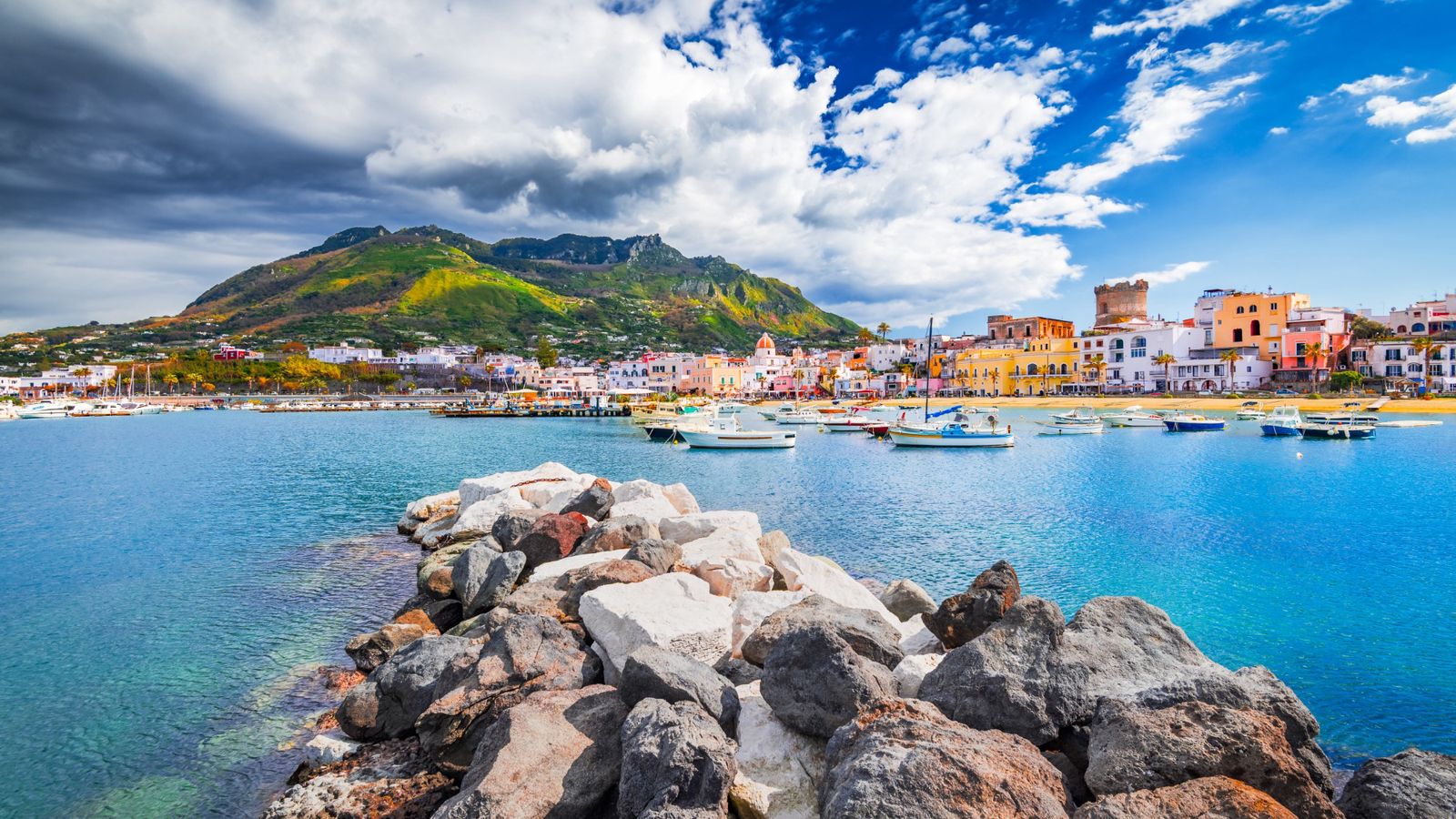
Leave by 9am to cross the gulf before the Maestrale peaks. The heading is west-northwest past the Sorrento shore and across open water toward Ischia, so once the northwesterly fills in you will be on a close reach, and a single reef keeps the boat comfortable if it pushes past 16 knots. Vesuvius sits over your starboard quarter the whole way, which makes for a memorable first leg. Porto d'Ischia is a deep natural harbour inside a flooded volcanic crater, with a quay lined with restaurants and ferry traffic to watch for at the narrow entrance. Once secured stern-to, walk to the Castello Aragonese or book an evening session at one of the thermal spas the island is famous for.
Distance: 24.3 nm. Sailing time: 5 to 6 hours. Overnight: Porto d'Ischia (harbour quay, stern-to).
Day 3: From Porto d'Ischia to Porto di Forio (3.8 nm)
This is the recovery day built into the loop. The hop around Ischia's northern shore to Forio is just 3.8 nm, under an hour even at a lazy pace, which leaves the entire day free. Anchor off Spiaggia di Citara for a long swim before taking your berth, then spend the afternoon ashore: Forio is Ischia's most scenic town, with whitewashed lanes, the clifftop Chiesa del Soccorso, and a long sandy beach. Treat it as your day to linger, because from tomorrow the legs get longer again. Dinner on the Forio quayside is one of the highlights of the week.
Distance: 3.8 nm. Sailing time: under 1 hour. Overnight: Porto di Forio (harbour quay).
Day 4: From Porto di Forio to Marina di Capri (20.6 nm)
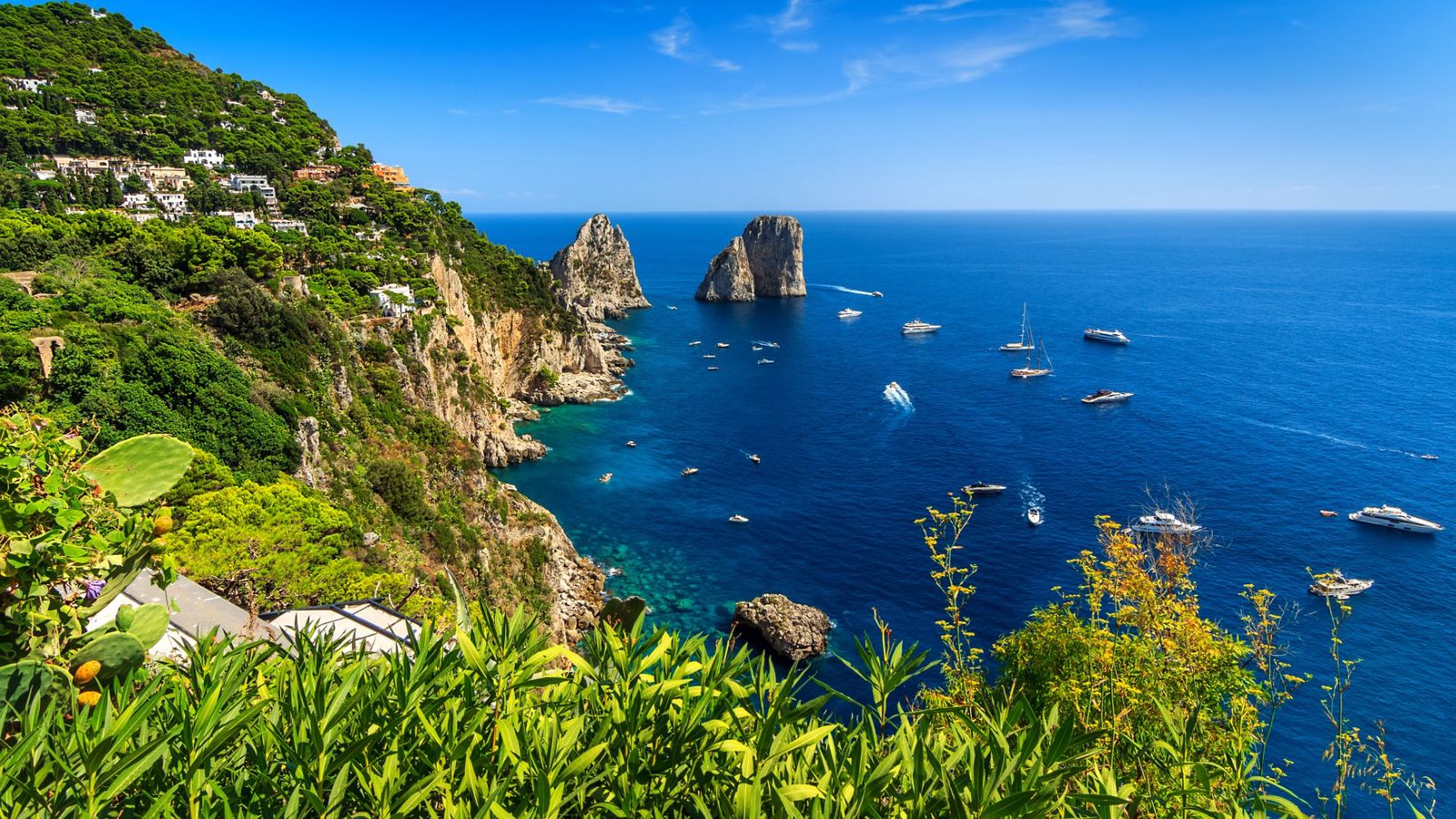
Head south down Ischia's west coast and then southeast across open water toward Capri. With the Maestrale behind you this is the downwind day of the week, a broad reach easing to a run as you close the island, so rig a preventer if you pole out. Capri's profile grows dramatically on the approach, and if the swell allows you can detour past the Faraglioni rocks before entering. Marina di Capri (Marina Grande) is small, busy, and expensive in season: book the berth ahead, and expect close-quarters stern-to mooring with lazy lines. The reward is an evening in Capri town after the day-trippers leave, reached by funicular from the harbour.
Distance: 20.6 nm. Sailing time: 4 to 5 hours. Overnight: Marina di Capri (marina, stern-to with lazy lines, reservation essential).
Day 5: From Marina di Capri to Marina di Cetara (21.6 nm)
Round Punta Campanella and sail east along the full length of the Amalfi Coast, with the Lattari Mountains dropping straight into the sea to port. The northwesterly comes over your aft quarter, so this is another relaxed broad reach, and the coast gives you Positano, Amalfi, and a string of watchtowers as a rolling backdrop. Cetara, tucked near the eastern end, is a working fishing village known for colatura di alici, the anchovy sauce produced here for centuries. The small harbour is atmospheric and far less crowded than its famous neighbours, and the swimming off the rocks just east of town is excellent. Eat anchovies in some form tonight; it would be rude not to.
Distance: 21.6 nm. Sailing time: 4 to 5 hours. Overnight: Marina di Cetara (small harbour, limited berths, call ahead).
Day 6: From Marina di Cetara to Marina Lobra (16.8 nm)
Now the return leg west along the same magnificent coast, and with the Maestrale on the nose this is the week's windward work: expect a close reach or a few tacks in the afternoon breeze, so leave by mid-morning to bank easy miles early. Seen from seaward in the other direction, Positano and the Furore fjord look entirely different in the morning light. Marina Lobra sits below the village of Massa Lubrense near the tip of the Sorrento peninsula, a small, friendly marina with pontoon berths in a quiet bay facing Capri. The walk up to the village for sunset over the island is fifteen minutes and worth every step.
Distance: 16.8 nm. Sailing time: 4 to 5 hours. Overnight: Marina Lobra (marina pontoon).
Day 7: From Marina Lobra to Marina di Stabia (9.1 nm)
A short, low-risk final leg of 9.1 nm back across the corner of the gulf, on a beam to close reach if the northwesterly is already awake. Leave time for a last swim stop along the Sorrento shore, then head in, top up at the Marina di Stabia fuel quay, and berth by late afternoon. Pack and clean in the evening; check-out is the next morning.
Distance: 9.1 nm. Sailing time: 2 to 3 hours. Overnight: Marina di Stabia (base marina).
Backup Plan and Tips
If the forecast turns, the loop shortens cleanly. A strong westerly system makes the Ischia crossing unpleasant, so swap Days 1 and 2 for Procida's Marina Grande, only a slightly shorter crossing but with a more sheltered approach, or stay inside the gulf entirely and overnight at Sorrento before picking up the route at Capri. If the Amalfi side is untenable, cut Cetara and spend two nights around the Sorrento peninsula, using the Bay of Ieranto near Nerano as a stunning lunchtime anchorage.
With ten days, add the stops this seven-day plan had to leave out: a night off Amalfi town itself for the cathedral and the old paper mills, an evening anchored off Positano, and Procida on the way out to Ischia. With two weeks you can push south to the Cilento coast or west to Ventotene.
Practical notes: book Capri and Cetara berths ahead in July and August, start the two 20-plus-mile legs before 9am to beat the afternoon chop, and keep the swim ladder rigged, because the best moments of this route are the unscheduled stops under the cliffs.
Frequently asked questions
What is the best time of year to sail the Gulf of Naples and Amalfi Coast?
The best months are June and September, when the weather is settled, the sea is warm, and harbours like Capri and Cetara are not at August capacity. The typical summer pattern is a light morning followed by a northwesterly Maestrale sea breeze of 12 to 18 knots in the afternoon. July and August work too but expect crowded quays and higher berthing fees, especially on Capri.
What licence do I need to charter a bareboat yacht from Marina di Stabia in Italy?
You need a certified skipper licence such as the ICC or a recognised national equivalent, and most Italian operators also ask a second crew member to sign a co-skipper declaration of experience. The charter company files the crew list and keeps the boat's registration and insurance papers aboard. On a domestic Italian loop there is no other paperwork for the crew to arrange.
How many nautical miles is a one-week sailing route around the Gulf of Naples?
A comfortable one-week loop from Marina di Stabia via Ischia, Capri, and the Amalfi Coast covers about 96 nautical miles over six sailing days. Individual legs run from a 3.8 nm hop between Ischia's harbours up to a 24.3 nm crossing of the gulf, so most days involve 3 to 6 hours of sailing with plenty of time ashore.
Is the Gulf of Naples suitable for beginner sailors on a bareboat charter?
It is an intermediate route, not a first-time-skipper trip. Navigation is line-of-sight and legs are short, but harbours like Porto d'Ischia and Marina di Capri require confident stern-to Med mooring in tight, busy quarters, and the afternoon Maestrale means you should be comfortable reefing without drama. One previous bareboat charter as skipper is a sensible minimum.
Can you moor a charter yacht overnight on Capri?
Yes, but only with an advance reservation in season, as Marina di Capri (Marina Grande) is small and berths are limited and expensive in July and August. Mooring is stern-to with lazy lines in close quarters. The upside is an evening in Capri town after the day-trip ferries leave, reached by funicular directly from the harbour.
Why stop in Cetara when sailing the Amalfi Coast?
Cetara is a working fishing village near the eastern end of the Amalfi Coast, famous for colatura di alici, an anchovy sauce produced there for centuries. Its small harbour is far quieter than Amalfi or Positano, berths are atmospheric rather than glamorous, and the swimming off the rocks just east of town is excellent. It makes an ideal overnight stop for yachts wanting the Amalfi Coast without the crowds.


