Stern-To Docking: The Complete Med Mooring Guide
Updated
How to back into a Mediterranean berth on your own anchor or a lazy line, handle every wind direction, and depart cleanly. With a 10-question quiz to test yourself.
On this page

Watch any Mediterranean marina on a summer afternoon and you will see the same show: a charter boat reversing toward the quay, chain rattling over the bow, a crowd of neighbours pretending not to watch. Stern-to docking, often called Med mooring, is the standard way to berth in the Mediterranean, and it is a skill of its own. Even very experienced sailors from tidal waters can find their first stern-to berth surprisingly humbling. This guide walks through the technique step by step: the classic anchor drop, lazy-line marinas, every wind direction, and how to leave again without collecting your neighbour's chain.
Why the Mediterranean docks stern-to
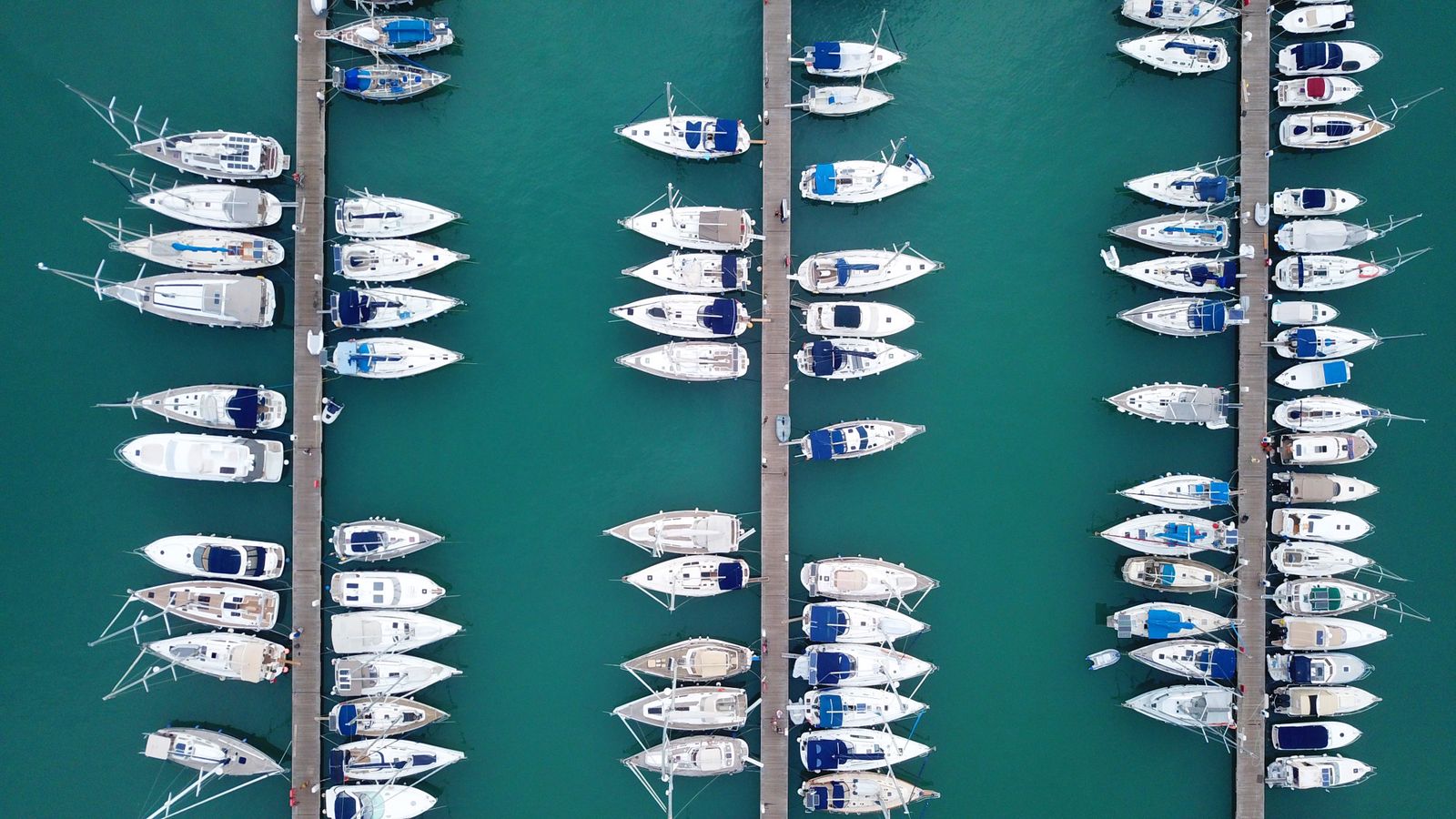
Stern-to docking on your own anchor is the classic method for non-tidal areas. With no significant tide, the boat can sit with its stern close to a fixed quay all day without the height difference becoming a problem. In tidal areas the technique simply does not work, which is exactly why so many otherwise seasoned skippers never learn it. The reward is obvious: boats moored stern-to pack far more tightly than boats alongside, you step ashore over the passerelle, and the bow points out into the harbour for privacy.
Prepare before you commit
Most stern-to dramas are decided before the boat ever starts reversing. A few habits make the difference:
Make a test approach. Pass the berth once and double-check it is actually suitable: width, depth, neighbouring chains and lazy lines.
Prepare while stationary. Hold the boat in front of the berth and rig everything calmly: stern lines, fenders on both sides, and a couple of stern fenders just in case (chapter one of every charter briefing, and still often skipped).
Know your chain. Use a scope of at least 5 times the water depth, and check whether the chain has length markers. On most charter boats the color code (which color sits at which length) is written on the inside of the chain locker hatch. On your own boat, add colored markers yourself, for example cable ties every 10 meters (one at 10 m, two at 20 m and so on), for easy counting.
Consider prop kick. In reverse, the propeller pushes the stern sideways. Know which way yours kicks before you need to know it.
The classic drop: no wind
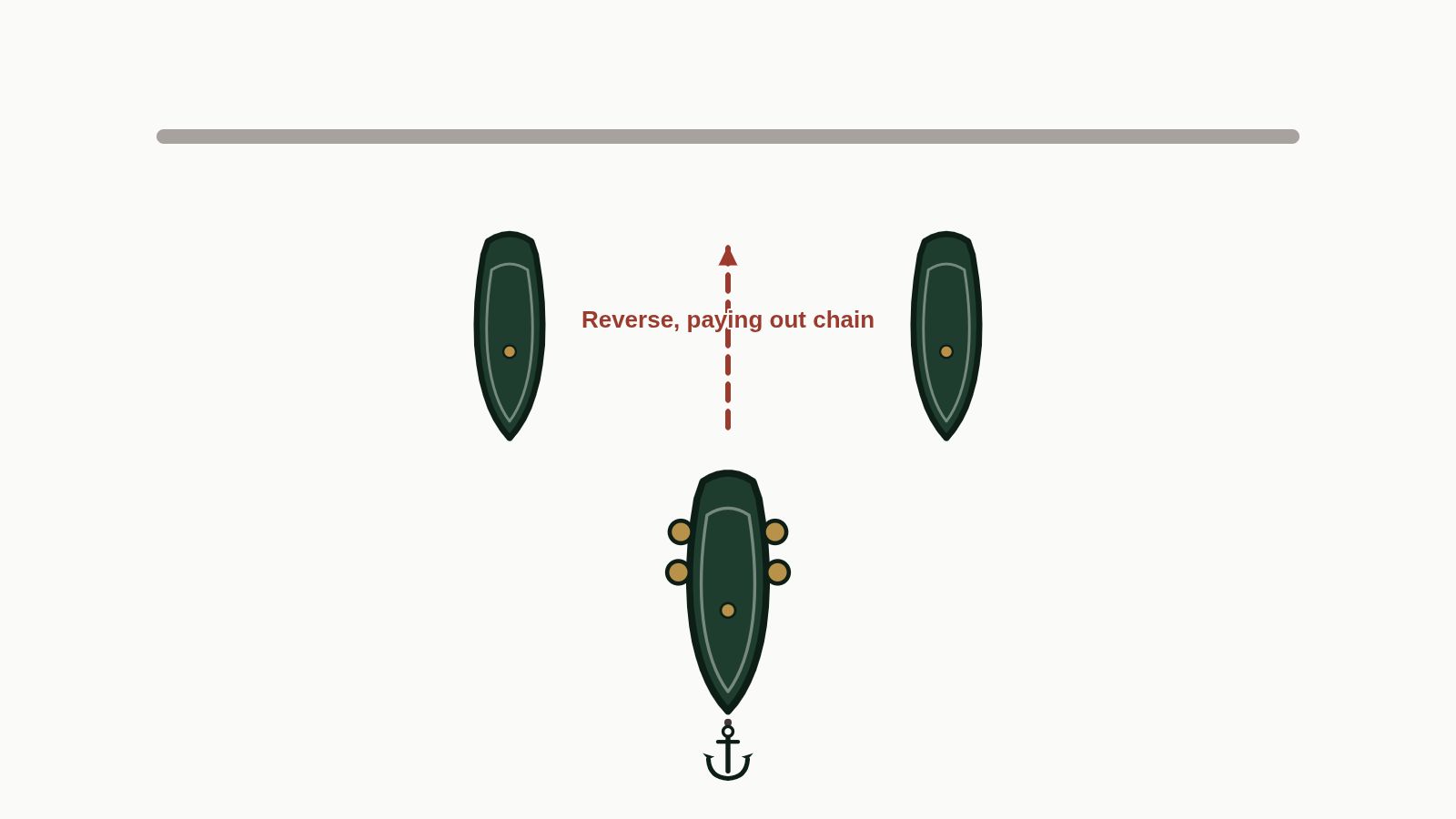
With calm conditions the manoeuvre is pure geometry. Position the boat perpendicular to the quay, in line with your berth, and stop at a distance equal to the length of chain you plan to use. Drop the anchor and reverse straight back, paying out chain as you go, until the stern is a passerelle-length from the quay. Secure the stern lines, tension the chain, done.
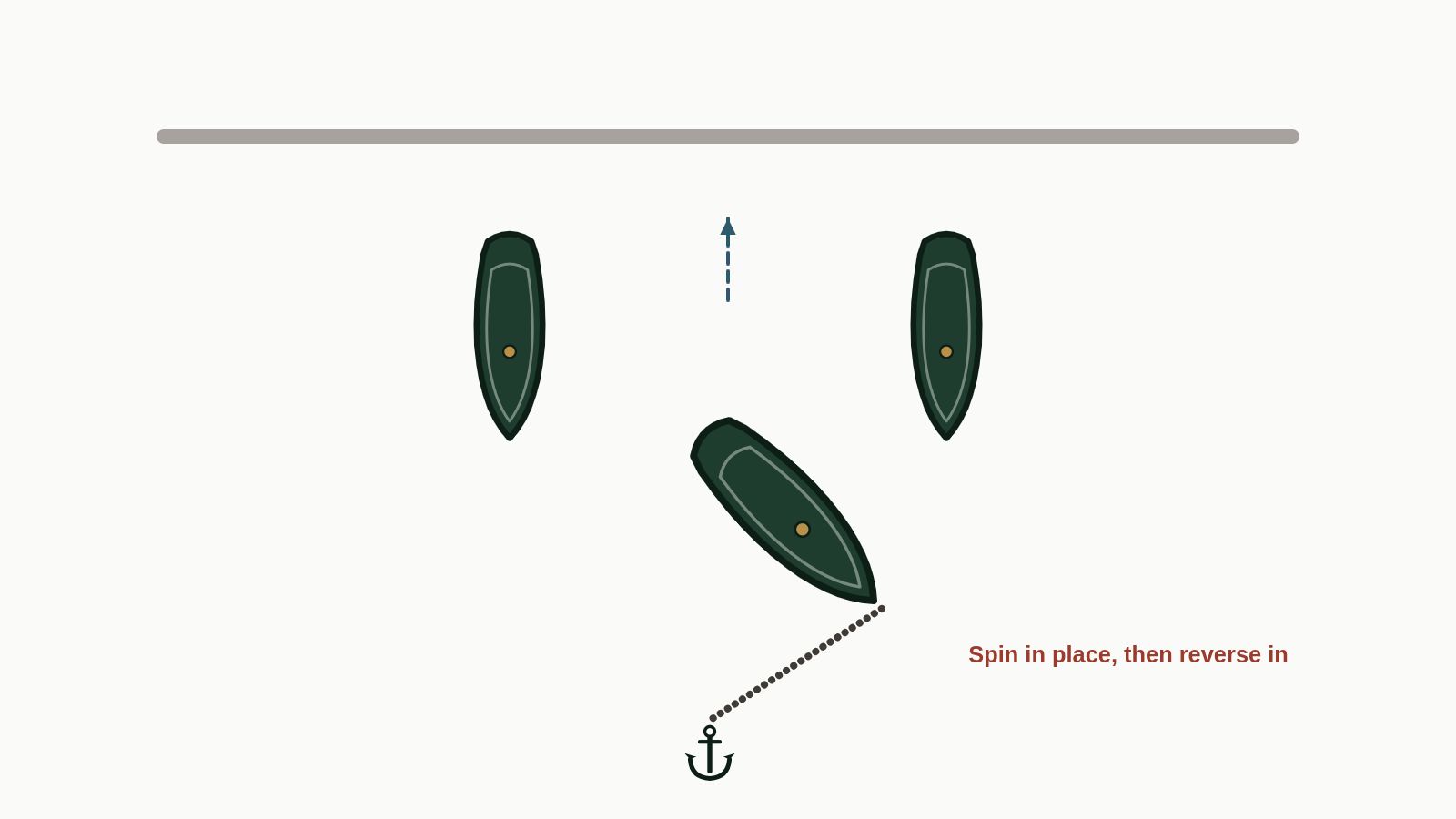
If you lose control of the boat halfway back (it happens to everyone in a crosswind gust), do what most skippers do: there is no need to retrieve the chain and start over. Just stop dropping chain, spin the boat in position, then reverse again and continue dropping chain as you enter the berth.
Anchor work that makes it smooth
Lower a few meters of chain in advance, so the anchor already hangs close to the seabed before the final "drop" call comes.
The anchorman keeps dropping chain only while the chain leads away at an angle. If it hangs straight down, pause: you are piling chain on the seabed instead of laying it out.
After 20 to 30 meters of chain you can test the grip, or test it once docked.
Once the snubber line is secured, put the chain on the windlass in a slack position. The snubber takes the load, not the gearbox of your windlass.
No windlass? Pass the chain through a loop of line secured on a cleat. You can stop the drop at any time just by pulling the line.
Lazy-line marinas
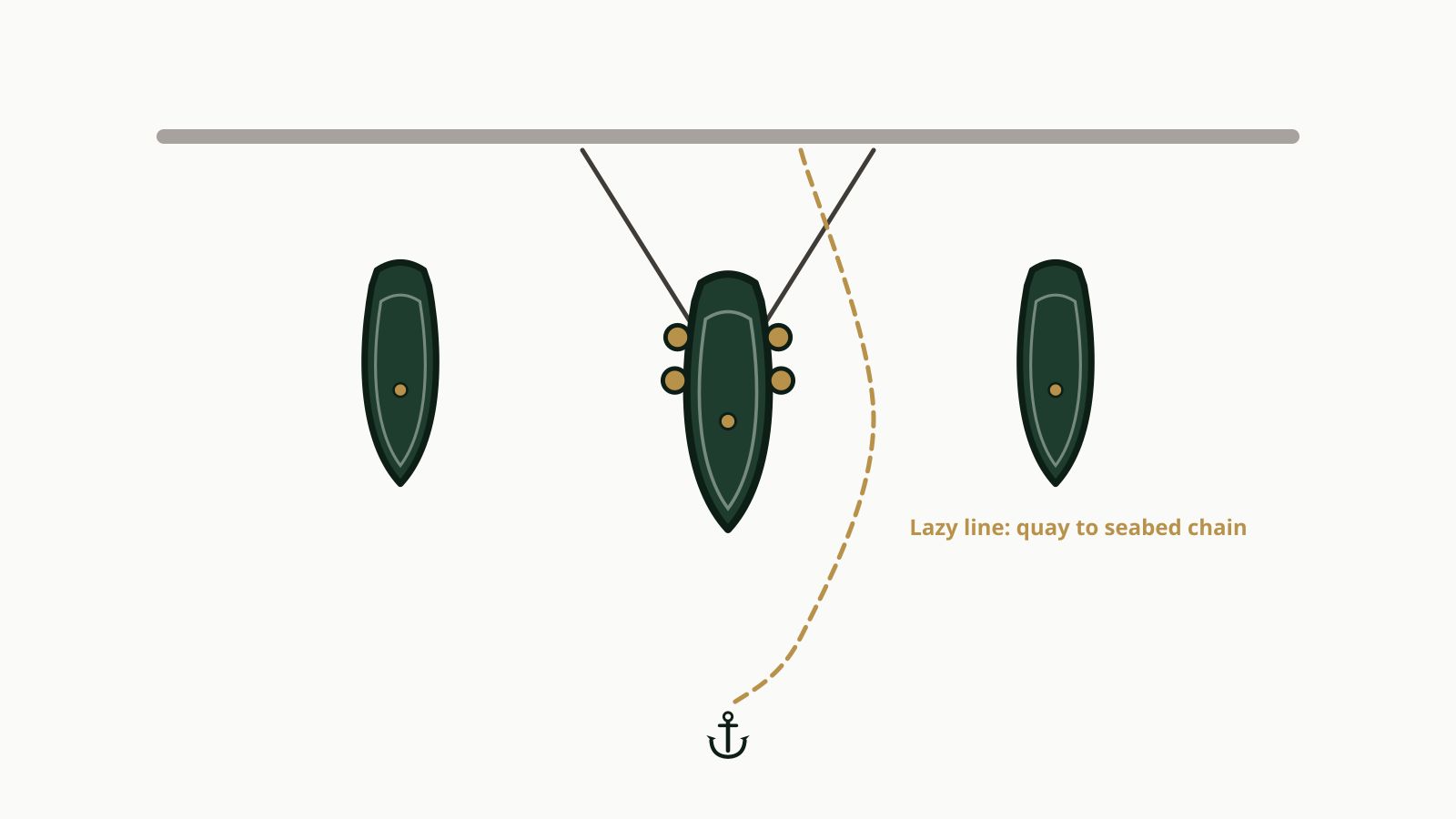
Most Mediterranean marinas spare you the anchor entirely. A lazy line (a light line made fast on the quay, leading to a heavy mooring chain on the seabed) replaces your ground tackle. The sequence matters:
Reverse into the berth.
Secure the stern lines.
Engage gently forward.
Walk the lazy line to the bow and secure it under tension.
Two tips save skin and gelcoat here. First, keep sailing gloves aboard; lazy lines grow barnacles and shells that cut bare hands. Second, keep the stern lines loose until the lazy line is secured at the bow, then simply reverse and take in the stern-line slack. Stretching a lazy line by hand against tight stern lines is a fight you will lose.
In a crosswind with a boat already berthed to leeward, do not be shy: it is always easier to lean gently on the leeward boat, with fenders doing the work, until your mooring is secured.
Reading the wind
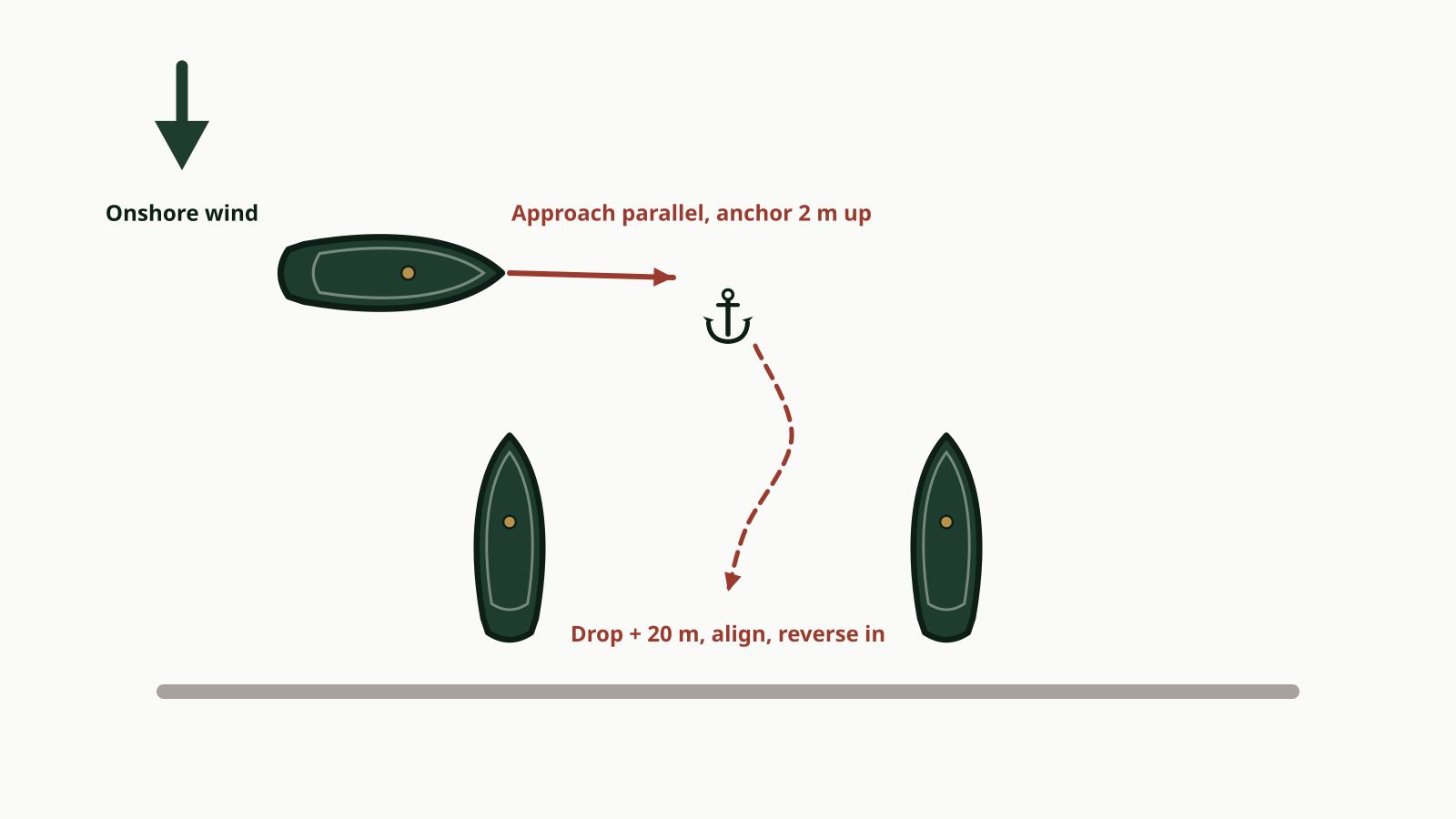
Onshore wind (blowing onto the quay)
The demanding one. A perpendicular approach must carry speed to keep steerage, which is exactly what you do not want near a stone quay. The top trick: approach parallel to the dock instead, with the anchor already lowered to about 2 meters above the seabed. Stop where your bow lines up with the center of your berth, quickly drop the anchor plus about 20 meters of chain, and pause. The boat swings until it aligns with the wind. Then continue dropping chain and reverse into the berth. Lose control? Spin the boat and repeat.
Offshore wind (blowing off the quay)
The easiest scenario. The wind holds the boat straight while you reverse into the berth; your only real job is the prop kick. Offset the helm while going astern to compensate, and adjust once more as you slow down.
Wind abeam
The crossing wind drifts your boat down onto the leeward neighbour, so do not aim for the centerline of the berth. Place the boat to windward instead. The bow crew calls lateral distance in wind terms: "2 meters above" means 2 meters to windward of the berth line, "1 meter below" means to leeward of it. Stop a few meters above, turn the helm to the wind, lower some chain and wait while the boat drifts slowly sideways. Start dropping the anchor 1 to 2 meters above the berth line and reverse in while the wind carries you down onto it. If a gust wins, spin the boat and go again. With an L-drive and wind on starboard, start reversing before the boat is fully perpendicular to the dock.
Getting out again
In calm weather, departure is the manoeuvre in reverse: slip the stern lines, motor gently ahead off the quay, recover the lazy line or weigh your anchor as you go, and steer clear of the neighbours' chains. Two habits make it smoother. Mind the prop: after dropping the lazy line, make sure it is clear of the propeller before you engage engine power. And give the windlass power while weighing anchor: run the engine in neutral at around 1200 rpm (generator mode) so the alternator feeds the windlass as the chain comes up.
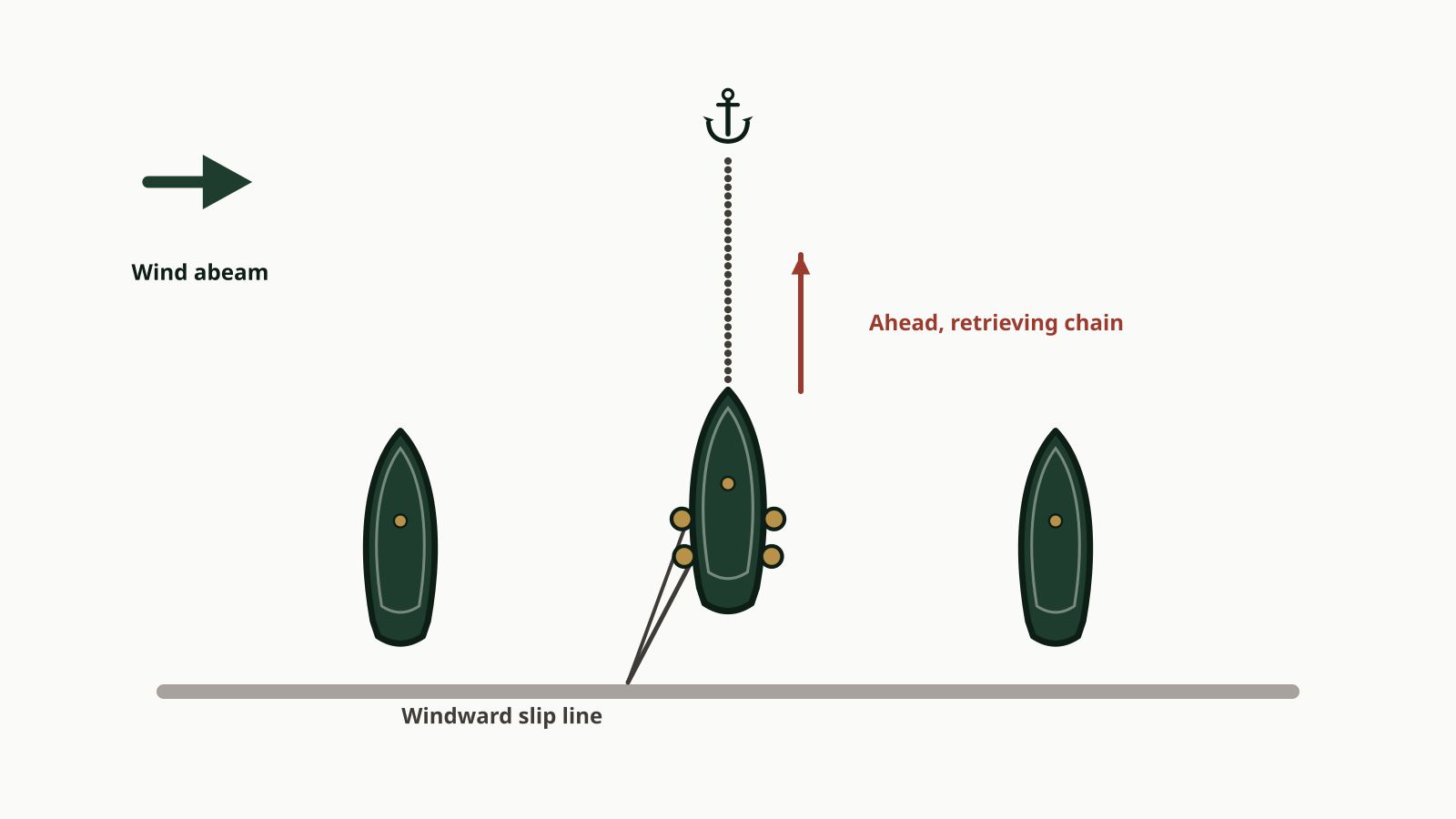
With wind abeam it deserves respect, because the crossing wind can drift you onto the anchor chain of the boat to leeward. Reduce the risk with a long windward stern slip line. Engage revs ahead and turn the helm to the windward side, then feed the stern line through the cleat while the bow crew retrieves chain. Once your transom reaches the beam of the leeward boat, you are ready to let go. Then wait for a time window with less wind and depart, keeping the bow on the center of your old berth while the rest of the chain comes up.
Test yourself
Ten random questions from our stern-to pool: preparation, anchor work, lazy lines, wind technique and departure. See how much of this actually stuck before your next charter.
Quiz
Open full quizStern-To Docking: Are You Ready to Med Moor?
Backing into a Med berth on your own anchor or a lazy line, in every wind direction, and getting out again. 10 questions drawn at random each run.
Before you start
This quiz is just for fun and self-study. The answers may contain mistakes, and it is not a professional assessment, exam, or certification of any kind. If you don't feel confident to sail, please get proper guidance from a qualified instructor or skipper — at sea, real experience beats a quiz score every time.
Practice beats theory: pick a quiet morning, an empty stretch of quay and a patient crew, and run the whole sequence twice. By the third marina of your charter, the crowd on the quay will be watching someone else.
Frequently asked questions
Why do Mediterranean marinas dock boats stern-to instead of alongside?
Med mooring, or stern-to docking, is the standard Mediterranean technique because there is no significant tide. Without tidal height changes, a boat can sit with its stern close to a fixed quay all day without clearance becoming a problem. Boats moored stern-to also pack far more tightly than boats berthed alongside, the bow points outward for privacy, and crew step ashore over a passerelle from the stern.
What is a lazy line in a Mediterranean marina and how do you use it?
A lazy line is a light line attached to the quay that leads underwater to a heavy mooring chain on the seabed, replacing the need to drop your own anchor. To use one, reverse into the berth, secure the stern lines loosely, engage briefly forward, then walk the lazy line to the bow and secure it under tension before tightening the stern lines. Wearing sailing gloves is strongly recommended because lazy lines collect barnacles and shells that can cut bare hands.
How do you dock stern-to when there is an onshore wind blowing onto the quay?
With an onshore wind, a straight perpendicular approach forces you to carry speed for steerage, which is dangerous near a stone quay. A safer method is to approach parallel to the dock with the anchor already lowered close to the seabed, stop when your bow is level with the center of the berth, drop the anchor with about 20 meters of chain, and wait for the boat to swing downwind before reversing into the berth. If you lose control at any point, you can spin the boat back into alignment without retrieving the anchor.
How much anchor chain scope do you need for stern-to docking and how do you measure it?
A scope of at least 5 times the water depth is recommended for stern-to docking. To keep track of how much chain you have paid out, check the inside of the chain locker hatch on a charter boat, where the color code is usually written. On your own boat, you can add colored cable ties every 10 meters as easy-to-count length markers.
How do you safely leave a stern-to berth when the wind is blowing across the marina?
When departing in a crosswind, the main risk is drifting onto the anchor chain of the boat to leeward. To reduce this, rig a long windward stern slip line, engage revs ahead with the helm turned to windward, and slowly feed the slip line while the bow crew retrieves the anchor chain. Once your transom clears the beam of the leeward boat, wait for a lull in the wind before departing, keeping the bow aimed at the center of your old berth while the remaining chain comes up.
What is prop kick and why does it matter for stern-to docking?
Prop kick is the tendency of the propeller to push the stern sideways while the engine is in reverse. Knowing which direction your propeller kicks matters in stern-to docking because it affects whether the stern will drift left or right as you reverse into the berth. You can compensate by offsetting the helm while going astern and adjusting again as the boat slows down.


