Sailing from Paros into the Quiet Cyclades: Iraklia, Koufonisia, Amorgos and Beyond
Updated
Paros is the gateway, but the real Cyclades start once you clear the harbour and head south. This seven-day route threads through the Small Cyclades and the quieter outer islands, covering Iraklia, Schinoussa, Koufonisia, Amorgos, and Donoussa on passages that feel nothing like the usual charter circuit.
On this page

Paros is many sailors' first taste of the Cyclades, and it's easy to see why: central location, reliable ferry links, and a solid marina at Parikia. But the moment you clear the harbour and point south, a different Cyclades opens up. Fewer boats. Tavernas that run out of food by 9pm. Anchorages where the only other vessel is a local fishing kaiki. This seven-day route pushes into the Small Cyclades and the quieter outer arc, covering Iraklia, Schinoussa, Koufonisia, Amorgos, Donoussa, and Naxos on the return.
Why Sailors Make This Passage
Most sailors in the Cyclades stick to the "golden triangle" of Mykonos, Paros, and Santorini. That means the outer islands stay genuinely quiet even in August. The Small Cyclades group sits just south and east of Naxos, close enough that you can hop between them in half-day sails, yet far enough from the ferry lanes that the anchorages feel remote. Folegandros and Sikinos, sitting to the southwest, reward the extra miles with clifftop chora villages and bays that see a fraction of the traffic hitting Santorini. Amorgos, the long ridge of an island to the east, is a proper passage destination: dramatic, a little rugged, and deeply satisfying to reach under sail.
This is a route for sailors who want to feel like they've actually gone somewhere, not just relocated their sundowner from one crowded dock to the next.
Logistics and Paperwork
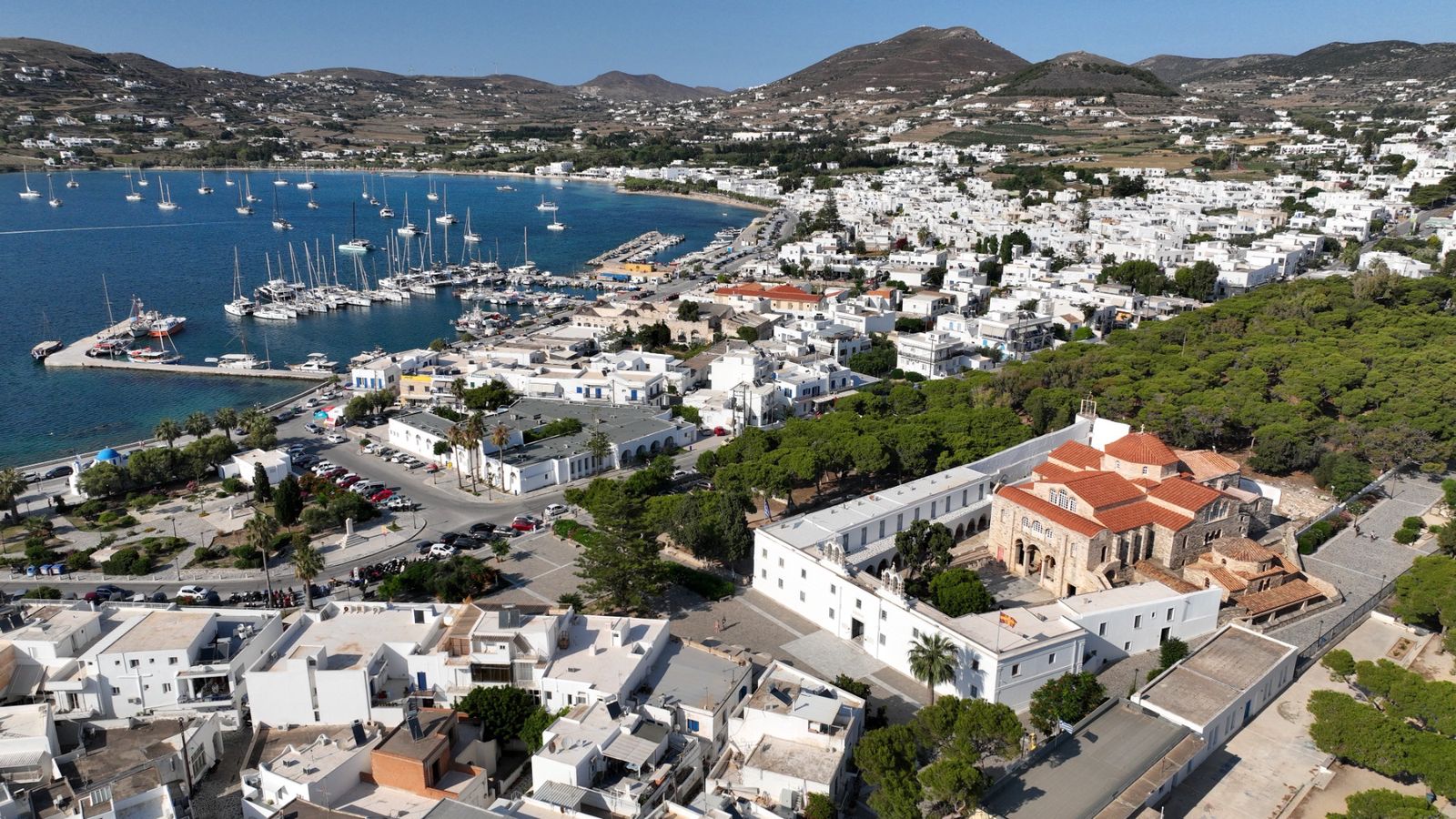
Starting Port: Parikia or Naoussa, Paros
Most charterers pick up from Parikia Marina, though Naoussa in the north of the island is also a common base. Parikia is the more practical start for this southbound route. Charter fleets operating out of Paros include:
- Kiriacoulis (Parikia)
- Dream Yacht Charter (Parikia)
- Neilson / Sunsail (both have Cyclades operations, often with vessels repositioned through Paros)
If you're on a bareboat, check in with the charter company no later than 4pm on Day 1. Briefings at most Paros operators run from around 3pm to 5pm, with departure the following morning.
Staying Within Greece
This entire route stays within Greek territorial waters, so there is no customs clearance, no transit log, and no border paperwork. You do not need a crew list stamped by port police for island-to-island sailing within Greece, though your charter company will have submitted crew details to the port authority at the start. Carry your passports and the ship's papers at all times; port police at smaller islands (Iraklia, Schinoussa) occasionally check.
One-Way Drop-Off
This is a loop route returning to Paros, so one-way fees do not apply. If you want to end in Naxos or Amorgos instead, discuss this with the charter company before signing the contract. One-way drops to a different island are possible with some operators but carry a repositioning fee (typically 150-400 EUR) and must be agreed in advance. Most fleet operators prefer a same-base return.
Charter Company Rules on Sailing Areas
Most Greek charter companies define a permitted sailing area in the contract. Paros-based operators typically include the Cyclades in full, but confirm that Amorgos and Donoussa are within your permitted zone. Some budget operators restrict area to a tighter radius. The Small Cyclades are almost always included; the far eastern islands like Donoussa occasionally require a specific area extension.
Weather and Difficulty
Prevailing Winds: The Meltemi
From late June through August, the Cyclades are dominated by the meltemi, a northerly or north-northwesterly wind that builds during the day and eases overnight. In the open passages between islands it regularly reaches force 4-6 (15-25 knots) and can spike to force 7 in July and August, particularly in the channels between Paros and Naxos and in the open water south of Naxos toward the Small Cyclades. The meltemi typically starts around 11am and peaks in the afternoon. Experienced sailors time their passages to leave early, arriving before the afternoon blow.
South of Naxos, in the Small Cyclades channel, the meltemi funnels between the islands and accelerates. Koufonisia in particular sits exposed; the anchorage at Pori Beach on the north side is tenable in moderate meltemi but becomes uncomfortable in a strong one. The windward anchorages on Schinoussa and Iraklia are better protected.
Best Months
May and June offer the best combination of settled weather, manageable meltemi, and uncrowded anchorages. Early June is arguably the sweet spot: water temperature is pleasant, facilities are open, and you won't be fighting for a mooring. September is excellent: the meltemi fades, winds become more variable but often lighter, and the crowds thin dramatically after the first week. July and August are perfectly sailable but require earlier departures and more flexibility on anchorages. October is possible but some tavernas close from mid-month, and weather becomes unpredictable.
Difficulty Rating
Intermediate. This route is not suitable for complete beginners. The open water passages (particularly Paros to Iraklia and Amorgos to Donoussa) involve several hours in the Aegean with limited shelter and exposed sea states. Meltemi conditions require confident sail handling and comfort with reefing on a rolling boat. A bareboat skipper should have at least 2,000 logged miles, including offshore passages. The anchorages on the smaller islands are generally straightforward but some require anchor-and-stern-to maneuvering in tight spaces. Donoussa in particular has a small harbour that demands precision in a cross-wind.
Day-by-Day Passage Plan
Day 1: Arrive Paros (Check-In Afternoon)
Check-in at Parikia Marina between 3pm and 5pm. Complete charter briefing, provision for 3-4 days (prices and selection are much better in Paros than in the Small Cyclades), and review the weather forecast. A good provisioning stop is the supermarket on the waterfront in Parikia, 5 minutes' walk from the marina. Dinner ashore in Parikia. Overnight in the marina.
Distance: 0 nm.
Day 2: Paros to Iraklia (Approx. 38 nm)
Depart Parikia by 7am to get ahead of the meltemi. The course takes you south past the southern tip of Paros, then across open water southeast toward Iraklia. This is the longest exposed passage of the week. If the meltemi is up, expect a lively beat to close-hauled sail for parts of the crossing. Seas can be 1.5-2.5 m in a strong meltemi.
Iraklia has a small harbour at Agios Georgios (also called Agios Giorgis) on the north coast. The harbour is tight with a concrete quay; anchor-and-stern-to is the norm. Alternatively, anchor in the bay off the beach to the west of the harbour in 4-8 m over sand. The village above the harbour has two or three tavernas. Iraklia has fewer than 150 permanent residents and almost no tourist infrastructure; this is the point.
Distance: approx. 38 nm. Sailing time: 5-7 hours depending on conditions.
Day 3: Iraklia to Schinoussa to Koufonisia (Approx. 12-15 nm)
Short day, but take your time. Schinoussa is just 5 nm northeast of Iraklia. The main anchorage is in the bay below the chora at Mersini, though it can be rolly in a northerly. The chora itself is a 15-minute walk up the hill and has a genuinely beautiful village square. Stop for coffee before continuing.
Koufonisia (specifically Ano Koufonisi, the inhabited island) is 6-7 nm east of Schinoussa. The main harbour at Koufonisia is the social hub of the Small Cyclades in summer. Expect a lively quay, good fish tavernas, and a young, relaxed atmosphere. The island is tiny enough to walk around in an hour. Anchor in Pori Bay on the north shore for better shelter in meltemi conditions, or take a berth on the quay if space allows. Note that Koufonisia harbourmaster does collect fees in season.
Distance: approx. 12-15 nm total. Sailing time: 2-4 hours. Use the afternoon to explore ashore.
Day 4: Koufonisia to Amorgos (Katapola or Aegiali) (Approx. 18-25 nm)
Amorgos is the crown of this route. Depart Koufonisia by 8am. The passage runs east-northeast across open water; the meltemi is usually on the beam or slightly forward of beam for this leg, giving a fast, exciting sail. Two harbours offer themselves on Amorgos: Katapola in the central west, which is the main port and has a proper quay with tavernas and a supermarket; and Aegiali in the north, which is quieter, deeper in a fjord-like bay, and arguably more dramatic.
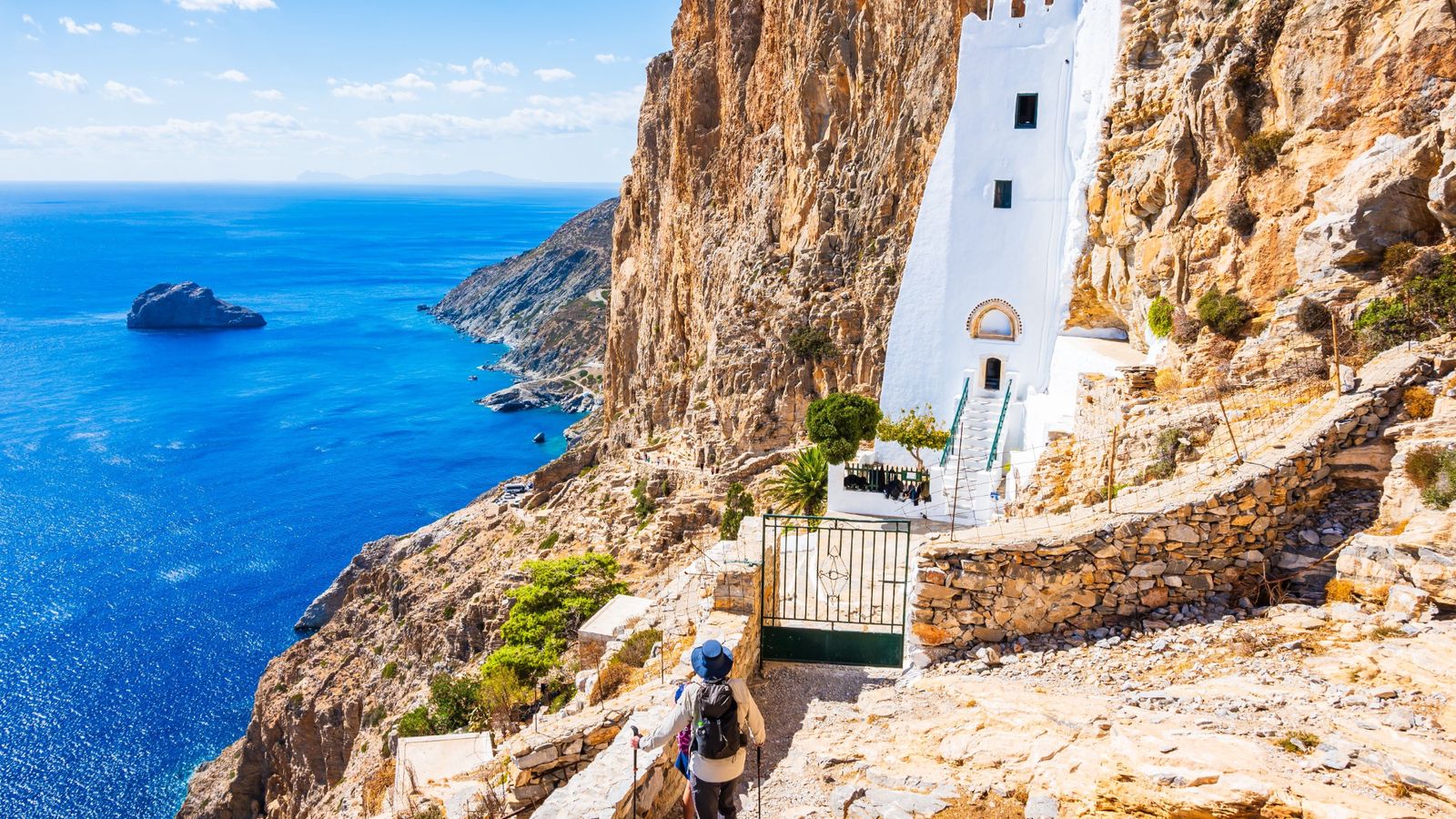
For a first-time visit to Amorgos, Katapola is the better choice: it gives time for the 20-minute bus ride up to Chora (the island capital, perched on a ridge above) and an afternoon visit to the Monastery of Hozoviotissa, the famous whitewashed monastery glued to a vertical cliff face on the island's south coast. The monastery is open to visitors in the morning; plan accordingly if you arrive the evening before and want to visit the next morning before departing.
Distance: approx. 18-25 nm depending on which port. Sailing time: 3-5 hours.
Day 5: Amorgos to Donoussa (Approx. 20 nm)
Donoussa sits to the north of the Small Cyclades group, northeast of Naxos, and it's the least-visited of the four small island cluster. Depart Amorgos (from Aegiali, if you moved there on Day 4, or return north along the coast first from Katapola) and sail northwest. The passage from Aegiali to Donoussa is roughly 20 nm in open Aegean water; from Katapola add 6-8 nm.
Donoussa's harbour at Stavros is small and east-facing. The village sits right on the harbour and is genuinely one of the most unspoiled spots in the Cyclades: a handful of houses, two or three tavernas, a bakery that produces excellent spanakopita. Mooring is stern-to on the quay; a cross-wind can make berthing tricky. The anchorage in the bay is an alternative in settled conditions. There is one small supermarket with limited stock; buy anything you need in Amorgos before leaving.
Distance: approx. 20-28 nm from Amorgos. Sailing time: 3.5-5 hours.
Day 6: Donoussa to Naxos (Approx. 28 nm)
This is your buffer day and your bridge back toward Paros. Depart Donoussa early (6:30-7am) as the passage runs southwest and the meltemi will be dead on the nose or close-hauled for much of the way if it's up. Naxos is the largest of the Cyclades and its main port, Naxos Town (Chora), has a full marina, excellent provisioning, waterfront restaurants, and the famous Portara (the marble gateway of an unfinished temple of Apollo) standing guard at the harbour entrance.
Arrive Naxos by early afternoon. Clear any provisioning needs, explore the old town's kastro and marble-paved streets, and enjoy a proper sit-down dinner. Naxos is the best-stocked island in the Cyclades and a good place to refuel (both the boat and the crew). Overnight in Naxos marina or on the town quay.
Distance: approx. 28 nm. Sailing time: 5-7 hours (allow for headwinds).
Day 7: Naxos to Paros (Approx. 16 nm)
An easy final leg. Depart Naxos in the morning and cross the strait back to Paros. The channel between Naxos and Paros is reliably windy in the afternoon; a morning departure puts you into Parikia by lunchtime with the meltemi still building behind you. If the wind is up and on the beam, this can be an exhilarating 2-3 hour blast to finish the week.
Charter return is typically by 9am on the final day (confirm with your operator). Most companies accept the boat back on the evening of Day 7 and do the handover the following morning; ask about this when you check in, as it effectively gives you a free extra night in Paros if you want it.
Distance: approx. 16 nm. Sailing time: 2-3 hours.
Total Distance and Summary
Total route: approximately 130-145 nautical miles over 7 days, with 5 sailing days and 2 short or buffer days. Daily passages range from 12 to 38 nm, with the Day 2 crossing (Paros to Iraklia) being the longest and most demanding. The rest of the legs are comfortably in the 15-28 nm range.
Backup Stops and Weather Contingencies
If the Meltemi Is Strong on Day 2
If the forecast shows sustained force 6-7 for Day 2, delay the Paros-to-Iraklia passage by a day and use Day 2 to sail south inside Paros to the anchorage at Alyki (south Paros), which is calm and sandy. You can then attempt the crossing on Day 3 when conditions often ease, and compress the Small Cyclades into a tighter itinerary (Koufonisia instead of both Iraklia and Schinoussa, then directly to Amorgos).
If Amorgos Is Too Exposed
In a strong sustained meltemi, the outer coast of Amorgos is rough and the Katapola approach involves a rolly entrance. An alternative Day 4 destination is the anchorage at Keros (the uninhabited archaeological island southwest of Koufonisia), which is calm in northerlies, or a second night in Koufonisia and a direct run to Naxos the following day, skipping Amorgos and Donoussa. This is a significant change to the route but a safe one.
If Donoussa Is Inaccessible
Donoussa's small harbour is sometimes impossible to enter or uncomfortably exposed in a strong northeasterly. The fallback is to sail from Amorgos directly to Naxos (approximately 38-42 nm from Katapola) and spend an extra night there. Naxos has always been the reliable backstop on this route.
General Tips
Always check the forecast on Windy, Poseidon (the Greek national forecast service at hnms.gr), or PredictWind before each passage. The HNMS Poseidon model is often more accurate for local Aegean conditions than the European models. In the Small Cyclades, water and fuel are limited; fill your tanks in Paros, Naxos, and Amorgos (Katapola has a fuel quay). Cash is essential on Iraklia, Schinoussa, and Donoussa; card machines exist but are unreliable. The harbourmasters on the smaller islands speak basic English; a printed crew list is appreciated even if not officially required.
Frequently asked questions
How experienced do you need to be to sail the Small Cyclades from Paros?
Intermediate experience is required. Skippers should have at least 2,000 logged miles including offshore passages, and be comfortable reefing and sailing to windward in force 5-6 conditions. The open crossings, particularly Paros to Iraklia and Amorgos to Donoussa, can produce confused seas and sustained wind in the Aegean meltemi season. Complete beginners or first-time bareboaters should not attempt this route without a professional skipper.
What is the meltemi and how does it affect sailing in the Cyclades?
The meltemi is a northerly wind that dominates the Cyclades from late June through August. It typically builds after 11am and peaks in the afternoon, often reaching force 5-6 and occasionally force 7 in exposed channels. Sailors on this route should plan to depart early (before 8am) for longer passages and expect the most comfortable conditions in the morning. May, early June, and September offer a gentler meltemi and are the preferred months for less experienced crews.
What is the best time of year to sail from Paros to the Small Cyclades and Amorgos?
The best months are May, June, and September. Early June combines manageable meltemi strength, open tavernas, pleasant water temperatures, and uncrowded anchorages. September is excellent after the first week, when wind eases and crowds thin. July and August are fully sailable but require earlier daily departures and more flexibility in anchorage choice. October is possible but some facilities on the smaller islands close mid-month.
Do I need any special paperwork or permits to sail between the Cyclades islands?
This entire route stays within Greek waters, so there is no customs clearance and no border paperwork required. Your charter company submits crew details to the port authority at departure. Carry passports and ship's papers at all times, as port police on smaller islands such as Iraklia and Donoussa occasionally check. No transit log or crew list stamp is required for island-to-island sailing within Greece.
Where can I get fuel and provisions in the Small Cyclades?
Fuel and water are best topped up in Paros, Naxos, and at Katapola on Amorgos, which has a dedicated fuel quay. Iraklia, Schinoussa, Donoussa, and Koufonisia have very limited or no fuel facilities. Water availability is patchy on the smaller islands. Provision generously in Paros before departure and restock in Naxos, which has the best supermarkets in the Cyclades. Cash is essential on the smallest islands, as card readers are unreliable.
How many nautical miles is the full Paros to Small Cyclades and Amorgos route?
The total sailing distance is approximately 130 to 145 nautical miles over seven days, with five active sailing days and two short or buffer days. Individual legs range from around 12 nautical miles (between the Small Cyclades islands) to 38 nautical miles (Paros to Iraklia). Daily sailing time ranges from two to seven hours depending on wind and the specific leg.


