Corfu to the Heel of Italy: Crossing the Adriatic and Back in 12 Days
Updated
Starting and finishing in Corfu, this 12-day loop cuts across the Strait of Otranto to Italy's heel, clears customs in Albania's undervisited Riviera, and returns through Saranda — a proper international passage that stays manageable for a competent bareboat crew.
On this page

Most bareboat crews never leave their home sailing area. They pick a country, lap around a set of islands, and call it a holiday. Nothing wrong with that. But if you want to cross an international sea, clear customs in two foreign countries, and still be back at your charter base in 12 days, the Corfu-Otranto-Albanian Riviera loop is one of the most achievable blue-water-adjacent passages in the Mediterranean.
The numbers make sense: the Adriatic crossing from Othonoi to Otranto is roughly 60 nautical miles — a long day passage, not an overnight. Albania's coastline is dramatic, underdeveloped, and surprisingly easy to navigate bureaucratically for a European passage. And the return leg through Saranda puts you back in Corfu with two days to decompress. This is a proper passage plan with real paperwork, real weather considerations, and a realistic day count for a competent bareboat crew of two to four.
Why Sailors Make This Crossing
The Corfu-to-Italy crossing attracts three types of crews: delivery skippers repositioning boats between fleets, experienced charter sailors looking to push beyond a single country's waters, and cruisers using the Ionian as a stepping stone toward the Adriatic. For charter sailors specifically, this itinerary is often an informal challenge — something to point to afterward as a real passage rather than an island hop.
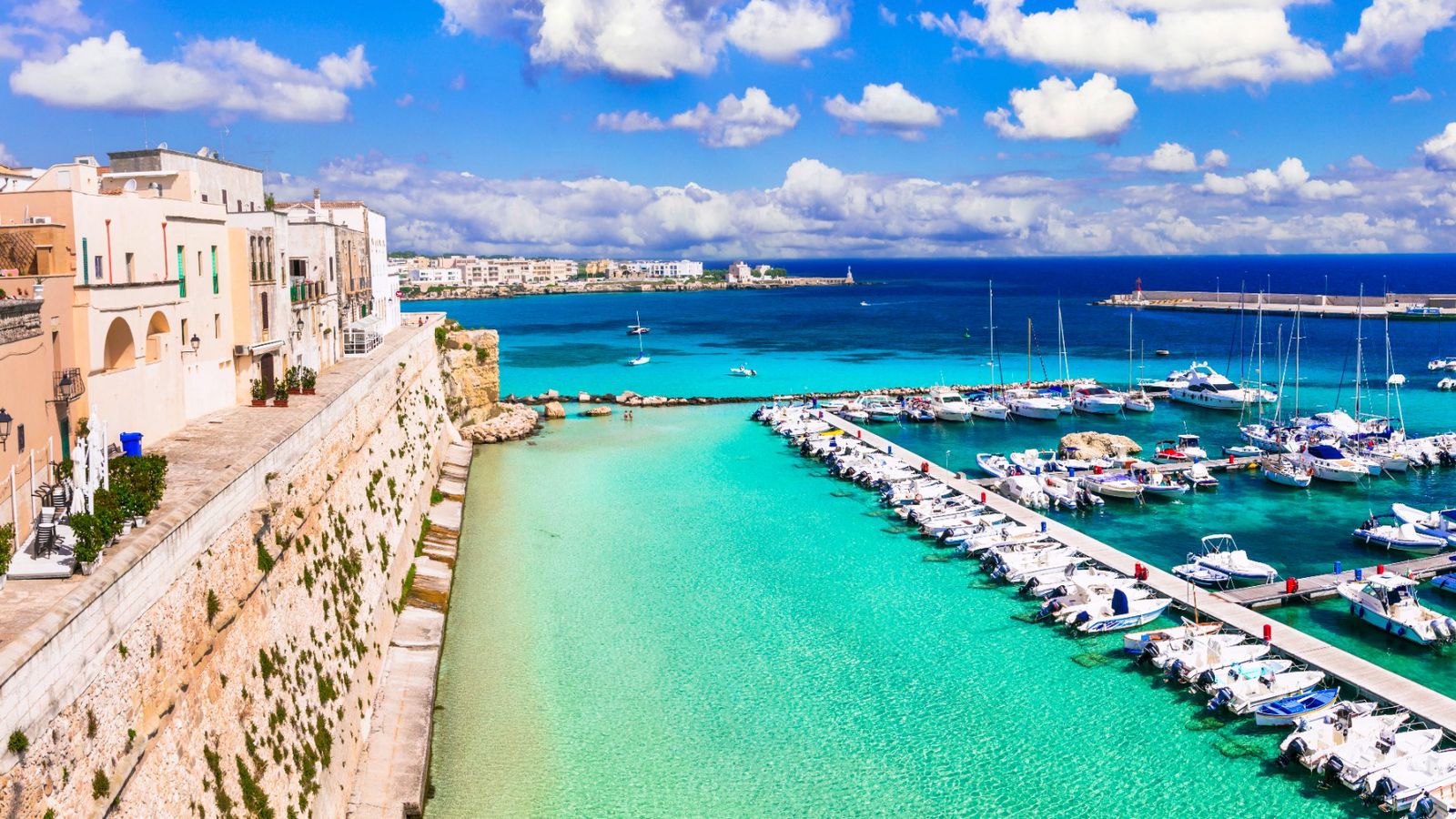
Otranto, at the tip of Puglia's heel, is historically where Eastern Mediterranean trade met Western Europe. For modern sailors it's a well-equipped town with a good marina, a straightforward entry protocol, and excellent food within walking distance of the dock. The Albanian Riviera — Porto Palermo, Himara, Saranda — remains genuinely undervisited by sailing yachts, which means uncrowded anchorages and a cruising experience that feels more like the Greek islands did thirty years ago.
Charter Company Rules
Before you start plotting waypoints, confirm with your charter base whether they allow international passages. Most of the established operators in Corfu (Gouvia Marina area) do permit the Italy and Albania crossing, but they will require advance notice — typically one to two weeks minimum. Some companies charge an additional insurance supplement for going beyond Greek territorial waters. Get this in writing before you depart.
Your charter company will provide a crew list and vessel documentation. Make copies. You will need these at Italian customs in Otranto and at Albanian check-in in Orikum. Some charter companies will pre-prepare a Zarpe (Spanish terminology borrowed informally in the region) or a departure declaration — ask specifically what documentation they provide for international crossings and whether they have a contact number for the port agent in Otranto.
Paperwork Reality: Italy, Albania, and Back to Greece
The paperwork on this loop falls into three distinct moments: entering Italy, entering Albania, and re-entering Greece. The Corfu departure and the Italian departure back toward Albania are administratively light by comparison.
Entering Italy at Otranto
For this passage, you can largely ignore the formalities of the Greece-to-Italy leg. EU freedom of movement means there's no formal check-in or check-out requirement for EU-flagged boats sailing between Greece and Italy. Keep your crew list and boat documents aboard, but you won't be stopping at a port authority in Otranto for a stamp.
Checking Out of Italy
Before crossing to Albania, you must formally check out of Italy. This is important and sometimes overlooked by crews who assume departure is informal. Return to the Capitaneria di Porto in whichever Italian port you depart from — on this itinerary, that will be somewhere along the Puglia coast between Otranto and the port you choose as your departure point for Albania. Get your departure stamp or clearance document. This paperwork is what Albanian authorities will ask to see on arrival.
Entering Albania at Orikum Marina
Albania has invested meaningfully in its marina infrastructure over the last decade, and Orikum Marina (near Vlore) is the designated port of entry for sailing yachts approaching from the south. The check-in process involves the border police, customs, and harbourmaster — they will come to your boat, which is straightforward in practice. Have passports, crew list (multiple copies, they will keep one), ship's registration, and your Italian clearance document ready. Most nationalities, including EU, US, UK, and Australian, can enter Albania without a pre-arranged visa for stays up to 90 days. Confirm current entry requirements for all crew nationalities before departure.
There is a check-in fee at Orikum — typically modest, in the range of €20–50 for the administrative process, separate from your marina berth fee. The marina staff generally speak functional English and are experienced with sailing yachts. If you contact the marina in advance (VHF channel 16, or by phone), they can advise on current procedures and sometimes arrange a port agent to simplify the process.
Checking Out of Albania at Saranda
Saranda is your exit port from Albania. The Saranda port authority and border police office is near the ferry terminal. Check out in person with all crew — bring everything you brought into Albania. They will process your departure and issue clearance for Greece. Do not skip this step. Attempting to arrive in Corfu without Albanian clearance paperwork creates problems with Greek authorities and with your charter company.
Re-entering Greece at Corfu
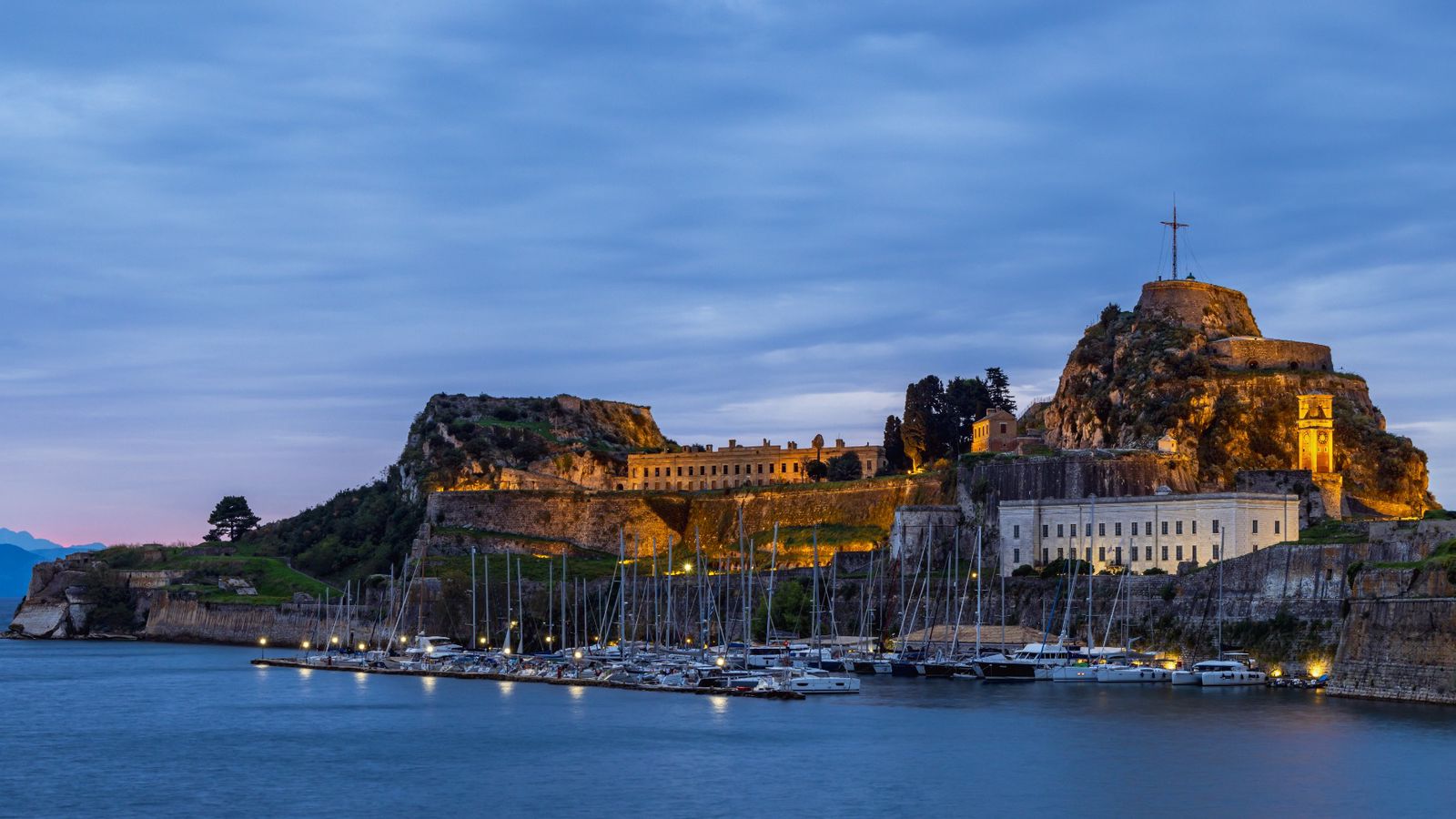
Corfu has a designated check-in point for arriving vessels — Gouvia Marina is the most practical for charter boats returning from Albania. The port police (Limeniko Soma) handle re-entry. As with Italy, EU nationals with EU-flagged vessels have a streamlined process, but you still need to present your crew list, ship's papers, and Albanian clearance document. Non-EU crew members will have their passports checked against Schengen entry records. Allow an hour for this process and plan your arrival timing accordingly — port authority offices in Greece typically operate between 0800 and 1400, and again in the late afternoon. Arriving at 1800 on a Friday can mean waiting until Monday morning, so time your return from Albania with this in mind.
Weather Windows and Sea State
The Adriatic crossing between Othonoi and Otranto sits at roughly 39–40 degrees north latitude. The prevailing summer wind pattern runs from the northwest — the Maestro in local terminology — which technically means a reaching passage heading northwest from Otranto. In practice, the summer Adriatic is dominated by calms and light thermals, with the Bora (a fierce katabatic northeasterly) being the serious hazard but one that is primarily a spring and autumn feature. July and August are the most settled months, with June and September offering better sailing wind at the cost of slightly less predictable weather windows.
For the crossing from Othonoi to Otranto, plan your departure in the early morning — between 0400 and 0600 — to make use of the calm early hours and arrive in daylight with time to clear customs. The crossing is approximately 60 nautical miles, which at 6 knots gives you a 10-hour passage. A 0500 departure means arrival around 1500, which is workable for port authority hours.
The Albanian coast runs roughly north-south and is partially sheltered from westerly weather by the mountains. The Karaburun Peninsula creates interesting wind acceleration and some swell reflection — give the headlands adequate clearance and anchor in the established bays rather than improvising spots on exposed sections of coast. Porto Palermo's bay is well-sheltered and deservedly popular.
Check POSEIDON (Greek weather service), Meteo.gr, and Windguru for the Ionian and southern Adriatic. For the Albanian coast, the same services apply, though forecast resolution can be lower. The NAVTEX for the Adriatic covers this area — maintain a watch and be prepared to alter plans if a Bora warning is issued even in summer.
Difficulty Rating
This passage is rated intermediate to advanced. A competent bareboat skipper with at least two offshore passages (defined as overnight or passage-making beyond sight of land) should be comfortable. The specific skills required are: passage planning with tidal and weather analysis, VHF radio operation and distress protocol, night watch management (relevant if your timing on any leg slips), basic celestial or GPS navigation cross-checking, and the administrative confidence to handle foreign port authority check-ins independently.
This is not a trip for first-time bareboat sailors or anyone for whom the Ionian Island hop felt like a stretch. The crossing distances are manageable, but the international nature of the passage — three different country port authorities, multiple documentation requirements, and the necessity of weather window timing — requires a skipper who can make go/no-go decisions confidently and who has a contingency plan they are genuinely prepared to execute.
Day-by-Day Passage Plan

Day 1: Corfu — Settle In and Explore
Collect the boat in the morning, complete your systems check, and put the departure pressure aside for today. Walk Corfu Town. The old Venetian fortresses, the Liston arcades, and the produce market near the port are all within comfortable walking distance of Gouvia or the Old Port. Brief your crew on the boat's systems, practice a man-overboard drill in the marina basin if they are unfamiliar, and check your paper and digital charts for the Othonoi approach. Buy provisions for three days — the next resupply stop with reliable supermarkets is Otranto.
Day 2: Corfu to Othonoi Island
Othonoi is the northernmost of the Diapontia Islands, sitting about 23 nautical miles northwest of Corfu. It is a small, quiet island with a harbour that accommodates modest-sized yachts on its quay. Depart Corfu mid-morning and plan for a comfortable afternoon arrival. Othonoi is your staging point for the crossing, so spend the afternoon checking the weather forecast meticulously. Confirm wind direction and strength for the 0500 departure window the following morning. Have dinner ashore if the small taverna is open, and get to bed early. A 0430 alarm is coming.
Day 3: Othonoi to Otranto — The Crossing
Set the alarm for 0400. This is your main event. Othonoi to Otranto is approximately 60 nautical miles on a course of roughly 300–310 degrees magnetic, depending on your exact departure point. The passage crosses the Strait of Otranto at its narrowest navigable width and is fully offshore — no stopping if conditions deteriorate, which is why weather confirmation the night before is non-negotiable.
In benign summer conditions, expect 10–12 hours of sailing. If the wind has gone light (common in July and August), motor-sail to maintain schedule and arrive in Otranto before the port authority offices close at 1700. As you approach the Italian coast, the white cliff line of Puglia appears dramatically from the low water — one of those arrival moments worth pausing to appreciate before the marina formalities begin.
Check in with the Capitaneria di Porto and Guardia di Finanza on arrival. Have all documents ready in a waterproof folder. Once cleared, find your berth in Porto di Otranto — the marina and the old port both have visitor berths, and Otranto town is immediately accessible. Dinner in Otranto is excellent: fresh orecchiette, grilled fish, local Primitivo wine. You have earned it.
Day 4: Otranto Rest Day or Coastal Exploration
Otranto rewards an unhurried morning. The cathedral contains one of the most remarkable mosaic floors in Europe — a 12th-century tree of life covering the entire nave. The castle walls overlook the Adriatic crossing you just completed. If you feel energetic, a short sail up the coast toward Santa Maria di Leuca (the very tip of the heel) offers dramatic cliff scenery. Otherwise, use this as a genuine rest and logistics day: confirm the weather window for the Albania crossing, check your provisions, and ensure all the Italian checkout paperwork is understood before you need to execute it.
Day 5: Positioning Day in Puglia — Choose Your Departure Point
Today is a sailing and decision day. You need to position yourself for the crossing to Orikum Marina, which is approximately 75–85 nautical miles depending on your departure point. Otranto itself is a viable departure port, but sailing 20–30 miles south to a point closer to Santa Cesarea Terme or Castro gives you a slightly shorter crossing and puts you further from any northerly Adriatic traffic patterns. Choose based on conditions and your preferred anchorage comfort.
Critically, you must check out of Italy before this departure. Return to the local Capitaneria office wherever you are — Otranto or a coastal port south of it — and complete your exit formalities. Obtain your clearance document for Albania. This step cannot be deferred to tomorrow morning before you leave.
Settle into your chosen departure anchorage or marina berth, set a 0400–0600 alarm depending on conditions, and confirm the forecast one final time before sleep. The Albania crossing is a day passage of similar length to the Otranto crossing — same logic, same early departure discipline.
Day 6: Day Crossing to Orikum Marina — Check In to Albania
Depart at first light. The course from the southern heel of Italy to Orikum is roughly east-southeast, crossing the Strait of Otranto and entering Albanian waters. As you approach the Albanian coast, the mountains of the Ceraunian range are visible from considerable distance — a distinctive landfall. Orikum Marina lies in the Bay of Vlore, south of the city of Vlore itself.
Call the marina on VHF 16 as you approach and confirm the check-in process. The border authorities will board your vessel at the marina berth. Have all documents in order: passports, crew list copies, ship's papers, Italian clearance document. The process is usually completed within two hours. Once cleared, you are free to move within Albanian waters for the duration of your stay.
Orikum itself is a small town with basic provisioning. The marina has fuel and water. Rest well — tomorrow starts slowly, which is deliberate.
Day 7: Karaburun Peninsula Exploration — Half Day Rest, Half Day Sail
Give yourself a late start this morning. You have been running on early alarms for four days. Brew coffee in the cockpit, let the crew sleep in, and depart Orikum around 1000. Today's goal is to round the Karaburun Peninsula and find a sheltered anchorage on its southern or eastern side.
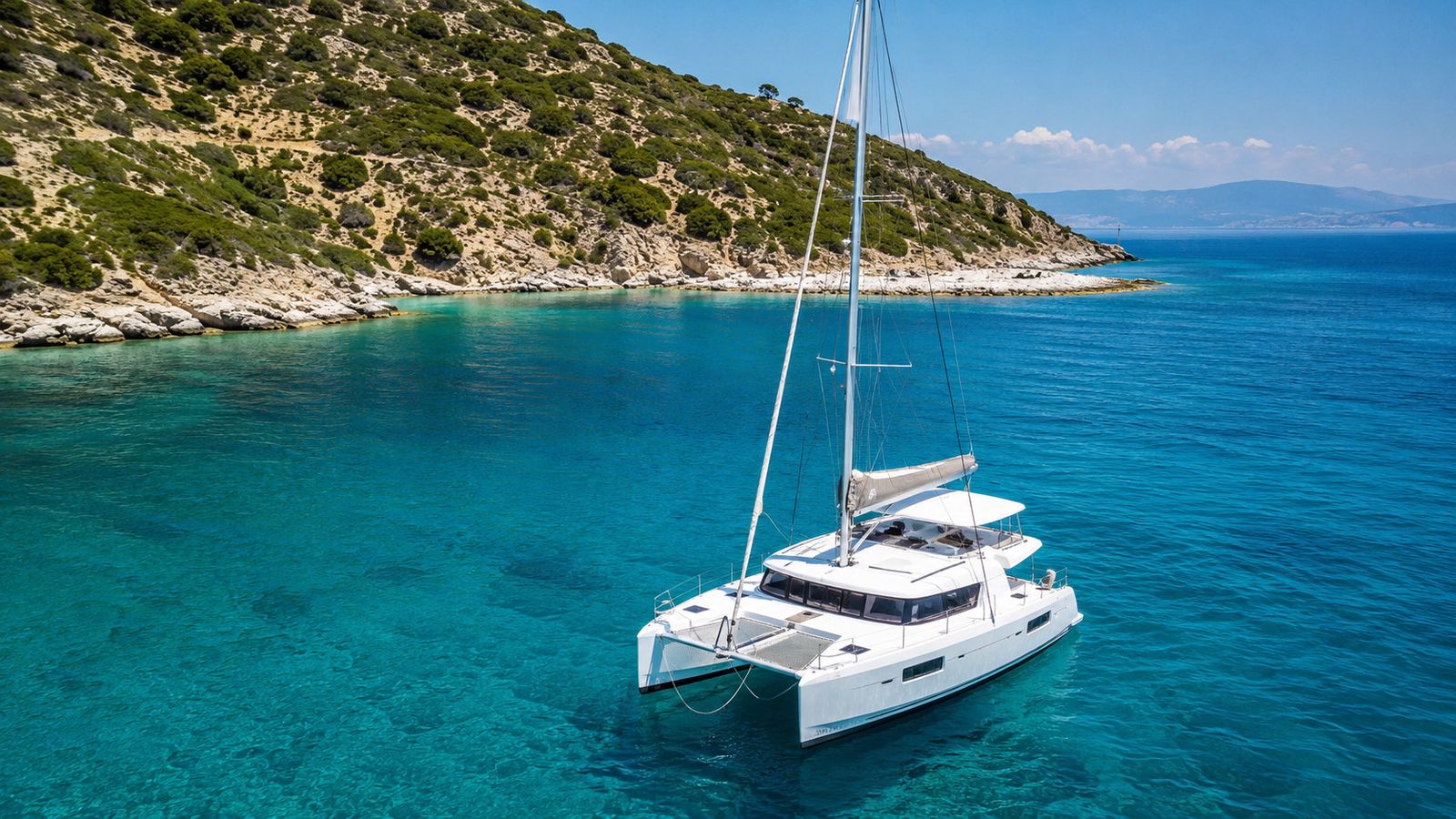
The Karaburun Peninsula is a protected nature reserve — largely uninhabited, with clear water and dramatic limestone cliffs dropping into the sea. It forms the western arm of the Bay of Vlore. Sailing around it involves some exposure to open Adriatic swell, so pick your moment and give the headlands proper clearance. Once around, the anchorages in the bays along the inner (eastern) coast of Karaburun offer spectacular isolation. Anchor in 6–12 meters over sand, set the hook well, and swim. This is one of the genuinely rewarding days of the passage.
Day 8: Porto Palermo
A relatively short sail south from Karaburun, Porto Palermo is the highlight of the Albanian Riviera for most sailors. The bay is protected on three sides and contains a remarkably preserved Ottoman castle on a small peninsula — it served as a submarine base in the Hoxha era and has been partially opened as a museum in recent years.
Anchor in the bay clear of the ferry quay and the small beach area. The water here is exceptional — a deep turquoise that photographs better than it sounds in a passage plan. There are a few small restaurants ashore. Take the dinghy in and walk to the castle if time allows. Spend the night at anchor; the bay is well-sheltered in summer northwesterly conditions.
Day 9: Sail to Saranda — Check Out of Albania
Saranda is approximately 15 nautical miles south of Porto Palermo — a short morning sail. Arrive by midday to ensure you have time to complete the Albanian check-out process during office hours. The port authority and border police are near the ferry terminal; the process mirrors your check-in at Orikum. Obtain your departure clearance document — this is your ticket back into Greece.
Saranda is a proper town, worth an afternoon wander. It has grown rapidly as a tourist destination and has a waterfront promenade, restaurants, and cafes that make for a comfortable final evening in Albania. Directly across the narrow channel from Saranda are the ruins of Butrint — a UNESCO World Heritage Site that is worth a half-day trip if you have energy, though the ferry schedule across to the ruins makes it a logistical commitment on a check-out day.
Provision for the return leg if needed and plan the departure time for the following morning's crossing back to Corfu. The distance is approximately 25–30 nautical miles — a comfortable day passage that does not require a brutal early start.
Day 10: Return to Corfu — Check In to Greece
A relaxed departure — 0700 or 0800 is entirely sufficient. The crossing from Saranda to Corfu is short and pleasant, with the mountains of the Greek and Albanian coast framing the passage. Keep your Albanian clearance document accessible and make for Gouvia Marina or the port of Corfu for formal re-entry.
Present yourself to the port police with all documents: passports, crew list, ship's papers, and Albanian clearance. If you have timed your arrival for mid-morning or early afternoon on a weekday, the process is typically completed without delays. Once cleared, you are back in Greek waters and the pressure of international formalities is over.
If it is early enough, sail around to one of Corfu's east coast bays for a quiet swim. You have earned it a second time.
Days 11–12: Corfu and Paxos
Two days to exhale. Use this time to explore Corfu's coast at leisure — the bays on the northeast coast between Kassiopi and Nisaki are beautiful and, outside August, not overcrowded. If conditions allow, the 20-nautical-mile run south from Corfu to Paxos is one of the best day sails in the Ionian. Paxos has a handful of small harbors (Gaios, Loggos, Lakka) and the anchorages off Antipaxos to the south are among the most purely beautiful in Greece. Turquoise water, white sand, no crowds if you time arrival before noon.
Return the boat to base on Day 12 in the condition you found it. Brief the charter company on any maintenance issues you noticed and, if they are interested, report back on the Albanian check-in process — many operators are still building their knowledge of that route and appreciate firsthand accounts.
Backup Plan and Contingency Stops
Weather is the variable that rewrites passage plans. Here is how to think about contingencies for each major leg:
If the Othonoi-to-Otranto window closes due to a developing low or elevated swell, return to Corfu and wait. Do not attempt the crossing in conditions above Force 5 or with a confused swell pattern — the crossing has no intermediate shelter. A one-day delay rarely destroys the itinerary; compress Days 3–5 by shortening the Puglia coastal exploration instead.
If the Italy-to-Albania crossing has a weather problem, the anchorages along the southern Puglia coast — Castro, Santa Cesarea Terme, Tricase Porto — offer adequate shelter while you wait for conditions to improve. All are accessible by road for crew changes if needed.
On the Albanian coast, Porto Palermo and the Karaburun bays are your weather refuges. Himara (between Porto Palermo and Saranda) is a viable additional stop if you need to break the coastal leg into smaller segments. It has a small harbor with limited facilities but adequate shelter.
If the return crossing from Saranda to Corfu has deteriorating conditions, the Albanian port of Saranda itself is a valid place to wait — you are still checked out of Albania so re-entering is administratively awkward, but in genuine safety circumstances the port authorities will be pragmatic. Better to avoid this situation by being conservative with your departure timing.
Frequently asked questions
Do I need to check out of Italy before sailing to Albania?
You need to formally check out of Italy at the Capitaneria di Porto in whichever port you depart from before sailing to Albania. On this itinerary, that happens on Day 5 before crossing to Orikum. You will receive a clearance document that Albanian authorities will ask to see on arrival. Skipping this step is not advisable — Albanian border police expect it and Greek port authority will also ask how you exited Italy.
What paperwork do I need to check in to Albania at Orikum Marina?
Check-in at Orikum Marina involves border police, customs, and the harbourmaster — all of whom come to your boat. Have passports for all crew, multiple copies of your crew list, ship's registration papers, and your Italian clearance document ready. Most EU, US, UK, and Australian nationals can enter Albania without a pre-arranged visa for stays under 90 days. There is a small administrative fee, typically €20–50, separate from marina berth fees.
How long does the Othonoi to Otranto crossing take and when should I depart?
The crossing from Othonoi to Otranto is approximately 60 nautical miles, typically taking 10–12 hours at average sailing speeds. A departure between 0400 and 0600 allows you to arrive in Otranto during daylight with time to clear customs before port authority offices close around 1700. July and August offer the most settled conditions, with light summer winds often meaning some motor-sailing to maintain schedule.
What level of sailing experience do I need for this Corfu to Italy and Albania route?
This passage is rated intermediate to advanced. The distances are manageable, but the international nature of the itinerary — three separate country check-ins, go/no-go weather decisions for offshore crossings, and independent customs navigation — requires a skipper with prior offshore passage experience. It is not appropriate for first-time bareboat sailors or anyone for whom single-country island hopping felt like a stretch.
Will my Corfu charter company allow me to sail to Italy and Albania?
Most charter operators based in Corfu allow international passages to Italy and Albania, but you must request permission in advance — typically one to two weeks minimum. Some companies charge an additional insurance supplement for leaving Greek waters. Get written confirmation before departure and ask what documentation they provide for international crossings, including whether they have a contact for a port agent in Otranto.
How do I check out of Albania at Saranda before sailing back to Greece?
Saranda is the designated Albanian exit port for this itinerary. Present yourself to the port authority and border police near the ferry terminal with your passports, crew list, ship's papers, and the clearance document from your Orikum check-in. They will process your departure and issue a clearance document for Greece, which you will need when checking back in at Corfu. Plan to arrive in Saranda by midday to complete the process during office hours.


