Sailing in Denmark: The Complete Boat Charter Guide
Updated
Denmark barely makes it onto most sailors' radar, which is exactly why it should be at the top of yours. Thousands of miles of coastline, hundreds of islands, picture-perfect harbor towns, and a sailing infrastructure that puts many Mediterranean destinations to shame.
On this page

Why Denmark Is Made for Sailing
Denmark is one of Europe's most underrated sailing destinations — a country where land and sea are so intertwined that no point in the country is more than 52 kilometers from the coast. With over 7,000 kilometers of coastline, 443 named islands (72 of them inhabited), and some of the most charming harbor towns in northern Europe, Denmark offers a sailing experience that is intimate, varied, and genuinely rewarding.
What makes Denmark particularly appealing for charter sailing is the scale of it. Distances between anchorages are short, tides in most of the inland waters are modest, and the cruising grounds range from the glassy, island-dotted waters of the South Funen Archipelago to the windswept Kattegat and the dramatic coastline of the Jutland peninsula. First-time charterers and seasoned bluewater sailors alike find plenty to keep them engaged.
The Danes themselves have a deep sailing culture. Nearly every small town has a marina, harbormasters are helpful and facilities are generally excellent, and it is perfectly normal to tie up alongside a wooden pier in a tiny fishing village and walk to a local restaurant for smoked herring and cold beer. That combination of infrastructure and atmosphere is hard to find anywhere else in northern Europe.
Best Sailing Regions in Denmark
The South Funen Archipelago
Widely regarded as Denmark's finest cruising ground, the South Funen Archipelago (Det Sydfynske Øhav) is a natural paradise of low green islands, shallow bays, and historic market towns. The islands of Ærø, Langeland, Tåsinge, and Drejø are the anchors of this area, but there are dozens of smaller islets to explore. The town of Ærøskøbing on Ærø island is one of the best-preserved 18th-century towns in Scandinavia and worth a full afternoon ashore. Distances between harbors are rarely more than 10–15 nautical miles, making this an ideal region for relaxed, hop-on-hop-off cruising.
The Little Belt and the Great Belt
The two straits that separate Jutland from Funen (Lillebælt) and Funen from Zealand (Storebælt) offer very different experiences. The Little Belt is narrow, scenic, and can run strong currents — experienced sailors find it exciting. The Great Belt is wider and more exposed but rewards those who cross it with access to both the south Funen islands and the waters around Zealand. The ancient town of Middelfart on the Little Belt is a popular stop.
The Danish South Sea Islands
Along Denmark's southern border with Germany lie the islands of Als, Als Fjord, and the Flensburg Fjord area (shared with Germany). This region blends Danish and German maritime culture and is particularly popular for sailors crossing between the two countries. The harbor at Sønderborg is lively and well-equipped.
The Kattegat and North Jutland
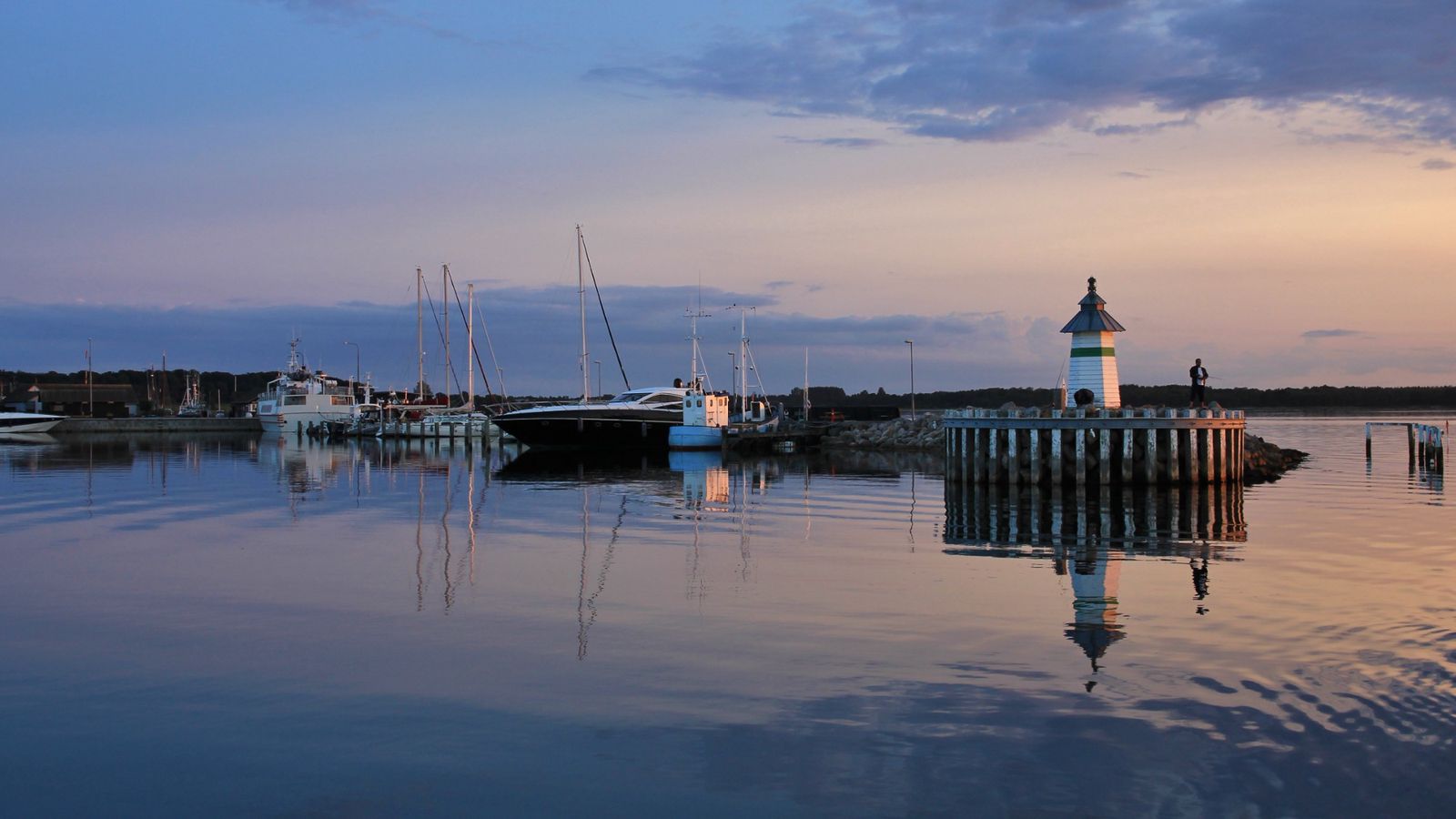
For sailors who want more open water and bigger conditions, the Kattegat — the sea between Denmark and Sweden — offers that and more. The coastlines around Aarhus, the Djursland peninsula, and the northern tip of Jutland at Skagen (where the North Sea and the Baltic Sea visibly meet) are spectacular. Skagen itself, with its distinctive yellow houses and dramatic light that has attracted painters for over a century, is one of Scandinavia's most charismatic destinations.
The Waters Around Copenhagen
Sailing in and around Copenhagen gives access to the Øresund strait, the narrow channel between Denmark and Sweden. It is a busy shipping lane but perfectly manageable for yachts, and the ability to sail from Copenhagen to Malmö or Helsingør (home of Kronborg Castle, the inspiration for Shakespeare's Elsinore) in a few hours is a unique pleasure. Several charter bases operate from the Copenhagen area.
Weather and Best Time to Visit
The Danish sailing season runs roughly from late April through September, with the peak months being June, July, and August. Summer days in Denmark are long — in June, you get around 17 hours of daylight — which means late evening sails in warm golden light are a genuine possibility.
Summer winds in the inner Danish waters and the archipelago tend to be moderate, typically ranging from Force 2 to Force 4, with sea breezes developing on warmer afternoons. The Kattegat can be considerably more boisterous, and the North Sea coast of Jutland is genuinely exposed and best left to experienced offshore sailors.
July and August are warmest (average air temperatures of 18–22°C) and the most popular. If you want fewer boats in the harbors and slightly lower charter prices, late May, June, or September are excellent alternatives. September in particular can be beautiful — stable high-pressure systems, warm enough to swim, and noticeably quieter marinas.
Fog can be a factor in spring, particularly in the Kattegat, and rain is always a possibility in northern Europe. Carrying foul-weather gear is sensible regardless of the season. Tides in the inner Danish waters (the Belt Sea and the Baltic approaches) are very small — often less than half a meter — but the Kattegat and the North Sea coast have more significant tidal ranges that require attention.
Costs Overview
Denmark is not a budget destination, but it is competitive with other northern European charter markets such as Sweden and Norway, and less expensive than many Mediterranean destinations once you factor in harbor fees, provisioning, and daily expenses.
As a rough guide for bareboat charter in mid-season (July):
Small cruising yacht (30–34 ft): approximately USD 1,200–1,800 per week
Mid-range cruising yacht (35–42 ft): approximately USD 1,800–3,000 per week
Larger performance yacht (43–50 ft): approximately USD 3,000–5,000 per week
Skippered charter (skipper included): add approximately USD 200–350 per day on top of the boat cost
Overnight marina fees in Denmark are typically in the range of DKK 150–350 (approximately USD 20–50) per night for a standard cruising yacht, which is very reasonable by Scandinavian standards. Fuel costs are higher than in southern Europe. Provisioning in Danish supermarkets is of excellent quality; budget roughly USD 30–50 per person per day for food and drink if cooking onboard, more if eating out regularly.
A 7-day bareboat trip for a crew of four to six on a mid-range yacht, including charter fees, marina fees, fuel, and provisioning, might total USD 4,000–7,000 depending on the time of year and how liberally you dine in harbors.
Sample 7-Day Itinerary: The South Funen Archipelago
This route starts and finishes in Svendborg, a major charter base on the south coast of Funen, and explores the heart of the South Funen Archipelago. It is suitable for competent beginners and intermediate sailors, with all passages well under 30 nautical miles.
Day 1: Svendborg to Troense / Vindeby
Depart Svendborg and sail south through the Svendborg Sound, one of the prettiest stretches of water in all of Denmark. Anchor or pick up a berth at Troense on Tåsinge island (just a few miles from Svendborg) or continue a little further to the small island of Vindeby. Walk ashore for dinner in Troense.
Day 2: Troense to Marstal, Ærø
Sail across to Ærø island and into the historic harbor of Marstal, long one of Denmark's most important maritime towns and home to a superb maritime museum. Explore the town on foot in the evening.
Day 3: Marstal to Ærøskøbing
A short sail along the north coast of Ærø brings you to Ærøskøbing, one of the most beautiful small towns in Scandinavia. Spend the afternoon wandering cobblestone streets lined with crooked half-timbered houses. This is a town worth a leisurely evening — find a table at one of the harbor restaurants.
Day 4: Ærøskøbing to Drejø
Sail north to the tiny island of Drejø, population barely 60, which has a small but welcoming harbor and a nature reserve covering most of the island. This is real off-the-beaten-track Denmark. Walk the island path to the lighthouse in the evening.
Day 5: Drejø to Faaborg
Cross to Faaborg on the south coast of Funen, a charming market town with a good museum and excellent cafes. Pick up provisions here for the last days of the trip.
Day 6: Faaborg to Lyø or Avernakø
Explore one of the quieter islands — Lyø and Avernakø both have small harbors and are largely agricultural, with a wonderfully unhurried atmosphere. Avernakø in particular has some lovely anchorages off its southern shore in settled weather.
Day 7: Return to Svendborg
Sail back to Svendborg through the archipelago, stopping for a final swim or lunch anchor if the weather allows. Return the boat by the agreed time and consider spending the evening in Svendborg itself, which has a lively waterfront.
Combining Denmark with Neighboring Countries
One of the most appealing things about sailing in Denmark is its position at the heart of a genuinely interconnected sailing region. The Baltic Sea, the Kattegat, and the North Sea approaches all come together here, making Denmark an excellent hub from which to extend a voyage into neighboring countries. Charter companies are generally comfortable with cross-border passages, though you should confirm this when booking.
Denmark and Sweden
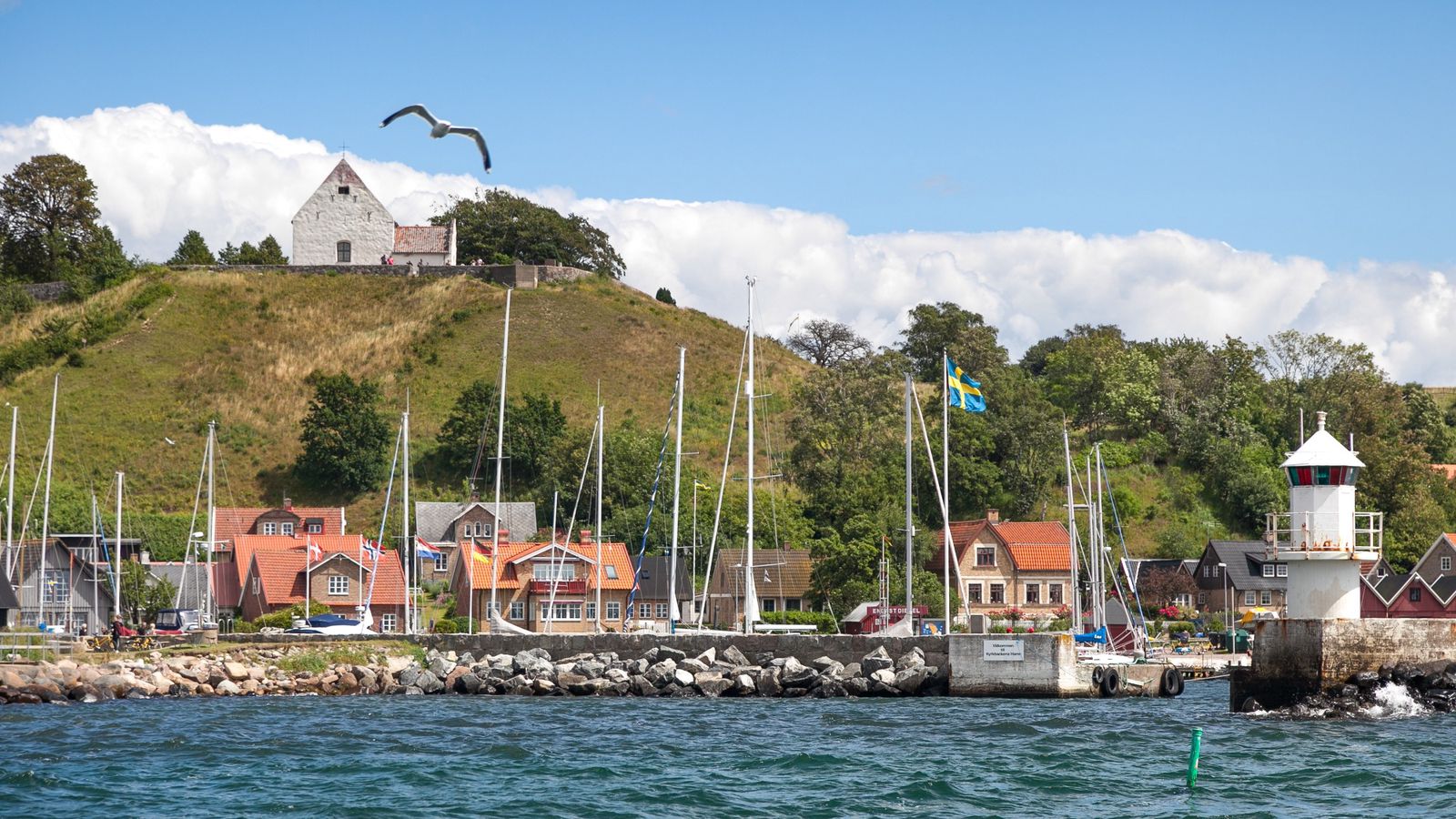
The Øresund strait between Copenhagen and Malmö is one of the world's most iconic short sea passages, and the Swedish west coast and Stockholm archipelago are among northern Europe's finest sailing grounds. From Helsingør in northern Zealand, the crossing to Helsingborg in Sweden is barely 4 nautical miles. The Swedish west coast southward from Gothenburg — with its red-painted fishing villages and smooth granite skerries — is achingly beautiful. If you have three weeks, a Denmark-Sweden loop taking in Copenhagen, the Øresund, the Gothenburg archipelago, and a return via the Kattegat is genuinely one of the great sailing holidays available in Europe.
Denmark and Germany
The border between Denmark and Germany runs through the Flensburg Fjord, a long and beautiful inlet lined with forests and small villages. Crossing from Danish Sønderborg or Flensburg itself into the German waters of Schleswig-Holstein is seamless — you will barely notice the border. The German sailing areas of the Schlei fjord, the Kiel Fjord (where the Kiel Week regatta takes place every June), and the island of Fehmarn are all within easy reach. Lübeck, with its extraordinary medieval Hanseatic old town, is a worthwhile destination if you're prepared to sail further into the German Baltic. A combined Denmark-Germany itinerary of two weeks would comfortably cover the South Funen Archipelago, the Flensburg Fjord, and the Kiel area.
Denmark and Norway
Norway is further away and requires more serious open-water passages, but it is absolutely achievable on a longer charter. From Skagen at the northern tip of Denmark, the crossing to the Norwegian coast near Kristiansand takes roughly 12–18 hours depending on conditions — a straightforward offshore passage for a competent crew. From there, the Norwegian fjord coast stretches northward in some of the most dramatic scenery on Earth. The Oslo Fjord itself is a wonderful cruising destination, dotted with islands and summer cabins, and only a few days' sail from the Danish departure points. A two-week Denmark-Norway trip might start in Aarhus or Aalborg, cross to Norway, spend several days in the Oslo Fjord or Kristiansand area, and return via Skagen.
A Grand Baltic Loop
For those with four to six weeks available, Denmark sits perfectly as the western anchor of a grand Baltic loop: south Funen and Copenhagen to Sweden, north to Gothenburg or east to Stockholm, across to Finland or Estonia, down through the Baltic states, into the waters of Poland and Germany, and back west through the Kiel Canal to Denmark. This is a voyage of a lifetime, and Denmark — with its excellent charter infrastructure and central position — is the natural starting point.
5 Practical Tips for Sailing in Denmark
1. Get Comfortable with Danish Marinas
Danish marinas operate on a simple color-coded system: a green tag on a berth means it is available for visitors, a red tag means it is occupied. Most harbors have a self-service check-in system and excellent shower and laundry facilities. In the busiest marinas in peak summer (particularly in Ærøskøbing and Marstal), arrive before 16:00 to secure a good berth.
2. Plan Around the Tides in the Kattegat
In the inner Danish waters and the South Funen Archipelago, tidal ranges are very small and current is largely driven by wind and barometric pressure rather than the moon. In the Kattegat and approaching the North Sea, however, tides become significant. Check pilot charts and local sailing guides carefully if you plan to sail north of Funen.
3. Carry a Danish Sailing Guide
The Danish coastal authority publishes detailed Den Danske Havnelods (Danish Harbor Pilot), and several English-language sailing guides cover the region well, including the RCC Pilotage Foundation's guide to the Baltic. These are invaluable for navigating the many shallow passages in the archipelago, where local knowledge makes a real difference.
4. Embrace the Smoked Fish Culture
Many small Danish fishing harbors have a røgeri — a smokehouse — right on the quay. Smoked mackerel, herring, and eel are staples, and stopping for a plate of smoked fish at a harbor-side table is one of the defining pleasures of a Danish sailing holiday. Do not skip this.
5. Respect the Shallow Waters
Parts of the South Funen Archipelago are genuinely shallow, with depths of 1–2 meters common in inshore areas. Know your boat's draft before departure, carry up-to-date charts (preferably the official Danish S-charts), and use your depth sounder actively. Charter companies will brief you on this, but arriving prepared will make you a much more confident skipper in these waters.
Getting There and Charter Bases
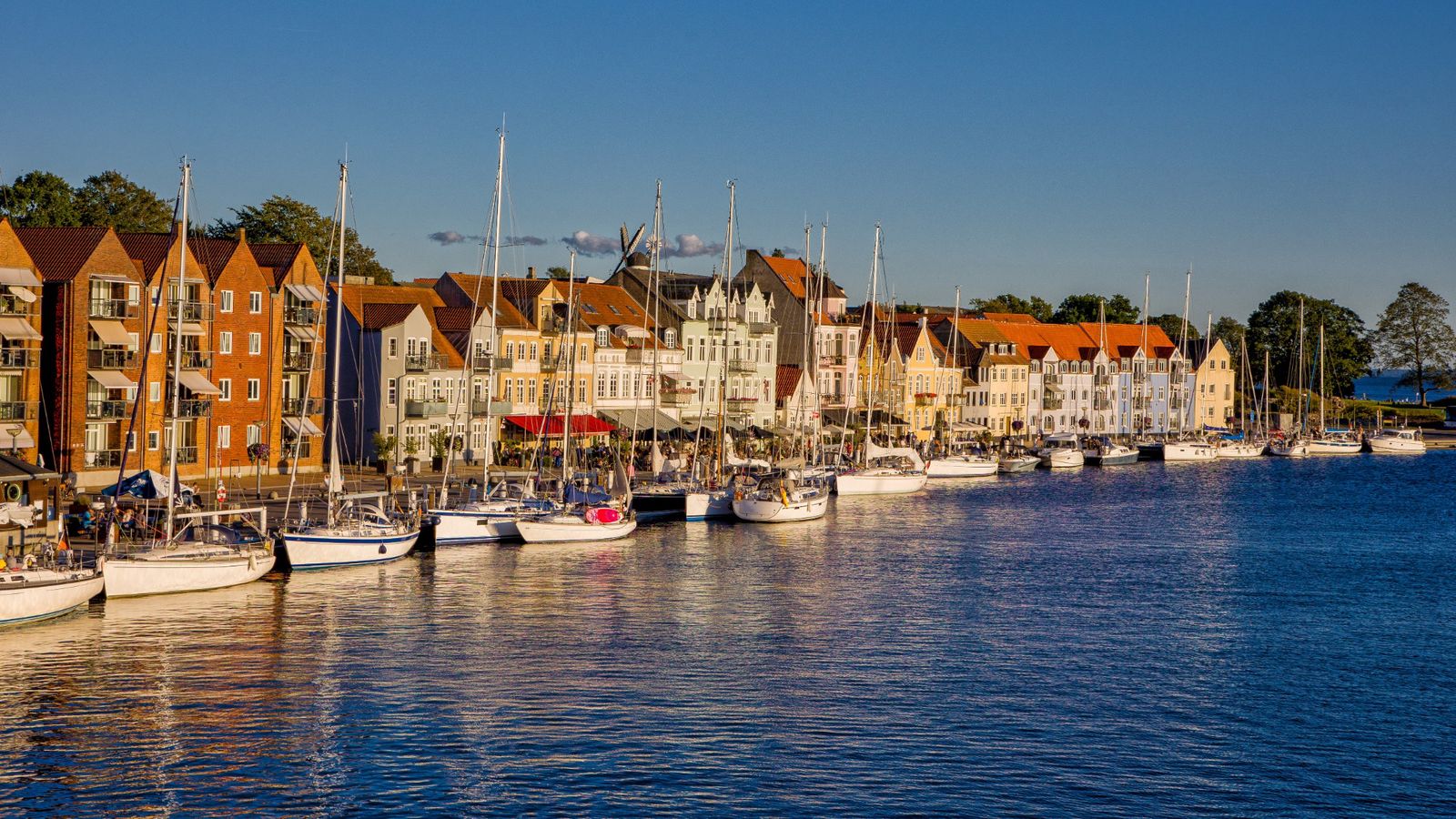
The main charter bases in Denmark are located in Svendborg (the most popular, with easy access to the South Funen Archipelago), Marina Syddanmark near Kolding, Copenhagen (for Øresund sailing), and Aarhus (for Kattegat and north Jutland cruising). Several companies also operate from smaller bases in the Flensburg Fjord area near the German border.
International flights serve Copenhagen Airport (CPH), which is well-connected to Svendborg by train (approximately 2.5 hours with a change). Aarhus Airport and Billund Airport are useful for charter bases in Jutland. Car rental is an option if you want flexibility in provisioning and exploring ashore.
Denmark requires no visa for EU or US citizens for stays under 90 days, and English is spoken to an exceptionally high standard throughout the country, making communication with harbormaster staff, provisioning, and local restaurants completely straightforward for English-speaking visitors.
Frequently asked questions
What is the best sailing area in Denmark for a first-time charter?
The best sailing area in Denmark for most visitors is the South Funen Archipelago, a group of islands off the south coast of Funen including Ærø, Langeland, and Tåsinge. Distances between harbors are short (typically 10–20 nautical miles), tides are minimal, the scenery is beautiful, and towns like Ærøskøbing are among the most charming in Scandinavia. The main charter base for this area is Svendborg.
What is the best time of year to sail in Denmark?
Denmark's sailing season runs from late April through September. July and August are the warmest and most popular months, with average temperatures of 18–22°C and long daylight hours. June and September are excellent alternatives — still warm enough, with fewer boats in the marinas and occasionally better wind conditions. Early spring can bring fog, particularly in the Kattegat.
How much does a boat charter in Denmark cost?
A bareboat charter for a mid-range cruising yacht (35–42 feet) costs approximately USD 1,800–3,000 per week in peak season. Overnight marina fees typically run USD 20–50 per night. A full week aboard for a crew of four to six, including the boat, marina fees, fuel, and provisioning, might total USD 4,000–7,000 depending on the season and how often you dine out.
Can I sail from Denmark to Germany on a charter boat?
Yes, combining Denmark and Germany is very easy and popular. The border runs through the Flensburg Fjord, and crossing between Danish and German waters is seamless. The German Schleswig-Holstein coast, the Kiel Fjord, the Schlei fjord, and the island of Fehmarn are all within easy reach. A two-week itinerary can comfortably cover the South Funen Archipelago and the Kiel area. Always confirm cross-border permissions with your charter company before departure.
How significant are the tides when sailing in Denmark?
The inner Danish waters — the South Funen Archipelago and the Belt Sea — have very small tidal ranges, often less than half a meter, with water levels mainly driven by wind and barometric pressure rather than the moon. However, the Kattegat (between Denmark and Sweden) and the approaches to the North Sea have more significant tides and stronger currents that require careful attention and up-to-date pilot information.
What sailing qualifications do I need to charter a boat in Denmark?
A bareboat charter in Denmark typically requires RYA Day Skipper certification or an equivalent national qualification, plus a practical logbook demonstrating relevant sea miles. Some charter companies may require ICC (International Certificate of Competence) for non-European skippers. If you do not hold a qualification, opting for a skippered charter is a straightforward alternative and adds approximately USD 200–350 per day to the cost.


