Sailing Ibiza and Formentera: Routes, Anchorages, and What to Expect
Updated
You have heard of Ibiza. But you have not really seen it until you have anchored off a limestone cliff at sunset with a glass of something cold and Es Vedrà rising from the sea ahead of you. This is that Ibiza — and it is even better with Formentera next door.
On this page

Why Ibiza and Formentera Are Worth the Hype
There is a version of Ibiza that belongs to the clubbers, the influencers, and the all-inclusive resort crowd. Then there is the Ibiza you discover from the water — a coastline of wild limestone cliffs, hidden sea caves, turquoise coves so clear they look artificially colored, and anchorages where the only soundtrack is the wind in the rigging. Pair it with Formentera, the smallest and least-developed of the Balearic Islands, and you have one of the most visually stunning cruising grounds in the Mediterranean.
The two islands sit at the southern end of the Balearic archipelago, separated by a shallow channel called Es Freus. Together they offer a compact but endlessly rewarding sailing area that works for first-time bareboat charterers and seasoned bluewater sailors alike. You can cover the essentials in five days; you could come back for a decade and still find new corners.
What Makes This Area Unique
The Pitiuses — the ancient name for Ibiza and Formentera — have a character that the more touristed Mallorca and Menorca don't quite replicate. Ibiza's interior is still dominated by ancient whitewashed farmhouses, wild rosemary, and the UNESCO-listed salt flats at Ses Salines. Formentera is almost car-free by culture, where the primary modes of transport are bicycle and boat. The water between the two islands, the Es Freus channel, is a protected marine park with extraordinary visibility — you can often see the seafloor in 15 meters of water.
What sets this area apart from a sailor's perspective is the density of genuinely beautiful anchorages within short sailing distances. On Ibiza alone, the west coast offers coves like Cala d'Hort and Cala Conta that would be considered headline destinations anywhere else in the Mediterranean. On Formentera, the beach at Illetes is regularly ranked among the finest in Europe. The sailing distances between major stops are rarely more than a few hours, which means you spend more time swimming and less time passage-making.
Sailing Conditions
The primary wind in summer is the Tramuntana, a northerly that funnels down from the mainland. It is typically a daytime breeze building from around 10 knots in the morning to 15–20 knots by early afternoon, dying off at sunset. In July and August this is highly reliable — so reliable that most experienced skippers plan their legs for mornings when conditions are lighter and the sea surface is calmer.
The other wind you will encounter is the Llevant, an easterly that can bring stronger and rougher conditions, particularly in late August and September. The Poniente (westerly) is less common in summer but can produce lively sailing on the western passages. The Mestral, a north-northwesterly similar to the Mistral further up the French coast, can pipe up quickly and strengthen significantly — always keep an eye on the forecast when you are exposed on the northern coasts of Ibiza.
Sea state in the channel between Ibiza and Formentera is generally benign in settled conditions, though the shallow water in Es Freus can make for a short, choppy chop when any wind is against tide. Overall, summer sailing here is forgiving: predominantly flat seas, warm water (25–28°C in July and August), and short distances between safe harbors.
Difficulty Level
This is an excellent cruising ground for beginner to intermediate sailors. The passages are short, there are no tidal concerns beyond minor currents, and marina infrastructure is well developed. The main challenges are traffic density in peak season (there is a lot of it), anchoring etiquette in busy coves, and occasional strong afternoon winds. Experienced sailors will find plenty to enjoy — particularly the more exposed northern coves of Ibiza and some of the wilder anchorages on Formentera's eastern tip — but you do not need blue-water experience to have a fantastic trip here.
Who This Area Is Best For
Ibiza and Formentera suit a wide range of sailing travelers. Couples and small groups looking for a mix of gorgeous scenery, good food, and some nightlife (if that is your thing) will feel immediately at home. Families with children do exceptionally well here because of the calm, shallow, clear anchorages where kids can snorkel, paddleboard, and swim safely. First-time charterers appreciate the forgiving conditions and the fact that help is never far away.
If you are purely chasing remote wilderness with no other boats around, you may find peak July and August challenging — the most famous coves can get very crowded. Visiting in June or September dramatically reduces boat and tourist traffic while keeping water temperatures warm and sailing conditions excellent. Experienced sailors looking for more challenging passages might use Ibiza and Formentera as a base and day-sail to the more rugged northern coasts or plan a longer passage connecting to Mallorca or Menorca.
Suggested 7-Day Itinerary
Check-in on Day 1 is from 1 pm, with access to the boat from 3 pm. This itinerary is based on a charter out of Marina Ibiza (Ibiza Town), which is the most common base for bareboat and skippered charters in the area. All distances are approximate and weather-dependent.
Day 1 — Ibiza Town to Cala d'Hort (Ibiza West Coast)
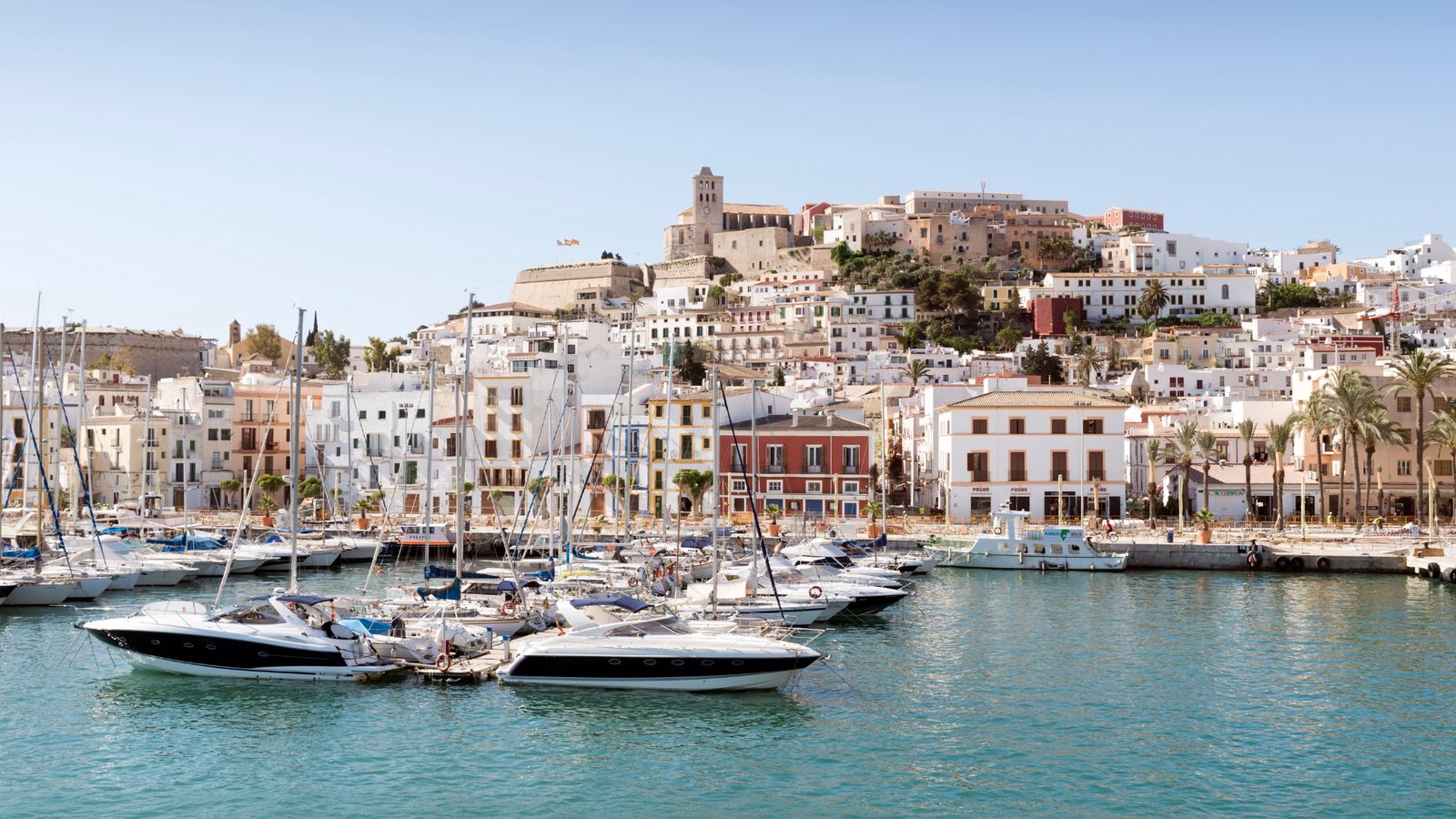
You will likely not get away from the marina much before late afternoon after completing your boat briefing and provisioning. That is fine — use the evening in Ibiza Town itself. The old town, Dalt Vila, is a UNESCO World Heritage site and one of the most beautiful fortified towns in the Mediterranean. Walk the cobbled ramparts at sunset, eat at one of the restaurants in the shadow of the cathedral, and get an early night. Tomorrow the sailing starts.
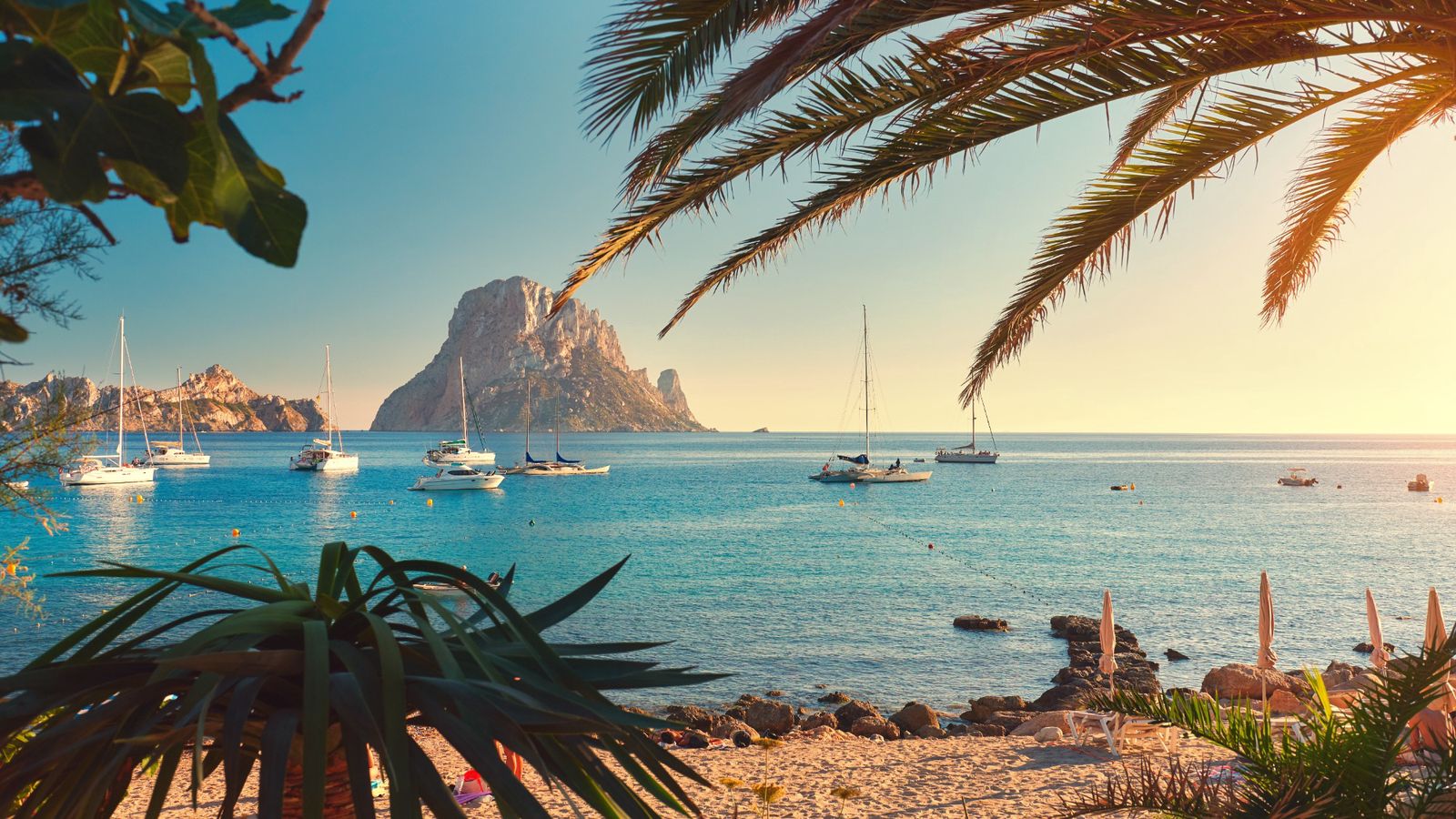
In the morning, motor out of the harbor and set a course south along the western coast of Ibiza. The first major headland you round, Cap Llentrisca, drops away to reveal one of the island's most dramatic views: the rocky silhouette of Es Vedrà, a 382-meter sea stack rising from the water like a tooth. Anchor in the bay of Cala d'Hort in its shelter. The holding is sandy and generally good; the views are extraordinary. Snorkel the rocky edges of the bay, swim to shore for lunch at one of the chiringuitos (beach bars) above the beach, and watch the sun set directly behind Es Vedrà.
Distance: Approximately 12 nautical miles from Ibiza Town marina.
Day 2 — Cala d'Hort to Formentera (Illetes / La Savina)
An early start gives you the calmest passage through Es Freus, the channel between Ibiza and Formentera. This passage requires care — there are multiple islets, shoals, and mandatory waypoints through the marine protected area. Follow the buoyed channel carefully and refer to your pilot book; a GPS chartplotter is essential. The reward is arriving on Formentera with the whole day ahead of you.
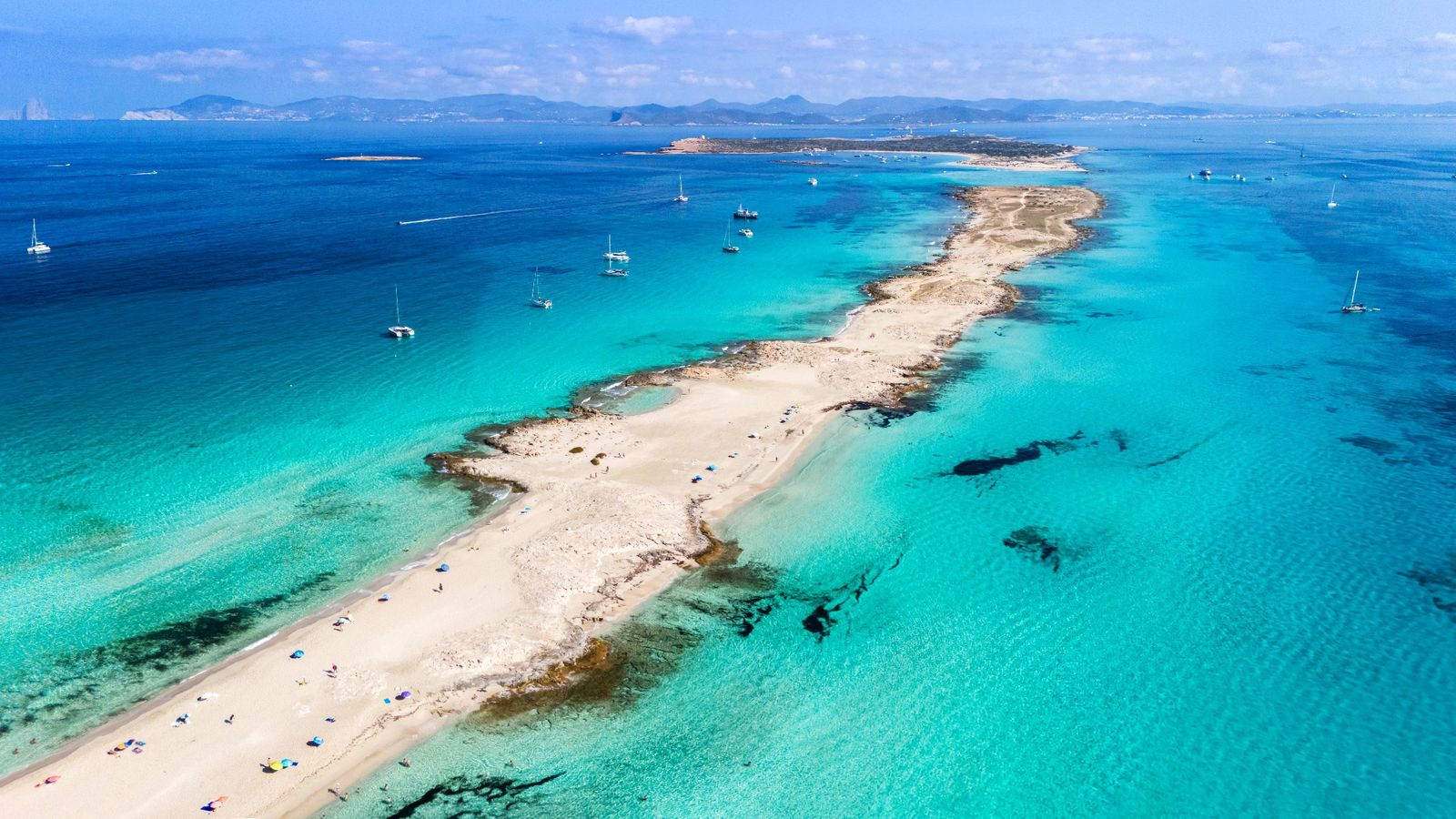
Head for the long sandspit at Illetes on Formentera's northern tip. The water here is the color of the Caribbean — shallow, luminously clear, and warm. Drop the anchor on the Formentera side of the spit (there are also mooring buoys you can pick up for a fee). Spend the morning swimming, snorkeling, and watching the parade of boats arriving. In the afternoon, move around to La Savina, Formentera's only real harbor, to take on water and check in if required. The harbor is modest but functional, and the town has good supermarkets for provisioning.
Distance: Approximately 10 nautical miles from Cala d'Hort.
Day 3 — Formentera (Espalmador and the Southeast)
Dedicate a full day to Formentera. In the morning, dinghy over to the uninhabited island of Espalmador, which sits just north of Formentera's main landmass. There is a famous natural mud pool here — the locals claim it has therapeutic properties; you will certainly come out looking filthy and grinning. The beaches on Espalmador are among the quietest in the area.
Sail or motor around Formentera's eastern cape, Cap de Barbaria, to explore the southern coastline. The Mola plateau on the eastern end of the island drops to the sea in dramatic cliffs. Anchor off Cala en Baster or the beach at Es Calo de Sant Agusti on the northeast coast for an afternoon swim. The village of El Pilar de la Mola at the top of the plateau is worth a dinghy trip ashore for a late lunch and the views. Return to anchor off Illetes or pick up a mooring buoy for the night.
Distance: A circumnavigation of Formentera covers roughly 25 nautical miles; adapt to suit conditions.
Day 4 — Return to Ibiza: Cala Conta and the Southwest Coast
Head back north through Es Freus to Ibiza's southwest coast, targeting Cala Conta (also called Cala Comte). This is arguably the most beautiful beach on Ibiza: a series of small coves divided by rocky outcrops, with water that shifts from pale turquoise in the shallows to deep cobalt further out. It gets busy in the afternoon — arrive before noon to anchor comfortably. Spend the middle of the day here, then as the afternoon winds build, sail north along the dramatic cliffed coastline past Cala Bassa and around Cap Nono toward San Antoni de Portmany.
San Antoni (Sant Antoni de Portmany) is Ibiza's second town — a large commercial harbor with full marina facilities, good provisioning, and a famous sunset strip. It is louder and more package-holiday in character than other stops on this itinerary, but the harbor is excellent and the renowned Cafe del Mar sunset is an Ibiza institution worth experiencing at least once.
Distance: Approximately 15 nautical miles from La Savina to San Antoni.
Day 5 — North Ibiza: Cala Salada and Puerto de San Miguel
The northern coast of Ibiza is wilder, less visited, and more rugged than the south. Head north from San Antoni past the cape and work your way along the cliffs. Cala Salada is a stunning, partially shaded cove just north of the cape — popular but with more room than the southern coves. Push further north to Puerto de San Miguel (Port de Sant Miquel), a large bay with a marina and one of the nicest villages on the island. The caves of Can Marca above the bay are worth the walk ashore.
This is a longer day of sailing and exploring. The northern coast can be more exposed if the Tramuntana is blowing — assess conditions before committing to the more open anchorages. If conditions are benign, consider anchoring in the outer bay rather than going into the marina; it is beautiful and calm in settled weather.
Distance: Approximately 16 nautical miles from San Antoni to Puerto de San Miguel.
Day 6 — Northeast Ibiza: Tagomago and Cala Boix
From the north, make your way around Punta Grossa and down the northeast coast — a less-traveled stretch of Ibiza that rewards the effort with dramatic geology and fewer crowds. The islet of Tagomago sits off the northeast corner and has a gorgeous anchorage on its western side. Access is technically private (the islet is owned) but anchoring outside is entirely possible in settled conditions.
Continue south along the east coast, stopping at Cala Boix — a dark-sand cove framed by pines with an excellent beach restaurant ashore. The eastern coast has several other options depending on conditions: Cala Mastella (very small but jewel-like), Cala Llenya, and Santa Eulalia — a sophisticated small town with a proper marina, a relaxed promenade, and excellent restaurants. Santa Eulalia makes a great penultimate-night stop for a proper dinner ashore.
Distance: Approximately 20 nautical miles, depending on stops.
Day 7 — Return to Ibiza Town
The final morning is a short hop back to Ibiza Town marina, roughly 8 nautical miles south from Santa Eulalia along the east coast. Check-out is typically required by 9 am. Use the previous evening to clean the boat, pack your gear, and say goodbye to the anchorages. Arrive back in Ibiza Town with time for a final walk around Dalt Vila or a coffee in the old port before your charter ends.
Key Stops and Anchorages
Ibiza Town (Eivissa)
The departure and return point for most charters, Ibiza Town is a genuinely extraordinary place. The walled old city, Dalt Vila, contains the cathedral, the governor's castle, and a tangle of medieval streets that have been protected and inhabited continuously for over 2,500 years. The harbor below is busy and modern — Marina Ibiza is a full-service yacht marina with good shower facilities, restaurants, and provisioning stores. Spend at least one evening exploring the ramparts and the old town before you set sail.
Cala d'Hort (Ibiza West Coast)
The anchorage below Es Vedrà is one of the iconic views of the Balearics. Es Vedrà itself is a protected nature reserve — you cannot land on it — but the view from the water is remarkable, particularly at dusk when the rock turns gold and then orange against the sky. Holding is sandy and generally reliable. There is a small beach with a few restaurants; arrive early in summer to claim a good spot. The cove faces west, making it exposed to westerly swells — check the forecast.
Illetes, Formentera
The sandspit at Illetes is the postcard image of Formentera. The water on both sides of the spit is extraordinary — clear, warm, and shallow enough to anchor comfortably while still having deep visibility into the seabed. It is at its most beautiful in the early morning before the day-tripper boats arrive from Ibiza. Mooring buoys are available for a fee; anchoring is also permitted in designated areas. There is a beach bar at the end of the spit for drinks and lunch.
Espalmador
This uninhabited island between Ibiza and Formentera is officially part of the Balearic protected marine park and is one of the great hidden gems of the area. The mud baths in the interior attract a steady trickle of visitors — bring an old swimsuit. The beaches are quieter than Illetes and the snorkeling around the rocky edges of the island is excellent. Anchorage is possible off the beaches but the island can be crowded with superyacht tenders in peak season.
Cala Conta (Ibiza Southwest)
Consistently voted among the most beautiful beaches in the Balearics, Cala Conta is a set of coves linked by rocky outcrops facing the small islands of Illa des Bosc and Illa sa Conillera. The water color is exceptional. There is a famous beach bar serving cold drinks and fresh fish that has been a Ibiza institution for decades. Arrive early — it fills rapidly. The anchorage is sandy and holds well, but in any westerly swell it becomes uncomfortable quickly.
Mooring and Marina Tips
Marina Ibiza and Puerto Deportivo de Ibiza in the main town are the primary charter bases and have all facilities, but they are expensive — budget 80–150 euros per night for a standard bareboat depending on size and season. San Antoni marina is slightly more affordable and better positioned for the west coast. Santa Eulalia marina on the east coast is well-run and a lovely town to spend an evening. Puerto de San Miguel in the north offers limited berths but a beautiful setting.
In peak July and August, anchorages in popular coves like Illetes, Cala d'Hort, and Cala Conta can be extremely crowded. Many of the best spots have mooring buoys installed by the marine park authority — use them where available as they protect the seagrass meadows (Posidonia oceanica) below. Anchoring directly into Posidonia is illegal in the Balearics and carries significant fines. Always check the anchor is in sand before setting it.
The Es Freus marine park has specific rules: use only designated anchoring zones, stay within the buoyed channel when transiting, and observe no-wake zones. These are actively enforced by the Guardia Civil Maritime.
Insider Tips
Go in June or September. The islands in July and August are extraordinary — the light, the water temperature, the energy — but the volume of boats, day-trippers, and beach crowds in the most popular coves can diminish the experience. June offers near-identical sailing conditions with perhaps 60% of the boat traffic. Late September is warm, the water is at its hottest after months of summer sun, and the anchorages are practically empty by comparison.
Learn the Es Freus channel before you sail it. The passage between Ibiza and Formentera looks short on a chart, but the islets, shoals, and shallow patches demand careful navigation. Download the current version of a recognized pilot guide for the Balearics before you leave home and study the waypoints. The buoyed channel is not always perfectly intuitive and GPS chartplotters are not a substitute for understanding what you are looking at.
Carry cash for anchorage fees and chiringuitos. Many of the beach bars and mooring services in remote coves operate on a cash-only basis. An ATM is easy to find in any town but harder to find when you are swinging on a buoy in Cala d'Hort and suddenly very thirsty.
Cost Expectations
Ibiza and Formentera are not a budget destination, but they offer reasonable value for sailing compared to the same number of hotel nights and ferry tickets. Below are approximate figures for a one-week bareboat charter in summer 2025.
Bareboat charter cost: 2,500–6,000 euros per week depending on boat size (38–50 feet), season, and operator. Peak weeks in late July and August command the highest rates. Six-berth catamarans run significantly higher.
Provisioning: A full week's groceries and drinks for four to six people typically runs 300–500 euros, depending on how many meals you eat aboard versus ashore.
Marina berths: Budget 60–150 euros per night when you take a marina berth. On nights when you anchor or pick up a marine park mooring, costs drop to 10–25 euros for the buoy.
Eating out: Ibiza has a reputation for eye-watering prices, and the top beach clubs and restaurants can justify it. But there are excellent mid-range restaurants throughout both islands where you can eat a full dinner with wine for 25–40 euros per person. Beach bar lunches at the chiringuitos run 15–25 euros a head.
Fuel: Diesel at Balearic marinas typically runs 1.20–1.50 euros per liter. A typical charter week in mostly sailing conditions might consume 50–100 liters.
Total budget guidance: For a crew of four sharing a 40-foot bareboat, an all-in week including charter, provisioning, marina fees, dining out three or four times, and fuel typically falls in the range of 1,000–1,600 euros per person. Add a skipper (600–900 euros per week plus expenses) if you want to charter without qualifications or prefer to have someone else handle the navigation.
Frequently asked questions
Is anchoring free in Ibiza and Formentera, or do I need to pay for mooring buoys?
In the Balearics, anchoring directly on Posidonia oceanica seagrass meadows is illegal and carries fines that can run into thousands of euros. In protected areas like the Es Freus marine park between Ibiza and Formentera, you must anchor only in designated sandy zones marked on marine park charts, or pick up an official mooring buoy. Marine park buoys typically cost 10–25 euros per night and are collected by patrol boats. Enforcement is active and serious.
Which marina should I base my charter from for sailing Ibiza and Formentera?
The most convenient and common base for a sailing charter around Ibiza and Formentera is Marina Ibiza (also called Puerto Deportivo de Ibiza) in Ibiza Town. It has the best charter operator infrastructure, full provisioning options, and places you perfectly for either the west coast of Ibiza or a crossing to Formentera. San Antoni de Portmany on the west coast is a secondary option with slightly lower berth costs.
What is Es Freus and do I need special experience to sail through it?
The Es Freus channel is the shallow, island-studded passage between the southern tip of Ibiza and the northern tip of Formentera. It is part of a protected marine park and requires careful navigation through a buoyed channel, as there are multiple islets and shoals. The passage is straightforward in calm conditions if you follow the waypoints in a current pilot guide, but it should not be attempted in poor visibility or strong onshore winds without local knowledge.
When is the best time to sail Ibiza and Formentera?
Late June and September are the best times for a balanced experience. Both months offer warm water (23–26°C in June, 26–28°C in September), reliable sailing breezes, and far fewer boats in the most popular anchorages. July and August are peak season with the most crowded coves, highest charter prices, and strongest tourist traffic, though the sailing conditions themselves remain excellent.
What are the typical wind conditions sailing around Ibiza in summer?
The dominant summer wind is the Tramuntana, a northerly breeze that typically builds to 10–20 knots during the day and eases in the evening — excellent for comfortable coastal sailing. The Mestral (north-northwesterly) can arrive with less warning and build quickly, particularly affecting exposed northern anchorages. Sea conditions are generally benign in summer, making this a forgiving area for sailors with limited offshore experience.
Do I need a sailing license to charter a boat in Ibiza?
A bareboat charter qualification such as a Day Skipper or equivalent is typically required by charter companies, along with a minimum number of logged sea miles. If you do not hold a recognized qualification, you can charter a boat with a professional skipper added to the crew, which typically costs an additional 600–900 euros per week plus the skipper's food and accommodation expenses. Many charter operators in Ibiza offer skippered charter packages.


