How to Become a Professional Hostess or Chef on a Sailing Boat
Updated
Few jobs let you cook for a living while spending your afternoons swimming in a turquoise bay. Here is what it genuinely takes to build a professional career as a hostess or chef on a sailing charter boat.
On this page

Working as a hostess or chef on a sailing boat is one of those rare jobs where your office is the open sea, your commute is a sunrise sail, and your performance review is whether the guests go home happy. But it takes more than a love of cooking and boats to make it work professionally.
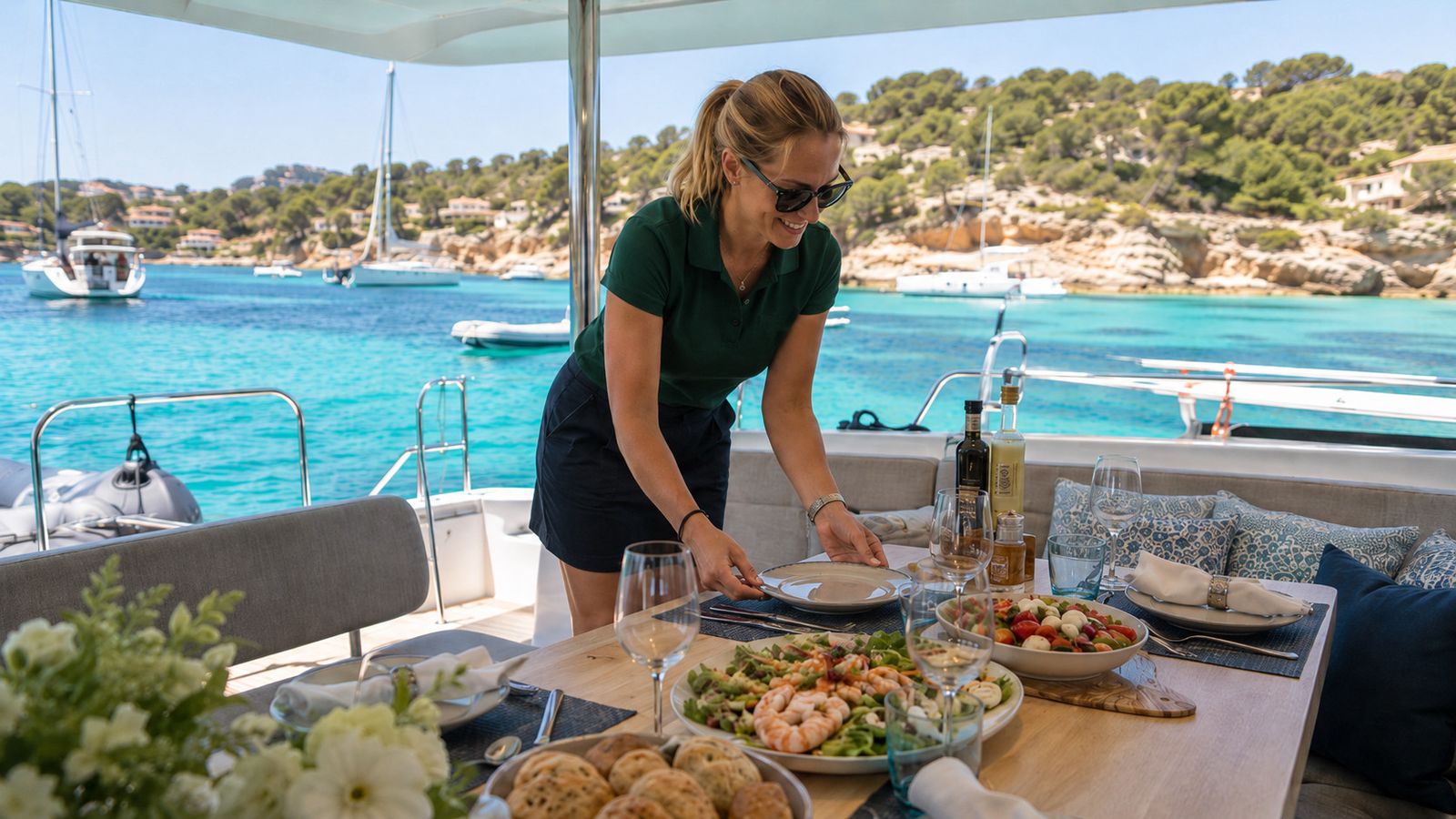
Hostess vs. Chef: What Is the Difference?
These two roles sound similar but have meaningfully different scopes — and different paychecks to match.
A hostess typically handles breakfast and lunch, and occasionally one dinner during the charter week. Once the boat is docked in the afternoon and the post-lunch cleanup is done, your working day is over. You are free to swim, explore, or rest. It is a lifestyle-friendly role that still earns solid tips when done well.
A chef covers all meals, including evening dinners. The workload is heavier and the hours are longer, but the base pay and tip potential are correspondingly higher. If you have serious culinary training and want to make cooking your primary maritime career, this is the route to pursue.
Both roles sit at the heart of the guest experience. On a sailing charter, food and hospitality are often what guests remember most — more than the destinations themselves.
Qualifications You Will Actually Need
You do not need a three-year culinary apprenticeship, but you do need something credible on paper. Charter companies and private boat owners will want to see evidence of professional cooking ability before they hand you a galley.
Culinary training: An advanced cooking course at a recognized professional school is the minimum most employers expect. A formal culinary diploma is a strong advantage if you want to work on larger or more prestigious vessels.
Food safety certification: Many countries require a food handler or food safety certificate for anyone preparing meals commercially. Check the requirements for the specific region where you plan to work — this is non-negotiable in some jurisdictions.
A sailing qualification: At a minimum, RYA Competent Crew or an equivalent certification is strongly preferred. Skippers on small/medium sized sailing boats often rely on the hostess or chef to help with docking and anchoring. Knowing your way around a boat makes you a far more attractive hire.
Expect to cook a meal as part of the interview process. Charter companies regularly ask candidates to demonstrate their skills in a real galley setting before making any offer.
Provisioning: The Part Nobody Tells You About
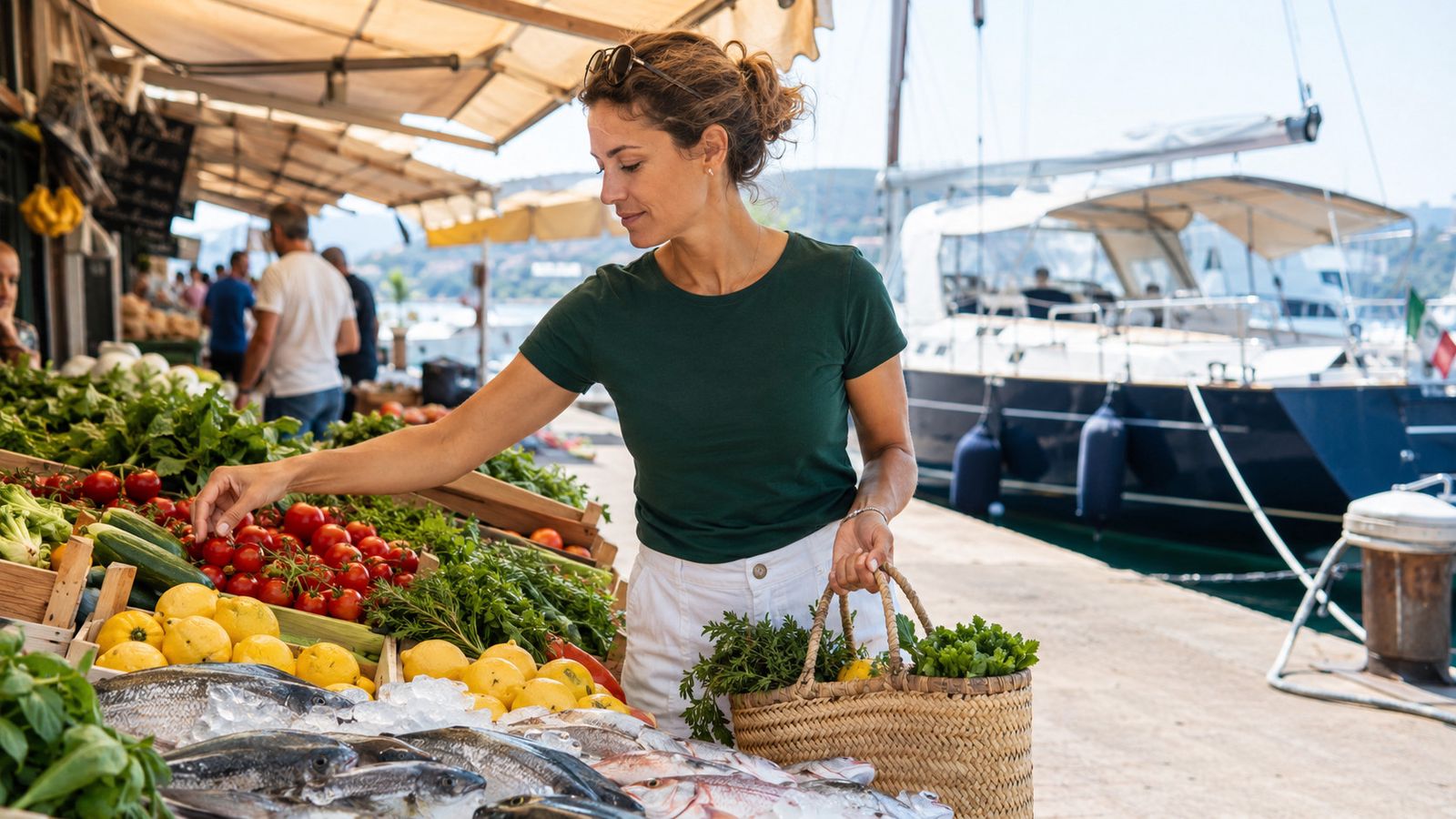
Cooking on a charter boat is only half the job. Provisioning — sourcing, planning, and buying everything the guests will eat and drink for the week — falls squarely on your shoulders.
The process typically starts about a week before departure. You contact the clients directly and work through:
Dietary requirements, allergies, and strong food preferences
Preferred meals and dishes for each day
Drinks, snacks, and any special requests
The provisioning budget
You then plan a detailed shopping list, source everything from local markets or suppliers, and load it onto the boat in time for departure. On a catamaran with limited fridge space and a galley built for efficiency rather than comfort, this planning stage is critical. Running out of something mid-passage is not an option.
What a Typical Day as a Hostess Looks Like
Days on a sailing charter have a rhythm driven by wind, tides, and guest expectations. Here is what you can expect when things run normally:
Wake up early — ideally before the guests stir — and tidy anything left over from the evening
Prepare and serve breakfast
Clean up after breakfast
Help the skipper undock or bring in the anchor lines
At the first anchorage or stop, begin preparing lunch and put out a small snack to keep guests comfortable
Set the table, serve lunch, and clean up afterward
Help with undocking or anchoring again as the boat moves to the second stop
Prepare a light afternoon snack once the boat is settled for the day
Do a quick overall tidy of the boat
Your working day ends — swim, walk, or explore as you like
A brief tidy before bed keeps things running smoothly for the next morning
The rhythm is manageable, and the afternoon freedom is one of the genuine perks of the hostess role over a full chef position.
Life on Board: What to Expect
The realities of living on a working sailing boat are worth understanding before you commit. Accommodation varies significantly depending on the vessel type.
On a catamaran, you will most likely be given the skipper cabin — a compact berth in the bow of one of the hulls, usually with a hatch overhead but no private bathroom. You learn quickly to time your bathroom needs around marina stops or moments when the guests are occupied.
On a monohull, the setup is often more comfortable. You typically have a dedicated private cabin, which makes rest easier during longer passages.
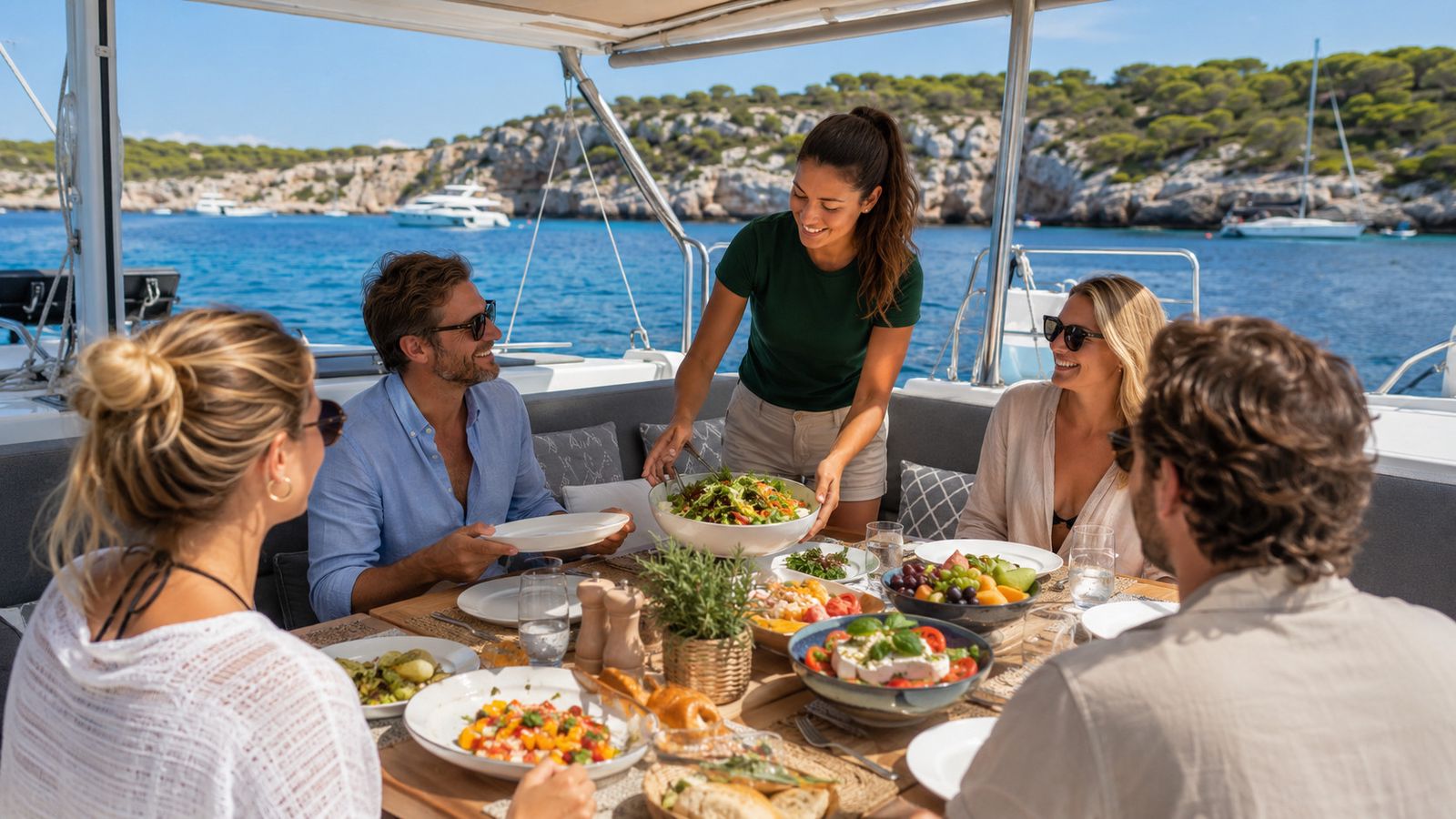
Your role also places you in an interesting social position on board. You are generally the link between the skipper and the guests — translating between the operational needs of the boat and the expectations of the clients. It takes people skills as much as cooking skills, and the ability to stay calm and pleasant when things do not go to plan is what separates good hostesses from great ones.
Where to Find Work
The most direct route is to visit or contact charter companies in the region where you want to work. The Mediterranean, Caribbean, and Pacific are the busiest charter markets, but opportunities exist wherever sailing tourism is active. Charter bases are typically clustered around marinas, and the companies operating there are your best first contacts — they either hire directly or can point you toward private owners and brokers looking for crew.
Online crew placement agencies and sailing forums are also worth exploring, particularly for positions on private yachts. Building a small portfolio that shows your cooking ability — photographs of dishes, a sample menu, references from previous employers — will give you a significant advantage when reaching out cold.
Is This Lifestyle Right for You?
Before you invest in courses and certifications, it is worth being honest with yourself about what the job actually involves. You will be living in close quarters with strangers, working in a small galley that may be heeling at fifteen degrees, and keeping a cheerful face when guests are demanding and the weather is not cooperating.
The rewards are real — beautiful places, genuine freedom, strong tips when you do the job well, and a working life that most people only experience as a holiday. But it is still a job, and the professionalism you bring to it will determine both your enjoyment and your earning potential.
Frequently asked questions
What is the difference between a hostess and a chef on a sailing charter boat?
A hostess on a sailing boat typically prepares breakfast and lunch, occasionally one dinner, and handles provisioning and guest service. A chef covers all meals including dinner and earns more, but works longer hours. Both roles include provisioning responsibilities — planning menus, contacting guests about dietary needs, and shopping for the week before departure.
What qualifications do I need to work as a hostess or chef on a sailing boat?
You need at minimum an advanced cooking course from a recognized culinary school, and a food safety or food handler certificate is required in many countries. Employers will often ask you to cook a test meal as part of the interview. A sailing qualification such as RYA Competent Crew is strongly preferred, since skippers on smaller boats frequently rely on the hostess or chef to help with docking and anchoring.
What does provisioning involve on a sailing charter?
Provisioning means planning, budgeting, and sourcing all the food and drinks for a charter week. About a week before departure, you contact the guests to confirm dietary requirements, allergies, preferred meals, snacks, drinks, and the overall budget. You then create a shopping list and load everything onto the boat before the charter begins.
Where does a hostess or chef sleep on a sailing boat?
Accommodation depends on the boat type. On a catamaran you typically get the skipper cabin in the bow — a compact berth with a hatch, usually without a private bathroom. On a monohull you more often have a private cabin, which is generally more comfortable. In both cases, storage space is limited and you share the heads with others or time your use around marina stops.
How do I find a job as a sailing boat hostess or chef?
The best approach is to contact charter companies directly in the region where you want to work — they hire staff or can refer you to private owners and brokers. Major charter markets include the Mediterranean, Caribbean, and Pacific. Online crew placement agencies and sailing forums are also useful, especially for positions on private yachts. A small portfolio with food photos, sample menus, and references will significantly strengthen your applications.
Is working as a hostess on a sailing charter boat a good lifestyle?
The role suits people who are comfortable in small shared spaces, genuinely enjoy both cooking and hospitality, and can stay composed when conditions are challenging. The lifestyle offers real rewards — beautiful destinations, afternoon freedom once the work is done, and strong tip income when guests are happy — but it requires flexibility, physical stamina, and strong interpersonal skills in close quarters.


