How to Make Your Dog Happy on a Boat: A Practical Guide for Sailing With Pets
Updated
Bringing your dog sailing? Learn how to test if they enjoy boats, which safety gear matters, how to solve the bathroom problem, and how to plan a dog-friendly route.
On this page

Sailing with your dog can be one of the most rewarding ways to spend time together on the water. The salty breeze, new smells, quiet anchorages, and uninterrupted hours by your side make for a vacation your four-legged crew member will remember. But not every dog is born to be a sailor, and a happy dog on board takes a bit of preparation. Here's a practical guide to making your next sailing trip a tail-wagging success.
Step 1: Test the Waters Before You Commit
Before booking a week-long charter, take an honest look at how your dog reacts to boats and water. Some dogs settle into boat life immediately; others stay tense the entire time. Neither is a personality flaw, but it does affect your planning.
Ideally, take your dog on a few short trial runs first. A day trip on a friend's boat, a ferry crossing, or even an hour on a small rental can tell you a lot. Watch for these signs:
Good signs: Your dog lies down, looks around calmly, eats and drinks normally, and naps during the trip.
Warning signs: Constant whining, panting unrelated to heat, refusal to lie down, drooling, vomiting, or trying to jump off.
If your dog seems stressed during a short trip, a multi-day charter probably isn't the right move yet. Some dogs warm up after a few outings, so don't give up after one bad attempt, but do respect what your dog is telling you.
Step 2: Choose the Right Boat and Add Safety Gear
When chartering, look for boats that are dog-friendly (not all charter companies allow pets) and consider the layout. Catamarans tend to be easier for dogs because of the wide, stable decks and lower freeboard. Monohulls work fine too, but movement and heeling can unsettle some dogs.
One add-on worth every cent: safety netting along the lifelines. Many charter companies offer this as an optional extra, sometimes marketed for families with children, but it's just as valuable for dogs. A nervous dog scrambling on a wet deck can slip under the lifelines in seconds. Netting closes that gap and gives you peace of mind, especially at night or in choppy conditions.
Other essentials to bring or request:
A well-fitted doggy life jacket with a sturdy handle on top so you can lift your dog out of the water.
A non-slip mat or two for slippery cockpit floors and the saloon.
A shaded spot on deck. Decks get hot, and dogs overheat faster than people.
Plenty of fresh water and a bowl that won't slide around.
Pros and Cons of Bringing Your Dog
Pros: Constant companionship, no boarding fees or kennel guilt, dogs love the smells and shore walks in new places, and many anchorages feel safer with a dog on board.
Cons: More planning around bathroom needs, fewer dining options ashore, you can't easily leave the boat for long inland excursions, and some countries have strict pet entry rules between borders.
Step 3: Solve the Bathroom Problem
This is the question every dog owner asks first, and rightly so. Most dogs are trained their entire lives to not pee where they live or sleep, and they instinctively read the boat as exactly that kind of place. The result: a dog that holds it for 12, 18, even 24 hours, which is neither healthy nor fair.
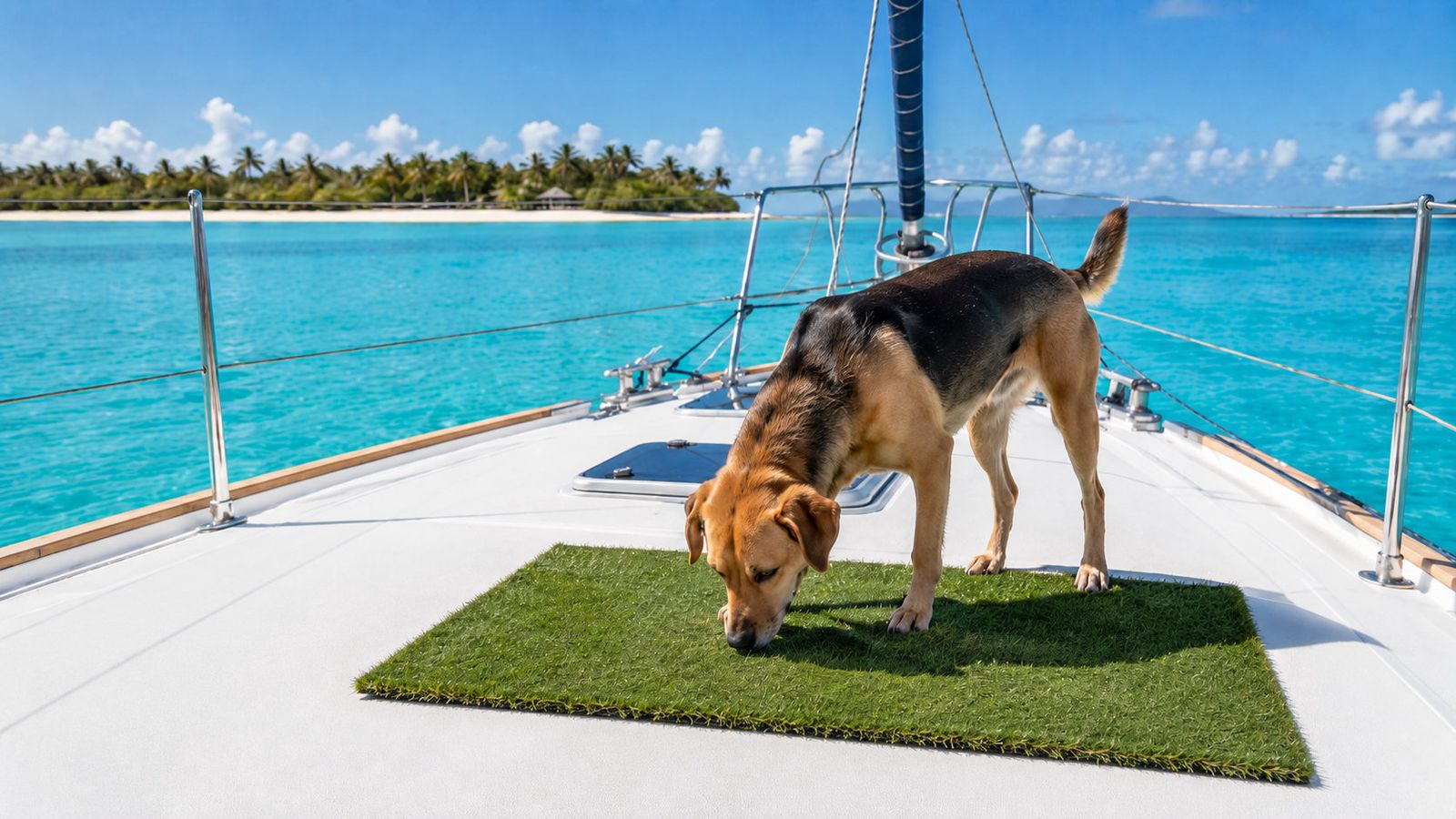
The classic trick is to bring a piece of fake grass (artificial turf) on board. A square meter is plenty. Place it on the foredeck or transom, somewhere your dog can access easily but that's away from the cockpit. The texture and smell of grass help signal that this is an acceptable spot. Some owners rub a little used grass from home onto the mat to seed the idea.
Tips for making this work:
Introduce the turf at home before the trip so it's already a familiar option.
Rinse it overboard with seawater after each use, then let it dry.
Praise heavily the first time. This is a moment worth celebrating.
Step 4: Plan a Route With Plenty of Shore Time
Even with a turf solution, dogs need to walk, sniff, and move around. A sailing itinerary built around your dog will look different from a typical "as much sailing as possible" route. Aim for shorter passages, ideally three to five hours, and prioritize destinations where you can get ashore at least once a day.
Shore time doesn't have to mean a marina, though marinas are the easiest option. With a confident dog, you can also:
Anchor in a quiet bay and use the dinghy to ferry your dog to a beach. Practice dinghy boarding at home or in calm water first. A nervous dog jumping in or out can capsize a small tender.
Choose anchorages near uninhabited islands or coves with easy beach landings. Dogs love these spots: open space, no traffic, and water shallow enough to wade.
Mix marina nights with anchor nights. Marinas give you long walks and the chance to refill water tanks; anchorages give you peace and beach access.
If your dog isn't comfortable in the dinghy, work on that before the trip. Use treats, take very short rides at first, and always put the life jacket on. Lifting a 30-kilo dog over the side of a tender into a heaving boat at 3 a.m. is not something you want to learn on the fly.
Practical Tips From Experience
Bring familiar bedding. A bed or blanket from home gives your dog a smell-anchor in an unfamiliar environment.
Pack more food than you think you need. Specific brands can be impossible to find in remote anchorages.
Carry your vet records and a basic pet first-aid kit. Include tick removers, paw balm for hot decks, and any regular medications.
Check entry rules if you're crossing borders. The EU pet passport, microchipping, and rabies vaccinations are non-negotiable in many regions.
Watch for heat stress. Provide shade, fresh water, and a wet towel to lie on during hot days.
Mind the noise. Engines, winches, and flapping sails can scare sensitive dogs. Introduce these sounds gradually.
Summary
A happy dog on a boat is mostly the result of good planning. Start by confirming your dog actually enjoys being on the water, choose a boat with safety netting and dog-friendly features, solve the bathroom question with a piece of artificial turf, and design a route that respects your dog's need to stretch its legs ashore. Add a life jacket, plenty of shade and water, and a healthy dose of patience, and you'll have a crew member who loves sailing as much as you do.
The dogs that thrive on boats aren't necessarily the most adventurous ones, they're the ones whose owners thought ahead. Do the prep work, and the rest is just sea breeze and belly rubs at sunset.


