What Is a Flotilla Sailing Holiday — and Is It Right for You?
Updated
A flotilla holiday gives you the helm of your own yacht with a professional lead crew alongside for support — discover how it works, what it costs, and whether it suits your experience level.
On this page

What Is a Flotilla Sailing Holiday — and Is It Right for You?
Imagine sailing your own yacht through turquoise Greek waters, stopping each evening at a different harbor village for cold beer and fresh grilled fish — but with a professional crew on a lead boat nearby if you need them, and a dozen other like-minded sailors making the same journey alongside you. That, in a nutshell, is a flotilla sailing holiday.
It's one of the most popular ways to experience sailing in the Mediterranean, and yet plenty of people have never quite understood how it works, whether they're experienced enough to join one, or how it stacks up against a bareboat charter or a skippered yacht. This guide answers all of those questions and helps you figure out if a flotilla holiday is the right choice for your next trip.
So, What Exactly Is a Flotilla?
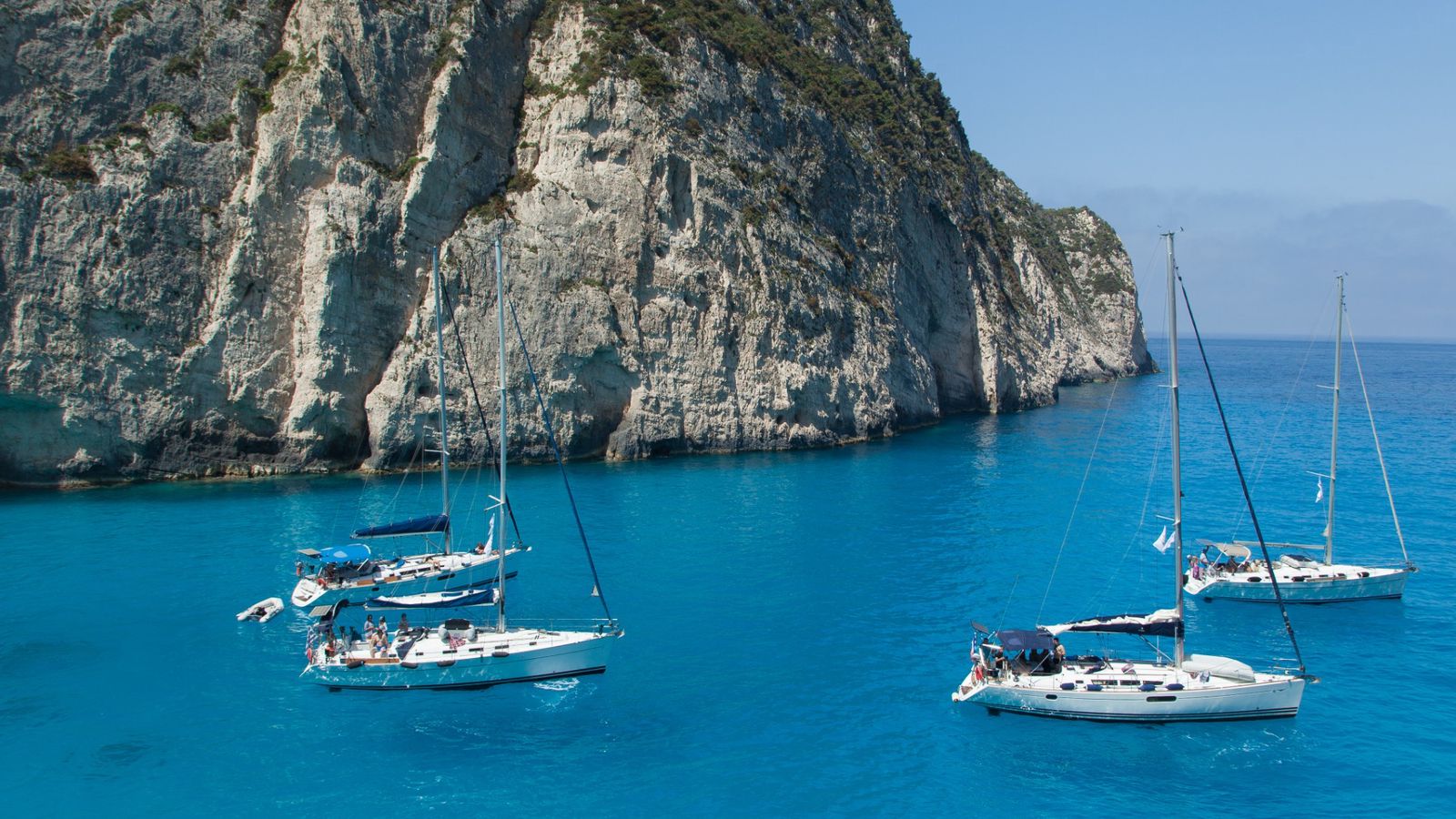
A flotilla is a group of yachts — typically between six and twenty boats — that sail together along a pre-planned route, usually over one or two weeks. Each yacht is crewed by its own holidaymakers (usually a couple or a small group of friends or family), but the entire fleet is supervised and guided by a professional lead crew.
That lead crew travels on their own dedicated boat — the lead boat — and they're the backbone of the whole operation. They typically consist of:
A skipper who plans the daily routes, monitors weather, and provides sailing guidance
An engineer or technician who can fix mechanical problems on any boat in the fleet
A hostess who handles social events, local knowledge, and flotilla logistics
Each morning, the lead crew holds a briefing — usually over coffee at the quayside — covering that day's weather, the route, distances, any tricky navigation points, and where you'll be anchoring or mooring for the night. Then the fleet sets off, sailing at its own pace, with the lead boat making sure everyone arrives safely. In the evenings, the group often gathers at a taverna or on deck together, making flotilla holidays as much a social experience as a sailing one.
How Is a Flotilla Different from a Bareboat Charter?
On a bareboat charter, you rent a yacht and sail it entirely independently. There's no lead boat, no daily briefings, no support crew. You plan your own route, handle any problems yourself, and need to be a competent skipper. It offers total freedom but requires real experience and confidence.
A flotilla sits comfortably between bareboat and skippered charter. You still have your own yacht and you're still in charge of sailing it, but you're never alone. The support structure means that less experienced sailors can take the helm of a proper cruising yacht without the anxiety of doing it completely solo for the first time.
Think of it this way:
Bareboat charter — You're on your own. Full freedom, full responsibility.
Flotilla — You're sailing your own yacht, but with a safety net and social group around you.
Skippered charter — A professional skipper lives aboard and sails the boat for you (or with you). You're a passenger as much as crew.
For many people, a flotilla is the perfect middle ground — real sailing, real responsibility, but with backup when you need it.
What Skill Level Do You Need?
This is probably the most common question, and the good news is that the bar is lower than most people expect. Flotilla holidays are specifically designed to be accessible to beginner and intermediate sailors. Many people join their first flotilla having completed nothing more than a basic RYA Day Skipper course or even just a competent crew qualification.
You should ideally be able to:
Helm a yacht in calm conditions
Understand basic sail trim and points of sail
Handle a yacht in a marina (with help from crew)
Read a basic chart and understand buoyage
Know the basics of anchoring
That said, the lead crew have seen it all. Mediterranean flotilla sailing tends to take place in relatively sheltered, well-charted waters with predictable summer weather patterns, so the conditions are forgiving. If you need help reverse-parking into a tight Greek quay with a stern line, the lead crew will come alongside and assist. If you're nervous about a particular stretch, you can ask to buddy up with the lead boat for the day.
Experienced sailors also enjoy flotillas — particularly those who want to sail in a new destination without the research burden of a bareboat, or those who simply enjoy the social dimension. Many veteran sailors go back year after year precisely because of the community aspect.
How Much Does a Flotilla Holiday Cost?
Flotilla pricing varies quite a bit depending on the destination, the time of year, the size of the yacht, and how many people are sharing the boat. As a rough guide for the Mediterranean, here's what you might expect:
Budget flotilla (shoulder season, smaller yacht, 2–3 people): £600–£900 per person for a week, all-in
Mid-range flotilla (peak summer, 32–38ft yacht, couple): £1,000–£1,600 per person for a week
Premium flotilla (peak season, larger yacht, popular destination): £1,800–£2,500+ per person
These costs typically include the yacht hire itself, marina fees, the lead boat fee (usually a supplement of £100–£200 per boat per week), and basic safety equipment. You'll pay separately for flights, provisioning (food and drink on the boat), fuel, and your evenings ashore.
Compared to a comparable bareboat charter of the same yacht and route, a flotilla is slightly more expensive due to the lead boat surcharge. However, many sailors find the peace of mind and social experience more than worth the premium — and for those who couldn't safely undertake a bareboat, there's simply no comparison.
The Classic Flotilla Holiday: What to Expect Day by Day
The classic flotilla format has barely changed in forty years, and that's partly why it works so well. A typical week in the Greek Ionian or Aegean might look something like this:
Day 1 — Arrival: You fly into a regional airport (Preveza, Corfu, Kos, Rhodes), transfer to the base marina, meet the lead crew, receive a full boat handover, and attend a welcome briefing over drinks.
Days 2–6 — Sailing: Each morning starts with a briefing (typically 09:00), you set off mid-morning and sail between two and five hours to the next stop. Afternoons are for swimming off the boat, exploring the village, and relaxing. Evenings are for eating together ashore or sundowners on deck.
Day 7 — Return: You sail back to the base marina, clean the boat, hand over the keys, and either fly home or stay on for a few extra days if you've extended.
The rhythm is gentle. You're not racing, and you're not trying to cover huge distances. The whole philosophy is to arrive somewhere beautiful, stop, and enjoy it — then do it again the next day.
Beyond the Classic Format: Different Versions of Flotilla Holidays
The standard one-week, fully-guided flotilla is the most common format, but the concept has evolved considerably. Here are some variations worth knowing about:
Two-Week Flotillas
Many operators run two-week itineraries that cover more ground — sailing from one island group to another, for example, or completing a full circuit of a larger island chain. These suit sailors who want more miles and more diversity of scenery.
Flotilla and Villa Combos
Popular in the Greek islands and Croatia, these packages combine a week on a flotilla yacht with a week based in a private villa. The sailing leg and the land leg can often be done in either order, making it an ideal family option.
Racing Flotillas
For the more competitive sailors, some flotillas incorporate informal racing between the fleet on certain legs. There's no serious pressure, but it adds an element of fun and friendly rivalry, and it's a great way to improve your sailing technique in a supportive environment.
Themed and Special Interest Flotillas
You'll find flotillas organised specifically for families with young children, for solo travellers (where the operator matches individual sailors with shared berths on fleet yachts), and even for special occasions like anniversary groups or sailing clubs doing their annual trip together.
Positioning Flotillas — The Insider's Best Value Secret
This is one of the least-known but most rewarding versions of the flotilla concept, and it deserves its own section.
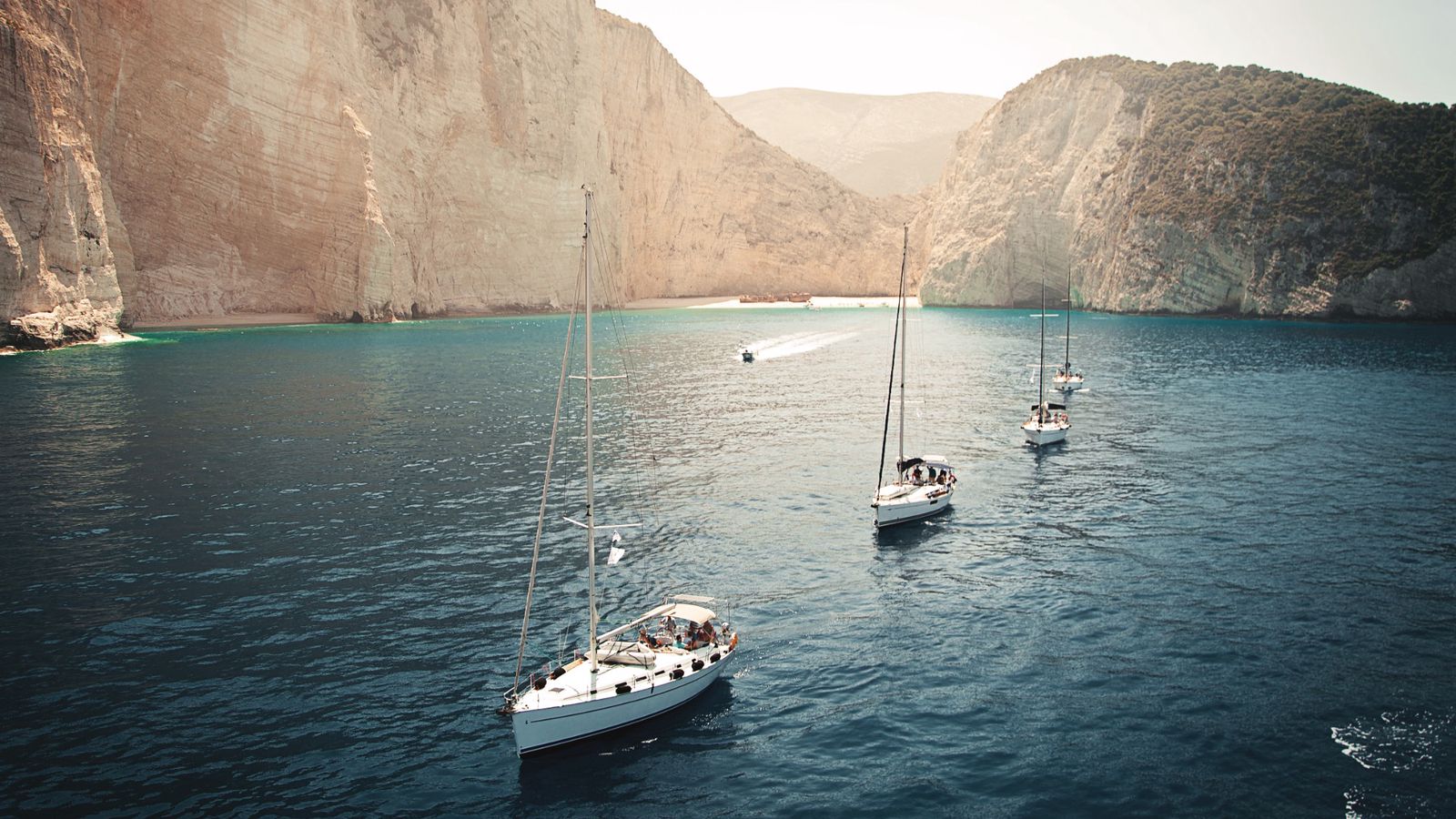
At the start and end of each sailing season — typically April–May and October–November — charter companies need to move their fleets between winter and summer bases. Rather than ferry these boats with paid delivery crews, operators turn the repositioning into a flotilla event and open it up to paying guests at a fraction of peak-season prices. The result sits somewhere between a classic flotilla and a proper offshore adventure: one-way passages covering serious distance through less-travelled waters, aimed at sailors who want real miles in the logbook rather than a gentle bay-hop.
A typical positioning flotilla links two of an operator's bases over seven to eight days, often covering 250–500 nautical miles with daily legs of up to 65 NM and a strong emphasis on actually using the sails.
What makes this format unusually flexible is that you can typically join in three different ways:
Bareboat with your own crew — take a whole yacht and sail it as part of the fleet, with the lead boat and daily briefings as your safety net. Diesel, end cleaning and a refundable deposit are usually mandatory extras.
Individually as crew — book a single berth in a shared double cabin (with single-cabin upgrades usually available). Ideal for solo travellers or couples not wanting a whole boat.
On an educational boat — at least one yacht in the fleet is often run as a training vessel, skippered by a qualified instructor with students working toward a sailing licence. Theory, practical work, and a written exam on the final day make this an unusually efficient way to qualify while crossing real water.
Positioning flotillas are genuinely adventurous: the weather is more variable, the legs are longer, and the social infrastructure is leaner than a classic July flotilla. But for sailors who want mileage, real conditions, certified miles for licence applications, and routes most charter visitors never see — at prices often 30–50% below peak season — this is one of the best-kept secrets in sailing holidays.
The Best Destinations for Flotilla Sailing
Flotilla sailing is almost synonymous with the Mediterranean, though the concept has spread well beyond it. Here are the destinations that consistently produce the best flotilla experiences:
The Greek Ionian Islands
Corfu, Lefkada, Ithaca, Kefalonia, Zakynthos — the Ionian coast is the traditional home of the flotilla holiday. Consistent northwesterly winds (the Meltemi is less aggressive here than in the Aegean), calm seas, short sailing legs, spectacular anchorages, and some of the best taverna food in Greece make this the classic choice. The Lefkada canal and the sailing ground around Meganisi and Sivota are particularly beloved.
The Greek Aegean and Saronic Gulf
The Saronic Gulf south of Athens — including Aegina, Hydra, Poros, and Spetses — offers some of the most beautiful sailing in Greece in a relatively compact area. The Cyclades (Mykonos, Paros, Naxos, Santorini) are more exposed and better suited to experienced sailors, while the Sporades offer green, forested islands and a more relaxed pace.
Croatia
The Dalmatian Coast has exploded in popularity over the past two decades and now rivals Greece as Europe's top flotilla destination. The thousands of islands between Split and Dubrovnik offer extraordinary scenery, crystal-clear water, and a brilliant mix of historic medieval towns and remote anchorages. The winds are generally gentler than Greece, making it an excellent first-flotilla destination.
Turkey (Turkish Aegean)
The Bodrum Peninsula, the Gulf of Gökova, and the waters around Marmaris and Fethiye offer some of the most spectacular sailing scenery in the world. Gulet-style vessels are the norm here, and flotillas in Turkey often take a slightly different shape — sometimes incorporating traditional wooden motor-sailers alongside standard yachts.
The British Virgin Islands
The BVI is the Caribbean's answer to the Greek Ionian — sheltered waters, consistent trade winds, short sailing legs, and extraordinary anchorages like The Bight on Norman Island or the Bitter End on Virgin Gorda. More expensive than Mediterranean flotillas, but an outstanding experience for those who want to try Caribbean sailing in a supported format.
Scotland and Ireland
Flotillas in Scottish and Irish waters suit sailors who want dramatic scenery, wildlife (seals, dolphins, puffins), and a genuine sense of adventure without flying long-haul. The West Coast of Scotland in particular — the Clyde estuary, the Kyles of Bute, and the southern Hebrides — is breathtaking in summer, though the weather is considerably more variable than the Med.
Pros and Cons of a Flotilla Holiday
The Pros
Perfect for less experienced sailors. You get the real sailing experience without the full pressure of sailing independently.
Social and fun. You're part of a group, and the communal evenings ashore are often the highlight of the trip.
Professional backup on tap. Mechanical problems, navigation questions, difficult manoeuvres — help is always available.
Well-planned routes. The lead crew has sailed these waters many times and will take you to anchorages you'd never find on your own.
Good for families. Children tend to love the social environment, and the family-friendly format is well-established.
Great skill-builder. After a week on a flotilla, most sailors feel significantly more confident and capable.
The Cons
Less freedom than bareboat. You're broadly following a set itinerary and sailing in a group, which limits spontaneity.
The social element can be a double-edged sword. If you prefer solitude and independence, a large flotilla may feel too communal.
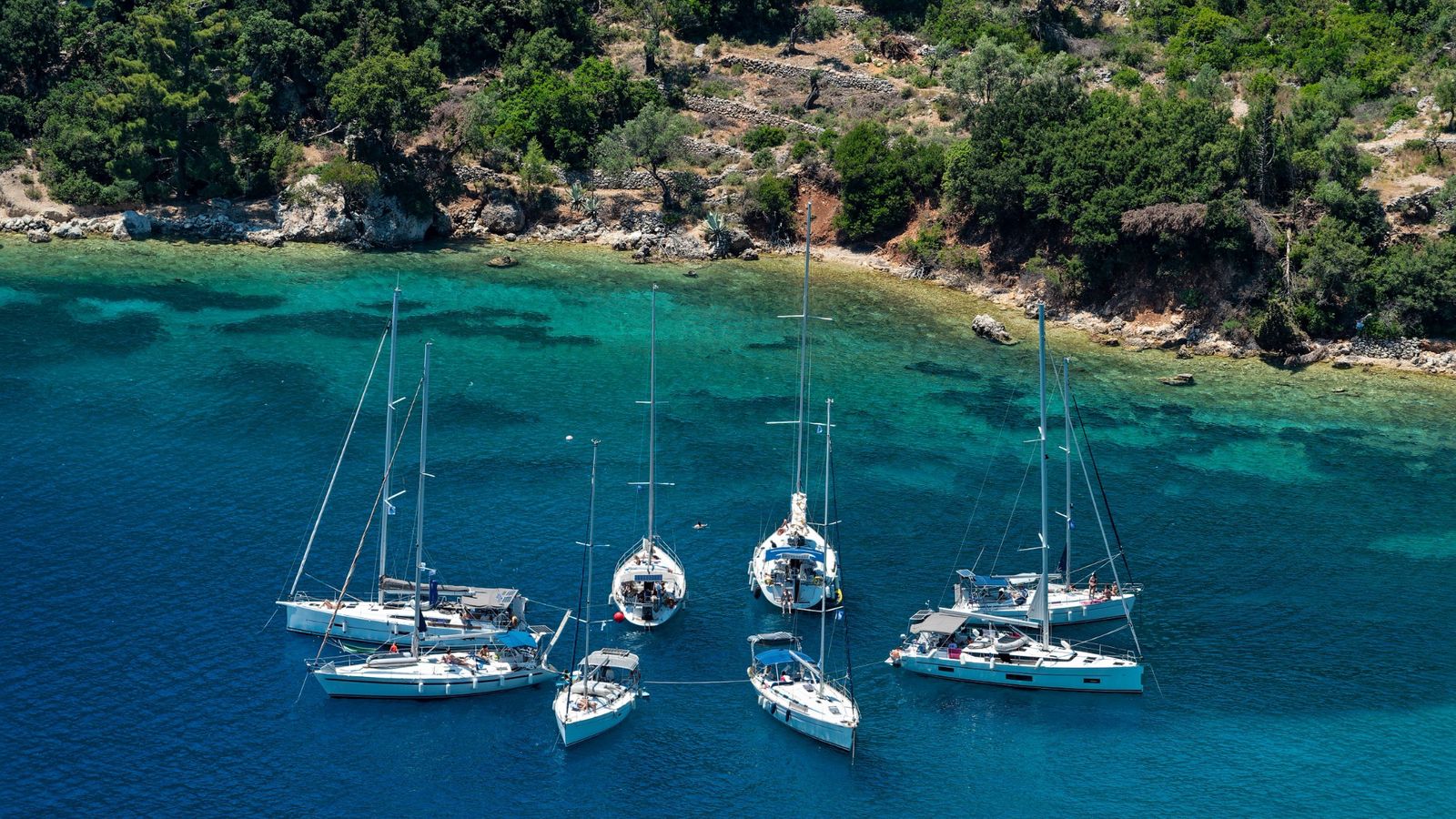
Popular anchorages get crowded. When fifteen boats all arrive at the same pretty bay, it loses some of its magic.
Lead boat fees add cost. You pay a supplement for the support infrastructure even if you never use it.
Variable group dynamics. You can't always predict who else will be on the flotilla, and not every group gels perfectly.
Practical Tips for First-Time Flotilla Sailors
Take a course beforehand. Even a weekend RYA competent crew or Day Skipper course will give you the confidence to get the most from a flotilla. You'll arrive knowing port from starboard and sheets from halyards.
Book a mid-sized yacht. A 34–38ft boat is the sweet spot for couples or small groups. Big enough to be comfortable, small enough to handle easily.
Sail shoulder season. May, June, and September offer the best combination of settled weather, emptier anchorages, and lower prices. July and August are peak season and come with more wind and much more company.
Get to the briefings. Even experienced sailors should attend the daily morning briefing — the lead crew's local knowledge is invaluable and often includes insider tips on the best restaurants or hidden beaches.
Don't overload the boat. Every extra bag is a nuisance in a small yacht. Travel light, use soft bags, and leave the big suitcase at home.
Budget for evenings ashore. This is where the money goes on a flotilla holiday. Factor in at least £25–40 per person per day for meals and drinks ashore, on top of your provisioning for breakfasts and lunches on the boat.
Consider a positioning passage. If you're an RYA Day Skipper or above, look at early or late season positioning options. They represent extraordinary value and an experience you'll talk about for years.
Is a Flotilla Holiday Right for You?
If you want real sailing — helm in hand, sails up, spray on your face — but you're not quite ready for the full independence of a bareboat charter, a flotilla holiday is almost certainly the right answer. It offers everything that makes sailing special, wrapped in a structure that makes it accessible and safe.
If you're an experienced sailor who values total freedom and privacy above everything else, a bareboat charter will suit you better. And if you'd rather watch the scenery from a sun lounger while someone else handles the sheets, a skippered yacht is your match.
But for everyone in between — the enthusiastic beginner, the returning sailor who hasn't helmed a boat in years, the family looking for an adventure holiday with a memorable social element — the flotilla remains one of the finest sailing experiences on earth. There's a reason the format has endured for half a century: it works beautifully, and people come back to it again and again.
Whether you choose the sun-soaked Ionian in July, the wild west coast of Scotland in June, or a positioning passage across the western Mediterranean in October — the flotilla world is ready to welcome you aboard.


