Boat Charter in Thailand: The Complete Guide
Updated
Everything you need to plan a catamaran charter in Thailand: the best sailing routes from Phuket, seasonal weather, costs, a 7-day itinerary, and practical tips for navigating the Andaman Sea.
On this page

Why Thailand Is a Dream Destination for Sailors
Thailand has quietly become one of the world's most coveted sailing destinations, and it is not hard to understand why. The Andaman Sea and the Gulf of Thailand offer a stunning combination of warm turquoise waters, dramatic limestone karsts jutting from the sea, hidden lagoons, and white-sand beaches that remain largely untouched by mass tourism once you leave the shore behind. Add to that a year-round tropical climate, some of the most affordable boat rental in Asia, and a culture that genuinely welcomes visitors, and you have a recipe for an unforgettable charter experience.
Unlike the Mediterranean, where marinas are crowded and anchorages are contested, Thailand still offers a sense of discovery. You can anchor in a secluded bay in the morning, explore a sea cave by kayak in the afternoon, and share grilled fish with locals at a beachside village by evening. For sailors seeking that rare combination of adventure, comfort, and value, a Thailand yacht charter is genuinely hard to beat.
The Hub: Phuket and Its Marinas
Phuket is the undisputed gateway for sailing in Thailand. The island hosts several well-equipped marinas that serve as the primary base for the majority of charter operations in the region. Ao Po Grand Marina in the northeast and Royal Phuket Marina on the east coast are the two most established, offering full provisioning services, technical support, charter company offices, and easy access to both northern and southern sailing routes. Boat Lagoon Marina is another popular option, particularly for catamarans, which require slightly wider berths.
Flying into Phuket International Airport and transferring directly to a marina is seamless, making the logistics of starting a charter straightforward even for first-time visitors to the region. Most charter companies are well-practiced at welcoming sailors off flights and getting them settled aboard the same afternoon.
Best Sailing Regions: North vs. South
Heading North: Phang Nga Bay and the Similan Islands
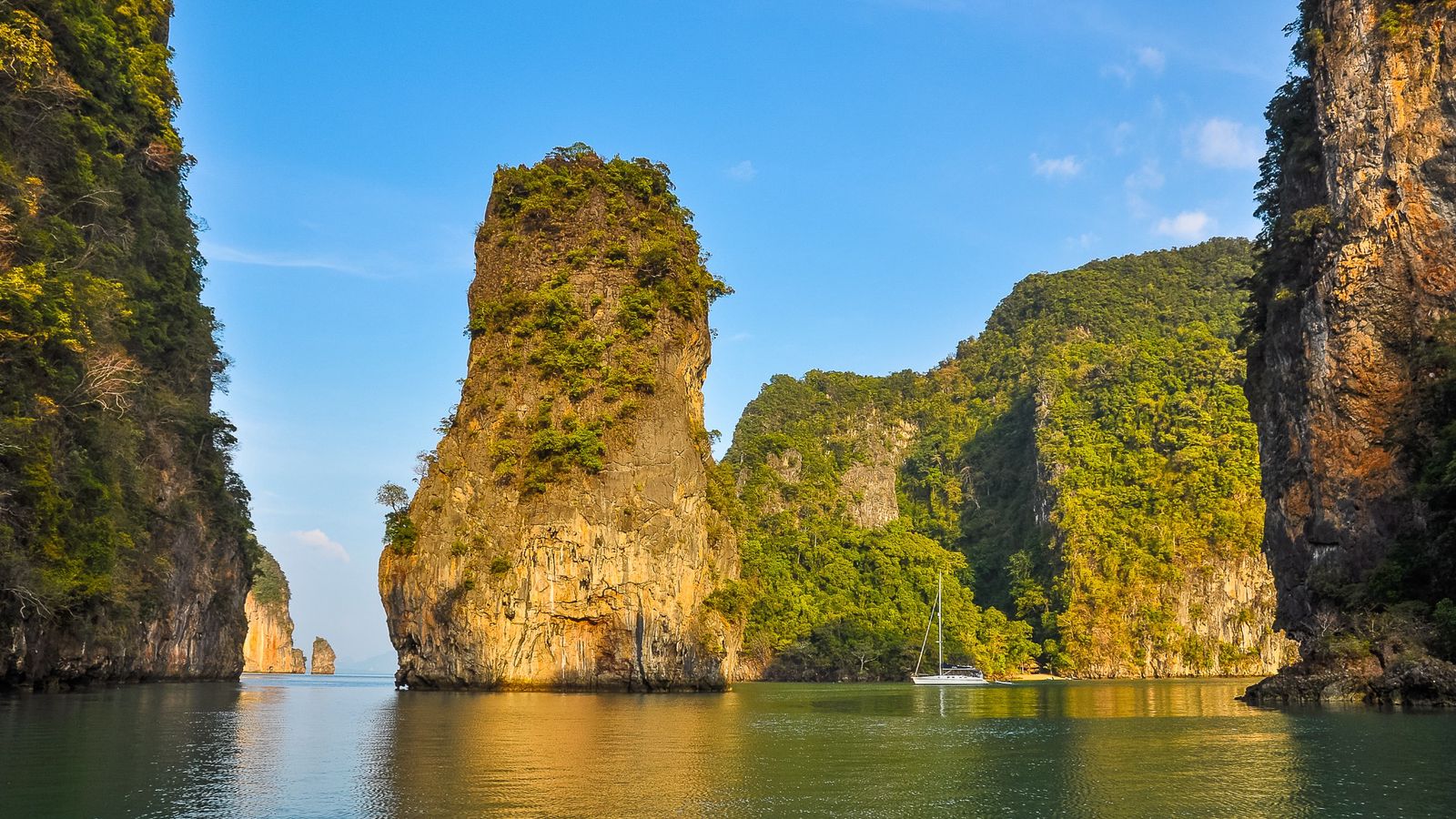
The northern route from Phuket is the most popular, and for good reason. Phang Nga Bay is one of the most visually spectacular sailing grounds in the world. The bay is studded with hundreds of limestone karst islands, many of them hollow, sheltering secret lagoons called hongs that can only be entered by dinghy or kayak at low tide. James Bond Island, made famous by the 1974 film, sits within the bay and is a worthwhile stop despite the occasional tourist longtail boat during daylight hours.
Continuing north, the Similan Islands National Park is a protected marine reserve with world-class snorkeling and diving. The underwater visibility here is exceptional, and the fish life is extraordinary. Ko Surin and the waters approaching the Myanmar border offer even more remote cruising if you have the time and the right permits. This northern corridor is well-suited to a catamaran, as the wider beam handles the sometimes lumpy sea conditions between islands more comfortably than a monohull, and the shallow draft allows access to anchorages that deeper keels cannot reach.
Heading South: Ko Phi Phi, Krabi, and the Trang Islands
The southern route from Phuket is less trafficked by charter boats and rewards sailors who want a quieter experience. Ko Phi Phi is an obvious first stop, with its iconic twin-bay geography and vibrant nightlife balanced against some genuinely beautiful snorkeling just off the cliffs. Beyond Phi Phi, the Krabi coastline opens up into a series of quieter bays and mangrove-lined rivers worth exploring by dinghy.
Further south, the Trang archipelago is one of Thailand's best-kept sailing secrets. Islands like Ko Mook, Ko Kradan, and Ko Libong see a fraction of the visitors that Phi Phi or Phang Nga receive, yet offer beaches and anchorages of equal beauty. Ko Libong is home to a small population of dugongs, and early morning anchorages off the seagrass beds give you a reasonable chance of spotting them. This southern corridor suits sailors who are willing to sacrifice a little infrastructure in exchange for a more genuine sense of escape.
Weather and Best Time to Visit
Thailand's sailing season is determined by two distinct monsoon systems, and understanding them is essential for planning a safe and enjoyable charter.
The Andaman Sea, which includes Phuket and all the sailing grounds to the north and south described above, is at its best between November and April. During these months the northeast monsoon brings dry, settled weather, consistent southwesterly trade winds in the 10 to 20 knot range, and flat to moderate sea states. This is the peak charter season and prices reflect that demand. January through March tends to offer the most stable conditions, with long sunny days and reliable sailing breezes.
From May through October, the southwest monsoon arrives over the Andaman Sea, bringing strong winds, heavy rain, and sea states that can make offshore passages challenging or genuinely hazardous. Most responsible charter companies will not permit departures during the heart of the southwest monsoon without an experienced skipper aboard, and some marinas see significantly reduced operations. The Gulf of Thailand coast, on the other side of the peninsula, has an opposite weather pattern and offers reasonable sailing conditions during the Andaman off-season, but the sailing grounds there are less dramatic and less accessible from Phuket.
The shoulder months of November and late April can offer excellent value alongside good conditions, particularly for sailors who are flexible with their dates.
Costs Overview
One of the most compelling aspects of a boat rental in Thailand is the relative affordability compared to European or Caribbean equivalents. Prices vary based on season, vessel size, and whether you charter bareboat or skippered, but the following ranges give a useful working picture.
A comfortable catamaran in the 38 to 45-foot range, which is the most popular choice for couples or small groups of four to six people, typically costs between USD 2,500 and USD 4,500 per week on a bareboat basis during the peak season. Skippered charters add roughly USD 150 to USD 250 per day for the skipper's fee, plus their food and expenses. A fully crewed charter with a skipper and host aboard a larger 50-foot-plus catamaran can reach USD 7,000 to USD 12,000 per week depending on the vessel and inclusions.
Additional costs to budget for include marina fees (typically USD 30 to USD 80 per night at the major Phuket marinas), national park entrance fees if you plan to visit Similan Islands (approximately USD 30 per person), fuel, and provisioning. Food and drink in Thailand remain genuinely affordable, and a well-stocked boat provisioned from local markets can be achieved for a fraction of what the same provisioning would cost in the Mediterranean. Eating ashore at local restaurants is consistently excellent and inexpensive.
A Sample 7-Day Catamaran Itinerary from Phuket (Northern Route)
Day 1 — Phuket to Ko Yao Noi
Depart from Ao Po Grand Marina in the late morning and sail northeast into Phang Nga Bay. Ko Yao Noi is a low-key, predominantly Muslim island with a relaxed atmosphere and a beautiful anchorage on its western side. Settle in, swim, and enjoy a quiet first evening aboard.
Day 2 — Ko Yao Noi to Phang Nga Bay Exploration
Spend the full day exploring the karst islands of Phang Nga Bay by catamaran and dinghy. Visit James Bond Island in the morning before the day-tripper boats arrive, then seek out one of the hidden hongs in the afternoon. Anchor overnight in a sheltered bay within the bay.
Day 3 — Phang Nga to Ko Racha Noi (or Ko Yao Yai)
If conditions allow and your group wants excellent snorkeling, a longer passage south to Ko Racha Noi offers some of the clearest water close to Phuket. Alternatively, stay north and anchor off Ko Yao Yai for a gentler day of exploring the village and cycling the quiet island roads.
Day 4 — Sail North Toward the Surin or Similan Islands
This is the longest passage day of the itinerary, heading northwest toward the Similan Islands National Park. Depart early to arrive with enough afternoon light for snorkeling. The park entrance fee is collected at the ranger station. Overnight anchoring within the park may require advance arrangement with your charter company.
Day 5 — Similan Islands
Spend a full day in the park. Snorkel over the coral gardens at Koh Ba Ngu, circumnavigate some of the smaller outcrops by dinghy, and watch for reef sharks in the shallows. This is typically the most memorable day of a northern itinerary.
Day 6 — Return South to Ko Naka Yai or Ko Rang Yai
Begin the return passage south, stopping at one of the quieter islands close to Phuket for a final full day of swimming and relaxing. Ko Naka Yai has a lovely anchorage on its eastern side with minimal swell.
Day 7 — Return to Phuket Marina
An easy morning sail back to the marina, arriving mid-morning for checkout procedures. Allow time for a final lunch ashore in Phuket before departing.
Travel Requirements and Sailing Licenses
Thailand does not require foreign sailors to hold a specific Thai sailing license to charter bareboat, but the practical requirements deserve careful attention. Most charter companies in Phuket will require at minimum an internationally recognized sailing qualification such as an RYA Day Skipper, IYT Bareboat Skipper, or ASA 104 equivalent, along with a logbook demonstrating relevant offshore experience.
If you do not hold the required qualifications, chartering with a professional skipper is a practical and popular solution. Many first-time Thailand yacht charter clients choose this option regardless of their qualifications, as a local skipper provides invaluable knowledge of anchorages, weather patterns, and marine park regulations.
Regarding entry requirements for Thailand itself: most Western passport holders receive a 60-day visa-on-arrival or visa-exempt entry, which is generally sufficient for a one-week charter with a few days on either side. Passport validity of at least six months beyond your travel dates is required. Always verify current entry requirements with the Royal Thai Embassy before booking, as policies can change.
For sailing into marine parks such as the Similans or Surin Islands, your charter company will handle the required park permits and vessel registration paperwork, but it is worth confirming this is included in your charter agreement before signing.
5 Practical Tips for Sailing in Thailand
1. Choose a catamaran for comfort and access. The Andaman Sea can produce short, choppy swell between island groups, and a catamaran's wide beam handles this far more gracefully than a monohull. The shallow draft also lets you tuck into bays and beach anchorages that deeper-keeled boats simply cannot reach. For groups of four or more, the additional deck space and separate hulls make a meaningful difference to the enjoyment of the trip.
2. Arrive a day early to provision properly. The large Makro supermarket near the marinas in Phuket is one of the best stocked wholesale stores in Southeast Asia and makes provisioning straightforward and affordable. Arriving the day before your charter begins gives you the time to shop thoroughly, stow everything properly, and do a proper handover with the charter company without feeling rushed.
3. Respect the national park rules. Anchoring on coral is strictly prohibited in all Thai marine parks, and rangers do enforce this. Your charter catamaran should be equipped with sufficient anchor chain to swing well clear of reef areas, but always check your position on the chartplotter before letting go the anchor. Most established anchorages within the parks have sandy patches clearly marked on the cruising guides provided by charter companies.
4. Carry cash in Thai baht for anchorage fees, park entry, and provisioning. While the major marinas accept card payments, many local fishing villages, national park collection points, and small island vendors operate on a cash-only basis. ATMs are readily available in Phuket town before departure, and the exchange rate is generally favorable for USD, EUR, and GBP.
5. Book your charter well in advance for peak season. November through February is in high demand, and the best catamarans are reserved months ahead. If you have a specific vessel or a fixed travel window in mind, booking at least four to six months in advance is strongly recommended. Shoulder-season bookings in late October or April offer more flexibility and can yield meaningful savings on the charter fee.
Final Thoughts
A Thailand yacht charter from Phuket offers a rare combination of world-class natural scenery, reliable sailing conditions during the peak season, warm hospitality, and a cost profile that makes extended charters accessible to a wider range of sailors than comparable destinations in Europe or the Caribbean. Whether you choose to head north into the karsts and reefs of Phang Nga Bay and the Similan Islands, or south toward the quieter beaches of the Trang archipelago, a well-planned catamaran charter will leave you with memories that are genuinely difficult to replicate on land. Thailand rewards those who take to the water, and Phuket is the perfect place to begin that journey.


