How to Prepare for Your Sailing Charter: The Complete Pre-Departure Checklist
Updated
From visa checks and provisioning to packing your personal safety kit, here's the complete preparation guide for your sailing charter — so you can cast off with confidence.
On this page

How to Prepare for Your Sailing Charter: The Complete Pre-Departure Checklist
You've booked the boat, rallied the crew, and you're counting down the days. But between booking confirmation and stepping aboard, there's a surprisingly important window of preparation that can make the difference between a seamless sailing holiday and a stressful one. Whether it's your first bareboat charter or your tenth, getting the details right before you leave home pays off enormously once you're on the water.
Here's everything you need to think about before you set sail.
1. Entry Requirements: Visas, Health, and Travel Documentation
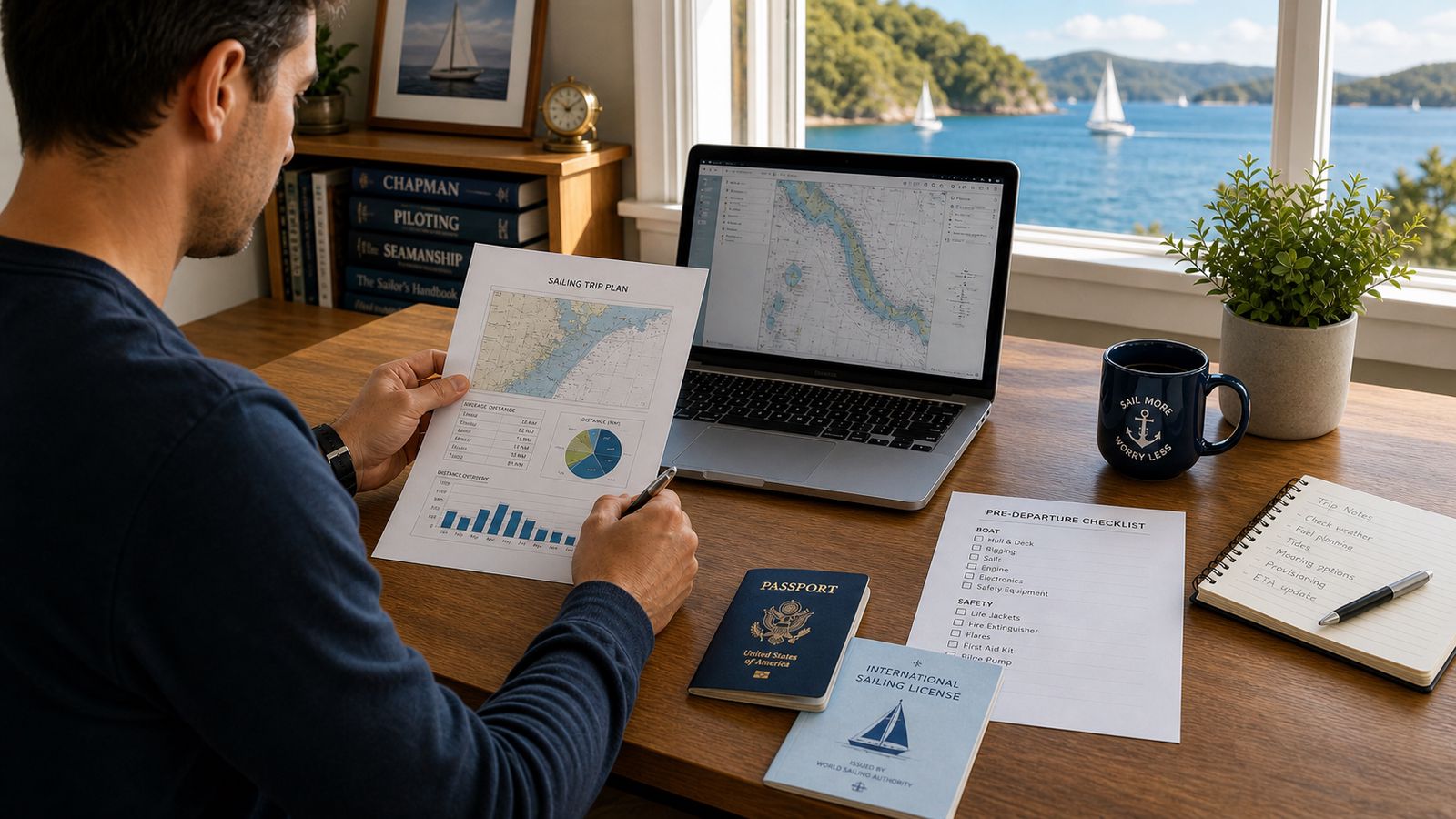
Before anything else, check whether you need a visa for your destination. Even within the EU, some lesser-visited sailing destinations — particularly in the Balkans or the Eastern Mediterranean — have their own entry nuances. If you're sailing between countries during your charter (for example, from Croatia into Montenegro), both countries' entry requirements apply.
Health requirements matter too. Some destinations still require proof of vaccination for certain diseases, and travel insurance that covers medical evacuation is strongly recommended for any sailing holiday. Check whether your personal health insurance covers you at sea or in a foreign country, and consider a dedicated travel health policy if it doesn't.
Quick checklist:
Valid passport (check expiry — many destinations require 6 months validity beyond your travel dates)
Visa requirements for all countries you may enter, including transit stops
Vaccination requirements or health declarations
Travel insurance covering sailing activities and medical evacuation
Emergency contact information stored both digitally and on paper
2. Money Matters: Currency and Payment Methods
It's easy to assume your card will work everywhere — and in many marinas and restaurants it will. But once you're anchoring in smaller bays, buying fish from a local fisherman on a remote island, or paying for a berth at a tiny harbour with no card reader, cash becomes essential.
Before departure, research the local currency and the typical payment culture of your destination. In Croatia, for example, the euro is now standard — but in Turkey, Greece's more remote islands, or some Caribbean destinations, cash is still king for day-to-day transactions. Call the marinas you plan to visit ahead of time and ask how they prefer to be paid. The same goes for provisioning suppliers and fuel docks.
Practical tips:
Carry a mix of cash and at least two different payment cards
Notify your bank before departure to avoid your card being blocked abroad
Know the ATM situation at or near your base marina — some charter destinations have very limited ATM access
Keep a small emergency cash reserve separate from your main wallet
3. Your Skipper's Documents: What to Bring Onboard
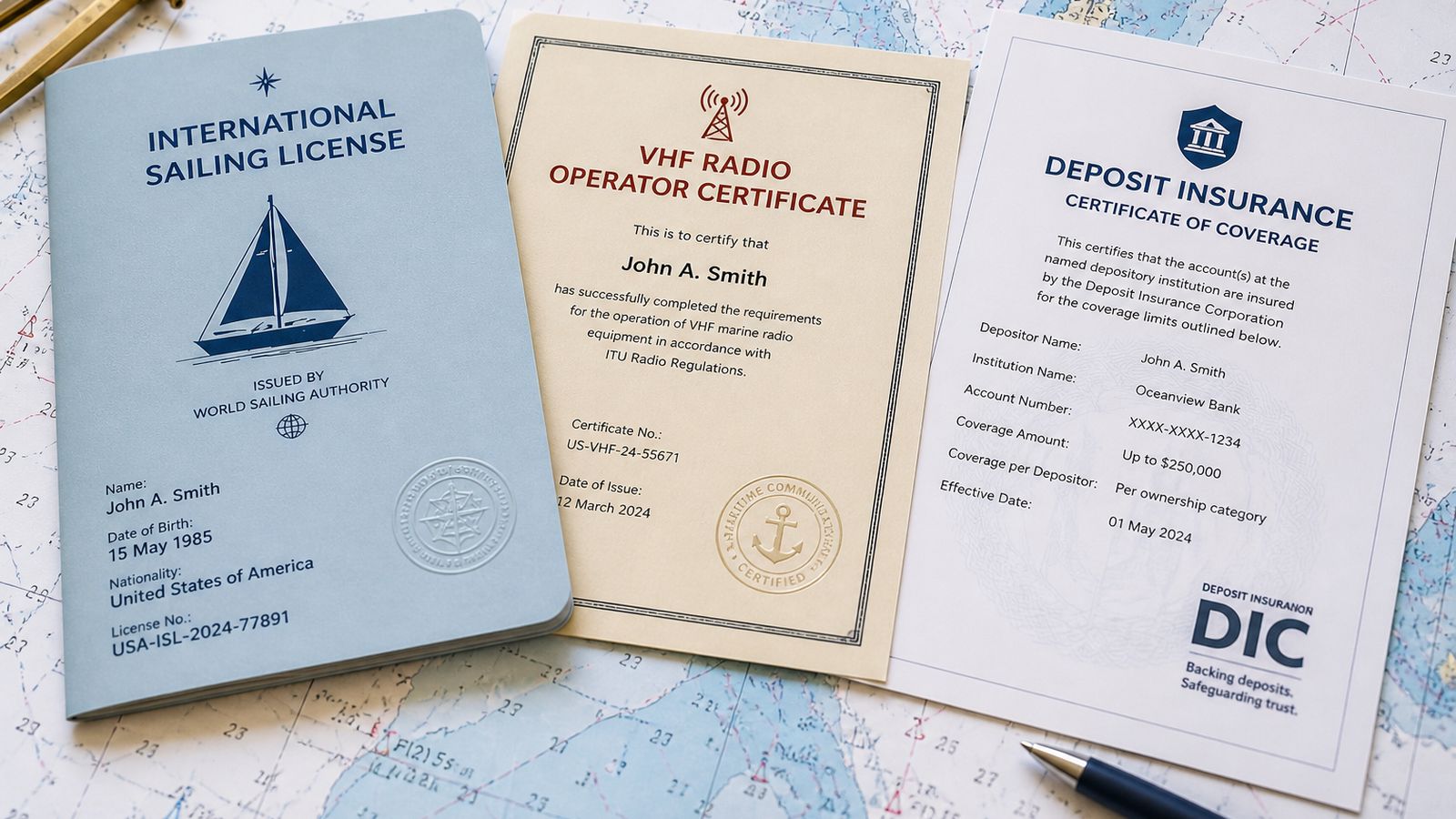
If you're taking a bareboat charter, the charter company will ask for proof of your sailing qualifications. Bring your original sailing license — not a photocopy — along with any other certifications relevant to the boat type or waters (VHF radio license, coastal skipper, ocean yachtmaster, etc.).
If you've taken out deposit insurance for the charter security deposit, bring those policy details too. In the event of any onboard damage, you'll want that paperwork immediately accessible rather than buried in an email inbox with spotty marina WiFi. Many skippers also keep a captain's log documenting their previous passages and experience — presenting this at check-in can build trust with the charter company and occasionally smooth over any ambiguities about qualification levels.
Don't forget:
Original sailing license and any additional certifications
VHF operator's license (required in most European waters)
Deposit insurance policy details and emergency contact number for your insurer
Captain's log or sailing CV if you have one
Crew list (many charter companies and some coastguards require this)
4. Provisioning: Plan Before You Arrive
Nothing deflates the first afternoon of a sailing holiday like spending three hours hunting for a supermarket, hauling groceries down a long pontoon in the midday heat. Smart provisioning starts before you even leave home.
Research what's available near your base marina. Many larger marinas have a supermarket within walking distance — but opening hours, stock levels, and delivery options vary significantly. Call ahead. Seriously. Phone the nearest supermarket and ask whether they deliver to the marina or pontoon. Many do, especially in popular charter destinations like the Greek islands, Croatia, or the BVI, and it can save you enormous amounts of time and effort on day one.
Think about how many days you're provisioning for between each resupply stop. Build a rough meal plan for the week, accounting for at least a couple of restaurant dinners ashore. Don't forget the unglamorous essentials: sunscreen, seasickness tablets, washing-up liquid, bin bags, and paper towels.
Provisioning tips:
Call the local supermarket before arrival — ask about delivery to the marina
Plan a rough weekly meal schedule to avoid over- or under-buying
Stock extra water — consumption is higher than you expect on a hot passage
Bring a good cooler bag for day trip provisions and anchorage picnics
Check whether the charter boat has a gas or electric cooker so you pack the right lighters or utensils

5. Toys and Water Sports Gear: What to Bring
The water toys you bring (or rent) can completely transform the experience, especially if you're sailing with kids or a group that loves exploring. Think about what kind of sailing holiday you're after and match your gear to it.
Many charter boats come with basic snorkelling equipment, but quality varies wildly. If you're serious about snorkelling or diving, bring your own mask and fins. A good quality dive mask that fits your face is infinitely better than whatever shared rubber contraption lives in the boat's equipment locker.
For the more adventurous, Stand-Up Paddleboards (SUPs) are a brilliant way to explore sheltered bays and can usually be rented at the marina if the charter boat doesn't include one. Bodyboards are lightweight and great fun in swell. If you're looking at e-Foils or other powered water toys, check with your charter company first — some have restrictions on powered equipment not included in the charter package.
Gear to consider:
Personal snorkel mask and fins (worth bringing your own)
Underwater camera or waterproof phone case
SUP (check if the charter boat includes one, or hire at the marina)
Bodyboard for surf stops or young crew members
Fishing line and lures if your destination allows it
Wetsuit or rash guard for cooler water temperatures early or late in the season
6. Personal Safety and Navigation Backup: The Essentials Many People Forget
Charter boats are well-equipped — but there's a difference between the boat being equipped and you being equipped. A few personal safety and navigation items are worth packing regardless of the boat's onboard kit.
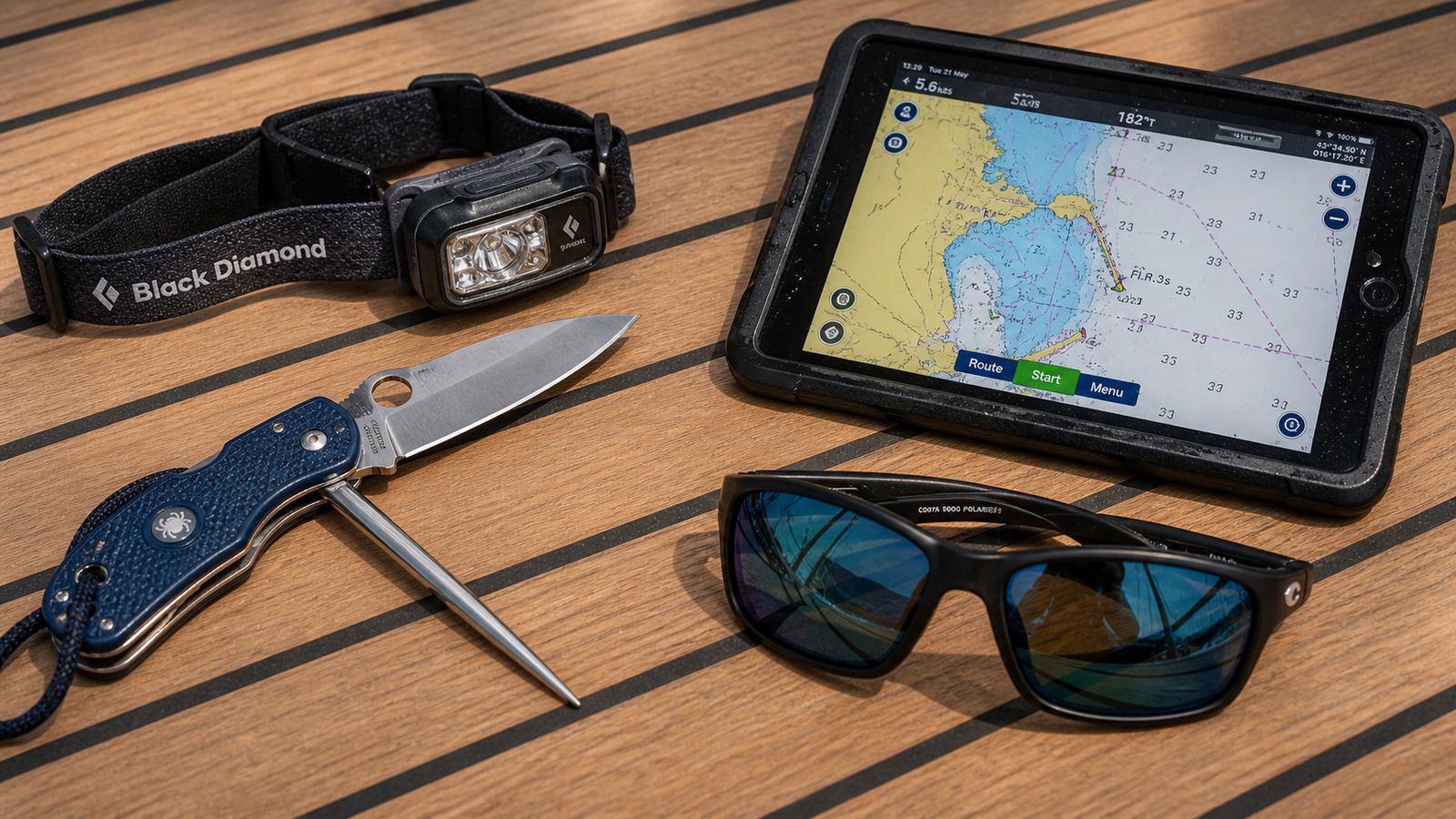
A good personal knife — a fixed blade or a solid folding knife with a marlinspike — is something every active crew member should have on their person when sailing. It's a safety tool first and foremost, useful for cutting a line in an emergency. Choose one that's rust-resistant and comfortable to wear on a harness or belt.
A headlamp is another must-have. Night watches, anchor light checks, engine compartment inspections — you'll reach for it more than you expect. Pack a spare set of batteries too.
Finally, consider loading a navigation app onto your personal tablet or phone as a backup. Apps like Navionics, iSailor, or Garmin ActiveCaptain can be lifesavers if the boat's chartplotter malfunctions or you're anchoring somewhere the onboard charts don't cover in detail. Download your charts for offline use before departure — marina WiFi is rarely good enough to do it on arrival.
Personal safety and navigation kit:
Personal sailing knife (rust-resistant, with marlinspike)
Headlamp with spare batteries
Tablet or phone with navigation app loaded and offline charts downloaded
Personal AIS beacon or PLB (Personal Locator Beacon) for offshore passages
Deck shoes with non-marking soles
Quality sunglasses with UV protection — polarised lenses are ideal on the water
7. Crew Preparation: Get Everyone on the Same Page
A sailing charter is only as good as the crew dynamic. Before departure, have a conversation with everyone coming aboard about expectations — watches if you're doing overnight passages, seasickness plans, dietary requirements for provisioning, and basic safety briefings.
If any crew members are new to sailing, encourage them to read a basic introduction beforehand and discuss terminology, so the first tack doesn't involve a frantic explanation of what "duck!" means. Most charter companies offer a safety briefing at check-in, but it pays to supplement this with your own crew briefing once you're settled onboard.
Summary: Your Pre-Charter Preparation Checklist
Good preparation is what separates a stressful departure from a confident one. Run through this list in the weeks before your charter and you'll step aboard feeling ready for anything the sea has to offer.
✅ Visas, health requirements, and travel insurance sorted
✅ Cash and cards organised, bank notified
✅ Sailing license, certificates, deposit insurance, and captain's log packed
✅ Provisioning researched — supermarket delivery arranged if possible
✅ Water toys and personal snorkel gear decided and packed
✅ Personal knife, headlamp, and navigation app with offline charts ready
✅ Crew briefed and expectations aligned
Do the preparation once, and then leave it behind. Because when you finally slip the lines and feel the first breath of wind fill the sail, the only thing you should be thinking about is where to point the bow.


