Sailing Sardinia & Corsica: Routes, Anchorages & What to Expect
Updated
A complete guide to sailing between Sardinia and Corsica — covering the best routes, top anchorages, Mistral conditions, a 7-day itinerary, and whether it's cheaper to charter from France or Italy.
On this page

Few sailing destinations in the Mediterranean can match the raw, untamed beauty of the waters between Sardinia and Corsica. This is granite-boulder coastline, turquoise bays that rival the Caribbean, and some of the most reliable summer winds in the entire Med. Whether you're threading the needle through the Strait of Bonifacio or dropping anchor in a deserted cala with nothing but umbrella pines behind you, this corner of the Western Mediterranean earns its reputation as one of Europe's great sailing grounds.
This guide covers everything you need to know: which side of the channel to charter from (and which is cheaper), the best routes, must-stop anchorages, marina costs, and an honest assessment of what conditions to expect week by week.
What Makes This Area Unique
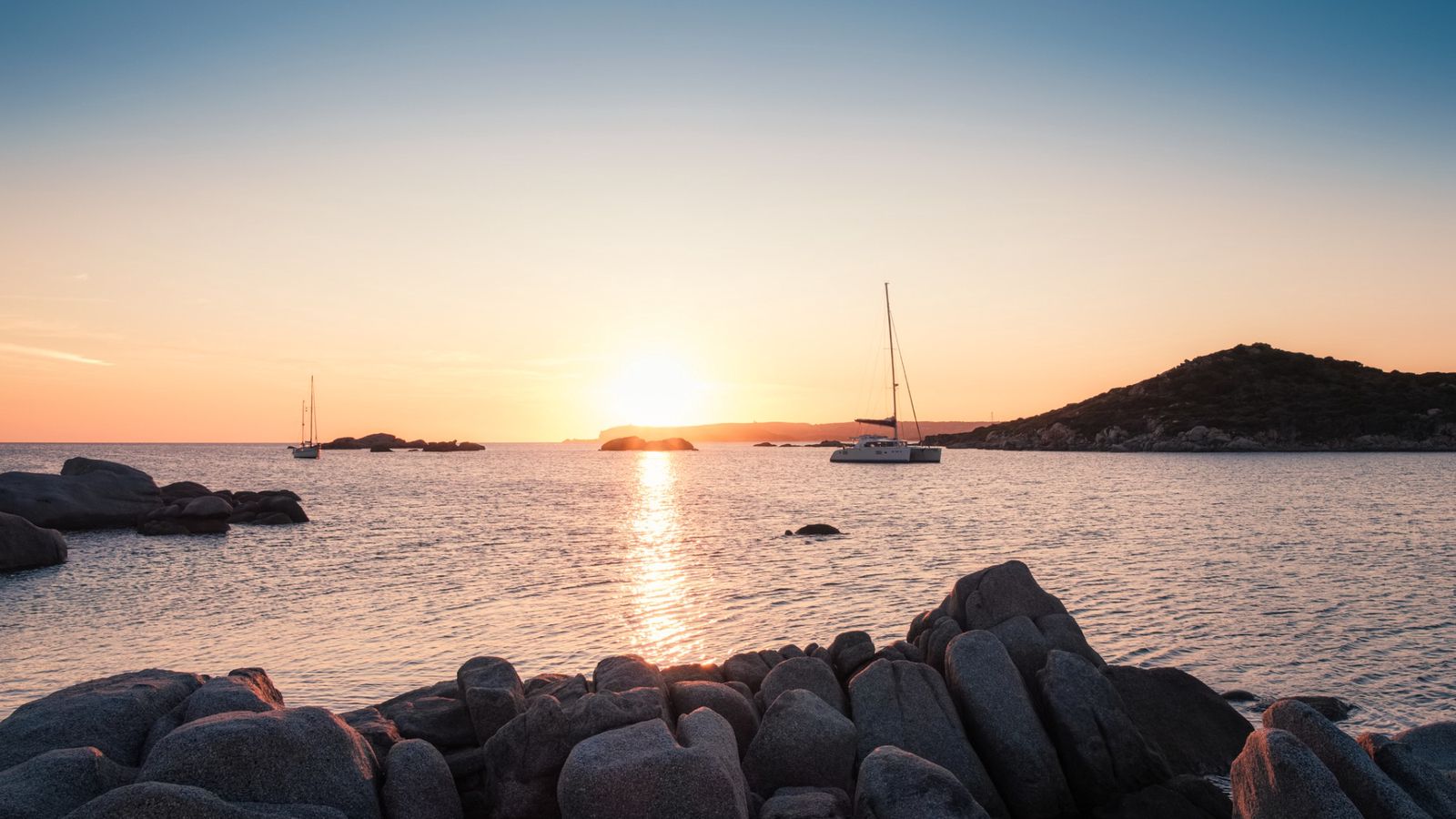
The Sardinia–Corsica sailing corridor is defined by two things above all else: the geology and the wind. The coastlines here are sculpted from ancient pink and orange granite that crumbles into the sea as dramatic stacks, arches, and boulders the size of houses. The water clarity is extraordinary — 15-metre visibility is standard, and in some anchorages it feels more like sailing in the Maldives than Southern Europe.
What makes this area genuinely special for sailors — as opposed to just tourists — is the combination of challenging open-water passages and perfectly sheltered anchorages within short distance of each other. You can have a bracing 20-knot beat across the Bocche di Bonifacio in the morning and be swimming off a deserted white-sand beach by afternoon. The two islands also have strikingly different characters on the water: Corsica is more rugged, French, and slightly less crowded; Sardinia is more developed in places but rewards those who venture to its northern coast, the Costa Smeralda and the archipelago beyond it.
The Maddalena Archipelago, sitting between the two islands, is arguably the jewel of the entire region — a national park of uninhabited islands, drifting sandbars, and anchorages so good they're worth organising an entire itinerary around.
Sailing Conditions: Wind, Sea & Difficulty
The Mistral
The defining meteorological feature of this region is the Mistral — a cold, dry northwesterly wind that funnels down the Rhône Valley and accelerates as it crosses the Gulf of Lyon. In summer it typically blows for 3–5 days at a time, building to 25–35 knots in open water and occasionally gusting well above that in the Strait of Bonifacio. The Mistral is not to be taken lightly. It arrives quickly, kicks up a steep, short chop, and can make the Strait of Bonifacio genuinely uncomfortable or downright dangerous for smaller yachts.
The flip side: a moderate Mistral (15–22 knots) gives you some of the best sailing in the Mediterranean. The skies are crystal clear, the water is blue-black, and the boat moves. Experienced sailors actively plan to catch a Mistral passage from Corsica to Sardinia or down the west coast.
The Tramontane & Libeccio
The Tramontane blows from the northwest across northern Corsica. The Libeccio comes from the southwest and is most common in autumn, when it can build rapidly and produce confused seas on the western coasts. Summer brings more thermal winds — sea breezes that build through the afternoon and die around sunset — which are ideal for day sailing between anchorages.
Season by Season
May–June: Excellent. Quieter anchorages, reliable winds, warm but not hot. The best month for experienced sailors wanting uncrowded bays. Water temperature still cool (18–20°C).
July–August: Peak season. Anchorages fill quickly, especially in the Maddalena Archipelago and around Bonifacio. Winds can be lighter and more variable, but you'll hit Mistral episodes. Prices spike. Water is 24–26°C and incredible.
September–October: A strong second favourite. Crowds thin dramatically after mid-September, anchorages free up, charter prices drop, and the sea is still warm. Libeccio risk increases in October. This is arguably the most rewarding month for experienced sailors.
Difficulty Rating
The Sardinia–Corsica circuit is best classified as intermediate to advanced. Day sailing between nearby anchorages is accessible to competent beginners with good supervision, but the open-water passages — particularly through or near the Strait of Bonifacio — require solid seamanship, an understanding of Mistral forecasting, and experience handling a yacht in 20+ knots of wind and choppy seas. If you're a relatively new sailor, consider a skippered charter for at least part of the trip, or stay on the more sheltered eastern coasts.
France or Italy? Which Is Cheaper to Charter From?
This is the first practical question most sailors ask, and the honest answer is: Italy is typically cheaper, but France gives you a better starting position for the northern islands.
Chartering from Italy (Sardinia)
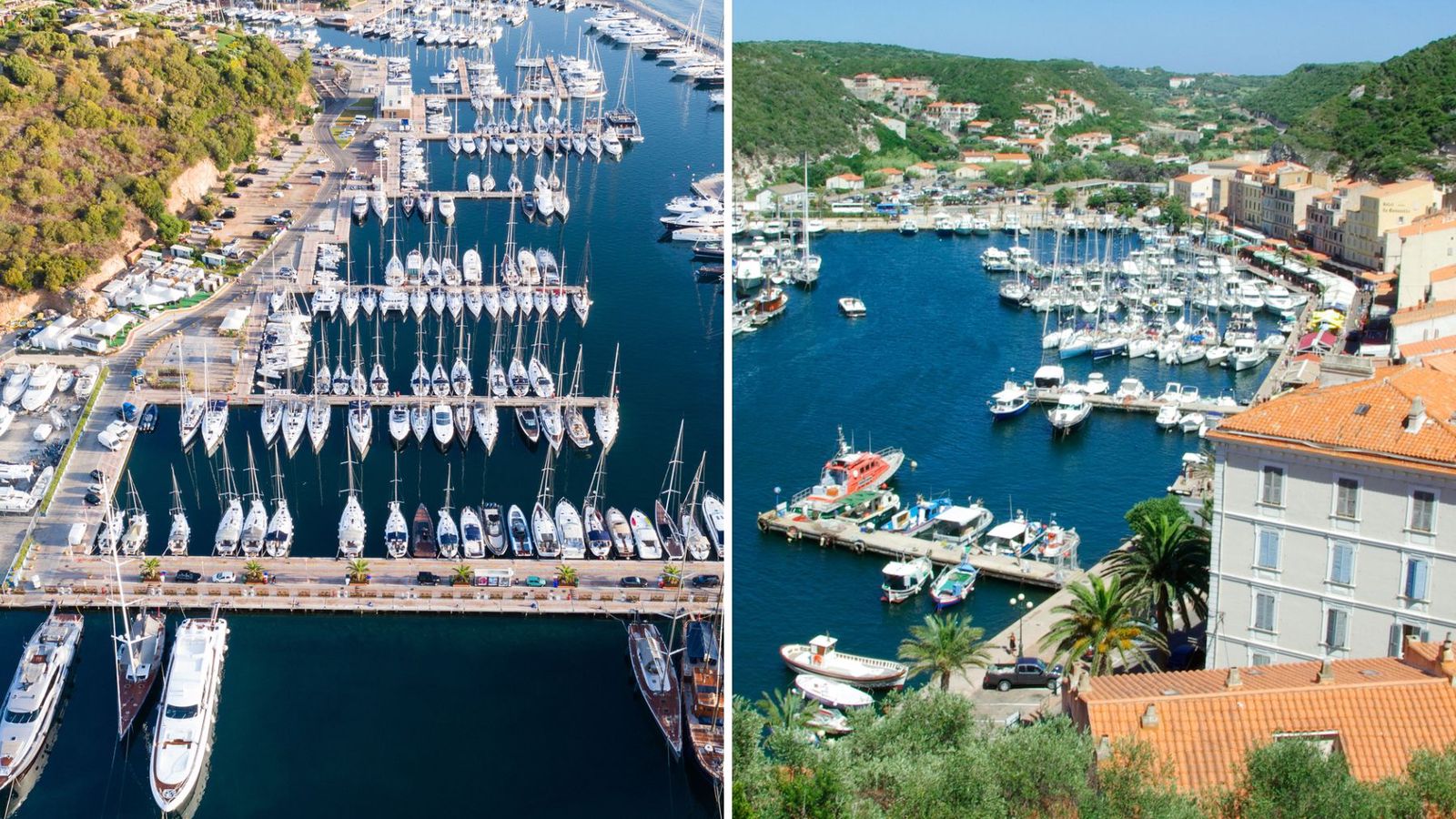
The main charter bases on the Italian/Sardinian side are Olbia, Palau, and La Maddalena. Palau and La Maddalena are the most convenient for jumping straight into the archipelago. Italian charter companies generally offer lower base rates than their French counterparts — a comparable 40-foot monohull might run 15–25% cheaper per week in high season from Olbia or Palau versus Ajaccio or Propriano. APA (Advance Provisioning Allowance) and fuel costs are also generally lower in Italian marinas, and marina fees throughout Sardinia tend to be slightly less expensive than in Corsican ports.
Best Italian charter bases:
Palau — the most popular base for archipelago sailing. Small, convenient, excellent provisioning. Easy access to La Maddalena by ferry or by sea.
Olbia — better flight connections (Ryanair, easyJet from many European cities), larger choice of charter fleets, Costa Smeralda nearby. Slightly further from the archipelago.
La Maddalena — right in the heart of it. Fewer charter companies but brilliant position.
Chartering from France (Corsica)
Corsican charter bases include Ajaccio, Porto-Vecchio, Bonifacio, and Propriano. French charter companies tend to have well-maintained, newer fleets — many run by Corsica's established bareboat operators — but prices are higher. Bonifacio is the most strategically positioned port for a Corsica–Sardinia loop, sitting right at the strait, but it's one of the most expensive ports in the region for overnight berthing (€80–150+ per night in July–August for a 40-footer).
Best French charter bases:
Bonifacio — dramatic position, great starting point, expensive. Ideal if you want immediate access to both islands.
Porto-Vecchio — better value than Bonifacio, stunning Gulf of Porto-Vecchio nearby, good fleet options.
Ajaccio — capital city, best for flights, more competitively priced. West coast of Corsica opens up.
The Verdict
For a budget-conscious one-week itinerary focused on the Maddalena Archipelago and Bonifacio, charter from Palau or Olbia in Sardinia and cross to Corsica. You'll save on the base charter rate, fuel, and marina fees, and you'll be in the best position to explore the archipelago immediately. If you want to explore the west coast of Corsica and the Golfe de Valinco, chartering from Ajaccio or Propriano makes more geographic sense, and the premium is worth it.
Typical costs (bareboat, 40-foot monohull, high season 2024):
Italy (Palau/Olbia): €2,200–€3,800/week
France (Porto-Vecchio/Ajaccio): €2,800–€4,500/week
France (Bonifacio peak): €3,500–€5,500/week
Catamarans add roughly 40–70% to these figures
The Main Sailing Areas
1. The Maddalena Archipelago (Sardinia)
A protected national park of seven main islands and dozens of smaller islets, scattered across the channel between Palau and Corsica. The anchorages here — Cala Coticcio on Caprera, the beaches of Spargi, the sandbars off Budelli — are among the finest in the Mediterranean. Navigating in the archipelago requires attention to the many rocks and shoals, but the rewards are extraordinary. Entry to the national park is free by sea, though some beaches (including the famous pink beach at Budelli) have restricted landing areas.
2. The Strait of Bonifacio
The 12-kilometre channel separating the islands is one of the busiest and most demanding stretches of water in the Western Mediterranean. It funnels the Mistral ferociously, and the tidal currents can run at 2–4 knots. Passages through the strait should be timed carefully — a morning departure before the sea breeze builds, in settled conditions, is standard advice. Bonifacio itself is a spectacular objective: the medieval citadel perched on white limestone cliffs above the harbour is one of the great port entrances in Europe.
3. South Corsica (Porto-Vecchio to Bonifacio)
The southeastern tip of Corsica offers some of the island's most accessible and beautiful sailing. The Gulf of Porto-Vecchio is studded with anchorages, and the shallow bays around Pinarello and Favone are perfect lunch stops. The coastline becomes increasingly dramatic as you approach Bonifacio, with white limestone contrasting against the usual pink granite.
4. The Costa Smeralda (Sardinia)
The famous Emerald Coast runs from Palau south to Olbia, and while it's known for superyachts and Porto Cervo's stratospheric marina fees, the coastline itself is stunning and accessible. The anchorages between Porto Cervo and Cannigione are beautiful, and if you time it right — early morning or early September — you'll have them largely to yourself. Porto Cervo marina charges eye-watering prices (€300–1,000+/night for visiting yachts in summer), so use the anchorages.
5. West Coast Corsica (Ajaccio to Propriano)
Less visited by charter sailors, the west coast is wild, exposed, and magnificent. The Golfe de Valinco south of Propriano has some extraordinary anchorages — Campomoro, with its Genoese tower, is a highlight. This coast requires more careful weather planning as it's fully exposed to the Libeccio and southwesterly swells, but in settled conditions it's the most dramatic sailing in the region.
Suggested 7-Day Itinerary: The Maddalena Loop
Starting from Palau, Sardinia. Suitable for intermediate to experienced sailors. Approximately 120–150 nautical miles total.
Day 1: Palau to Cala Coticcio, Caprera
Distance: 8–10 NM | Difficulty: Easy
Provision in Palau the evening before — there's a good supermarket within walking distance of the marina — and depart mid-morning. The short crossing to the Maddalena Archipelago is a perfect shake-down sail. Anchor at Cala Coticcio on the eastern side of Caprera, universally nicknamed "Tahiti" by Italian sailors. The anchorage is double-sided, with electric-blue water over white sand and pink granite walls on three sides. Arrive by early afternoon in July–August to secure a spot. Depth 3–6m, sand, good holding.
Day 2: Coticcio to Spargi — Cala Corsara
Distance: 12–15 NM | Difficulty: Easy–Moderate
An early start allows you to enjoy Coticcio in the morning quiet before the day-tripper boats arrive. Sail northwest through the archipelago, passing the main island of La Maddalena (good provisioning stop if needed, plus excellent gelato). Cala Corsara on Spargi is a wide, north-facing bay with brilliant white sand. The snorkelling on the eastern reef is exceptional. The bay can be rolly if the Mistral is blowing — in that case, duck around to the more sheltered Cala Granara on the southern tip.
Day 3: Spargi to Bonifacio, Corsica
Distance: 22–28 NM | Difficulty: Moderate–Challenging (weather-dependent)
The big day of the itinerary. The crossing to Bonifacio takes you through the Strait proper, and conditions vary enormously. Check the NOAA/Météo-France forecast the evening before — aim for winds under 20 knots and no Mistral building. Depart early (06:00–07:00) before the sea breeze stacks on top of any residual swell. The entrance to Bonifacio under the white cliffs is genuinely dramatic. Berth in the Port de Bonifacio (VHF Ch 9, call ahead in summer — it fills fast). This is an expensive night (~€80–150 for a 40-footer in July), but it's worth it for the experience. Walk the citadel at sunset — it's spectacular.
[Image: The dramatic white limestone cliffs of Bonifacio, Corsica, seen from the water with a sailing yacht entering the narrow harbour entrance below the medieval citadel]
Day 4: Bonifacio to Îles Lavezzi
Distance: 8–12 NM | Difficulty: Easy–Moderate
The Îles Lavezzi are a nature reserve immediately east of Bonifacio — a cluster of rounded granite boulders rising from an impossibly clear sea. There are several anchoring bays; Cala di Giunco and the anchorage on the northern side offer the best protection depending on wind direction. Snorkelling in the marine reserve is world-class: posidonia meadows, octopus, moray eels, and excellent visibility. Note: anchoring on posidonia (seagrass) is illegal — use the sandy patches and be precise. A dinghy is essential here for exploring ashore. Sleep under the Milky Way — light pollution is negligible.
Day 5: Lavezzi to Pinarello or Gulf of Porto-Vecchio
Distance: 18–22 NM | Difficulty: Easy
Head north along the Corsican coast, tucking into the beautiful Anse de Pinarello — a shallow, sheltered bay with a small beach village, a Genoese tower on the headland, and excellent anchorage in 3–5m over sand. It's quieter than the heavily touristed bays further south and has a lovely beach bar that stays open into the evening. Alternatively, push on into the Gulf of Porto-Vecchio and anchor off Palombaggia, perhaps the most beautiful beach in all of Corsica — though the anchorage gets busy in August.
Day 6: Porto-Vecchio Gulf to Cala di Volpe or Capriccioli, Sardinia
Distance: 30–35 NM | Difficulty: Moderate
A longer offshore leg back to Sardinia, heading for the Costa Smeralda. The crossing is straightforward in settled conditions and gives you time to enjoy some open-water sailing before the anchorage-hopping of the final days. Capriccioli is a favourite local anchorage — two small sandy bays divided by a granite headland, surrounded by juniper and mastic scrub. Stunning, and protected from the Maestrale (NW wind). Avoid Porto Cervo marina unless you're prepared for the bill; anchor in the outer bay instead.
Day 7: Capriccioli to Palau
Distance: 15–20 NM | Difficulty: Easy
A relaxed final day coasting north back to Palau. Stop for a morning swim at Cala Petra Ruja or anchor off the long beach at Rena di Ponente near Santa Teresa for a final lunch in the water before checking back into the marina. Palau has good restaurants along the waterfront — the Ristorante Da Robertino is a local institution for grilled fish and fregola pasta.
Key Stops: 5 Unmissable Anchorages
1. Cala Coticcio, Caprera (Sardinia)
The most beautiful anchorage in the Maddalena Archipelago and arguably in the Mediterranean. Double-sided granite cove, white sand, electric-blue water. Arrive early — by high summer it holds 40+ boats and the holding can get churned up. Best in June or September. No facilities; bring everything you need.
2. Bonifacio, Corsica
The port is narrow and deep — up to 40m in places — and you'll likely take a stern-to berth in the inner port. Walk up to the Haute Ville in the evening when the day trippers have left. The Escalier du Roi d'Aragon (187 steps cut into the cliff face) leads down to a small cave with views back to Sardinia. Expensive, but essential.
3. Îles Lavezzi, Corsica
A nature reserve at the eastern end of the Strait of Bonifacio. No facilities whatsoever, extraordinary snorkelling, and the kind of raw, wind-blasted landscape that makes you feel genuinely at sea. The 2004 Corsaire wreck memorial near the lighthouse is a sobering reminder of the strait's history.
4. Cala Corsara, Spargi (Sardinia)
A wide, sandy bay on the northwestern side of Spargi island. Great holding in 4–8m, good protection from southerly winds, excellent snorkelling on the eastern reef. Gets busy in August — try anchoring just east of the main bay for more space.
5. Palombaggia, Corsica
If you've never seen a Corsican beach, Palombaggia will redefine your expectations. Pink granite boulders, umbrella pines growing to the water's edge, and sand so fine it squeaks. The anchorage in the bay is straightforward (sand, 3–6m), and the beach bar up on the dune does excellent rosé. Gets very busy in July–August afternoons — arrive before noon or after 17:00.
Mooring & Marina Tips
National Park Rules: The Maddalena Archipelago is a national park. Anchoring on posidonia seagrass meadows is strictly prohibited and carries significant fines. In popular anchorages like Coticcio, use the sandy patches clearly visible through the water. Rangers patrol by RIB in summer and do check.
Mooring Buoys: Several anchorages in both the Maddalena park and Corsican nature reserves have installed free or low-cost mooring buoys during summer. These are not always marked on charts — check current cruising guides (Imray's Corsica & Sardinia guide is the best reference) for up-to-date buoy positions.
Booking Ahead: Bonifacio marina (Port de Bonifacio) and Porto-Vecchio marina (Port de Plaisance) should be called on VHF or emailed ahead in July–August. Both fill completely by mid-afternoon. Some sailors anchor outside and dinghy in — this is a viable strategy at Porto-Vecchio but not practical at Bonifacio (the harbour is the only comfortable shelter).
Anchor Watch: In the Strait of Bonifacio and around the northern tips of both islands, set an anchor alarm if a Mistral is forecast. Wind can shift 30–40 degrees within a Mistral squall, and a previously well-sheltered anchorage can become untenable quickly.
Marina Cost Guide (2024, 40-foot monohull):
Palau marina: €40–75/night
La Maddalena: €50–90/night
Porto Cervo (if you must): €200–600+/night in July–August
Olbia Porto Antico: €55–95/night
Bonifacio: €80–150/night (July–August)
Porto-Vecchio: €60–120/night
Ajaccio: €50–80/night
Cost Expectations: Weekly Budget Guide
These figures assume a crew of 4–6 splitting costs, one week in July from a Sardinian charter base:
Charter boat (40-foot bareboat, from Palau): €2,500–€3,800
Fuel: €150–250 (diesel is €1.60–1.80/litre in Sardinian marinas)
Marina fees (2–3 nights in marina, rest anchored): €200–400
Provisioning for 6 people/week: €350–500
Eating ashore (3–4 meals out): €200–400
National park fees, anchorage buoys, misc: €50–100
Total per week (excluding flights): €3,450–€5,450
Per person (crew of 6): €575–€910/week
Adding a skipper typically adds €150–200/day. A French charter from Bonifacio with similar parameters would add roughly €500–800 to the base charter cost.
3 Insider Tips
Tip 1: Use the Ferry Schedule to Time the Strait Crossing
The Strait of Bonifacio sees constant ferry traffic between Bonifacio (France) and Santa Teresa di Gallura (Sardinia). The ferry companies are not going to delay for weather — if the ferries are running, conditions are passable. If they've cancelled morning sailings, that's your sign to stay put and spend another day in the islands. Check Moby Lines or Corsica Ferries schedules online for real-time operational status.
Tip 2: The Budelli Pink Beach — What Nobody Tells You
The famous pink beach (Spiaggia Rosa) on Budelli island has been closed to landing since 1994, but what most sailors don't know is that the anchorage off the beach itself is perfectly legal and accessible. You simply cannot walk ashore. Anchoring in 4–6m off the beach gives you views of the pink sand (coloured by fragments of coral and shells) from the water — often better than the land view. Morning light is best. The ranger station on the island can sometimes arrange a supervised landing for a small fee — ask at La Maddalena marina.
Tip 3: September Is the Best-Kept Secret
French and Italian summer holidays end around August 20th–25th. By September 1st, the transformation in anchorages like Coticcio, Corsara, and Palombaggia is dramatic — boats that held 50 yachts in August will have 8–10. Charter prices drop 20–30%. Sea temperature is 24–26°C (the warmest of the year). Winds are more reliable, the Libeccio risk is manageable with good forecasting, and the quality of light for photography is extraordinary. If your schedule allows any flexibility, September is the month.
Practical Information
Charts & Navigation
Carry both paper charts and electronic. The best electronic charting for this region is Navionics or C-MAP on a good chartplotter — both are detailed enough for the archipelago. The Imray M13 (Corsica and Sardinia) is the gold-standard paper chart for passage planning. Download the Windy app and configure it to show the ECMWF model — it's significantly more accurate than the GFS model for Mediterranean Mistral forecasting.
Getting There
Olbia airport (OLB) is the best hub for Italian charters — served by Ryanair, easyJet, Vueling from most major European cities.
Figari airport (FSC), just north of Bonifacio, is the best entry point for southern Corsica charters.
Bastia (BIA) covers northern Corsica if you're starting from Porto-Vecchio or beyond.
Documents & Regulations
EU citizens sailing between France and Italy need no special clearance, though you should carry ship's papers, insurance documents, and personal ID at all times. Non-EU sailors should check current entry requirements. Italian and French coastguard patrols are active in summer and will conduct document checks, particularly in the national park areas. A valid VHF radio operator's licence is required to operate the ship's radio in both countries.
Final Word
The Sardinia–Corsica sailing circuit is one of those rare destinations that genuinely lives up to its reputation — and then some. The combination of dramatic scenery, reliable wind, extraordinary water clarity, and the contrast between developed coastlines and genuinely wild anchorages gives it a depth that keeps sailors coming back year after year. Charter from Sardinia if cost is a priority and the archipelago is your main objective; charter from Corsica if you want to explore the French island's spectacular west coast. Either way, build in flexibility for Mistral days, carry a good cruising guide, and don't rush. The best moments here — a dawn swim in Coticcio before anyone else wakes, a slow tack through the channel with the limestone cliffs of Bonifacio ahead — are ones no itinerary can fully plan for.


