Sailing from Nikiti to the Sporades via Lemnos: A Two-Week Northern Aegean Passage
Updated
Most charterers stick to the Chalkidiki peninsulas and call it a holiday — and that is fine. But if you have an intermediate-to-advanced crew and a taste for open water, this two-week loop from Nikiti through Lemnos, Agios Efstratios, and Skyros to the Sporades is one of the most rewarding and least-sailed routes in the Greek islands.
On this page

Most sailors who charter in Chalkidiki spend two weeks threading between the three peninsulas, maybe hopping out to Thasos, and calling it a trip. That is a perfectly good holiday. But if you have an intermediate-to-advanced crew, a taste for open water, and the patience to wait for the right weather window, there is a longer, more ambitious loop sitting right there on the chart: north to Porto Koufo, across to Lemnos, down through the northeastern Aegean, and into the Sporades — before a long beat back to Nikiti. This guide is written for sailors who are seriously planning that trip.
Be honest with yourself before you commit. This itinerary includes multiple offshore passages of 50–80 nautical miles, some of which will take 7–11 hours depending on conditions. The Aegean is not the Atlantic, but it is not a sheltered bay either. If the weather is not cooperating, the fallback plan — Chalkidiki's peninsulas and Thasos — is genuinely worth doing instead. There is no shame in it.
Why Sailors Make This Crossing
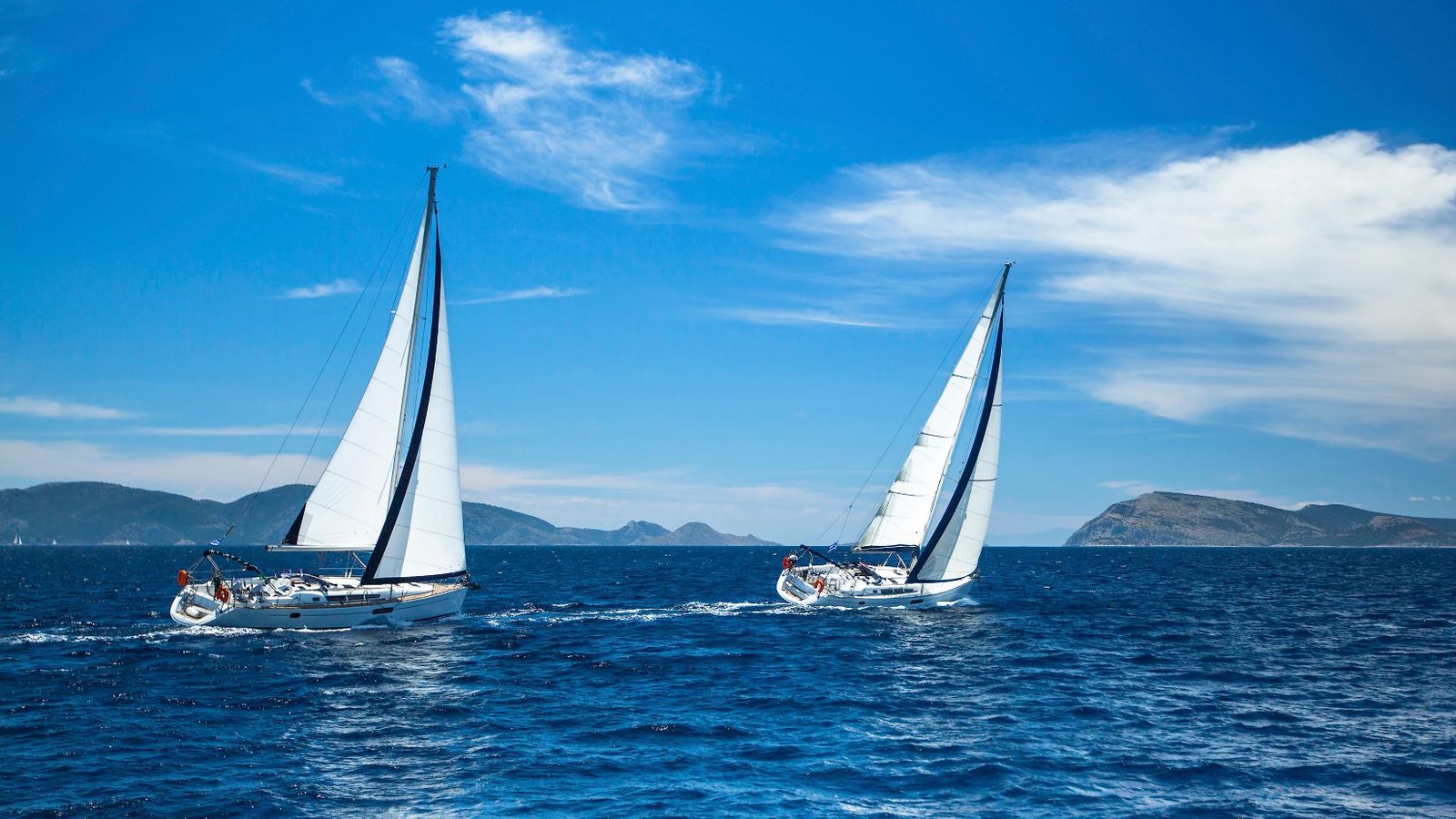
The Nikiti-to-Sporades loop is one of the least-traveled charter routes in the Greek islands, and that is precisely the point. Lemnos, Agios Efstratios, and Skyros see a fraction of the charter traffic that Skiathos and Skopelos absorb every summer. The passages are real sailing — not just motor-sailing between anchorages two hours apart. You earn the destinations.
Sailors who attempt this route typically fall into a few categories: experienced charterers looking for a step up from the standard Sporades circuit, delivery crews repositioning a boat from the northern Aegean, or adventurous couples or groups willing to accept some uncertainty in exchange for emptier anchorages and a genuine offshore feel.
Weather and Difficulty
This route is rated intermediate to advanced. You should be comfortable with overnight passages, have crew that can stand watches, and be able to reef confidently in building conditions. The Aegean meltemi — the prevailing summer northerly — is your main variable. In July and August it blows hard and consistently, which can make the passage to Lemnos either a screaming reach or a brutal beat depending on exactly where the wind sets. June and September are the preferred months for this loop: the meltemi is lighter and less consistent, windows of settled weather are longer, and the anchorages at your destination islands are not yet packed.
The crossing from Chalkidiki to Lemnos runs roughly southeast, which in a north-to-northwest meltemi gives you a beam-to-broad reach — good sailing, but the fetch across open water builds a swell that can make for an uncomfortable motion if the wind is over 20 knots. Timing your departure to arrive in daylight is non-negotiable; Lemnos's entry to Myrina is straightforward but you do not want to be doing it in the dark for the first time.
The return leg from Kyra Panagia back to Chalkidiki is another 7–11-hour passage, typically into or across the meltemi. This is often the hardest day of the trip. Plan it for early morning departure to get as much distance covered as possible before the afternoon wind builds.
Suggested Day-by-Day Passage Plan

Day 1 — Nikiti to Porto Koufo
Depart Nikiti in the morning. Porto Koufo, on the southernmost tip of the Sithonian peninsula, is one of the finest natural harbors in the northern Aegean — a deep, almost completely enclosed fjord that gives you a calm and straightforward first night. The sail from Nikiti is short, around 3–4 hours depending on your exact departure point, which gives you time to shake down the boat, sort out any gear issues, and get your crew used to standing watch rotation before the longer passages begin.
Day 2 — Porto Koufo to Lemnos (Myrina)
This is the first serious passage day. Depart at first light — 0530 to 0600 in summer — to give yourself maximum daylight on the water. The direct course from Porto Koufo to Myrina, Lemnos is roughly 60–70 nautical miles depending on your exact line, and will take 7–11 hours under sail. If wind and swell are light, consider a slight detour north past the Athos peninsula — keeping the required distance from the monastic territory — to get the visual reward of the Holy Mountain from seaward before turning east toward Lemnos. In stronger meltemi, take the more direct southern line and do not dawdle.
Myrina is the capital and main port of Lemnos. The harbor has a marina and a quay where visiting yachts can go stern-to. Fuel, water, provisioning, and restaurants are all available. The port authority is here if you need to show papers.
Days 3–5 — Exploring Lemnos
Lemnos rewards slow exploration. Spend two or three nights on the island. Myrina itself has a striking Venetian castle, good waterfront tavernas, and a relaxed atmosphere that is noticeably different from the more tourist-heavy islands to the south. The island's interior is flat and agricultural — unusual in the Greek islands — and the beaches on the eastern side of the island are long and uncrowded. Sailing around to Moudros Bay, the enormous natural harbor on the south side of the island, is worth a half-day if conditions allow. It is one of the largest natural harbors in the Aegean and carries significant history from the First World War.
Day 6 — Lemnos to Agios Efstratios
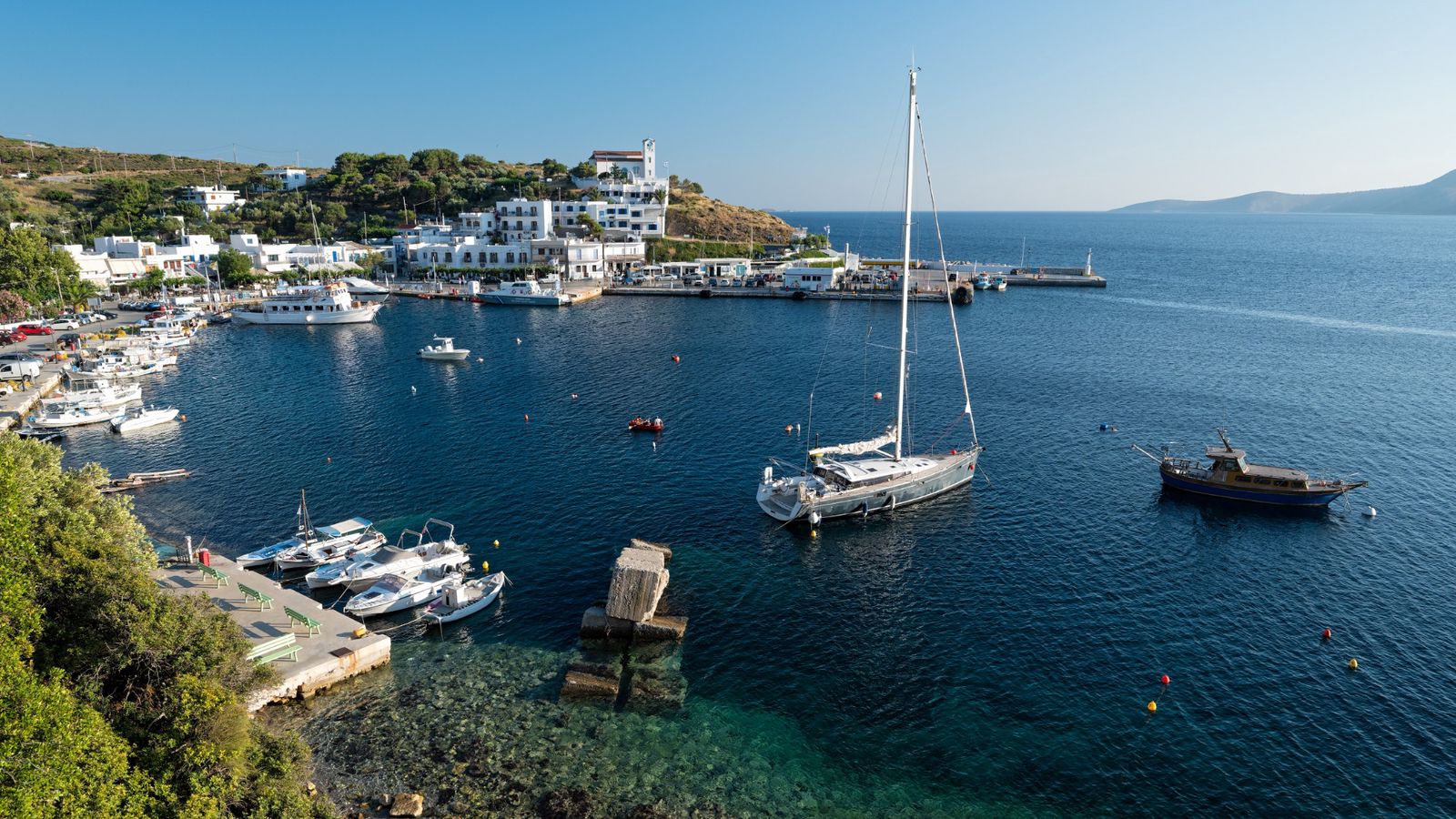
Agios Efstratios — known locally as Ai Stratis — is a small, remote island southwest of Lemnos. The passage is roughly 20–30 nautical miles and a half-day sail. The island was famously used as a place of political exile during the Greek civil war and the junta period; it has a single village, very basic facilities, and an atmosphere of genuine isolation. It is one of those stops that sailors either love immediately or find too quiet — but it earns its place on this route as a contrast to anything else on the itinerary. Anchor off the village; there is no proper marina. Depths are manageable and holding is generally good.
Day 7 — Agios Efstratios to Skyros
Another long day: the passage from Agios Efstratios to Skyros is 50–70 nautical miles depending on your line, putting you at the longer end of the 7–11-hour range if winds are light. Depart early. Skyros is the southernmost and most isolated of the Sporades, far from the Skiathos-Skopelos axis where most charter traffic concentrates. Linaria, on the western coast, is the main port and has a small marina and quay. Kalamitsa Bay to the south is a calmer alternative anchorage if Linaria is crowded or the northerly is pushing swell into the harbor.
You have now made the crossing into the Sporades. The hard offshore work is essentially done — the remaining legs between islands are shorter and more sheltered.
Days 8–9 — Skyros
Skyros is not a standard charter stop precisely because it is far from the other Sporades. That means quieter anchorages, fewer flotillas, and a distinctly local character. Skyros Town (Chora), perched on top of an inland rock, is one of the most striking villages in the Aegean. The island has a strong tradition of local craft and a unique cultural identity. Spend two nights — one anchored near Linaria, one either in Kalamitsa or exploring the northern coast if conditions are calm. The Rupert Brooke memorial near Tris Boukes Bay in the south is a poignant stop for those with the inclination.
Day 10 — Skyros to Alonnisos
The Skyros-to-Alonnisos crossing is 30–40 nautical miles across open water — a solid half-day to full day passage that serves as your entry into the core Sporades. Alonnisos is the wildest and least developed of the main Sporades, surrounded by the National Marine Park of Alonnisos, which is the largest marine protected area in the Mediterranean. Anchorages at Steni Vala, Patitiri, and the various islets to the north and east are among the best in the region. Plan to spend at least one night here.
Day 11 — Alonnisos to Skopelos
A short, relaxed sail of 15–20 nautical miles. Skopelos Town and Glossa/Loutraki are both worth visiting. Skopelos is green, hilly, and more developed than Alonnisos but still far calmer than Skiathos. The film Mamma Mia was shot here and brought a wave of tourism, but the island has absorbed it gracefully. Anchor in Panormos Bay or Agnondas for a quieter night, or tie up in Skopelos Town harbor for easier provisioning.
Day 12 — Skopelos to Skiathos
The shortest sailing day of the trip — 15 nautical miles at most. Skiathos is the most cosmopolitan island on this route: an airport, a proper marina, a buzzing waterfront, and beaches that get genuinely busy in August. After the isolation of Skyros and Agios Efstratios it can feel like a different world. Reprovisioning here is easy. Fuel is available. If you need a weather day or need to restock before the long passage home, Skiathos is the right place to do it. Anchor off Lalaria Beach or find a berth in the main harbor.
Day 13 — Skiathos to Kyra Panagia
Position yourself for the final long passage. Kyra Panagia is an uninhabited island in the Northern Sporades group, roughly halfway between Skiathos and Chalkidiki, and one of the finest anchorages in the northern Aegean. The bay on the western side is deep, sheltered, and almost entirely empty of other boats by the time you get this far north. The sail from Skiathos is 25–35 nautical miles — a comfortable afternoon passage that gets you into position without burning a full day. Anchor here, have a quiet evening, and get an early night. Tomorrow will be a long one.
Day 14 — Kyra Panagia to Nikiti
Final passage day. Depart at dawn — 0530 or earlier if the forecast suggests the meltemi will build by midday, which it often does. The course from Kyra Panagia back to Nikiti is 50–70 nautical miles, again in the 7–11-hour range. Depending on wind direction this can be a satisfying close-reach back or a harder slog into a northerly. Monitor the forecast carefully in the days before and consider an early departure to arrive at Nikiti with daylight to spare. Do not leave Kyra Panagia late and plan to arrive at the marina in the dark.
Backup Plan and Key Advice
If the weather at any point does not support the offshore legs, do not push it. The Aegean punishes impatience more reliably than almost any other sea in Europe. The fallback plan is genuinely good: Chalkidiki's three peninsulas offer weeks of sailing on their own, the island of Thasos is an easy and beautiful daysail to the north, and the anchorages along the Sithonian coast are among the finest in northern Greece. You can have an excellent two-week charter without leaving the immediate area.
Specific weather abort points to plan for in advance: if the forecast on Day 2 shows more than 20–25 knots of meltemi from the north on the Porto Koufo to Lemnos crossing, delay by a day and explore the Athos peninsula coastline instead. If the Day 6 or Day 7 passage windows look bad, extend your time on Lemnos. The return passage from Kyra Panagia is the one to be most conservative about — arriving back at the charter base a day early with a tired crew is always better than arriving a day late in rough conditions.
Carry paper charts in addition to your chartplotter for the offshore legs. Phone signal is patchy or absent in the middle of the Lemnos crossing and around Agios Efstratios. Make sure your VHF is working before you leave Nikiti. File a float plan with someone ashore if you do not have a satellite communicator on board.
Frequently asked questions
What experience level do you need to sail from Nikiti to the Sporades via Lemnos?
The minimum experience level for this route is confident intermediate — meaning you are comfortable sailing offshore in open water, can stand watches as part of a crew rotation, and know how to reef quickly in building conditions. Several legs on this itinerary are 50–70 nautical miles long and take 7–11 hours, with no shelter en route. Beginners or sailors whose experience is limited to sheltered coastal hops should not attempt the Lemnos and Skyros crossings, particularly in July or August when the meltemi can blow hard across open fetch.
When is the best time of year to sail this northern Aegean loop from Chalkidiki?
June and September are the best months for this route. The Aegean meltemi is lighter and less consistent in these shoulder months, weather windows are longer and easier to predict, and the anchorages on Lemnos, Agios Efstratios, and Skyros are much quieter. July and August are technically possible but the meltemi often blows 25–30 knots consistently, which makes the long offshore legs uncomfortable and sometimes dangerous for an average charter crew.
How long is the sailing passage from Chalkidiki to Lemnos?
The longest passages on this route — Porto Koufo to Lemnos, and the return from Kyra Panagia to Nikiti — are each roughly 60–70 nautical miles and take between 7 and 11 hours depending on wind strength and direction. The crossing from Agios Efstratios to Skyros is a similar distance. You should plan all three of these legs as full sailing days with a pre-dawn departure, and never attempt them in a forecast showing more than 20–25 knots of northerly wind.
What is the island called Agii Apostoli near Lemnos and what can you expect there?
Agios Efstratios — often called Ai Stratis, with its main village known as Agii Apostoli — is a small and remote island roughly 30 nautical miles southwest of Lemnos. It has a single village, no proper marina, and very basic facilities, but it offers one of the most genuinely isolated anchorages in the Aegean. It is also historically significant as a former place of political exile during the Greek civil war. You anchor off the village in settled conditions; the holding is generally good.
Why do charter boats rarely visit Skyros in the Sporades?
Skyros sits far south and east of the main Sporades cluster around Skiathos and Skopelos, which makes it logistically awkward for standard one-week charter circuits operating out of Skiathos or Volos. Most charter companies concentrate their boats and itineraries on the tighter group of Skopelos, Skiathos, and Alonnisos. Sailing to Skyros from Chalkidiki via Lemnos, as in this itinerary, is actually one of the more natural ways to include it — it falls on the route rather than requiring a significant detour.
Can you take a charter boat from Chalkidiki all the way to Lemnos and the Sporades?
Before leaving Nikiti, confirm in writing with your charter operator that your contract permits the full route including the passages to Lemnos and Skyros. Some Greek charter companies restrict their boats to specific cruising zones, and the northern Aegean legs in particular may fall outside a standard permit area. One-way drop-off is generally not available on this circuit — you will be returning to Nikiti — so budget your sailing days carefully to ensure you have enough time to complete the return passage without rushing.


