The Classic Ionian Loop from Lefkada: Meganisi, Ithaca, Kefalonia and Back
Updated
The Lefkada loop — taking in Meganisi, Kalamos, Kastos, Ithaca, and Kefalonia — is the definitive Ionian charter circuit: 120-plus nautical miles, a week's sailing, and a careful balance of crowd management and stunning anchorages. Here is how to do it right.
On this page

The Ionian loop from Lefkada is one of the most sailed circuits in the Greek islands — and for good reason. You get dramatic limestone cliffs, turquoise anchorages, working fishing harbors, and enough variety to keep a mixed-ability crew engaged from day one. The loop takes in Meganisi, Kalamos and Kastos (two islands that most charter fleets skip entirely), then crosses to Ithaca and finishes in Kefalonia before returning to Lefkada. Done properly, it runs roughly 120 to 140 nautical miles depending on your exact stops, fits into a standard seven-night charter week, and offers genuine sailing rather than just motor-hopping between tavernas.
But the Ionian is not the quiet backwater it once was. July and August pack marinas to capacity, anchorages fill by early afternoon, and some berths now require advance booking. Go in without a plan and you will spend your evenings anchoring in swell or paying premium prices at oversubscribed town quays. This guide gives you a realistic, tested plan with contingencies.
Why Sailors Make This Loop
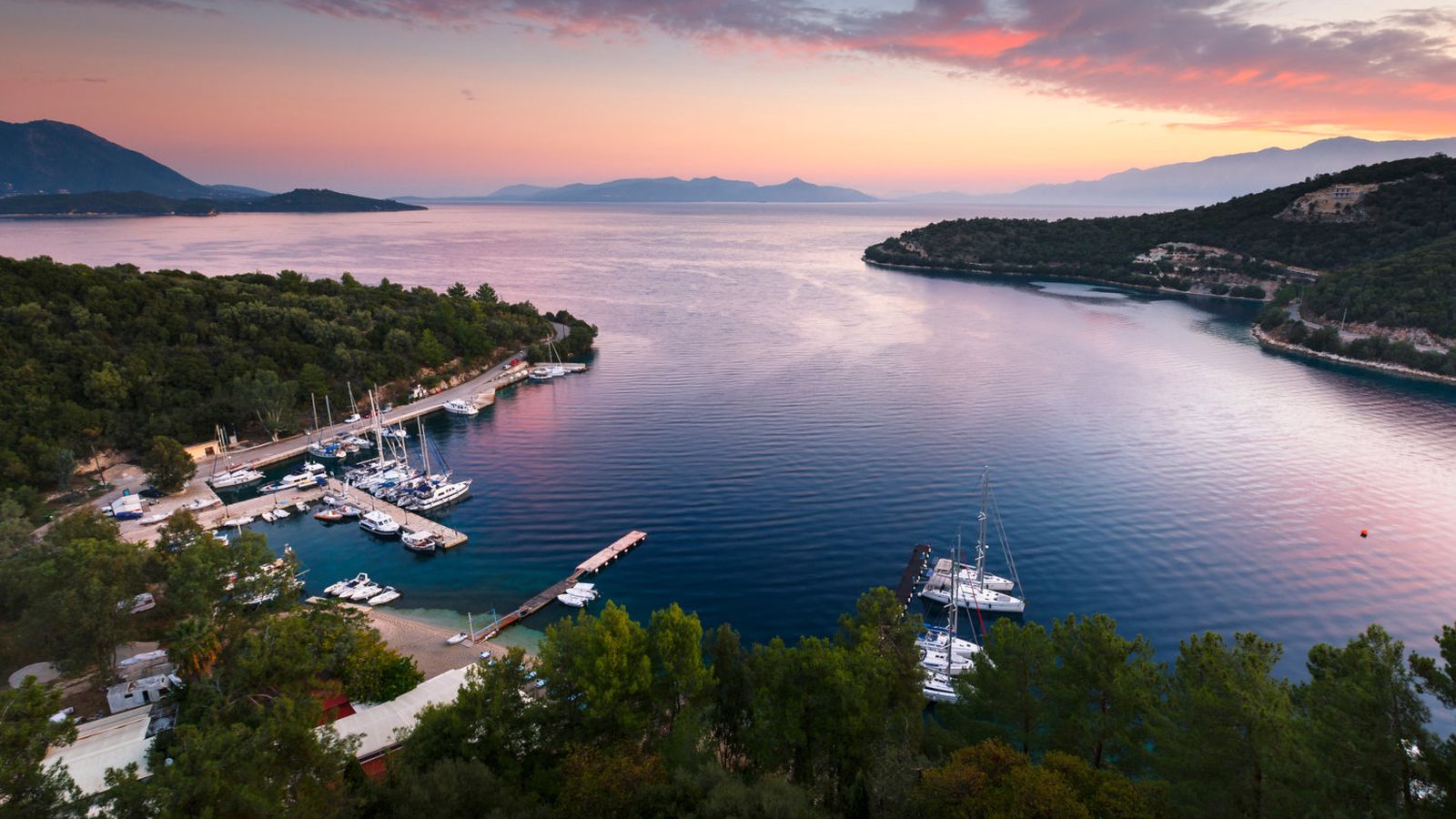
Most charter boats base out of Lefkada Marina or the nearby base at Nidri. The Lefkada loop is the dominant charter route in the region precisely because it works within a week, uses the prevailing NW summer meltemi without requiring a long upwind slog, and never puts you more than a few hours from shelter. It is commonly offered as a one-way loop — you leave and return to the same base — so there are no one-way drop-off fees, no cross-border paperwork complications, and no repositioning headaches.
The islands of Kalamos and Kastos attract sailors who want to step off the tourist conveyor belt. Both are lightly visited, have small local populations, and offer anchorages that still feel undiscovered even in peak season. Ithaca carries the weight of Homeric mythology and rewards those who look beyond the postcard shot of Vathi. Kefalonia is the big island of the group — busier, with more infrastructure, but also with the most dramatic scenery and some excellent restaurants.
Weather and Difficulty
Prevailing Conditions
The Ionian summer is governed by the maestro, a northwesterly wind that builds through the afternoon and dies by early evening. In June and September, it typically runs at Force 3 to 4. In July and August, it regularly touches Force 4 to 5, with occasional Force 6 gusts funneling through the channels between islands. Morning departures before 09:00 often catch the flat-calm window before the maestro establishes. Late afternoon sailing in the main channels can be genuinely lumpy, particularly in the Meganisi Strait and the crossing between Ithaca and Kefalonia.
The crossing to Asos on the northwest coast of Kefalonia deserves a specific mention. This is the most exposed leg of the entire loop. The bay at Asos sits at the base of a dramatic headland and is beautiful in calm conditions, but the approach requires rounding the northwestern cape of Kefalonia where there is no shelter and the swell builds quickly if the maestro is running strong. On a monohull in 15 knots, it is manageable. On a wide-beam catamaran in 20 to 25 knots with two-meter swell, it becomes a difficult and uncomfortable day. Check the forecast the evening before. If there is any doubt, skip Asos and route directly to Fiskardo — you can always return to Asos on a later calm morning.
Difficulty Rating
This loop is rated beginner to intermediate. Most passages are short (under 25 nm), sheltered channels are available if conditions deteriorate, and the anchorages are well-documented. That said, two caveats apply. First, navigating in the busy Ionian in peak season requires confidence under sail with other vessels nearby — this is not the place for a first-ever charter. Second, the Asos passage and any overnight sailing to avoid the afternoon maestro require a skipper comfortable reading forecasts and adjusting plans accordingly. A competent bareboat skipper with two or three previous charter weeks should handle this comfortably.
Recommended minimum experience: Coastal Skipper level or equivalent. Day Skipper with a charter-experienced crew as support is workable in June and September. July and August conditions and harbor congestion raise the bar slightly.
Best Months
June and September are the sweet spots. Winds are lighter, anchorages less crowded, tavernas more relaxed. Early July is still manageable. High season (mid-July through August) requires more planning, earlier arrivals, and advance marina bookings — but the sailing is still excellent if you are organized.
Day-by-Day Passage Plan

Total distance: approximately 120 to 140 nautical miles. Realistic sailing days: seven nights, eight days, with one full rest or exploration day built in. Distances below are approximate and point-to-point.
Day 1: Lefkada/Nidri to Meganisi (Port Spilia or Vathi) — 8 to 12 nm
A short, easy first day. Departing from Nidri, head south through the Nidri channel and round into Meganisi. Port Spilia is a small commercial harbor on the north side of the island — basic, with a taverna on the quay, and quieter than Vathi. Vathi (also called Meganisi Town Quay) is the main village and has more options for dinner, but the quay fills fast and is exposed to afternoon wake from passing ferries. Arrive by 13:00 if you want a good stern-to berth. Both options allow a gentle shake-down day for the crew.
Day 2: Meganisi to Kalamos or Kastos — 12 to 18 nm
Head southeast past the southern tip of Meganisi and across to Kalamos or Kastos, depending on conditions and preference. Kalamos Town has a small quay and one of the most authentic harbors on the loop — fishing boats, old men playing backgammon, a single bakery that runs out of bread by 09:30. Kastos is even smaller, with a beautiful protected bay and almost no tourist infrastructure. The two islands are close enough (about 5 nm apart) that you can visit both if you start early. Anchor off Kastos for lunch and continue to Kalamos for the night, or vice versa.
Note: both islands have limited water and fuel. Provision before leaving Meganisi or Nidri. Depths off the Kalamos quay shoal quickly at the southern end — approach slowly and check the chart.
Day 3: Kalamos to Vathi, Ithaca — 20 to 25 nm
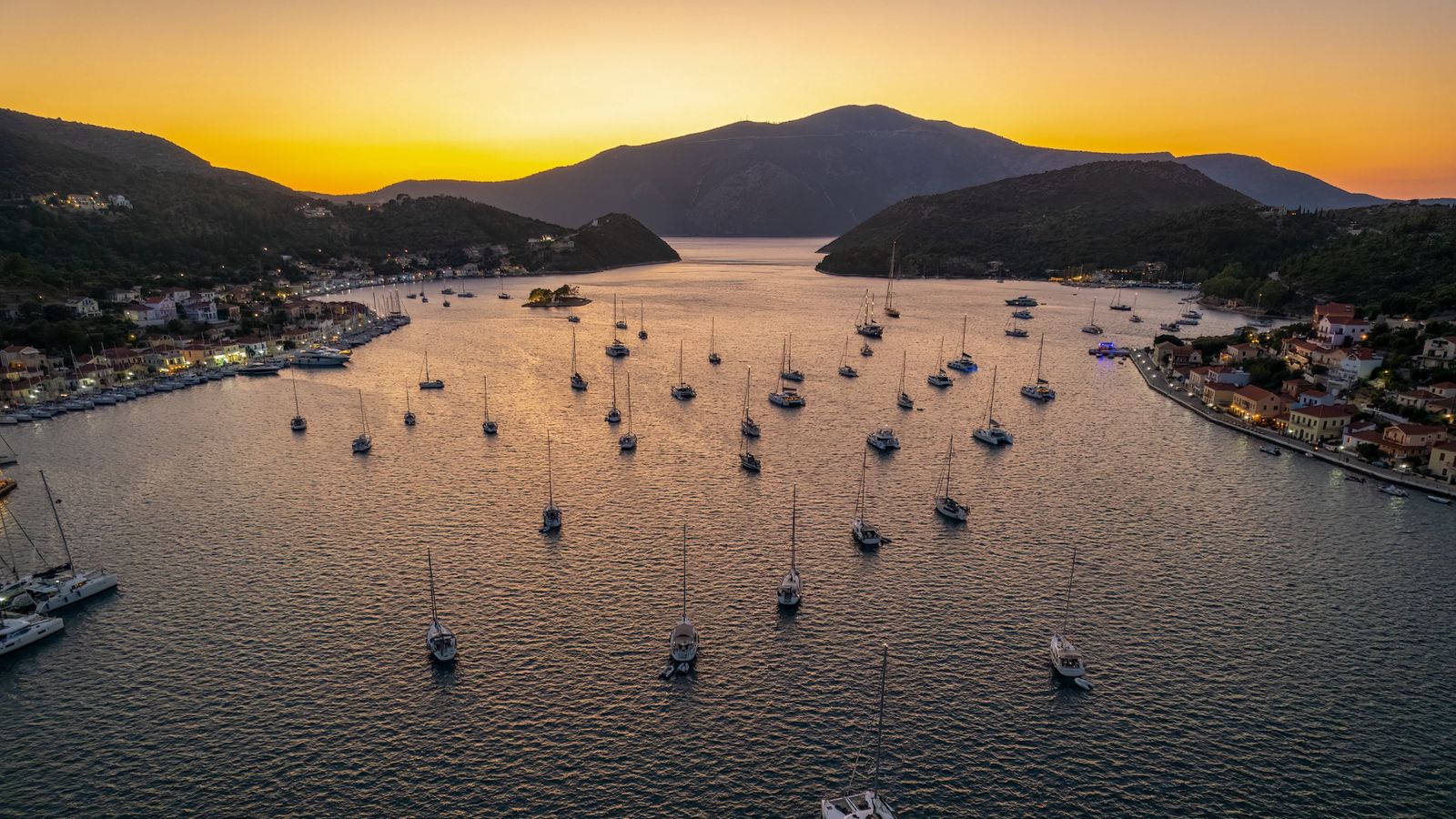
This is one of the better sailing days of the loop. Leaving Kalamos with the morning calm, you pick up the maestro by midday as you cross toward the northern tip of Ithaca. The channel between Lefkada and Kefalonia is open water and often gives a clean reach. Vathi is the main port of Ithaca, set in a narrow fjord-like bay — one of the most dramatic harbor approaches in the Ionian. The town quay is popular and fills quickly; the inner anchorage behind the quay has good holding on sand. Arrive by 14:00. The harbormaster office is on the waterfront and will direct you to a berth. Evening: walk up to the Loizos taverna above the square and book ahead if you are traveling in July or August.
Day 4: Vathi to Fiskardo, Kefalonia — 12 to 15 nm
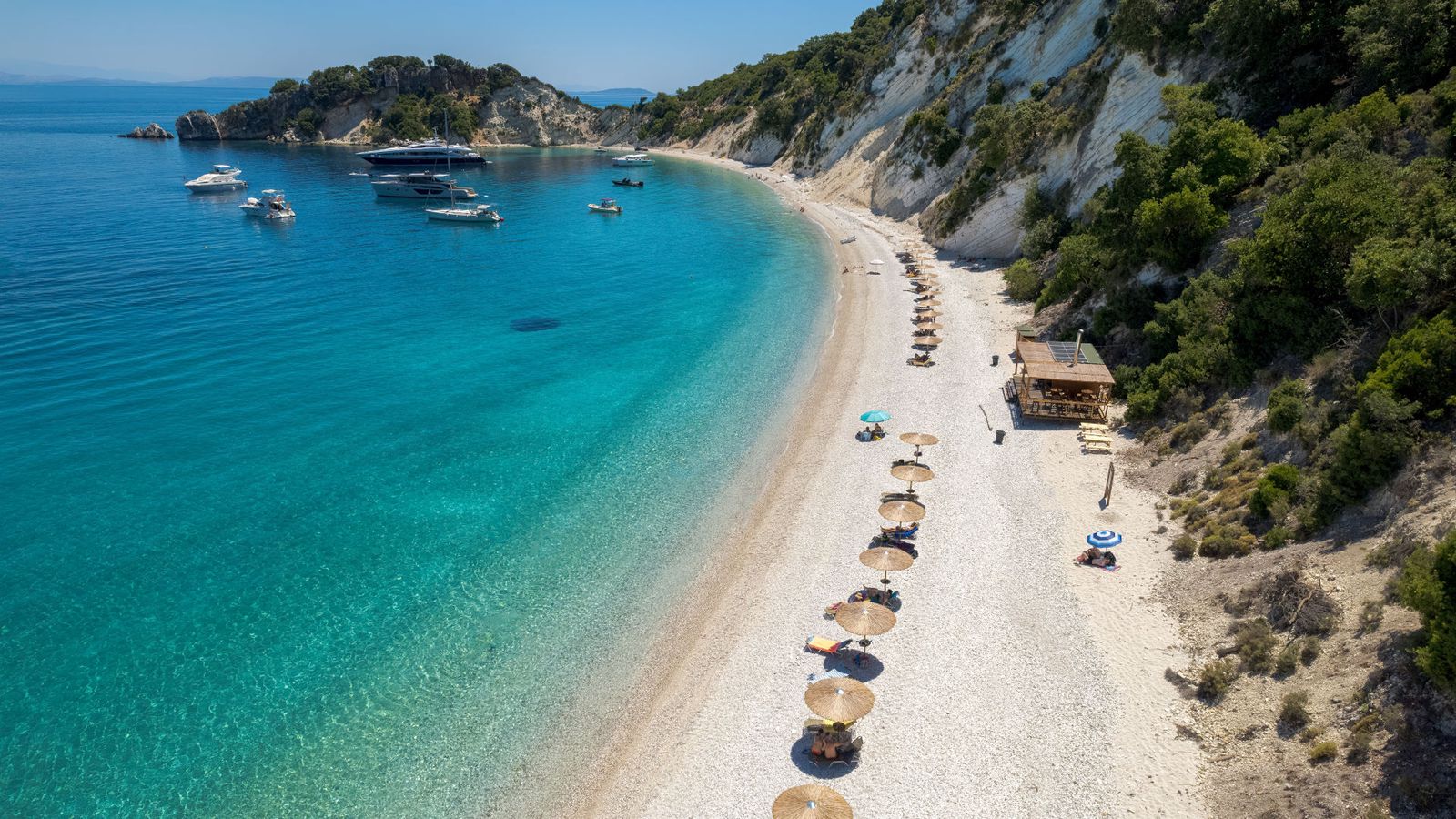
Cross the Ithaca Channel, which is the narrowest and most sheltered crossing of the trip at around 3 to 4 nm. Fiskardo is the jewel of northern Kefalonia — a perfectly preserved Venetian village with pastel-colored houses, excellent restaurants, and a harbor that everyone wants to be in simultaneously. This is the busiest stop on the loop and the one that most requires planning. In high season, berths at the town quay are effectively full by noon. Options: arrive before 11:00 to secure a stern-to quay berth, anchor off to the south in the bay outside the harbor (holding is adequate in settled weather), or book a berth at the small marina operated by the local port authority. The atmosphere in Fiskardo in the evening is genuinely lovely — it is worth the effort to time your arrival correctly.
Day 5: Fiskardo to Asos (weather permitting) or Assos Bypass — 18 to 25 nm
This is the day that requires a weather decision. Check the forecast the evening before and again at 06:00. If wind is below 15 knots and swell is under 1.0 meter, Asos is a beautiful and worthwhile stop. Depart Fiskardo early to arrive at Asos before the afternoon breeze builds. The bay is enclosed and calm when the wind is from the NW, but the entrance approach requires care as the headland creates turbulence. Anchor in 5 to 8 meters off the small beach. The village is a short walk over the causeway. There are two or three tavernas and a spectacular Venetian fortress above the bay.
If the forecast shows 20 knots or more, or if swell is running on the northwest coast, do not attempt Asos on a catamaran. The seas around the cape are steep and short-period, and a wide-beam cat will be uncomfortable and potentially stressed. In that case, consider Assos Bypass: from Fiskardo, head south along the sheltered east coast of Kefalonia to Sami (large, well-protected harbor with good facilities) or continue around to Poros. Both give shelter and allow you to continue the loop without the exposed northwest coast.
Day 6: Return toward Lefkada — Sivota or Nidri — 20 to 30 nm
From Asos or Sami, begin the return leg north. The direct route from Asos back to Lefkada via the Kefalonia-Ithaca channel and then north along the Lefkada coast is straightforward in calm conditions. A popular option is to break this leg at Sivota (a beautiful lagoon-like anchorage on the southwest Lefkada coast, just south of the main island). Sivota gets crowded but is well-protected and has excellent tavernas right on the waterfront. If Sivota is full, Vasiliki on the southern tip of Lefkada is a viable alternative with a proper harbor and all facilities.
Day 7: Sivota to Nidri/Lefkada Marina — 10 to 15 nm
A short final morning sail north to return to base. The Lefkada east coast is sheltered and the sailing is relaxed. If you have time before charter handover, duck into Spartochori on the north tip of Meganisi for a final swim stop. Nidri or Lefkada Marina for handover.
Marina Bookings and Arriving Early
The single most important operational habit on this loop is arriving early. Fiskardo, Vathi, Meganisi, and Sivota all operate on a first-come, first-served basis for most berths, and popular spots are genuinely full by 14:00 in July and August. Plan your passages to arrive between 11:00 and 13:00. This means early morning departures — often 07:30 to 08:30 — which has the added benefit of sailing in calmer conditions before the maestro establishes.
For Fiskardo specifically, calling ahead on VHF or contacting the port authority by phone in the morning is worthwhile in peak season. Some operators have informal arrangements with local port agents — ask your charter company if this is available.
Backup Stops and Contingencies
If Asos is not viable: Sami and Poros on the east coast of Kefalonia are sheltered, well-equipped, and easy to approach in any conditions. Sami has a proper harbor with fuel, water, and provisions.
If Fiskardo is full: Frikes on the northern coast of Ithaca (small, charming, easily reachable from Fiskardo or as an alternative stop before Fiskardo) is a solid backup. Alternatively, anchor south of Fiskardo in Dafnoudi Bay — calm in NW winds and popular for this reason.
If the maestro is running hard mid-week: the interior channels between Lefkada and Meganisi, and between Ithaca and the mainland, are significantly more sheltered than the outer passages. The Meganisi Strait and the stretch south of Nidri can be sailed in comfort when the open water is unpleasant. Use the channels to make progress if the outer route feels marginal.
If Sivota anchorage is packed: Vasiliki is 8 nm further east along the Lefkada coast. Less pretty, more functional, but with a marina, fuel dock, and reliable space even in peak season.
Frequently asked questions
How long does the Ionian loop from Lefkada take and how many miles is it?
The Ionian loop from Lefkada typically covers 120 to 140 nautical miles and fits comfortably into a seven-night charter week. Passages are short (most under 25 nm), and the route includes one rest or exploration day. Most skippers complete the full circuit without any rushed days.
When should I arrive at Fiskardo and Vathi to get a berth in high season?
Fiskardo on Kefalonia and Vathi on Ithaca are the two tightest stops on the loop and both fill by 13:00 to 14:00 in July and August. Arriving by midday is strongly recommended, especially at Fiskardo. Calling ahead on VHF Channel 16 or contacting the port authority by phone that morning will tell you whether space is available before you commit to the approach.
Is Asos in Kefalonia worth visiting and when should I skip it?
Asos on the northwest coast of Kefalonia is exposed and requires rounding a headland where swell builds quickly when the maestro is running. In winds above 20 knots or swells over 1.0 meter, the approach becomes rough and uncomfortable, especially on a wide-beam catamaran. If the forecast is doubtful, route instead down the sheltered east coast of Kefalonia to Sami or Poros and skip Asos entirely.
What are Kalamos and Kastos and why do sailors include them on the Lefkada loop?
Kalamos and Kastos are two small, lightly visited islands southeast of Meganisi that most charter fleets bypass in favor of busier Ionian stops. Both have authentic fishing-village atmospheres, uncrowded anchorages, and minimal tourist infrastructure. They are typically included on Day 2 of the loop as a pair — anchor off Kastos for lunch and overnight in Kalamos, or vice versa.
What is the maestro wind and how does it affect sailing in the Ionian islands?
The maestro is a northwesterly wind that dominates the Ionian in summer, typically building from around 10:00 and dying by early evening. In June and September it runs at Force 3 to 4; in July and August it regularly reaches Force 4 to 5 with gusts to Force 6 in open channels. Departing before 09:00 catches the flat-calm morning window and means you arrive at your destination before the wind — and the rest of the fleet — fully builds.
Do I need special paperwork or permits to sail the Ionian loop from Lefkada?
This loop stays entirely within Greek waters, so there are no international border crossings, customs procedures, or cross-border restrictions. Your charter company will provide a Transit Log (Cruising Permit), which is the main document you carry and present to port authorities and coast guard if asked. Carry several copies of the crew list and ensure all crew passports are in order on entry to Greece.


