Sailing Central Dalmatia: Kornati Islands, Šibenik & the Krka River
Updated
A complete sailing guide to central Dalmatia's most rewarding cruising circuit: the Kornati National Park archipelago, Šibenik's medieval waterfront, and the freshwater Krka River canyon — with a 7-day itinerary, anchorage details, park fees, and practical costs.
On this page

Central Dalmatia sits at the sweet spot between the well-worn Split-to-Dubrovnik charter trail and the quieter, wilder waters that most bareboat crews never bother to explore. The stretch of sea running from the Kornati archipelago down to the city of Šibenik and then inland along the Krka River is one of the most rewarding cruising grounds on the entire Adriatic coast — and it remains, against all odds, genuinely undervisited by the standards of Croatian sailing. If you have ever wanted the feeling of anchoring alone in a karst-sculpted cove while the rest of the fleet clusters around a single pontoon bar, this is where you find it.
This guide covers the full central Dalmatian cruising circuit: picking up a charter from Šibenik, sailing out through the Murter Sea to the Kornati National Park, working your way through the islands' best anchorages, and then making the return via the Krka Estuary for a dinghy detour to the waterfalls at Skradinski Buk. It is a loop that rewards curiosity, punishes rushing, and suits sailors who are confident enough to read a chart in a rocky archipelago but do not need to be seasoned offshore veterans to enjoy it.
What Makes This Area Unique
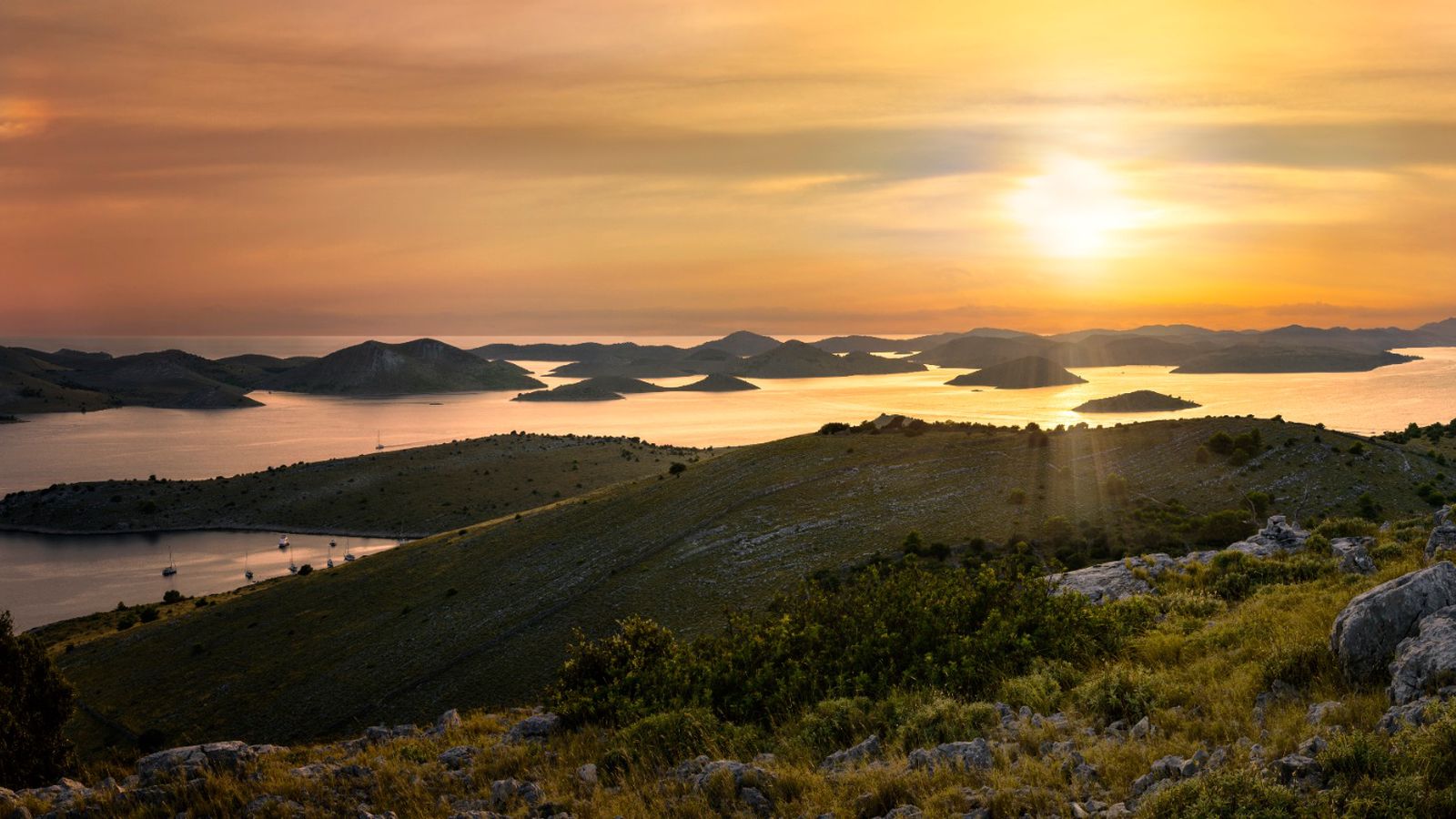
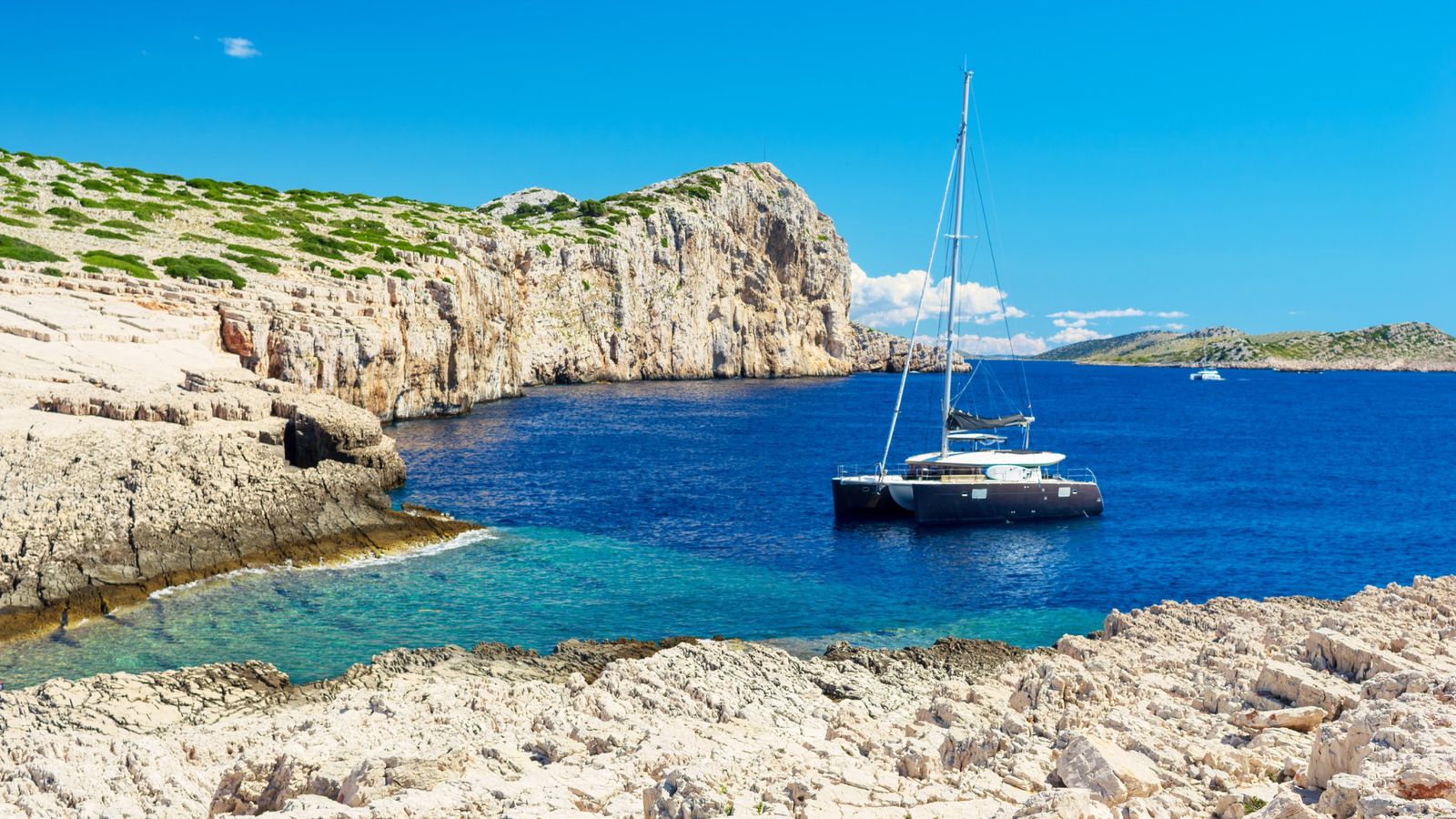
The Kornati Islands are unlike almost any other island group in the Mediterranean. There are 89 islands, islets, and reefs in the national park alone, and the outer, Adriatic-facing flanks of the main islands drop in near-vertical limestone cliffs — locally called crowns — straight into water that turns from jade to deep navy in less than a boat length. The islands are almost entirely uninhabited. There are no permanent residents, no supermarkets, no gas stations, and no tourist shops. What there is: silence, goats, olive groves that have not been tended in decades, and the cleanest water on the Croatian coast, consistently rated among the clearest in all of Europe.
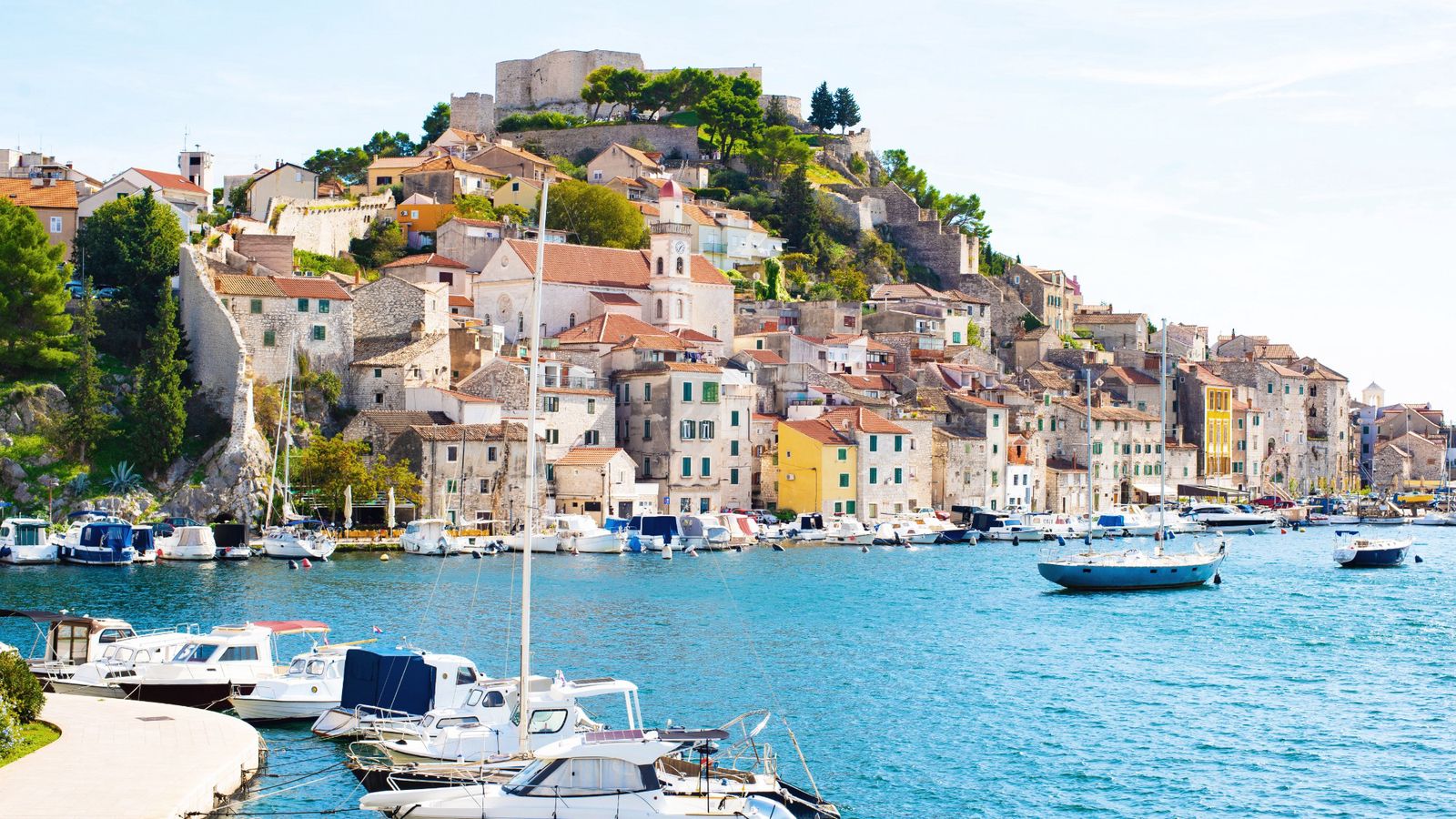
Šibenik, the port city that anchors this cruising ground, adds an entirely different dimension. It is older than Split and Dubrovnik — there is no Roman colony at its foundation; it was a purely medieval Croatian settlement, which gives its old town a different texture entirely. The Cathedral of St. James, a UNESCO World Heritage Site and one of the most significant Renaissance buildings in the whole of the Adriatic, sits a short walk from the ACI Marina where most charter yachts tie up. The combination of raw wilderness in the islands and genuine urban culture in the city makes this area feel unusually complete as a sailing destination.
The Krka River detour tips it over into something exceptional. The river is navigable by dinghy or tender from the estuary anchorage at Skradin all the way to the base of Skradinski Buk waterfall, and the journey passes through a canyon of extraordinary beauty. Most sailors on a Dalmatian charter never think to go upriver at all. The ones who do tend to rate it as one of the highlights of their entire trip.
Sailing Conditions and Difficulty
The central Dalmatian channel is subject to the two winds that define Croatian sailing: the bura and the jugo. The bura is a cold, dry, often violent northeasterly katabatic wind that accelerates down through the mountain passes above the coast. It is most powerful in winter and early spring, but a summer bura can arrive with surprisingly little warning and build to 25 or 30 knots within an hour. The jugo is a warm, humid southeasterly that usually gives more warning — pressure drops, skies cloud over, and it tends to build over 24 to 48 hours before hitting its peak. A strong jugo in August can sustain 25 knots with a confused swell and make anchorages on the southern shores of the Kornati deeply uncomfortable.
For most of the summer season — late May through September — the dominant daily pattern is the afternoon maestral, the northwesterly sea breeze that fills in around midday and provides reliable 12 to 18 knot sailing through the afternoon hours. This is the wind most charter sailors plan around, and it makes the Kornati channel a genuinely enjoyable daysailing proposition: motor out in the calm morning, sail back in the afternoon, anchor before sunset. The waters within the archipelago are largely sheltered from westerly swells by the outer island chain, but navigating between islands requires attention. The charts are dense with shoals, unmarked rocks, and narrow passes that look deeper on the plotter than they actually are.
Difficulty level is moderate. The Kornati are not a place for a first-time charter crew with no experience of rocky island navigation, but they are perfectly manageable for anyone who has done a week in the Cyclades or the outer Hebrides, or who has a competent skipper aboard. The key discipline is never approaching an unfamiliar anchorage fast, always using paper charts alongside electronic ones, and anchoring well before dark in an area where you have not been before. Draft matters: most anchorages in the Kornati suit yachts drawing 1.8 meters or less, and several popular spots will strand anything deeper at low water spring tide. Tidal range is small — rarely more than 50 centimeters — but in rocky narrow channels it is enough to matter.
Who This Area Suits
The Kornati circuit is best suited to sailors with at least one previous bareboat or skippered charter under their belt and some experience of anchor-out cruising. If you have only ever stern-tied to marinas and village quays, the Kornati will stretch your comfort zone — but not unreasonably so, and the reward is anchoring in places that feel genuinely remote.
Families with children who are confident in the water will find this area spectacular. The snorkeling off the Kornati limestone walls is world-class, the anchorages are calm enough for dinghy play on most summer evenings, and the novelty of the Krka River trip reliably impresses even teenagers who would otherwise be looking at their phones. The Šibenik marina stop gives everyone a proper dinner ashore and an ice cream resupply, which counts for a lot by day four.
More experienced blue-water sailors or those chasing the open-sea sailing experience should plan their routing to include some passages on the outer, Adriatic-facing side of the Kornati chain, where the crown cliffs are most dramatic and the sea state is livelier. The run from Veli Rat on Dugi Otok down to the Kornati on a fresh maestral is a proper offshore passage of 25 to 30 miles with nothing to hide behind — excellent sailing, and the contrast when you duck into a sheltered cove on the far side is very satisfying.
Suggested 7-Day Itinerary: Šibenik to the Kornati and Back
This itinerary assumes charter pickup at ACI Marina Šibenik and uses a loop format, so you return to the same port. Distances are modest — rarely more than 20 to 30 miles between stops — which keeps the sailing accessible while leaving plenty of time for swimming, exploring, and going slowly. All distances are approximate.
Day 1: Šibenik — Explore the City Before Departure
Do not leave on Day 1. Use the first day to provision in Šibenik, sort the boat, and walk the old town. The Cathedral of St. James deserves a proper hour. The loggia opposite the cathedral has a famous frieze of 71 stone heads carved in the 1400s — supposedly portraits of townspeople who refused to help fund the building's construction. The evening fish market near the Green Market sells local catch that will not be available in any Kornati konoba at half the price. Stock the boat properly: the Kornati have almost no provisioning options, and the island restaurant prices reflect their monopoly position.
Day 2: Šibenik to Zlarin and Prvic Luka — 10 Miles
A short first day's sail to shake everything down. Zlarin is the closest island to Šibenik with a permanent community — about 300 residents, a prohibition on motor vehicles, and a tradition of coral jewelry making that dates back centuries. The anchorage off the village is comfortable in the prevailing summer winds. Alternatively, continue two miles further to Prvic Luka on the island of Prvic — one of the most beautiful small harbors on this section of the coast, with a string of stone houses along the waterfront and a church that fills the entire skyline of the bay. Stern-tie to the quay if space is available, or anchor in the outer bay and dinghy in. There are two restaurants; book ahead in high season.
Day 3: Prvic to the Kornati — Via Tisno and Murter, 25 Miles
An early start to make the passage through the Murter Sea and into the Kornati before the afternoon wind builds. The strait at Tisno is narrow enough that you will likely need to motor through — watch the schedule for the opening bridge if you are in a hurry — but the channel is well-marked and straightforward. On the south side of Murter Island, pick up your Kornati National Park entry permit from the warden boat if you have not already arranged it through your charter company. Day-entry fees per vessel run to approximately 30 to 50 euros depending on boat length, and a multi-day permit is available and worth purchasing if you plan to spend two nights in the park. The first Kornati anchorage of the trip should be Lopatica Bay on the island of Kornat — the largest island in the group, running nearly 25 kilometers from end to end. The bay is wide, the holding is good sand and grass, and the crown cliffs rising to the south give you your first sense of what makes the Kornati so singular.
Day 4: Exploring Kornat Island — Moves of 2 to 8 Miles
Spend a day working slowly along Kornat Island, choosing anchorages based on the wind direction and your mood. Lavsa Bay is the most popular anchorage in the entire park — a long, landlocked inlet with a small restaurant and reliable holding in 4 to 6 meters. It can be crowded by mid-afternoon, so arrive by noon or accept that you will be one of twenty boats. If the crowds bother you, continue south to Kravljacica Bay, which is longer, less organized, and gets fewer visitors despite being equally beautiful. The restaurant at Lavsa will take a dinner reservation — the lamb and fish are both worth ordering, and the prices, while steep by Croatian standards, are fair for what you are getting in an island with no road access.
Day 5: The Outer Islands and the Adriatic Face — 15 Miles
The most dramatic day of the itinerary. Work your way around the southern tip of the Kornati chain to get a view of the outer face. The cliffs here drop 80 to 100 meters straight into the sea, and there is no beach, no anchorage, and no shelter — just the vertical limestone and the Adriatic horizon. You cannot anchor on the outer face, but you can heave-to and spend twenty minutes looking at it, which is worth doing. Then bear away north and east for the island of Zut, the second-largest in the group and the one place in the Kornati with a proper marina — ACI Zut has around 150 berths, fuel, and shore power, and it is a good option if you want a night tied up with facilities. The bay at Zut also has a small konoba and a beach bar that stays open late enough to constitute nightlife by Kornati standards.
Day 6: Zut to Skradin via the Krka Estuary — 30 Miles
The longest day of the itinerary, with an early departure recommended. The passage from Zut back across the Murter Sea and into the Šibenik channel is comfortable in the morning calm. Rather than returning directly to Šibenik, turn north into the Krka River estuary. The river is navigable under power for yachts drawing up to 2 meters as far as the town of Skradin, about 4 miles upstream — this is a remarkable passage, the canyon walls narrowing and rising around you as you leave the salt water behind and enter a different world of reed beds, fishing cormorants, and green freshwater. Moor in Skradin at the national park quay or the small ACI pontoon just outside town. From here, take the dinghy or a national park boat upriver to Skradinski Buk. The entrance to Krka National Park is ticketed — roughly 20 to 40 euros per person depending on season — but it includes the return boat transfer. The waterfall is a travertine cascade of seventeen steps and is justifiably one of the most visited natural sites in Croatia. Visit early in the morning or late in the afternoon to avoid the day-tripper crowds from Šibenik. Overnight in Skradin: the town has two excellent restaurants and a wine bar that pours local Debit white from the barrel.
Day 7: Skradin back to Šibenik — 10 Miles
An easy final day. Drop back down the Krka to the coast and motor the short distance into Šibenik for the handover. You will have time for a last swim off the city walls, a final coffee on the Riva waterfront, and a proper goodbye to one of the most underrated sailing cities on the Adriatic. Charter boats are typically due back by 5 or 6 pm, and Šibenik airport — actually at Zemunik near Zadar, about 45 minutes away — handles enough international traffic to make the fly-in, sail-out formula workable.
Key Stops in Detail
Šibenik
The base port and the city that justifies a full extra day at the start or end of the trip. ACI Marina Šibenik sits directly below the medieval fortress of St. Michael, which was recently restored and now hosts outdoor concerts in summer. The old town is flat enough to walk in an evening with no particular effort, which is a relief compared to the vertiginous old towns further south. Provisioning: the Konzum supermarket is a 15-minute walk from the marina, and the covered market near the cathedral sells local cheeses, olive oil, and dried figs that are worth loading aboard. Marina costs: approximately 80 to 150 euros per night for a 10 to 12 meter yacht in high season, including electricity and water.
Lavsa Bay, Kornat Island
The benchmark Kornati anchorage and worth every superlative directed at it. The holding is excellent — sand with some weed — and the enclosed geometry of the bay makes it secure in all but a strong bura. The restaurant on the north shore has been serving grilled fish and Dalmatian lamb for decades, and the family who runs it has watched the anchoring behavior of several generations of European charter sailors with what appears to be patient amusement. There is a fresh water tap at the restaurant for guests eating there. Snorkeling off the south shore of the bay is outstanding, particularly around the submerged ledge at the entrance.
Kravljacica Bay, Kornat Island
The alternative to Lavsa for crews who want more solitude. No restaurant, no facilities, no fee booth — just a long, south-facing inlet with 5 to 8 meters of depth over sand and weed and the sound of goats on the hillside. The entrance requires attention: a shoal extends from the east shore and is marked by a small beacon that can be difficult to see in the afternoon sun. Approach from the west, keep the beacon to starboard, and you are in. In July and August, this bay will typically have 5 to 10 boats by evening; in June and September, you may well be alone.
ACI Marina Zut
The only proper marina in the Kornati National Park and a genuine operational relief if you need fuel, a shore power connection, or a night of reliable Wi-Fi. The marina is tucked into the eastern bay of Zut Island with excellent shelter. Berth fees are in line with other ACI marinas — plan on 90 to 130 euros per night for a 10 to 12 meter boat — and the fuel dock is reliable during daylight hours. The island itself is worth a morning walk: there are olive terraces, a small church, and a donkey that has opinions about strangers.
Skradin and the Krka Estuary
The sleeper highlight of the whole itinerary. Skradin is an inland town that most Dalmatian charter sailors sail straight past without investigating, and that neglect is their loss. The town is full of medieval stonework, there is a working windmill on the hill above the harbor, and the restaurants source locally in a way that is increasingly unusual — the local Debit grape makes a white wine that rarely leaves the county, and the lamb and freshwater fish combination on most menus is a direct expression of the geography. Mooring at the national park quay costs around 15 to 25 euros per night and includes waste pump-out service.
Mooring and Marina Tips
Stern-to mooring is standard everywhere in Croatia, and the Šibenik area is no different. If you are not comfortable with this technique, practice before you arrive — finding a swing mooring or a bow-in berth is possible in some anchorages but not reliable at marinas. In the Kornati, many bays have mooring buoys operated by the adjacent restaurant: these are free if you eat at the restaurant and typically 10 to 20 euros per night if you do not. The buoys vary widely in quality. Always inspect the line and the mooring eye before trusting your boat to one, and always back it up with your own anchor if the buoy looks old or the conditions are unsettled.
The ACI marina chain operates three facilities relevant to this itinerary: Šibenik, Zut, and a small pontoon at Skradin. ACI membership cards give a discount of around 20 percent and are worth buying if you plan to use ACI marinas throughout a longer Croatian trip. Bookings can be made online, and high-season reservation is strongly recommended for Šibenik — it fills up. Zut is large enough that walk-in arrivals are usually accommodated, but calling ahead on VHF Channel 17 before 3 pm is a good habit.
Anchor chain length matters in the Kornati. Many of the best anchorages have depth profiles that drop from 5 meters to 15 meters within 20 meters of the shore, and the Mediterranean mooring style — anchor forward, stern line to the rocks — requires both a long dinghy ride with a line and confidence in your anchor placement. Carry at least 60 meters of chain and a long warping line if you intend to use this technique. A good snorkel to check anchor set is not optional in rocky ground; it is essential.
National Park Fees and Practical Costs
The Kornati National Park entrance fee is charged per vessel per day and scales with boat length. As a rough guide, budget approximately 35 to 50 euros per day for a 10 to 12 meter yacht. Multi-day permits offer better value. Fees can be purchased from the warden patrol boats that circulate in the park, from some charter companies in advance, or at the kiosks in Murter town before entry. Do not attempt to avoid paying — the wardens are thorough and the fine is substantial. The Krka National Park entrance is separately ticketed at approximately 20 to 40 euros per person depending on season, with the higher rates applying in July and August.
Charter costs for a 10 to 12 meter bareboat in this region run from around 1,800 euros per week at shoulder season (May, early June, September) to 3,200 euros or more per week in peak July and August. Fuel costs in the Kornati are low if you sail rather than motor — the maestral makes this possible on most afternoons — but a motorboat charter doing the same itinerary might spend 150 to 200 euros in diesel. Daily food and restaurant budgets vary enormously: provisioning the boat and cooking aboard most meals and eating ashore twice during the week is the most economical approach, typically adding 600 to 900 euros for a crew of four to six to the total trip cost.
Three Insider Tips
Buy the Kornati Multi-Day Permit Before You Enter
Charter companies based in Šibenik and Murter can arrange the Kornati National Park multi-day permit as part of your charter package, usually at a slight discount over purchasing daily from the patrol boats. Ask specifically when booking — some companies include it as standard, others offer it as an add-on that gets forgotten. Having it sorted in advance means you can sail in through any entrance and not have to wait for a warden boat to appear.
Time the Skradin Waterfall Visit for the Edges of the Day
Skradinski Buk receives tens of thousands of day-trippers by tourist bus from Split and Zadar throughout the summer, and midday at the waterfall can feel more like a theme park than a national park. Sailors who overnight in Skradin have a significant advantage: the park opens to overnight marina guests before the first tourist boats arrive, typically around 8 am, and the last boat back from the falls runs in the early evening after the day-trippers have gone. Both windows are dramatically quieter and photographically superior.
The Best Outer Kornati View Requires a Willingness to Feel Small
Most charter itineraries keep to the inner, sheltered side of the Kornati chain — understandably, since that is where the anchorages are. But the defining image of the Kornati, the sheer crown cliffs dropping into open sea, is only visible from the outer, Adriatic-facing side. On any afternoon with a settled maestral and nothing worse forecast, bear away around the southern tip of the chain and spend an hour sailing along the outer face at a comfortable distance. There is no anchor, no stop, no cold beer at the end of it — just one of the most dramatic pieces of Mediterranean coastline you are likely to see from a small yacht. It is worth every mile of the detour.


