Sailing Istria and the Kvarner Gulf: Croatia's Quieter, Greener Northern Islands
Updated
Istria and the Kvarner Gulf offer some of Croatia's most rewarding sailing — greener, quieter, and more weathered than the Dalmatian coast, with the islands of Cres, Lošinj, and Krk providing uncrowded anchorages, excellent local food, and genuine sailing character for those willing to respect the Bora.
On this page

Most sailors who come to Croatia head straight for Split, charter a boat out of Trogir, and spend a week hopping between Hvar, Brač, and Korčula. Those are brilliant islands — nobody disputes that — but they come with the crowds, the party boats, and the summer prices that have made the Dalmatian coast feel increasingly like a floating festival. If you want Croatia without the queue for a berth, the northern Adriatic is waiting for you.
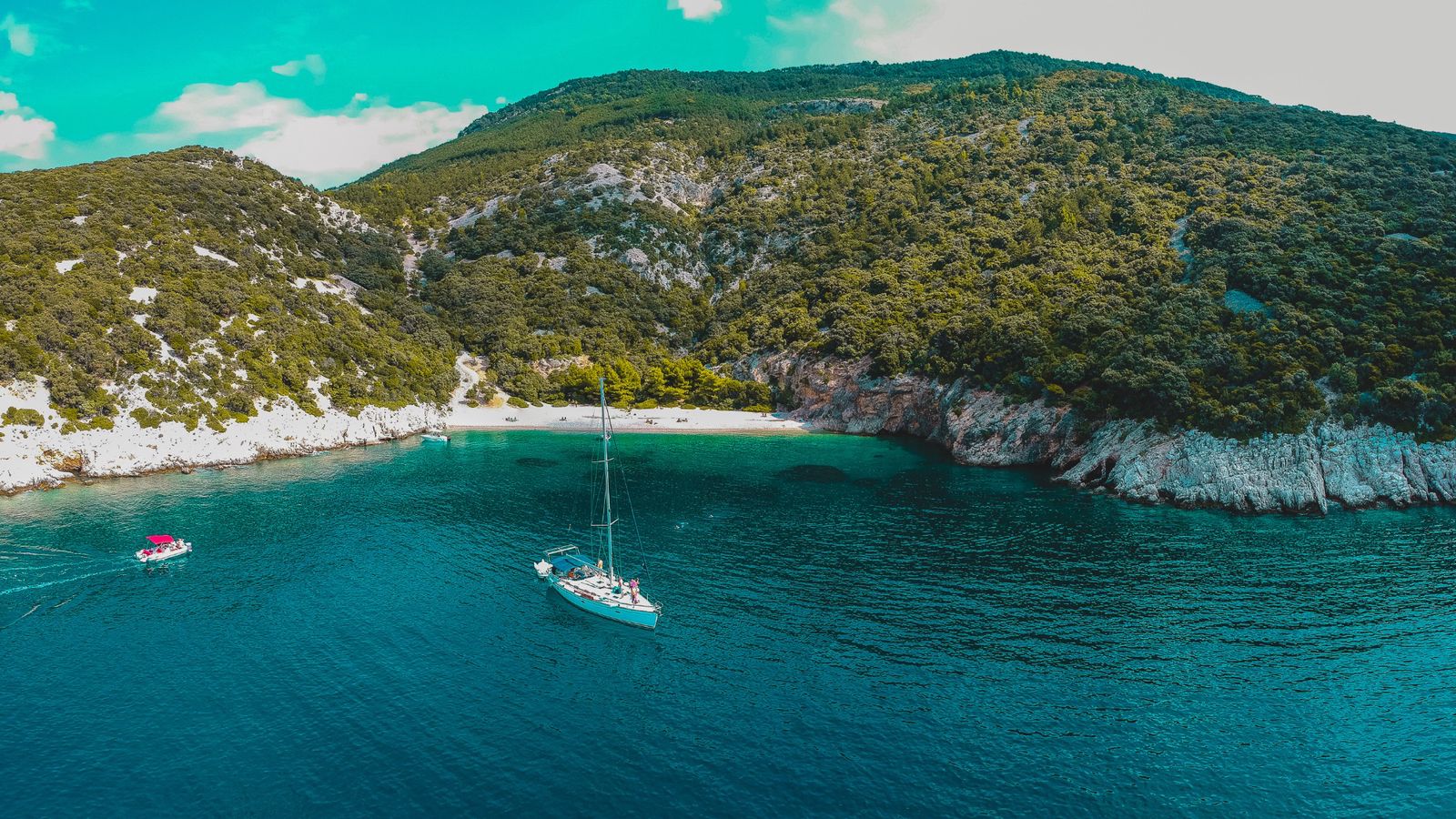
Istria and the Kvarner Gulf sit in the upper corner of the Adriatic, where Italy feels close enough to taste in the food, Austria's old Imperial fingerprints are still on the architecture, and the islands are covered in dense pine forest and macchia scrub rather than bare limestone. The water is cold and green rather than the turquoise of the south. The anchorages are quieter, sometimes empty. The fish is excellent. The people are unhurried. And the sailing, for those who prepare for it, is genuinely interesting.
What Makes This Area Unique
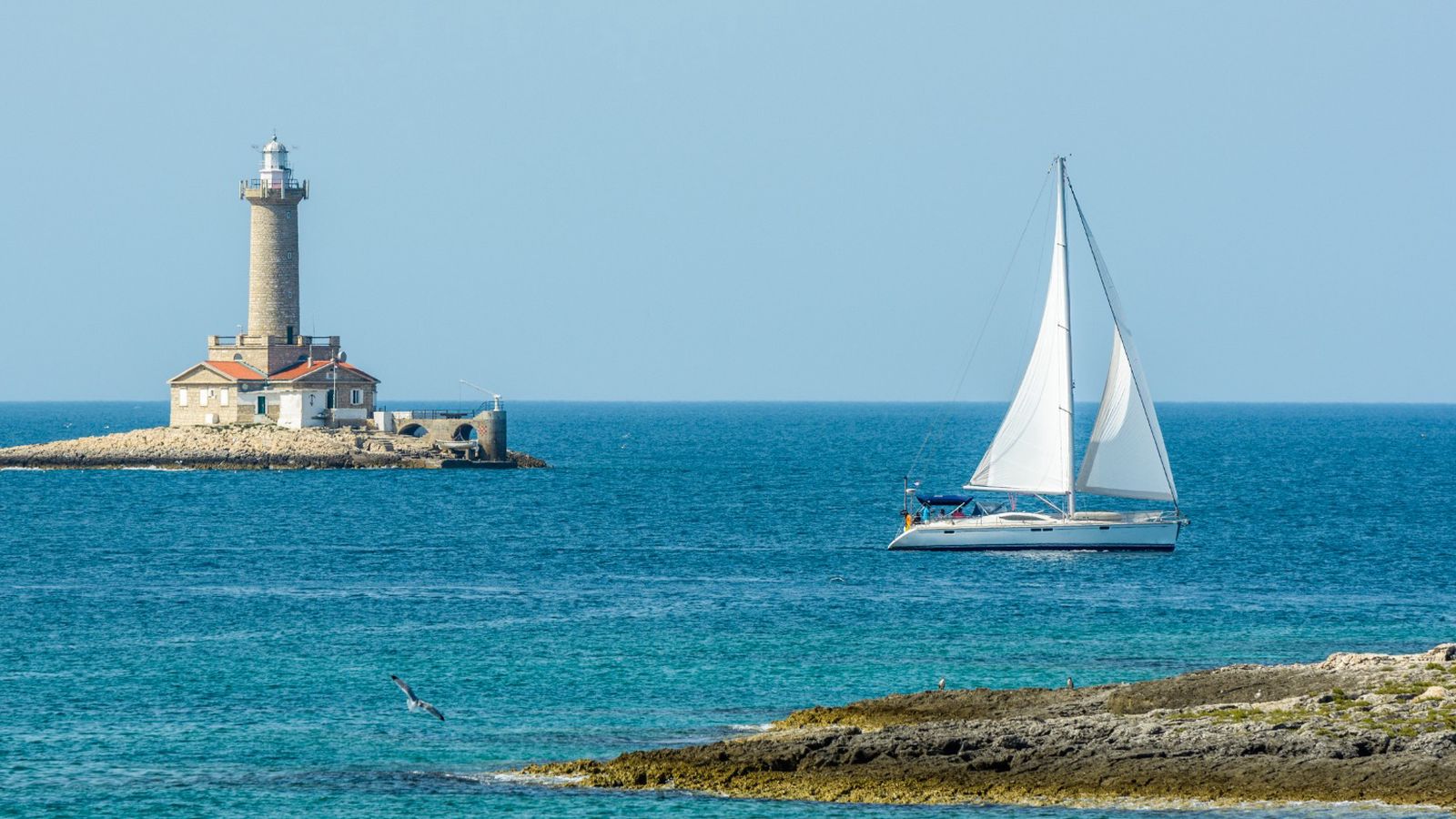
The northern Adriatic is where the Adriatic Sea narrows and becomes shallower, which has significant consequences for both the weather and the character of the sailing. Istria is a triangular peninsula jutting south into the sea, its western coast facing Italy across a busy shipping lane, its eastern coast looking into the mouth of the Kvarner Gulf — a body of water enclosed by the large islands of Cres, Lošinj, and Krk, with the Velebit mountain range of the Croatian mainland forming a dramatic eastern wall.
This geography creates a region with its own microclimate, its own wind systems, and a cultural identity that is genuinely distinct from Dalmatia. Istria spent centuries under Venetian rule, then Habsburg control, then Italian occupation before finally becoming part of Yugoslavia. You can feel all of this in a single afternoon in Rovinj or Pula — the coffee is Italian-style, the architecture is Venetian Gothic, and the menu will cheerfully mix pasta with freshwater trout and local Malvazija white wine. The Kvarner islands, meanwhile, were fashionable Habsburg summer resorts in the nineteenth century. Opatija, on the mainland shore, was the Adriatic equivalent of Baden-Baden. Lošinj was known for its healing air long before wellness became an industry.
For sailors, the critical difference from Dalmatia is density. The islands here are fewer but larger. The passage distances between stops are longer. The anchorages are less developed and less crowded. You will need to be a more self-sufficient sailor, carry more water and provisions, and be comfortable navigating with attention to the local wind forecasts. In return, you get bays to yourself, genuine village restaurants that have not yet been optimised for Instagram, and the particular satisfaction of sailing in a place that still has some rough edges.
Sailing Conditions: Wind, Weather, and What to Expect
The northern Adriatic has two dominant wind systems that every sailor in this region must understand before leaving the marina.
The Bora (Bura in Croatian) is the defining wind of the Kvarner. It is a cold, dry, katabatic wind that descends from the Dinaric Alps and the Velebit range, accelerating as it funnels through gaps in the mountains before hitting the sea. It can arrive very quickly, especially in the channels east of Cres and in Kvarner Bay proper, and it can reach Force 7 or 8 without much warning even in summer. In winter it is significantly more powerful and dangerous. In summer it tends to be shorter-lived — often a day or two — but it is the wind that demands respect. On the positive side, a summer Bora brings crystal visibility, cool temperatures, and occasionally excellent sailing if you are already in a safe position when it arrives.
The Jugo (Sirocco) is the warm southerly, bringing humidity, grey skies, and a confused sea built up over a long fetch from the south. It tends to give more warning than the Bora and is generally more manageable, though it makes some anchorages on the southern shores of islands untenable.
In summer, the dominant daytime wind on the west coast of Istria is the Maestral, the classic Mediterranean northwesterly sea breeze that fills in around midday and dies in the evening. This is comfortable sailing wind — Force 3 to 4, reliable, warm — and it makes the Istrian west coast particularly pleasant for July and August passages. The Kvarner proper sees less consistent Maestral influence because the surrounding mountains disrupt the pressure gradient, which is why local knowledge and a good VHF weather forecast matter more here than almost anywhere else on the Croatian coast.
Difficulty and Seasonality
This region is best suited to sailors with some offshore experience who are comfortable reading changing weather and making conservative decisions about when to move and when to stay put. It is not technically difficult sailing — there are no tidal streams worth mentioning, the charts are good, and the marina network is sufficient — but the Bora demands that you take it seriously and choose anchorages with an eye to shelter from the northeast as well as the south.
For beginners on chartered boats, the sheltered western coast of Istria between Poreč and Rovinj is genuinely approachable and very pretty. The Lim Channel, a drowned karst valley cutting inland from the Istrian west coast, is memorable and calm. But pushing into the Kvarner, particularly around the northern tip of Cres or in the Velebitski Kanal, calls for a crew that can handle the boat in a sudden increase.
The optimal sailing window is late May through June and then September through early October. July and August are busy (by northern Adriatic standards — still much quieter than Dalmatia), hotter, and have the most settled conditions but also the most other boats. Spring and early autumn offer emptier anchorages and more interesting wind, though you need to watch the forecast with greater attention.
Who This Area Suits Best
Experienced sailors will find the Kvarner Gulf genuinely rewarding — passages with real weather, interesting navigation, beautiful and uncrowded anchorages, and the chance to spend days without seeing another mast. The Bora keeps the less prepared away, which is part of the appeal.
Intermediate sailors with a solid bareboat charter background will manage well if they stick to the western Istrian coast and the southern waters around Lošinj and Cres, travel between forecasts, and are willing to sit out a Bora in a marina or secure bay. A VHF receiver and the habit of catching the morning meteo from Split Radio or Croatian weather services will be essential tools.
Beginners are better off starting with a skippered charter for their first visit, or restricting themselves to the Poreč-Rovinj-Pula triangle on the Istrian west coast, where conditions are more forgiving and the infrastructure is solid. The Kvarner in a summer Bora is not the place to be learning to reef for the first time.
Sailors who specifically want peace — the people looking for an anchorage at 5pm that does not require circling for twenty minutes before a mooring buoy appears — will find the northern Adriatic far more reliably solitary than Dalmatia in high season, and the landscape is strikingly different: greener, wilder, and with a coastal character that feels more genuinely Mediterranean and less packaged for tourism.
A Suggested 7-Day Itinerary: Pula to Lošinj and Back
This itinerary is designed for a bareboat charter of 38 to 45 feet, crewed by two to four people with solid offshore experience, sailing in June, early July, or September. It starts and ends in Pula, which has good flight connections and one of the best-provisioned marina bases in the region. Distances are manageable — none of these legs exceeds 35 nautical miles — and the route is designed to keep your weather options open.
Day 1: Pula to Rovinj (approx. 25 nm)
Leave Pula in the morning, rounding Cape Kamenjak if conditions allow for a look at the wild southern tip of Istria, then sail north up the west coast. This is a pleasant, sheltered reach in the Maestral. Rovinj is one of the most beautiful towns on the Adriatic — its old town spirals up a former island now connected to the mainland, and the Church of St. Euphemia on the hilltop is visible from miles offshore. The ACI marina is immediately south of the old town. Arrive by early afternoon to get a berth; in high season the town anchorage fills quickly but the marina is well-run. Spend the evening walking the lanes of the old town and eat at one of the smaller konoba restaurants one street back from the waterfront where prices are kinder. Rovinj's fish market operates in the morning — worth a look if you are up early.
Day 2: Rovinj to Lim Channel and Vrsar (approx. 12 nm)
A shorter day deliberately, because the Lim Channel deserves time. This drowned river valley cuts about 10 kilometres inland from the coast and feels nothing like the open sea — it is narrow, wooded, and almost completely sheltered. Anchor or pick up a buoy at the head of the channel and take the dinghy to the small restaurant at the end of the road for oysters farmed in these waters, which are outstanding. Do not miss this. Return to the coast and continue north to Vrsar, a small hill town with a compact marina and excellent Istrian food in the evening. The truffle trade is strong in this part of Istria — menus here take truffles seriously in a way that Dalmatian restaurants do not pretend to match.
Day 3: Vrsar to Poreč to Mali Lošinj (approx. 55 nm total — or split over two days)
This is the longest passage of the itinerary and the one that requires the most weather judgment, as it takes you across the open mouth of the Kvarner and down toward Lošinj. If the forecast shows anything uncertain from the northeast, do not hesitate to split this into two days by stopping at Poreč (a UNESCO-listed town and worth more than a fuel stop — the Euphrasian Basilica is a sixth-century mosaic masterpiece) and waiting for a settled window before the Kvarner crossing. If conditions are good, an early morning departure from Vrsar gives you the whole day and arrives at Mali Lošinj in the late afternoon. The approaches to Lošinj are straightforward, and the town itself is one of the most handsome in the Kvarner — nineteenth-century villas, a long waterfront, and a harbour that manages to feel both lively and unhurried.
Day 4: Lošinj — Day Sail to Susak and Return
Susak is one of the strangest and most rewarding small islands in the Adriatic. It lies about 8 nautical miles west of Lošinj and is composed almost entirely of sand — unusual in a region of bare limestone — which gives it an otherworldly golden quality quite unlike its neighbours. The population is tiny and elderly; many families emigrated to New Jersey in the early twentieth century and the island has an odd, half-empty quality that is profoundly atmospheric. There is a small harbour, a handful of houses, and one or two places to eat in summer. Anchor off the sandy beach, swim, walk the island, and return to Lošinj for the night. This is as close as the northern Adriatic gets to a desert island experience.
Day 5: Mali Lošinj to Cres Town (approx. 20 nm)
Sail north through the Lošinjski Kanal between the islands, then round into the broad bay on the west side of Cres that contains Cres Town itself. This is one of the genuinely undiscovered gems of the Croatian coast — a proper Venetian-era settlement with a harbour that feels lived-in rather than curated for visitors. The town has a loggia, a clock tower, small restaurants around the harbour, and very few tourists compared to anywhere in Dalmatia. Cres island is also the habitat of the Eurasian griffon vulture — an improbable and magnificent creature to see soaring above limestone outcrops inland. The marina in Cres Town is simple but functional. Provisions are available in town.
Day 6: Cres to Medulin or Pula via the Istrian East Coast (approx. 35 nm)
The east coast of Istria facing the Kvarner is less developed and less visited than the west coast. The passage south from Cres takes you back toward the Istrian mainland through the Fažanski Kanal, passing the Brijuni islands — a national park and former Tito residence, well worth a day visit if your schedule allows a deviation. Otherwise, press south to Pula or anchor off Medulin, a shallow bay south of Pula with good shelter and a quiet village behind it. This makes for an easy last-night anchorage before returning the boat.
Day 7: Return to Pula
A short morning sail back into Pula harbour and the marina for boat handover. Allow a few hours to walk the Roman amphitheatre — the Arena in Pula is genuinely one of the best-preserved Roman structures in existence, sitting right by the waterfront — before transfers or flights home.
Key Stops in Detail
Rovinj
The most photographed town in Istria and deservedly so. The old town is genuinely intact, the surrounding archipelago of small islands provides good day-sail and anchorage options, and the restaurant scene is better than anywhere else on the itinerary. The Punta Corrente Forest Park south of town is a peaceful walk. Fuel and water available at the ACI marina. Note that the town gets very busy on summer weekends — arriving on a Monday or Tuesday morning in July is noticeably calmer than arriving Friday afternoon.
Lim Channel (Limski Kanal)
Not a town or an island but one of the most memorable anchorages in the northern Adriatic. The channel is protected from all winds — you can anchor in almost any conditions and feel nothing. The walls of the valley rise steeply on both sides, pine-covered. The oysters and mussels grown here are among the best in Croatia. It is also, apparently, the channel used as a filming location for the 1960s film of Jules Verne's work — there is a cave midway along the southern wall that pirate tours operate through in summer. Access from the sea is straightforward; note the 5-knot speed limit inside the channel.
Mali Lošinj
The main settlement on Lošinj, Mali Lošinj has been known since the Habsburg era for the quality of its air — the combination of sea breeze and dense pine pollen was promoted as therapeutic as early as the 1880s. The town has a long waterfront lined with nineteenth-century villas in various states of renovation, a well-stocked supermarket for provisioning, multiple restaurants, and an unexpectedly good small art museum in a historic villa. The ACI marina is professional and large. Lošinj is also a good base for underwater diving on nearby sites.
Susak
Plan to arrive by mid-morning and leave by late afternoon to return to Lošinj before dark. The small harbour has limited space — anchor off the sandy beach on the island's northwestern side in settled conditions. The traditional women's costume of Susak, with its distinctive short skirt, was maintained by the island's community well into the twentieth century and is displayed in photographs throughout the island. Bring lunch provisions from Lošinj as the island's catering is limited and unreliable outside peak summer weeks.
Cres Town
Cres island is the largest in the Kvarner by area and almost its own country in character. The interior is covered in oak forest, sheep pasture, and abandoned settlements. Cres lamb, grazed on the aromatic herbs of the interior, is a local specialty and appears on every menu in town. The harbour cats of Cres Town are famous — there are hundreds of them, well-fed and essentially running the place. Cres has the largest freshwater lake on any Adriatic island, Lake Vrana, which supplies the island's water. It is a short walk or cycle from town and worth seeing for the improbable incongruity of a large freshwater lake on what otherwise appears to be a limestone desert.
Mooring and Marina Tips
The marina network in the northern Adriatic is anchored by the ACI chain, which operates marinas at Pula, Rovinj, and on Lošinj, among others. ACI marinas are reliable, well-maintained, and accept credit cards — they are also the most expensive option in the region. Book ahead for peak July and August dates, particularly Rovinj, where demand exceeds capacity on summer weekends.
The Croatian nautical authority requires visiting yachts to check in on arrival and to carry a valid Transit Log or Cruising Permit. This is obtained at the first port of entry with customs and border police — Pula is well set up for this. Keep the document accessible as harbour masters and police boats may ask to see it at any stop.
Many bays in the Kvarner and around Lošinj and Cres have mooring buoys installed by local restaurants or community trusts — these are usually free or come with an informal expectation that you will eat at the attached restaurant. This is generally an excellent arrangement. Check holding and condition of the buoy before trusting it in a freshening Bora.
Anchoring is the cheapest and most rewarding option when conditions allow. Holding in the region is mixed — sand and posidonia (seagrass) in many bays, which requires patience to set an anchor well. The posidonia is legally protected in Croatian waters; you should not anchor directly into seagrass meadows. Anchor on sand patches where you can find them and scope out at least 5:1 chain in normal conditions, more if there is any Bora in the forecast.
Fuel is available at the main marinas and at dedicated fuel pontoons in Pula, Rovinj, and Mali Lošinj. The Kvarner islands have fewer fuel options, so top up when you can.
Cost Expectations
The northern Adriatic is generally 20 to 30 percent cheaper than equivalent stops on the Dalmatian coast, and the premium marina locations in Istria are still meaningfully cheaper than Hvar or Dubrovnik equivalents. That said, Croatia overall has seen significant price increases since its eurozone accession in 2023, and Istria in particular — with its Italian influence and foodie reputation — is not the bargain it was a decade ago.
For a 40-foot bareboat charter out of Pula in June or September, budget approximately 1,800 to 2,800 euros per week depending on the boat age and specification. July and August peak prices run 2,500 to 4,000 euros for equivalent boats. These figures exclude fuel, marina fees, and the cruising permit.
Marina fees in ACI marinas run roughly 80 to 130 euros per night for a 40-foot boat in high season. Community marinas and smaller municipal harbours charge 30 to 60 euros. Anchoring is free unless a bay charges a conservation fee, which is increasingly common but rarely exceeds 10 to 15 euros.
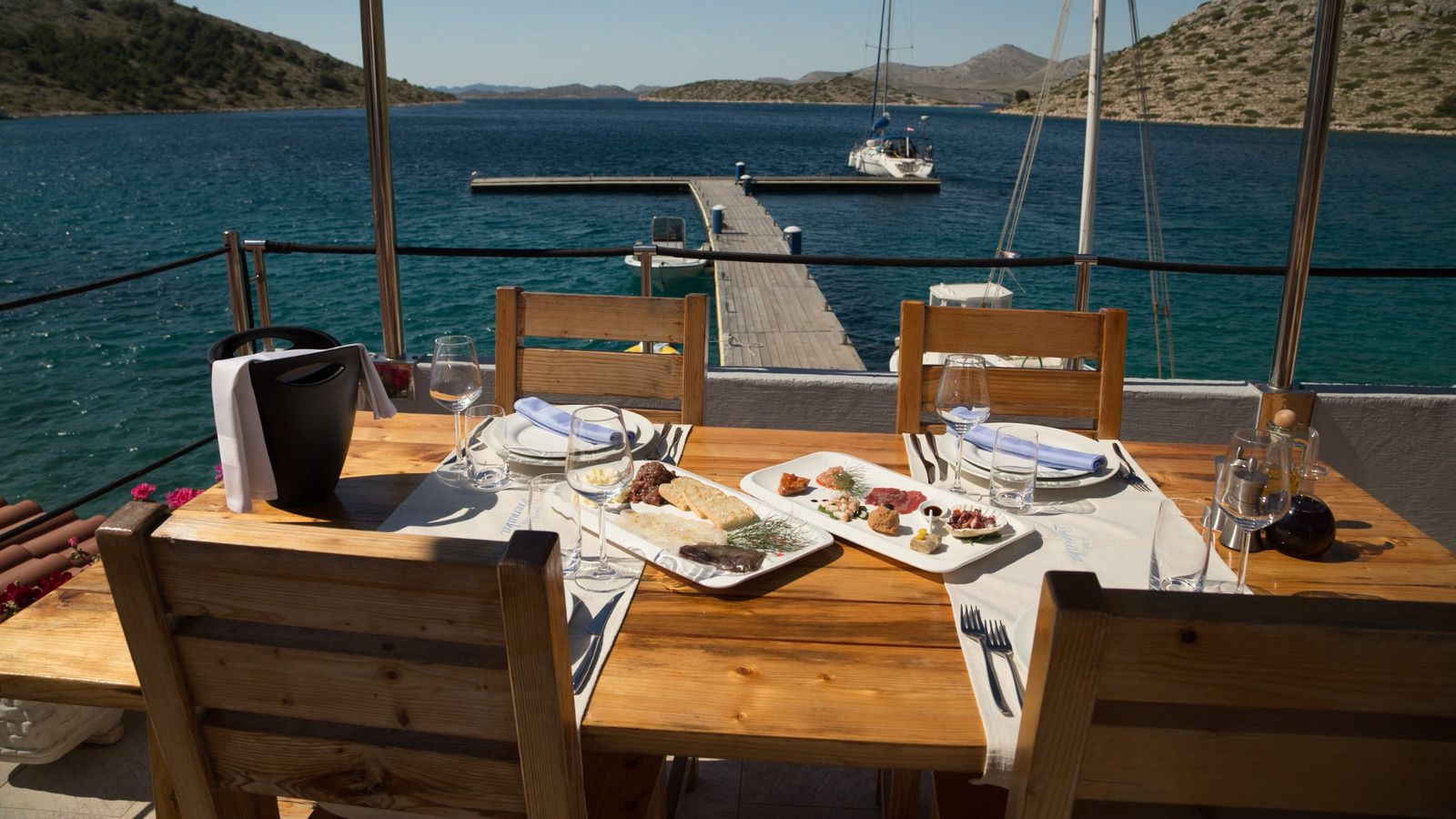
Eating ashore, a proper two-course dinner with local wine at a good konoba in Cres or Lošinj will cost 35 to 55 euros per person including wine. Istrian restaurants in Rovinj are slightly higher. Fresh provisions from markets and supermarkets are modestly priced and the quality of local produce — particularly olive oil, wine, cheese, and the famously expensive Istrian truffles — is very high.
Budget around 40 to 60 euros per day per person for food, marina fees, and incidentals on a crewed charter, in addition to the boat hire cost.
Three Insider Tips
1. Watch the Bora Gap at the Northern End of Cres
The passage between the northern tip of Cres and the Istrian mainland is one of the Bora's favourite acceleration zones in the Kvarner. Even when the sea state looks manageable and the barometer is steady, a Bora can build here very quickly when the pressure gradient across the Velebit steepens. Before committing to a northward passage through this area or crossing Kvarner Bay toward Krk, check the Prognoza Jadran forecast on the Croatian Meteorological and Hydrological Service website, listen to the 0535 or 1435 weather bulletin on VHF channel 24 from Split Radio, and ask locally. Marina staff in Cres Town will tell you plainly what they think is coming. Trust them.
2. The Lošinj Dolphins Are Real and Close
The waters between Lošinj and Cres are home to one of the best-studied populations of bottlenose dolphins in the Mediterranean, monitored since the 1980s by the Blue World Institute based in Veli Lošinj. These are resident animals with known life histories, not seasonal visitors. If you are sailing these channels at a moderate speed and keeping a watch, dolphin encounters are genuinely likely rather than merely hoped for. The Institute asks that boats approaching dolphins reduce speed, avoid sudden changes of course, and do not pursue animals that are not showing interest. A 100-metre minimum distance is the guideline. This is one of the few places in the Mediterranean where you might sail with dolphins that have been known to researchers for thirty years.
3. Provision Properly in Pula and Again in Lošinj
The supermarkets and markets in Pula and Mali Lošinj are significantly better stocked than anything you will find in Cres Town or on the smaller islands. Stock the boat thoroughly at the start and top up in Lošinj before heading north. Fresh bread is available in most settlements every morning from early bakeries — follow the smell. Water capacity matters here more than in Dalmatia because the Kvarner islands have less infrastructure for filling up at anchor, and the Cres freshwater lake, despite feeding the island, is a protected resource not available for yacht tanks. Fill water at every marina opportunity.
Final Thoughts
Sailing Istria and the Kvarner Gulf asks a little more of you than a standard Dalmatian charter week. The distances are slightly longer, the weather requires more attention, and the infrastructure is thinner. But the reward is a version of Croatian sailing that still has room to breathe — anchorages where you can hear the wind in the pines rather than the bass from the next catamaran, restaurants where the catch on the menu actually arrived this morning, and passages with enough meteorological character to make the seamanship feel worth practising.
The north is quieter, greener, and older-feeling than the south. It is also, in the best possible way, less finished. Come before that changes.


