Sailing the Cyclades: Routes, Tips & What to Expect
Published
A complete sailor's guide to the Greek Cyclades — covering the meltemi, a practical 7-day island-hopping itinerary, the best anchorages, mooring tips, costs, and insider advice for getting the most out of one of the Mediterranean's finest cruising grounds.

The Cyclades archipelago sits at the heart of the Aegean Sea like a scattered constellation of whitewashed villages, volcanic cliffs, and ancient marble ruins. For sailors, this region of Greece represents one of the most rewarding — and occasionally humbling — cruising grounds in the Mediterranean. From the iconic windmills of Mykonos to the caldera drama of Santorini, every anchorage tells a different story, and every day on the water feels like the one you'll talk about for years.
This guide is written for sailors who want more than a postcard itinerary. Whether you're chartering a bareboat out of Paros or joining a flotilla from Athens, what follows is the practical, experienced-backed knowledge you need to sail the Cyclades well.
What Makes the Cyclades Unique
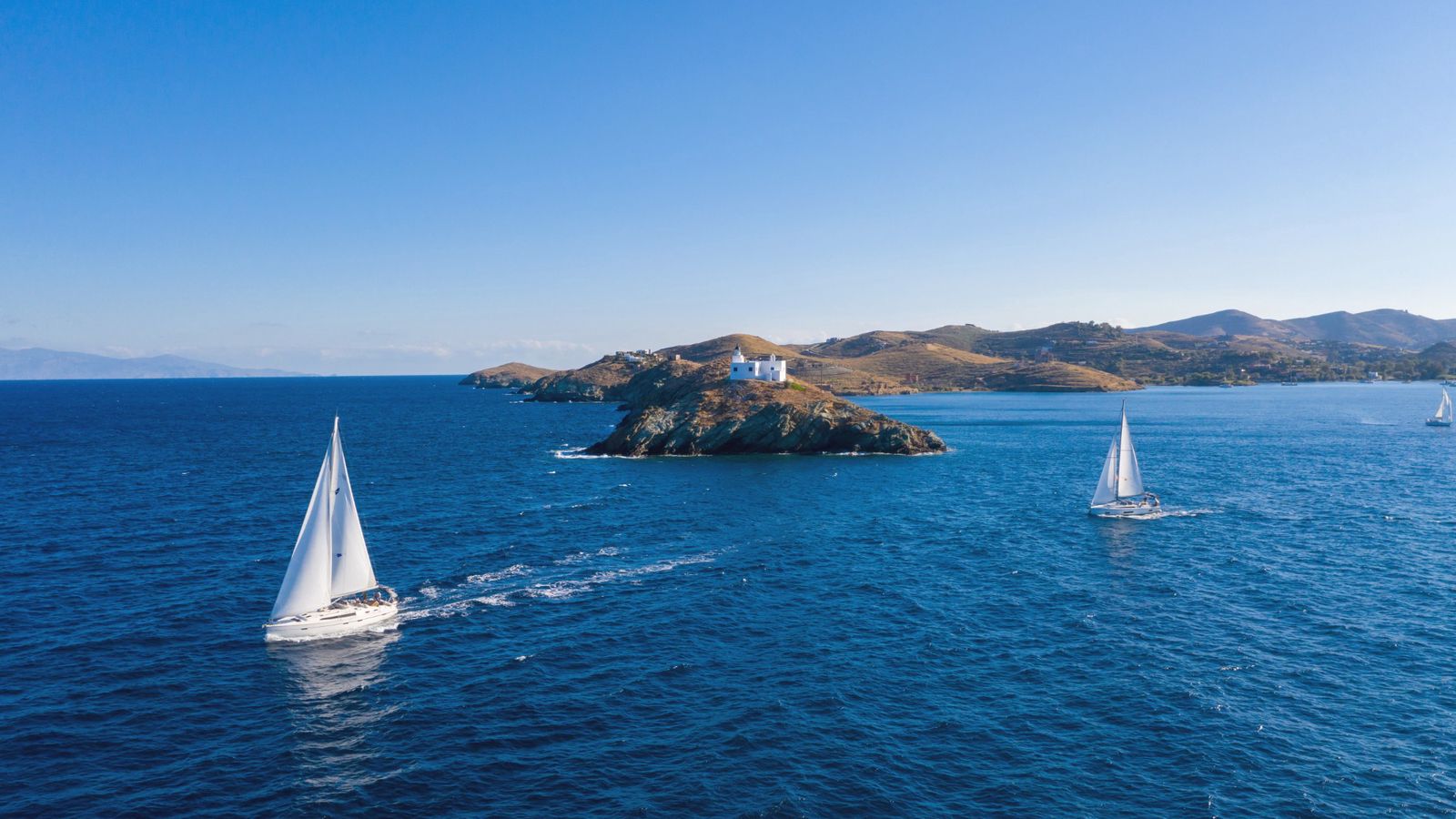
The Cyclades are defined by contrast. The landscape is stark and ancient — dry, rocky hillsides dotted with windmills and medieval fortifications called kastros — yet the sea surrounding these islands is strikingly clear, often displaying an almost surreal gradient from pale turquoise in the shallows to deep cobalt offshore. There are 220 islands in the group, of which around 24 are permanently inhabited. Each has its own character, its own rhythm, and its own reason to drop anchor.
What sets this region apart from other Mediterranean sailing grounds is the combination of reliable wind, relatively compact distances between islands, excellent charter infrastructure, and an authentic Greek culture that hasn't been entirely consumed by tourism — particularly once you venture beyond the famous names. A day's sail can take you from a world-famous party island to a near-empty anchorage where the only sound is water lapping against limestone.
The islands also carry extraordinary historical weight. These waters were sailed by Phoenician traders, Venetian merchants, and Ottoman fleets. You can anchor off the sacred island of Delos — birthplace of Apollo, one of the most significant archaeological sites in Greece — and walk among ruins that predate the Roman Empire. That layering of history beneath the blue-and-white aesthetic is something few cruising grounds can match.
Sailing Conditions: Wind, Sea State, and Difficulty
The Meltemi
The single most important factor in any Cyclades sailing plan is the meltemi — a dry, powerful northerly wind that dominates the Aegean from late June through early September. The meltemi typically builds through the morning, peaks in the afternoon (often reaching Force 5 to Force 7, sometimes gusting beyond), and eases after sunset. It blows most consistently in the central and northern Cyclades, funneled and accelerated by the gaps between islands.
This is not a wind to be casual about. Conditions can deteriorate from pleasant to rough in a matter of hours. Beam and beam-reaching in a meltemi can be genuinely spectacular sailing — fast, powerful, and exhilarating — but it also means choppy to rough seas and a physically demanding day. Southbound passages in July and August can be particularly hard work, beating into wind and chop. Experienced sailors often plan north-to-south routes to run or reach downwind, while northbound legs are timed for calmer morning windows.
Shoulder Season Conditions
May, early June, and October are widely considered the sweet spot for Cyclades sailing. Winds are more variable and lighter (Force 3 to Force 4 on average), sea states are more forgiving, and anchorages that would be packed in August are often beautifully quiet. The water is warm enough for swimming from late May onward, and the landscape is greener than the bleached summer palette. Spring also brings wildflowers across the hillsides — a side of these islands most visitors never see.
Difficulty Level
The Cyclades are suitable for intermediate to experienced sailors, particularly in summer. Beginners are not excluded, but anyone without solid experience handling a boat in Force 5 to 6 conditions should either sail with a skipper, join a flotilla, or plan a shoulder-season trip. Anchoring can also be more technical than in protected bays — many anchorages are open to the north or northeast, and a wind shift overnight can make an otherwise calm spot uncomfortable or unsafe. Good anchor technique, situational awareness, and a willingness to move are essential skills here.
Who the Cyclades Are Best For
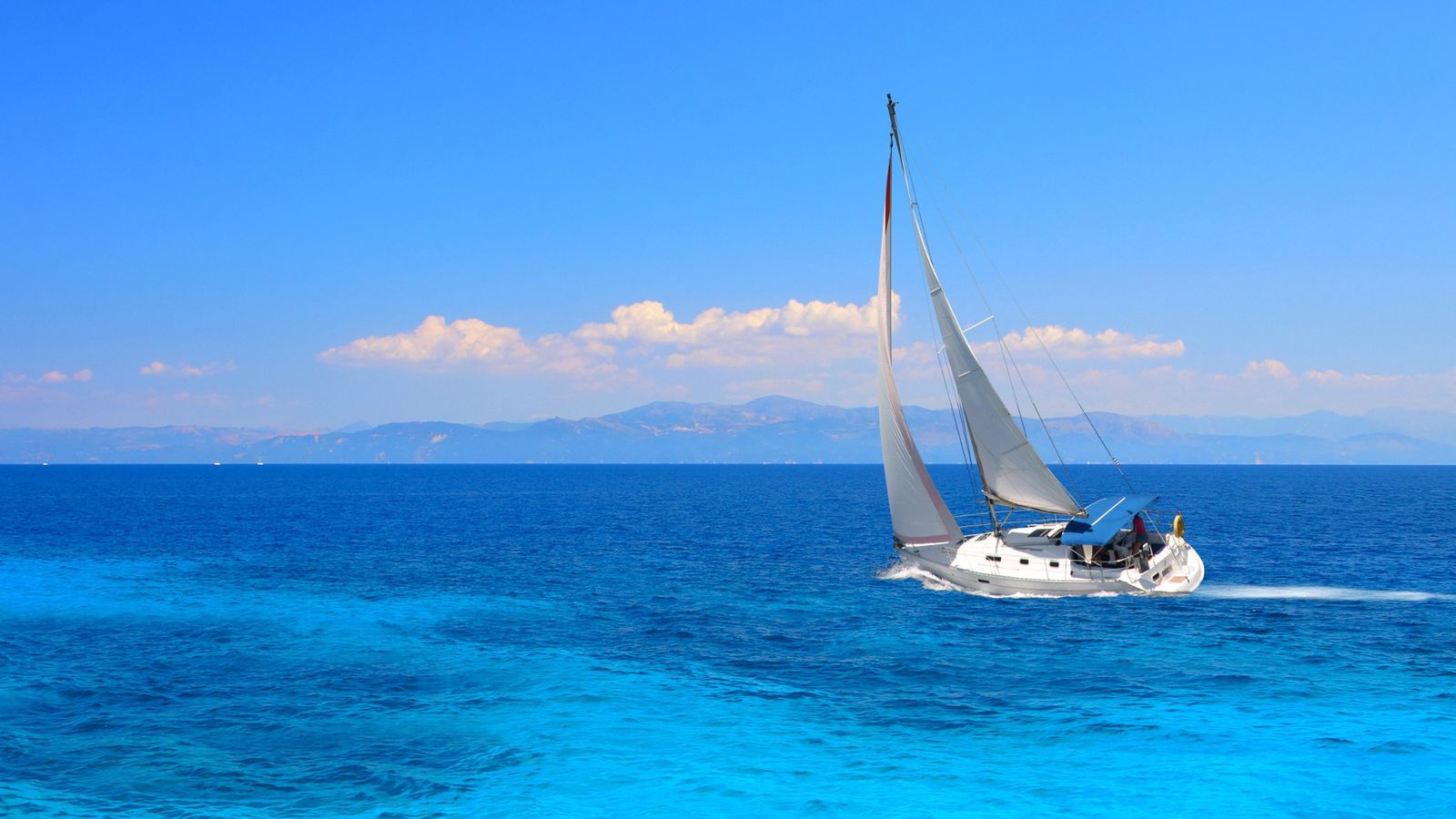
The Cyclades reward sailors who come prepared and approach the trip with flexibility. Rigid itineraries tend to fall apart when the meltemi has different plans. The region is ideal for:
Intermediate and experienced sailors who want a genuinely challenging and beautiful blue-water cruising ground without crossing an ocean.
Couples and small groups who want to balance active sailing with exploring on foot, eating and drinking well, and finding quieter anchorages off the tourist trail.
History and culture enthusiasts who appreciate that nearly every stop has layers of significance stretching back millennia.
Flotilla participants — the Cyclades are a popular flotilla destination and an excellent way for less experienced sailors to gain confidence in the conditions with experienced lead crews on hand.
Solo sailors with limited offshore experience should be cautious, particularly in peak summer. The meltemi demands full attention, and some crossings — particularly between the northern and central islands — can be long and exposed.
A Suggested 7-Day Cyclades Itinerary
This route is designed for a bareboat charter out of Paros, one of the best-placed charter bases in the Cyclades. It covers a mix of famous and lesser-known stops, balances sailing with exploring, and is structured to work with prevailing winds. Distances are manageable — most legs are between 15 and 35 nautical miles — allowing you to sail at a relaxed pace and still arrive before the afternoon meltemi peaks.
Day 1: Paros to Naxos (15 NM)
Clear the charter base at Parikia on Paros and set a course for Naxos, the largest and arguably the most interesting island in the Cyclades. The crossing is short and easily done in the morning before the wind builds. Arrive at Naxos Town (Hora) and tie up in the marina or anchor in the bay south of the harbor. Spend the afternoon exploring: the enormous unfinished marble doorway of the Temple of Apollo — the iconic Portara — stands at the harbor entrance and is unmissable. In the evening, head up into the old Venetian kastro, wander the alleys, and eat at one of the tavernas that have been there for generations. Naxos is also famous for its local produce — the potatoes, cheeses, and citrus are outstanding. Pick up provisions here; it's one of the best-stocked islands for reprovisioning.
Day 2: Naxos to Iraklia (20 NM)
Today's destination is one of the Lesser Cyclades, the small cluster of islands south of Naxos that most charterers sail past without stopping. Iraklia (also spelled Heraklia) is a gem — a tiny island of around 150 permanent residents with a single harbor village, excellent swimming, and a dramatically deep-blue cave called Agios Giorgos accessible by foot or dinghy. Anchor in the main harbor or, if there's room, the bay to the south. The pace of life here is unhurried to a degree that feels almost out of time. Have dinner at one of the two or three tavernas and watch the fishing boats come in as the sun drops behind the hills.
Day 3: Iraklia to Koufonisia (8 NM)
A short hop to the most fashionable of the Lesser Cyclades. Koufonisia — specifically the larger Ano Koufonisi — has developed a well-deserved reputation as the island you tell people about before it becomes too famous. The water is extraordinary: a series of sculpted rocky coves along the south coast, carved by the sea into natural pools and swimming holes, with colors that seem digitally enhanced. The village harbor is small, so arrive by mid-morning to secure a berth. The island is entirely walkable. The beach bars and tavernas here punch well above their weight. This is also a good day to slow down — swim, read, explore on foot, and have a long lunch.
Day 4: Koufonisia to Ios (30 NM)
This is the longest passage of the itinerary and requires an early start — aim to be underway by 7:00 or 7:30 AM. The crossing from Koufonisia to Ios takes you southwest across open water and can be lumpy if the meltemi has built overnight. Plan for a broad reach or run in the right conditions, but be prepared to motorsail in the morning calm before the wind fills in. Ios has a deserved reputation for nightlife, but the island has a quieter, more scenic side that's easy to find if you seek it out. Anchor in Mylopotas Bay on the south side, which is more sheltered and more beautiful than the main harbor, and walk up to the hilltop Hora for sunset. The tomb of Homer is reportedly on the island, a detail that adds an unexpected layer of gravity to what is otherwise known as a party destination.
Day 5: Ios to Santorini / Thirasia (25 NM)
The approach to Santorini from the north is one of the great sailing moments in the Aegean. The caldera — a vast volcanic crater flooded by the sea — appears gradually as you round the northern tip of the island, and then suddenly you're sailing inside the caldera itself, with sheer black and rust-red cliffs towering 300 meters above you and the white village of Oia perched at the rim. It is, by any measure, spectacular.
The main harbor at Fira is dominated by cruise ships and crowded; experienced sailors typically anchor in the caldera or make for the quieter island of Thirasia to the west. Thirasia is Santorini's quieter sibling — same dramatic geology, same caldera views, but a fraction of the tourist infrastructure and a genuinely local atmosphere. Anchor off the village of Korfos at the base of the cliffs and climb the steps to the hilltop village of Manolas. The view back across the caldera to Santorini's clifftop villages is worth every step.
Day 6: Santorini / Thirasia to Folegandros (25 NM)
Folegandros is the kind of island that sailors claim as their own secret, even though it's increasingly well-regarded. It remains, however, relatively difficult to reach by ferry, which means it retains a quietness that better-connected islands have lost. The main anchorage is at Karavostasis on the east coast, where the ferry port sits. From there, a bus or a stiff walk takes you up to the main Hora, a town widely considered one of the most beautiful in the Cyclades — a clifftop settlement of bougainvillea-draped alleys and handsome main square that manages to be undeniably pretty without feeling artificial. Eat dinner here and watch the sunset paint the Aegean in the full spectrum below you.
Day 7: Folegandros to Paros (45 NM)
The return leg is the longest of the trip and should be started at first light. The passage from Folegandros back to Paros runs northeast, which means you'll likely be sailing into or across the meltemi if it's active. Time your departure to get as much distance covered as possible in the early morning calm, and use the building breeze to your advantage on a beam reach as the wind fills in. If conditions are rough, the island of Sikinos offers a comfortable lee on its southern shore where you can wait out the worst. Arrive at Parikia by early afternoon, return the boat, and spend your final night ashore at one of Paros' excellent waterfront restaurants, debriefing the week over cold Assyrtiko wine.
Key Stops: What to Know Before You Go
Paros
The best all-round charter base in the Cyclades. Parikia has a well-equipped marina, good provisioning, reliable fuel, and a well-preserved old town with an outstanding Byzantine church, the Ekatontapyliani. The island is also a windsurfing mecca at Pounda and Golden Beach, which tells you something about the reliable wind conditions. Naoussa on the north coast is one of the most charming harbor towns in the archipelago.
Naxos
The largest Cycladic island and arguably the most self-sufficient. The interior is remarkable — villages that feel unchanged for centuries, marble quarries, and a mountain (Zeus) that gives the island a greener, more fertile character than its neighbors. The harbor at Naxos Town is well-equipped, and the town itself rewards a full day of exploration.
Delos
You cannot moor on Delos — it is an uninhabited archaeological site — but a short detour from Mykonos makes for an unforgettable few hours ashore. The ruins of what was once the most sacred and commercially important island in the ancient Greek world are extraordinarily well preserved: temples, mosaics, market streets, and the famous Avenue of the Lions. Take the dinghy ashore from an anchorage off Mykonos and visit by day trip.
Mykonos
Busy, expensive, and worth a brief stop for contrast if nothing else. The harbor at Mykonos Town (Hora) is chaotic in summer — anchor in Ornos Bay on the south coast for a quieter experience. The famous windmills, the labyrinthine Little Venice waterfront, and the sheer energy of the place are genuinely impressive even if it's not your scene. Provisioning and fueling here is reliable.
Syros
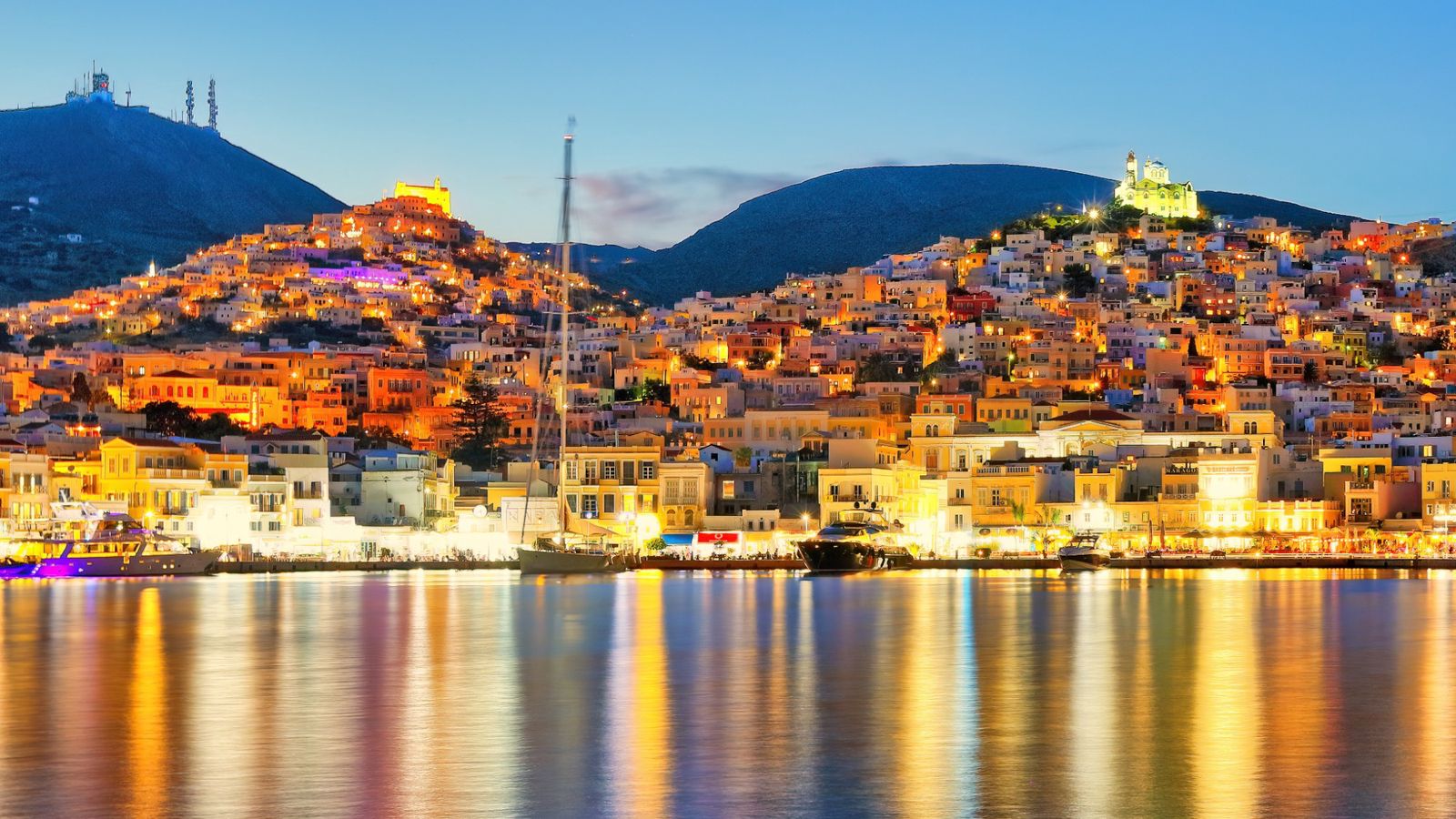
Syros is an underrated and highly rewarding stop. The island capital, Ermoupolis, is architecturally unlike anywhere else in the Cyclades — a neoclassical port city with a grand town hall, an opera house, and marble-paved squares that reflect its 19th-century role as the most important port in Greece. It still feels like a working city rather than a tourist stage set. The marina is large and well-serviced, making it an excellent provisioning stop for those sailing from Athens.
Mooring and Marina Tips
Mooring in the Cyclades requires more flexibility and local knowledge than many sailors expect. Here is what you need to know:
Stern-to mooring (Mediterranean mooring) is standard at most official quays. Drop your anchor at a 45-degree angle to the quay, reverse in, and tie stern lines. Practice this before you arrive if you haven't done it recently — it takes coordination and confidence, particularly in afternoon winds.
Mooring buoys are increasingly available in protected anchorages and at dive sites. Always inspect the buoy condition before trusting it for an overnight stay.
Arrive early. In July and August, popular anchorages and harbor spaces fill by noon or early afternoon. Aim to arrive between 10 AM and 12 PM to have a realistic choice of spots.
Holding in some bays is poor — particularly where seagrass (Posidonia) covers the bottom. Greek law protects seagrass; you cannot anchor in it. Use the sandy patches marked by lighter water color, and always set a watch or anchor alarm overnight.
Formal marinas with full facilities exist at Paros (Parikia), Syros (Ermoupolis), Mykonos, and Naxos Town. These fill up quickly in peak season and advance booking is strongly recommended. Smaller islands typically offer a town quay with basic facilities (water, sometimes electricity) and a harbor master who will collect modest fees.
Cost Expectations
The Cyclades are not a budget cruising ground, particularly in July and August. Here is a realistic cost breakdown for a typical 7-day bareboat charter:
Charter fees: A well-equipped 40-foot sailing yacht in high season will typically cost between $3,000 and $6,000 USD per week before extras, depending on the boat age and specification. Shoulder season (May, June, October) rates can be 20 to 40 percent lower.
Fuel: Plan for $150 to $300 for the week, depending on how much you motorsail. Diesel in Greek marinas runs approximately 1.70 to 1.90 EUR per liter.
Marina and mooring fees: Town quays typically charge 10 to 25 EUR per night for a 40-foot boat. Formal marinas charge 40 to 100 EUR per night. Budget 25 to 50 EUR per day averaged across the trip.
Food and provisioning: Eating well aboard from supermarkets costs 30 to 50 EUR per day for a couple. Dining ashore ranges from 15 to 25 EUR per person at a typical taverna to 50 EUR or more at higher-end restaurants on Mykonos or Santorini.
Total budget: For two people, plan on $5,000 to $9,000 USD for the week including charter, fuel, mooring, and a mix of aboard and ashore dining. The Cyclades reward those who seek out the quieter, lesser-known islands — costs drop noticeably as tourist pressure decreases.
Three Insider Tips
Tip 1: Sail Early, Swim Late
The meltemi almost always builds through the day and eases after sunset. Structure your days accordingly: be underway by 7 or 8 AM to cover distance in calm or light conditions, arrive by midday or early afternoon, and use the evening — when the anchorage settles and the light turns golden — for swimming, exploring ashore, and eating. Fighting the afternoon meltemi on a tight itinerary is a recipe for exhaustion and frustration.
Tip 2: The Lesser Cyclades Are Your Secret Weapon
Most charterers focus on the famous islands and miss the extraordinary cluster of small islands between Naxos and Amorgos: Iraklia, Schinoussa, Koufonisia, and Donoussa. These islands are separated by short passages, are easily connected into a multi-day loop, and offer some of the most beautiful and uncrowded sailing in the entire Aegean. The water clarity is exceptional, the tavernas are local and honest, and in May or October you may have entire anchorages to yourself.
Tip 3: Learn a Few Words of Greek
This may seem obvious, but it matters more in the Cyclades than in more internationalized cruising grounds. On smaller islands — Iraklia, Folegandros, Schinoussa — English is less widely spoken and the taverna owners, harbor masters, and fishermen you'll encounter daily respond warmly to even a basic effort. Kalimera (good morning), efharisto (thank you), and parakalo (please / you're welcome) will open doors and conversations that would otherwise stay closed. It's also, frankly, just the right thing to do.
Final Thoughts
Sailing the Cyclades is not always easy. The meltemi demands respect, the anchorages require skill, and a rigid schedule will be tested. But the reward for engaging with these challenges honestly — rather than fleeing to a protected marina at the first sign of wind — is access to one of the world's most extraordinary cruising grounds. The light in the Aegean in the late afternoon, the feel of a beam reach in a fresh northerly, the taste of grilled octopus at a quayside taverna as the fishing boats come in — these things compound, day after day, into something that feels close to perfect. Plan well, sail smart, and leave room for the wind to surprise you.


