Boat Charter in Italy: The Complete Guide to Sailing the Mediterranean's Most Iconic Coast
Updated
Everything you need to know about booking a boat charter in Italy — from the best sailing regions like Sardinia, Amalfi, and the Aeolian Islands, to licensing requirements, costs, and a complete 7-day Aeolian Islands itinerary.
On this page

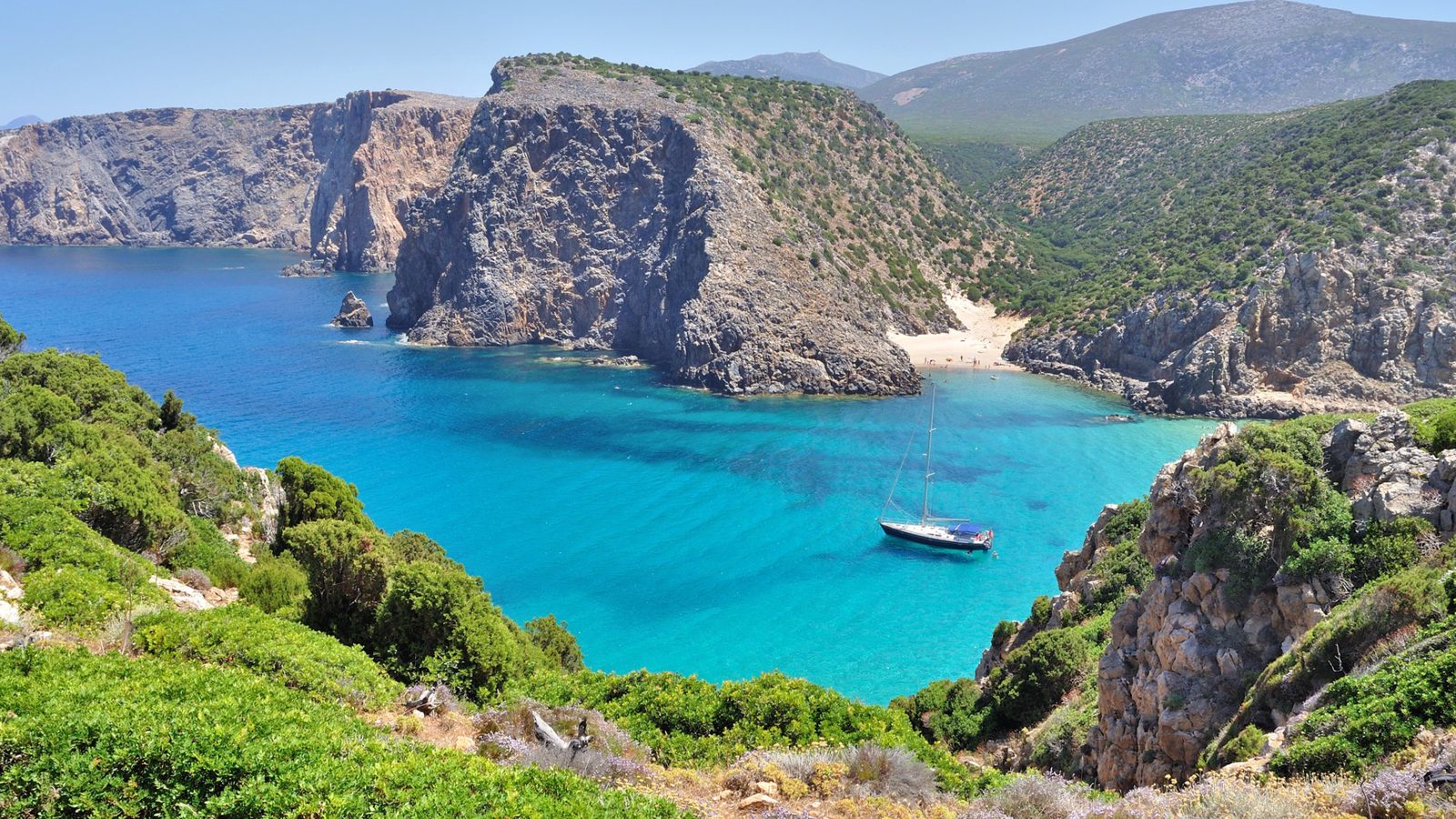
Few places on Earth combine raw natural beauty, world-class cuisine, and millennia of maritime history the way Italy does. Chartering a boat in Italy means waking up to the cliffs of the Amalfi Coast with an espresso in hand, anchoring off a deserted Sardinian cove with water so clear it looks photoshopped, or drifting through the smoky silhouette of an active volcano in the Aeolian Islands. It is, in a word, extraordinary.
Yet Italy is also one of the more nuanced sailing destinations in the Mediterranean. Licensing rules are stricter than in Croatia, mooring infrastructure varies wildly by region, and the sheer size of the country means you could charter here a dozen times and barely scratch the surface. This guide covers everything you need to plan the perfect Italian sailing trip — from choosing your region and booking your boat to navigating the bureaucracy and keeping costs under control.
Why Italy Is One of the World's Great Sailing Destinations
Italy has over 7,500 kilometers of coastline stretching along three seas — the Tyrrhenian, the Adriatic, and the Ionian. It includes two of the Mediterranean's largest islands (Sicily and Sardinia), dozens of smaller island chains, and a mainland coastline that alternates between dramatic volcanic scenery, lush Ligurian hillsides, and some of the most photographed coastal towns on the planet.
What sets Italy apart from other popular Mediterranean sailing destinations like Croatia and Greece is the cultural density. You are never far from a town with a 2,000-year-old cathedral, a restaurant where the pasta is made fresh that morning, or a local festival that has been running for centuries. Sailing here is not just a water sport — it is a full immersion in one of the world's richest civilizations, with the added freedom of arriving by sea, often beating the crowds entirely.
Italy vs. Croatia vs. Greece: How Do They Compare?
Croatia offers a more budget-friendly charter experience with calmer, island-sheltered waters ideal for beginners. The Dalmatian coast is stunning but has become very crowded in peak season. Licensing requirements are relatively relaxed.
Greece is the most expansive option, with thousands of islands spread across the Aegean and Ionian seas. It offers more solitude and longer passages between stops. Licensing requirements are moderate.
Italy delivers an unmatched combination of dramatic scenery, gastronomy, and cultural richness. Sailing conditions are more varied and sometimes more challenging than Croatia, and licensing requirements are the strictest of the three. Marinas tend to be more expensive. But for sailors who want the complete Mediterranean experience, Italy is in a league of its own.
Best Sailing Regions in Italy
Italy is too large to cover in a single charter. Most sailors choose one region and explore it deeply. Here are the five standout sailing areas, each with a completely different character.
1. Sardinia
Sardinia is widely regarded as the crown jewel of Italian sailing. The island's northeastern corner — the Costa Smeralda and the Maddalena Archipelago — is home to some of the most spectacular water in Europe. Think: transparent turquoise lagoons, pink granite boulders tumbling into the sea, and white sandy beaches that rival anything in the Caribbean.
The Maddalena Archipelago is a national park and arguably the best anchorage-hopping area in all of Italy. The islands of Caprera, Santa Maria, Budelli (home to the legendary Pink Beach), and Spargi can all be visited in a single week. The sailing conditions here are shaped by the Mistral — a powerful northwesterly wind that can gust to 30 knots or more. It makes for exhilarating sailing, but charterers should be prepared for it.
The Costa Smeralda around Porto Cervo is playground-of-the-rich territory, with superyachts, designer boutiques, and some of the most expensive marina berths in Europe. You don't have to spend big to enjoy it — the anchorages are free — but expect to pay a premium for any port services here.
Best for: Anchorage-hopping, natural scenery, experienced sailors, upscale bareboat or skippered charters.
2. Amalfi Coast & Gulf of Naples
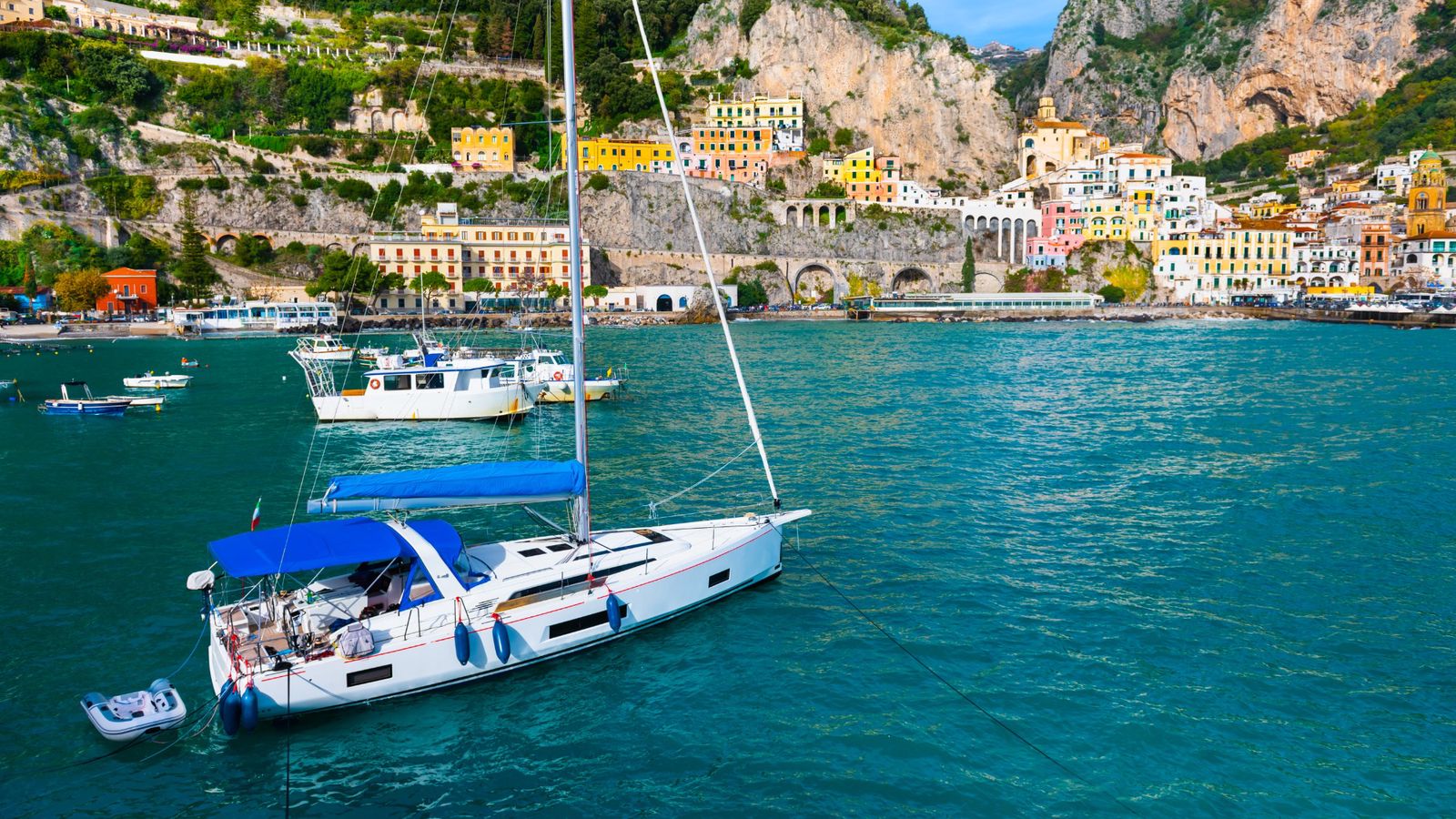
No sailing region in Italy is more iconic than the stretch of water between Naples and the Amalfi Coast. Vesuvius broods over the bay to the north, Capri rises dramatically from the sea to the south, and in between lie the cliff-clinging towns of Positano, Amalfi, and Ravello — all of them best appreciated from the water, where you can escape the summer crowds entirely.
The Gulf of Naples also gives access to Ischia and Procida, two volcanic islands with thermal baths, colorful harbors, and a more authentic, less touristy character than Capri. This region rewards slow exploration. Anchor off the Faraglioni rocks at dusk, swim through the Blue Grotto by tender, eat freshly caught octopus at a harbourside trattoria. It is the Italian postcard brought fully to life.
Sailing conditions here can be more challenging than they look. The Gulf of Naples can funnel wind and the waters around the Amalfi Coast have limited anchorages due to depth and swell exposure. Most sailors spend nights in marinas or at mooring buoys.
Best for: Cultural sightseeing, romantic trips, foodies, sailors comfortable with marina-based itineraries.
3. Sicily & the Aeolian Islands
Sicily is Italy's largest island and one of the most culturally layered places in the Mediterranean. Charter it as a base, and you'll find Greek temples, Arab-Norman cathedrals, baroque piazzas, and some of the best street food in Europe — all within reach by sea. The western tip of Sicily, around Marsala and the Egadi Islands, offers calm, shallow turquoise water perfect for swimming and snorkeling.
To the north of Sicily lies the Aeolian (Lipari) Islands — a UNESCO World Heritage archipelago of seven volcanic islands that is, for many sailors, the most otherworldly destination in Italy. Stromboli is an active volcano that erupts every 20 minutes, visible for miles at night as glowing lava spills down its slopes into the sea. Vulcano has black sand beaches and sulfurous mud pools. Panarea is tiny, chic, and car-free. Salina is green and serene, famous for its capers and the film Il Postino.
The Aeolians deserve at least a full week on their own. The sailing passages between the islands can be breezy and rolly — this is exposed, open-water sailing rather than the sheltered island-hopping of Croatia.
Best for: Adventure seekers, volcano enthusiasts, cultural travelers, intermediate to experienced sailors.
4. Tuscany & the Tuscan Archipelago
The Tuscan Archipelago — Elba, Giglio, Capraia, Montecristo, and others — sits off the coast of Tuscany and offers a surprisingly wild and uncrowded sailing experience relative to the region's fame. Elba is the largest island, famous as Napoleon's first exile, and has excellent marinas, good beaches, and diverse anchorages. Giglio is rugged and dramatic. Capraia, reached from Livorno, is almost entirely national park and offers spectacular cliff diving and hiking ashore.
The base ports of La Spezia (gateway to the Cinque Terre), Livorno, and Grosseto give access to this region. Sailing the Cinque Terre by boat is one of those experiences that genuinely changes how you perceive a place — the five famous villages seen from the water, with no cruise ship crowds in sight, is utterly memorable.
Best for: Sailors who want natural scenery without the Sardinian price tag, wine lovers, off-the-beaten-path exploration.
5. The Adriatic: Puglia & the Tremiti Islands
Italy's Adriatic coast is less celebrated than the west, but Puglia (the heel of the boot) is having a moment. The region's dramatic limestone cliffs, trulli-dotted hinterland, and extraordinary food scene make it a compelling charter destination. The base ports of Brindisi, Otranto, and Gallipoli serve the region, and the Tremiti Islands — a tiny, gorgeous archipelago in the northern Adriatic — are a worthy destination for those exploring from the north.
The Adriatic can be rough — the Bora wind blows hard from the northeast — but in settled summer conditions, this is wonderfully uncrowded sailing territory compared to the Tyrrhenian coast.
Best for: Independent travelers wanting something different, food lovers, budget-conscious sailors.
Best Time to Go: Weather and Sailing Seasons
Italy's sailing season runs from April through October, with the peak season compressed into July and August. Here's how the seasons break down:
May–June (Shoulder Season — Highly Recommended)
This is arguably the best time to charter in Italy. Temperatures are warm but not oppressive (typically 22–28°C), winds are moderate and consistent, anchorages are uncrowded, and prices are 20–40% lower than peak season. The sea is warming up but already swimmable, particularly in the south. Flora is at its best, and restaurants and marinas are open but not overwhelmed.
July–August (Peak Season)
The height of summer brings hot, dry weather and near-guaranteed sunshine, but also the most crowded conditions of the year. August in particular is Ferragosto — Italy's traditional summer holiday — when the entire country seems to head to the coast simultaneously. Marina berths must be booked months in advance. Anchorages fill by mid-afternoon. Prices peak. For Sardinia especially, August weekends can feel like the open sea has become a parking lot. That said, the winds are usually reliable, the swimming is spectacular, and the atmosphere is electric. If you can, target the first two weeks of July.
September–October (Second Shoulder Season — Excellent)
September is superb. Crowds thin after the first week, prices drop, the sea retains its summer warmth (often warmer than June), and the light takes on a softer, golden quality that photographers love. October starts to see more unsettled weather, especially in the north, but the south (Sicily, Sardinia, Puglia) remains reliably pleasant well into the month.
Prevailing Winds by Region
Sardinia / Corsica Strait: Mistral (NW) is the dominant wind, strongest in spring and autumn. Can arrive with little warning and reach gale force.
Tyrrhenian Sea (Naples, Amalfi, Sicily): Thermal winds predominate in summer. The Ponentino (westerly) builds in the afternoon. Generally gentler than Sardinia.
Adriatic: The Bora (NE) is the main hazard — cold, violent, and fast-moving. The Jugo (SE) brings humidity and swell. Summer afternoons often bring the Maestrale (NW).
Licensing Requirements for Chartering in Italy
This is where Italy differs most significantly from its Mediterranean neighbors, and it's critical to understand before you book.
The Italian Coastal License (Patente Nautica)
Italy requires all skippers — including foreign nationals — to hold a recognized sailing or powerboating license when chartering a vessel. The key rules are:
Within 6 nautical miles of the coast: A basic license is required for vessels over 6 HP. For most foreign charterers, an ICC (International Certificate of Competence) endorsed for coastal sailing is the minimum accepted credential.
Beyond 12 nautical miles from shore: A higher-grade offshore license is required. For international charterers, the RYA Yachtmaster Offshore or equivalent is typically accepted.
Bareboat charter companies are obligated to verify your license before handing over the boat. This is enforced more rigorously in Italy than in many other charter markets.
What Licenses Are Accepted?
Italy is generally pragmatic about international qualifications, but documentation must be in order:
ICC (International Certificate of Competence): Accepted for coastal sailing (within 12nm). Required as a minimum for most charter companies.
RYA Day Skipper / Yachtmaster: Accepted and well-regarded. Yachtmaster Offshore covers beyond-12nm passages.
ASA (American Sailing Association) certifications: Generally accepted, though specific requirements vary by charter company. Check with your broker.
Italian Patente Nautica: The gold standard locally. Obtainable by foreigners but requires a written and practical exam in Italian.
The Skipper Option
Don't have the right license — or simply don't want the responsibility? Hiring a professional skipper is a popular and excellent option in Italy. Skippers typically cost €150–€250 per day plus food and accommodation aboard. They double as local guides, chefs' assistants, and cultural interpreters, and they often know secret anchorages that no guidebook will tell you about. For first-time visitors to Italian waters, a skipper transforms a good trip into a great one.
Costs Overview: What Does a Boat Charter in Italy Actually Cost?
Italy sits in the mid-to-upper range of Mediterranean charter markets. Costs vary enormously by region, season, boat type, and whether you're going bareboat or crewed. Here's a realistic breakdown:
Weekly Bareboat Charter Rates (Sailing Yacht)
Low season (May, early June, October): €1,500–€3,500 for a 38–42ft yacht sleeping 6–8 people
Mid-season (late June, September): €2,500–€5,500
Peak season (July–August): €3,500–€8,000+
Sardinia premium: Expect 20–30% above these rates for Sardinian charters, particularly around the Maddalena Archipelago
Additional Costs to Budget For
Skipper: €150–€250/day
Marina berths: €40–€200+/night depending on region and season (Sardinia's Costa Smeralda can exceed €500/night for larger boats)
Fuel: €100–€300/week depending on motor use
Provisioning: Budget €50–€80/person/day for a mix of cooking aboard and eating out
Security deposit: €1,500–€5,000, held by credit card and released after safe return
APA (Advance Provisioning Allowance) for crewed charters: Typically 25–35% of the base charter fee on top
How to Save Money
Book early (6+ months in advance) for the best selection and occasional early-booking discounts
Travel in shoulder season (May–June or September)
Anchor out rather than taking marina berths every night — Italian anchorages are largely free
Provision at supermarkets rather than marina chandleries
Consider a catamaran for groups of 8+ — the cost per person drops substantially
Sample 7-Day Itinerary: The Aeolian Islands Loop
Base port: Milazzo, Sicily (main gateway for the Aeolians, well-served by flights to Catania or Palermo)
[Image: A sailing yacht anchored at sunset off Stromboli volcano in the Aeolian Islands, glowing lava trail visible on the volcanic slope, dramatic orange and purple sky reflecting on the calm water]
Day 1: Milazzo → Lipari (35nm)
Depart Milazzo after provisioning and head northeast to Lipari, the largest and most cosmopolitan of the Aeolian Islands. Arrive by early afternoon and take a marina berth in the main harbor. Spend the afternoon exploring the hilltop castle and the extraordinary archaeological museum, which holds one of the finest collections of Greek pottery in Italy. Dinner ashore at one of the harbor restaurants — order the pesto alla Lipariese (with almonds, capers, and tomatoes) and the local Malvasia wine.
Day 2: Lipari → Vulcano → Panarea (30nm total)
Morning: Motor or sail south to Vulcano (just 15 minutes from Lipari). Anchor in the main bay and go ashore to walk up to the crater rim (2 hours return) or wallow in the famous sulfurous mud baths at the Porto di Levante. It smells extraordinary, in every sense. Return to the boat, swim to de-sulfurize, and head north to Panarea. The smallest inhabited Aeolian island is effortlessly cool — no cars, good restaurants, fashionable crowd. Anchor in the sheltered bay and watch the sun go down over Stromboli in the distance.
Day 3: Panarea → Stromboli (16nm)
The big day. Sail north to Stromboli, the northernmost Aeolian island and one of the most active volcanoes on Earth. Anchor off Strombolicchio (the dramatic sea stack) or in the main bay on the leeward side (swell-dependent). Arrange a guided night hike to the crater summit (720m) — one of the most unforgettable experiences in the entire Mediterranean. The hike takes 2–3 hours each way and must be done with a licensed guide. Back aboard, watch Stromboli erupt from the cockpit over a nightcap.
Day 4: Stromboli → Salina (25nm)
Sail southwest to Salina, the greenest island in the Aeolians. Moor in Santa Marina Salina or the prettier anchorage of Pollara (used as a location in Il Postino — the beautiful half-moon volcanic bay is unmistakable). Rent scooters to explore the island, visit a caper farm, and try the famous granita di mandorla (almond granita with a fresh brioche) at a bar in Malfa. Salina's wines, particularly the Malvasia delle Lipari dessert wine, are extraordinary.
Day 5: Salina → Filicudi → Alicudi (40nm)
Head west to the outer islands — Filicudi and Alicudi — the Aeolians' most remote and least visited. Filicudi has a bronze-age village site and a sea stack called La Canna that rises 71 meters straight out of the water. Alicudi has no roads, no cars, and fewer than 100 permanent residents. It feels genuinely wild. Anchor overnight off Alicudi and experience what total silence at sea actually sounds like.
Day 6: Alicudi → Lipari → Vulcano (50nm)
Make the longer passage back east, stopping in Lipari for fuel and provisions if needed, then end the day at Vulcano's Porto di Ponente — the western bay, sheltered from the prevailing swell, with a black sand beach. Have a final, leisurely dinner aboard as the lights of Lipari twinkle across the strait.
Day 7: Vulcano → Milazzo (20nm)
An easy morning sail back to Milazzo. Arrive by noon for handover. If the agent allows, you'll be back in Milazzo with enough time to catch a late-afternoon flight or spend the night in Taormina — a magnificent baroque hilltop town just an hour's drive away that makes the perfect finale to a Sicilian sailing week.
Travel Requirements and Practicalities
Entry Requirements
Italy is a Schengen Area member. Citizens of the EU and most English-speaking countries (USA, UK, Canada, Australia, New Zealand) do not require a visa for stays of up to 90 days. The UK's post-Brexit status means British travelers no longer use the EU passport lane, but entry is still visa-free for tourist purposes.
ETIAS: The EU's new Electronic Travel Information and Authorisation System is expected to come into effect in 2025/2026. Non-EU travelers (including US, UK, Canadian, and Australian citizens) will need to pre-register online before travel. It is a simple, low-cost authorization (similar to the US ESTA) but worth checking the latest status before you book.
Documentation to Carry Aboard
Sailing license / ICC (original, not a photocopy)
Charter contract from the boat owner or charter company
Boat registration papers
Insurance certificate
VHF radio license (if operating the radio — legally required)
Passports for all crew
Italian coastal authorities (the Guardia Costiera) and local port police (Capitaneria di Porto) do conduct spot checks, particularly in popular areas. Having all documentation organized and accessible is not just good seamanship — it's legally required.
Formalities in Port
Italy is an EU country, so there are no customs formalities for boats sailing within the EU. If arriving from a non-EU country (e.g., Montenegro, Tunisia, or the UK post-Brexit), you must clear customs at a designated port of entry and fly the Q flag until cleared.
5 Practical Tips for Chartering in Italy
1. Book Marinas Well in Advance in Peak Season
Unlike Greece or Turkey, Italian marinas — particularly in Sardinia, Capri, and the Aeolians — fill up months ahead of peak season. Calling ahead is not enough; many require written reservations and credit card guarantees. Booking as early as January for a July or August charter is not paranoid — it's prudent. If you can't get a berth, anchor out and use the dinghy, but plan for this in advance rather than arriving and hoping.
2. Respect the Anchoring Regulations
Italy has strict environmental protections in many of its most beautiful areas. The Maddalena Archipelago, large sections of the Aeolian Islands, and marine protected areas around Portofino and the Cinque Terre all have regulated or prohibited anchoring zones. Violations carry heavy fines. Always check current regulations for your area — your charter company should provide up-to-date guidance, and the Guardia Costiera is vigilant.
3. Eat Like a Local, Not Like a Tourist
The worst food in Italy is found in the restaurants with English menus and photos of the dishes on a board outside. The best food is found in places where you're not sure you're allowed in. Make the effort to get off the marina pontoon and walk ten minutes inland. Ask locals where they eat. Accept that lunch, not dinner, is often the main meal. Italy will reward the curious eater extraordinarily well — octopus salad in Sicily, mozzarella di bufala still warm from the dairy in Campania, bottarga shaved over pasta in Sardinia.
4. Prepare for the Mistral (and Take It Seriously)
The Mistral is the defining meteorological reality of western Mediterranean sailing, particularly in Sardinia and the Tyrrhenian Sea. It arrives quickly, blows hard, and can pin boats in port for 2–3 days at a stretch. Subscribe to a reliable marine weather service (PredictWind, Windy, or the Italian MeteoAM), build flexibility into your itinerary, and never dismiss a Mistral forecast because the sky looks blue. Having a rest day in a beautiful Italian town is never truly a hardship.
5. Don't Underestimate the Distances
Italy is a large country and sailors routinely overestimate how much ground they can cover in a week. The Aeolians alone deserve 7–10 days. Sailing from Sardinia to Sicily in a week leaves almost no time to explore either properly. Choose one region, commit to it, and go deep rather than wide. The satisfaction of really knowing one stretch of Italian coastline — its anchorages, its restaurants, its light at different times of day — is far greater than ticking off five regions at speed.
Final Thoughts: Is Italy the Right Charter Destination for You?
Italy rewards the sailor who comes prepared. The licensing requirements are real, the marina costs are real, and the crowds in August are very real. But so is the experience of dropping anchor in a Sardinian cove of heartbreaking beauty and swimming in water you can see 20 meters down. So is watching Stromboli erupt from the cockpit of your boat at midnight. So is the plate of pasta that appears from a kitchen the size of a closet and somehow tastes like the best thing you have ever eaten.
Boat rental in Italy is not the cheapest or most convenient option in the Mediterranean. It is, for many sailors, the most rewarding. Plan carefully, go in the shoulder season if you can, hire a skipper for at least your first visit, and give yourself enough time to let the place breathe.
Italy has a way of getting under your skin. One charter is rarely enough.


