Sailing the Dalmatian Coast: Routes, Tips & What to Expect from Split
Updated
Over a thousand islands, medieval harbours, and Adriatic winds that build every afternoon like clockwork — a week sailing from Split doesn't just show you Croatia, it ruins you for every other holiday. Here is everything you need to plan it properly.
On this page

The Dalmatian Coast is one of Europe's most celebrated sailing destinations, and for good reason. With over a thousand islands, crystal-clear Adriatic waters, and a string of medieval towns frozen in time, a week spent sailing out of Split gives you access to a world that simply cannot be experienced any other way. Whether you're chasing the wind past Hvar's lavender fields, dropping anchor in a hidden cove on Vis, or threading through the Kornati archipelago, this stretch of Croatia delivers everything a sailor could want.
What Makes the Dalmatian Coast Unique
Croatia's Dalmatian Coast is a geological marvel. The islands here run in long, parallel ridges aligned northwest to southeast — the drowned peaks of an ancient mountain range — which creates a natural labyrinth of channels, bays, and anchorages. Unlike the Greek islands, where open-water crossings are routine, the Dalmatian islands are close together, meaning you're almost always within sight of land and rarely more than a few hours' sail from your next destination.
The combination of Roman ruins, Venetian-era architecture, UNESCO World Heritage Sites, and some of the clearest water in the Mediterranean makes this region extraordinary. Hvar Town is one of the sunniest spots in all of Europe. Vis remained closed to foreign tourists until 1989 and still carries a raw, undiscovered energy. The Kornati National Park contains 89 islands in an area of just 320 square kilometers — an island for almost every day of the year, as the locals like to say.
The food and wine culture adds another layer. Dalmatia produces outstanding white wines — particularly Pošip and Grk from Korčula — and the seafood is exceptional: grilled fish, black risotto, and peka (meat or seafood slow-cooked under a bell-shaped lid) are regional staples you'll find at harbourside konobas throughout the islands.
Sailing Conditions on the Dalmatian Coast
The Adriatic has a reputation for being both beautiful and occasionally feisty. Understanding the two dominant wind systems will make your week considerably more enjoyable.
The Maestral is your friend. This reliable northwesterly sea breeze builds through the morning and peaks in the early afternoon, typically blowing 12–20 knots during summer. It makes for excellent downwind or beam-reach sailing in the afternoons and dies away by early evening, giving you calm conditions to navigate into your anchorage. Experienced Dalmatian skippers plan their passages to take advantage of the Maestral — leave after breakfast, sail through the afternoon, and be moored by 5pm.
The Bura is a cold, dry northeasterly katabatic wind that funnels down through the mountain passes and can arrive suddenly and with significant force — 25 to 40+ knots. It's more common in spring and autumn but can appear in summer. Check the forecast daily on meteoadriatic.net or the Croatian Meteorological and Hydrological Service; Croatian marine weather is genuinely good and worth consulting every morning.
The Jugo (Sirocco) is a warm, humid southeasterly that brings choppy seas and can gust strongly. It tends to build over a day or two and is a sign to find a protected harbour.
For summer sailing (June through September), conditions are generally benign. July and August are the busiest months and the most reliably wind-light — you may find yourself motoring more than expected. June and September offer better wind, fewer crowds, and cooler temperatures. The sea temperature in July peaks around 26°C, making it outstanding for swimming.
Who Is This Trip Best For?
The Dalmatian Coast from Split is genuinely accessible to a wide range of sailors. The islands are close together, the ports are well-equipped, and the channels are well-marked. That said, there are some nuances worth understanding.
Beginners and intermediate sailors will find the area very forgiving. Day passages rarely exceed 20–30 nautical miles, anchorages are plentiful, and ACI marinas (the Croatian national marina chain) are dotted throughout the islands. Sailing qualifications are required to charter — typically an RYA Day Skipper or equivalent — but you don't need offshore experience. Beginners sailing with a qualified skipper will have a fantastic time.
Experienced sailors can push further, take the less-visited anchorages, explore the outer islands of Vis and the Kornati, and navigate by anchor rather than marina. The Kornati passages require confidence with chart-reading and anchoring, and the Bura demands respect — but none of this is beyond a competent coastal skipper.
This trip is particularly well-suited to groups of friends, couples, or families with older children who want a mix of sailing, swimming, good food, and nightlife (Hvar), with the option to escape the crowds entirely (Vis, Kornati anchorages).
Suggested 7-Day Itinerary from Split
This itinerary strikes a balance between popular highlights and quieter anchorages. It can be adapted depending on wind, pace, and preferences. Boat check-in is typically from 1pm at the charter base, with access to the boat from 3pm — budget your first afternoon accordingly, and read the insider tip below about getting ahead of the crowds on Day 1.
Day 1: Split to Maslinica or Rogac (Solta Island)
Don't underestimate the value of the first afternoon. While many charter groups spend Day 1 in Split provisioning, having dinner ashore, and departing the following morning, this puts you squarely in the middle of the Saturday changeover crowd — on the water, in marinas, and at every anchorage.
A smarter approach: provision quickly at the Billa or Tommy supermarket near ACI Marina Split in the morning before check-in, complete your boat briefing as efficiently as possible, and aim to depart by 4pm. Even 2 extra hours of sailing on Day 1 puts you meaningfully ahead of the pack for the rest of the week.
Solta is only 12 nautical miles from Split and makes an excellent first night. Maslinica, on the western tip of Solta, is a charming fishing village with a small marina and excellent mooring buoys in the bay. It's calm, unhurried, and completely unlike the tourist bustle of Hvar or Split. Eat at one of the waterfront konobas and get an early night — you have a week of sailing ahead of you.
Day 2: Solta to Hvar Town
The sail from Solta to Hvar Town runs roughly 20 nautical miles through the Hvar Channel. With a decent Maestral, this is a glorious beam reach with the mountains of the Dalmatian hinterland rising behind you. Leave mid-morning to catch the afternoon breeze and time your arrival for 3–4pm.
Hvar Town is the crown jewel of the Dalmatian charter circuit — and it knows it. The main town quay is stunning, with the 16th-century Arsenal, the Cathedral of St. Stephen, and a Venetian loggia all within steps of wherever you tie up. Mooring on the town quay is extremely competitive in July and August; ACI Marina Hvar is a reliable fallback (book ahead) or consider mooring buoys in Pakleni Islands, a short dinghy ride away.
Hvar's nightlife is legendary — the Carpe Diem beach club and its various offshoots attract a cosmopolitan crowd. But equally worthwhile is simply wandering the old town's steep lanes in the evening, eating well, and watching the parade of superyachts. Budget one full evening here; don't rush past it.
Day 3: Hvar to Vis (Komiža or Vis Town)
The passage from Hvar to Vis is around 20–25 nautical miles depending on your departure point, taking you into open Adriatic water. This is the most exposed passage of the week and the one where you'll really feel the boat moving. It's exhilarating rather than difficult in typical summer conditions, but check the forecast before departing — the open channel between Hvar and Vis sees a real swell if the Jugo has been blowing.
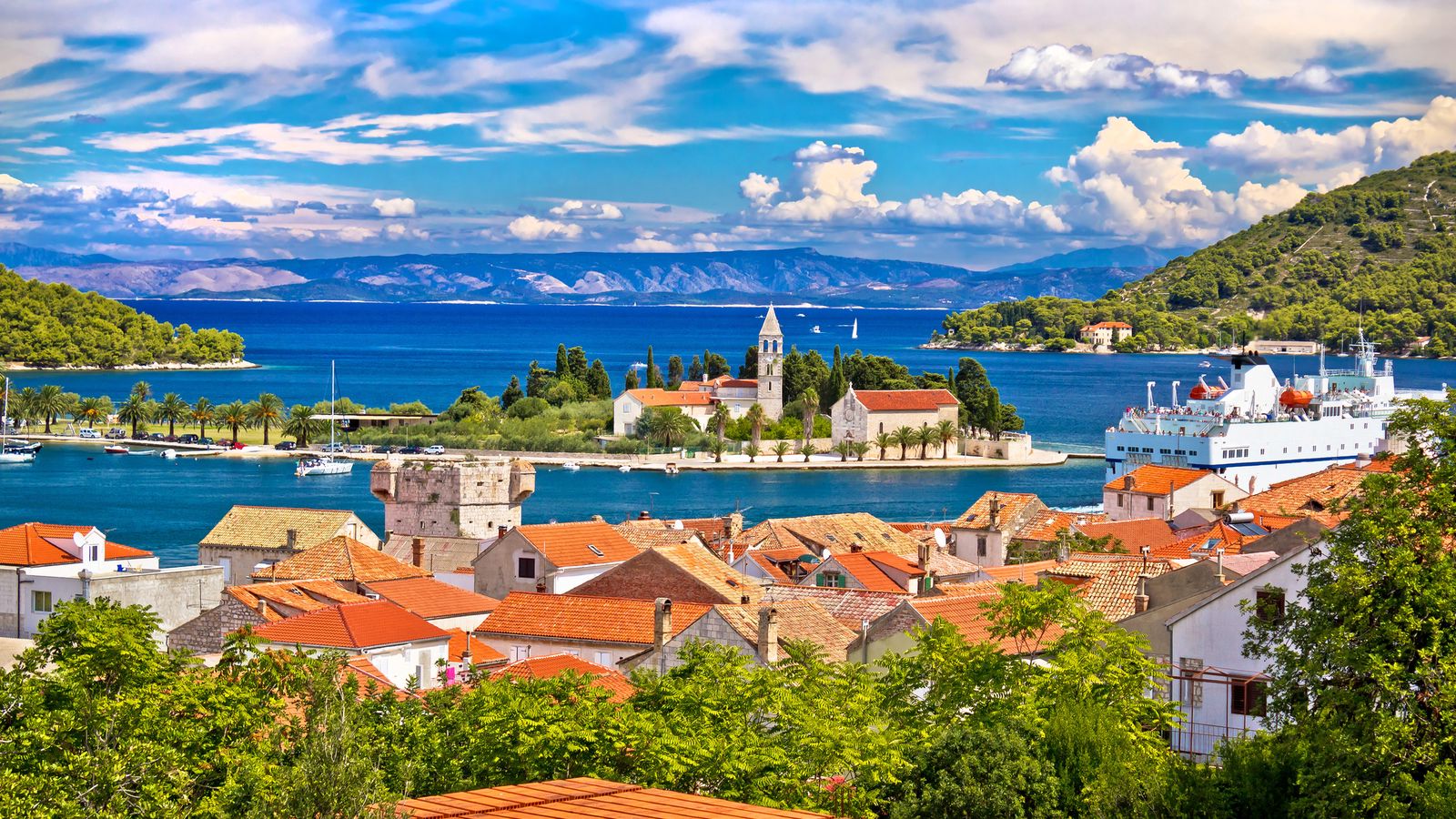
Vis is the remotest of the major Dalmatian islands, and it shows. The island only opened to foreign visitors in 1989 (it was a Yugoslav Navy base) and still has a quieter, more authentic character than Hvar. You have two main options: Vis Town on the northeast coast, which has a lovely bay, excellent restaurants including the famous Pojoda, and a small ACI marina; or Komiža on the western side, a compact fishing village that feels genuinely untouched and is the jumping-off point for the Blue Cave on Biševo Island.
Spend two nights on Vis if your itinerary allows — the island rewards slower travel. Day-trip by water taxi to the Blue Cave (book ahead; the morning slots sell out fast), explore the abandoned Yugoslav tunnels, and eat as well as you will anywhere on this trip.
Day 4: Vis — Exploration Day
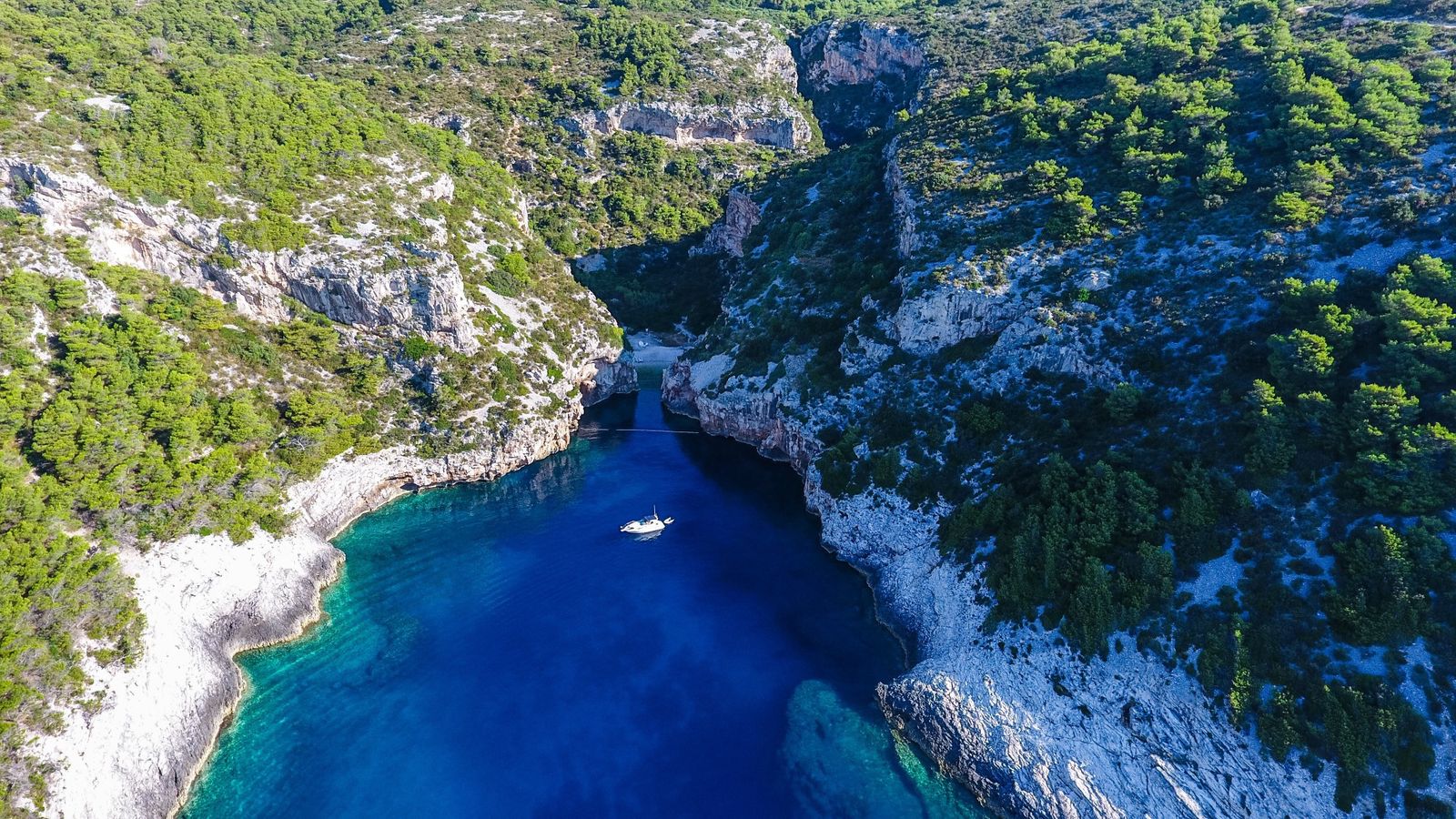
Devote this day to the waters around Vis. The Green Cave (Zelena špilja) on Ravnik Island is less visited than the Blue Cave and equally magical — the entrance is only possible by dinghy or swimming, and the light inside is extraordinary. Stiniva Cove, accessible only by sea (or a steep hiking trail), is one of the most photographed beaches in Croatia: a narrow slot in the cliffs opening into a perfect pebble bay. Anchor outside and swim in — the holding is good on sand.
If you have time, the small island of Biševo is easily reachable for those who haven't yet made it to the Blue Cave. Return to Komiža or Vis Town for the night. This is an ideal recovery day before the longer passage ahead.
Day 5: Vis to Kornati National Park (via Šibenik or direct)
This is the longest passage of the itinerary — roughly 45–55 nautical miles to reach the southern Kornati from Vis. Depart early (6–7am) to make the most of the day. You'll pass through the Splitska Vrata (Split Gate) and head northwest along the coast before turning into the Kornati channel.
Alternatively, if the distance feels ambitious for your group, break it into two legs: stop at Primošten (a beautiful old town on a tiny island connected to the mainland by a causeway) or Šibenik (a UNESCO-listed medieval city with a remarkable 15th-century cathedral) for the night, and continue into the Kornati the following morning.
The Kornati National Park requires a permit — purchased either in advance online or from rangers on the water. Keep your receipt. Some park rangers have been known to accept a permit from the previous day without requiring a new payment — particularly if you're leaving the park that morning. Show your receipt politely; don't push it if they insist on a new one, but it's absolutely worth trying. The rangers themselves often acknowledge the fee structure is steep for a one-night stop.
Day 6: Kornati Islands
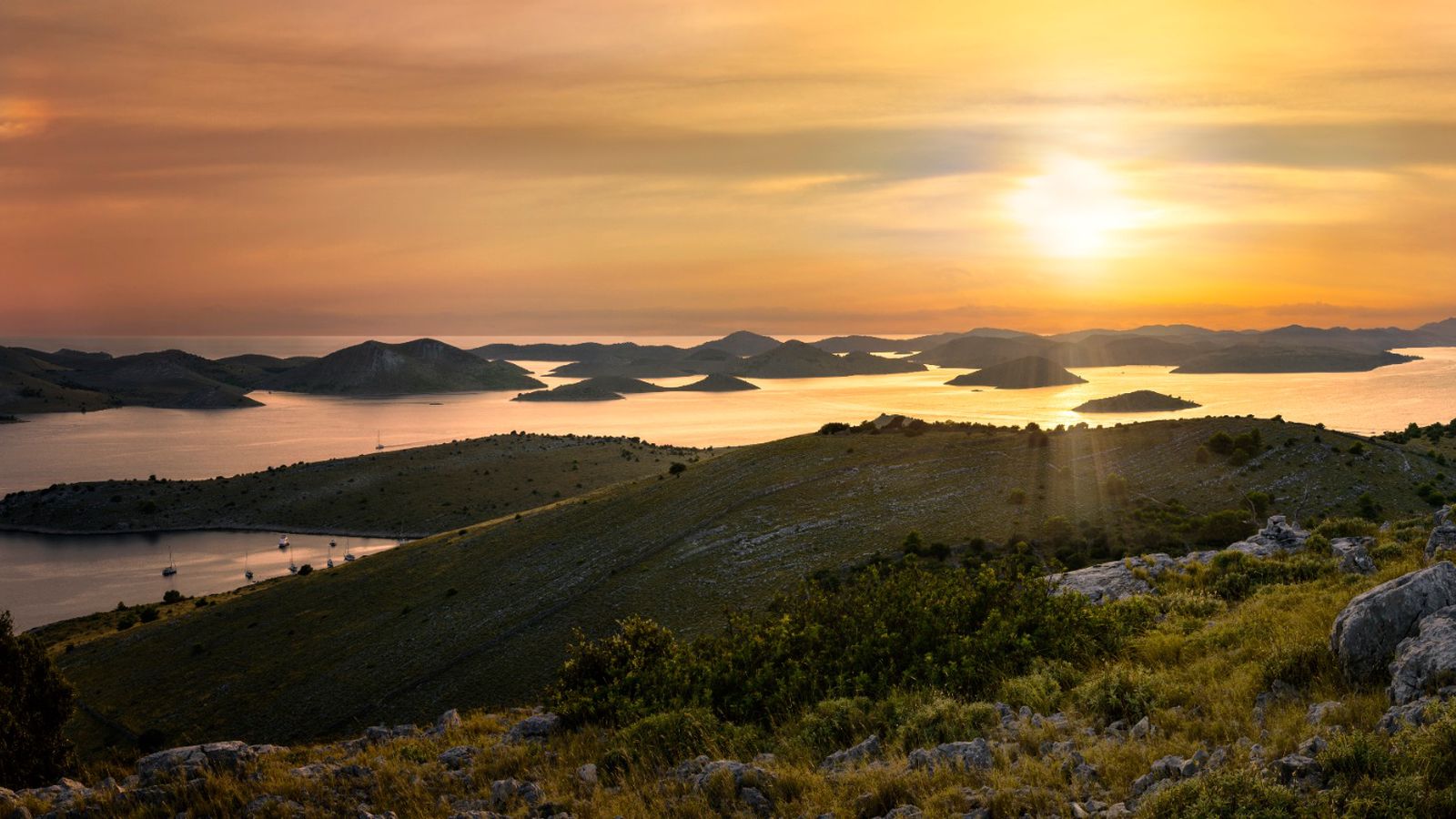
The Kornati is unlike anything else on the Croatian coast. These are bare, white limestone islands — almost no vegetation, almost no buildings, almost no permanent residents — rising straight out of impossibly clear water. The landscape feels prehistoric. The southern and outer edges of the park (the "crown" islands) have dramatic vertical cliffs dropping straight into the sea.
Anchor in one of the park bays — Kravljačica, Lavsa, or Strižnja are all beautiful — and spend the day swimming, snorkeling, and simply existing. Konoba boats visit many of the anchorages and sell grilled fish and cold beer directly from their decks, which is either wonderfully convenient or dangerously tempting depending on your willpower. The Kornati is the moment most sailors look back on as the highlight of the week.
Day 7: Kornati to Šibenik or Return to Split
Your final sailing day should account for the return to Split (roughly 50–60 nautical miles from the northern Kornati) or, if you've arranged a one-way charter, the handback at ACI Šibenik or ACI Rogoznica. Boats are typically due back by 9am on the final morning, so a final-night marina berth in Split or close to it is strongly advised — don't try to sail back on the morning of handover.
If time allows, Šibenik makes an excellent final port. The St. James Cathedral is one of the finest Renaissance buildings in Croatia, and the old town is far less crowded than Split or Hvar. It's a lovely note on which to end a week afloat.
Key Islands and Stops at a Glance
Solta
Quiet, local, and completely overshadowed by its famous neighbors. Solta is a genuine Dalmatian island where olive oil production, not tourism, is the primary industry. Maslinica and Rogac are both worth a stop. Use it as a first-night escape from Split and you'll have the anchorage largely to yourself.
Hvar
The most glamorous stop on the coast. Hvar Town's UNESCO-listed old town, fortress views, and vivid nightlife make it unmissable, but plan your mooring carefully. The Pakleni Islands (Paklinski otoci) just west of Hvar Town offer beautiful anchorages and are a short dinghy ride from the action — anchor at Palmižana for cocktails at the Robinson-style beach bar.
Vis
The soul of the Dalmatian islands. Authentic, unhurried, and blessed with excellent food and wine. Vis wines — particularly Vugava white — are produced in tiny quantities and rarely exported. Drink them here. The Blue Cave and Green Cave make Vis a bucket-list destination; the fortress-topped hills and Roman ruins give it depth beyond its beaches.
Kornati National Park
A UNESCO-recognized nature park and one of the densest island clusters in the Mediterranean. The Kornati rewards those willing to cover the distance. Remote, stark, and staggeringly beautiful. Budget for the park fee (around 150–200 HRK per person per day at the time of writing; always verify current rates) and keep your receipt.
Šibenik and the Krka River
Often skipped in favour of the islands, Šibenik is a genuine gem. Its St. James Cathedral (UNESCO) dates to the 15th century and is technically extraordinary — built entirely from stone without mortar or wood. The nearby Krka National Park (reachable by boat or taxi) has a series of stunning waterfalls. Note that swimming in Krka near the falls is now prohibited; check current park rules before visiting.
Mooring and Marina Tips
Croatia has an excellent marina infrastructure through the ACI chain (Adriatic Croatia International Club), which operates 22 marinas along the coast. ACI marinas offer reliable facilities — showers, electricity, Wi-Fi, security — and can be booked in advance through their app or website, which is strongly recommended in peak season. Prices vary but expect to pay €40–€90 per night for a 40ft yacht in summer, depending on the marina and season.
Outside of ACI marinas, you'll find a mix of town quay mooring (usually with a local tender offering stern-to lines and collecting a fee), private marinas, and anchorages. Anchoring is free but requires that you do not occupy a designated mooring field without paying the buoy fee. Mooring buoys in popular bays (Pakleni Islands, Kornati anchorages) are managed by local operators and typically cost €15–€30 per night.
Inside the Kornati National Park, anchoring on rocky or posidonia seagrass beds is prohibited — use designated anchorages or buoys. The park rangers take this seriously and fines are real. Always use a bow anchor and stern line to a fixed point if anchoring stern-to in a cove.
Mediterranean mooring (stern-to or bow-to quay) is standard throughout Croatia. If you're not practiced at it, the first attempt can be stressful — but marinas typically have a marinero on the dock to take your lines, and other sailors are generally helpful and generous with guidance.
Cost Expectations
The Dalmatian Coast is not a budget destination, particularly in July and August. That said, costs are considerably lower than equivalent sailing in France, Italy, or the Greek Cyclades. Here is a realistic breakdown for a group of 6–8 people on a bareboat charter for one week:
Boat charter: A 40–45ft sailing yacht (comfortably sleeping 6) costs approximately €2,500–€4,500 per week in peak season, excluding extras. Add 30–50% for a skippered charter.
Fuel: Budget €100–€200 for the week depending on motoring vs. sailing. Diesel at Croatian marinas is priced comparably to Western Europe.
Marina fees: If you stay in ACI marinas every night, budget €350–€600 for the week. A mix of marinas and anchorages (with mooring buoys) reduces this significantly.
Food and drink: Provisioning for the boat for a week (breakfasts, lunches, some dinners on board) costs approximately €150–€250 for 6 people. Eating out at a good konoba, expect to pay €20–€35 per person for a full dinner with wine — very reasonable by Western European standards.
National park fees: Kornati requires a per-person entry fee; Krka has a separate fee. Budget approximately €30–€50 per person for park fees during the week.
Activities: Blue Cave tours run €25–€35 per person. Boat taxis, scooter rentals on islands, and excursions add up — budget €50–€100 per person for extras.
All in, a realistic per-person cost (excluding the charter boat itself) for a week on the Dalmatian Coast is €500–€900, depending on how often you eat out and which marinas you choose. Split the charter cost across the group and a week of world-class sailing becomes remarkably good value.
Insider Tips
Get Ahead of the Crowd on Day 1
Saturday is changeover day for almost every charter company in Split, and it shows. The ACI Marina fills up, the supermarkets are chaotic, and popular first-night anchorages get crowded by mid-afternoon. The single most effective thing you can do to improve your week is to leave Split early on Day 1 — even if that means a simplified provisioning run and eating out for the first dinner. An extra 2 hours of sailing on the first afternoon puts you meaningfully ahead of the Saturday wave. Alternatively, some charter companies offer early check-in (sometimes for a fee); if that option is available, take it. You can do a full provisioning the evening before or early morning on Day 1 and be the first boat out of the harbour.
Keep Your National Park Receipt
When you enter the Kornati National Park, you'll pay a per-person entry fee and receive a receipt. Hold onto it. If a park ranger checks your papers the following morning and you're still within the park boundary heading out, some rangers are sympathetic to displaying the previous day's receipt without requiring a new payment — particularly if it's early in the morning and you're clearly departing. This is not a guarantee, and you should never argue or pressure a ranger who wants full payment. But it is worth having the receipt visible and presented politely. The rangers themselves sometimes acknowledge that the fee structure is a blunt instrument for a 12-hour stop.
Eat Where the Fishing Boats Are Moored
The most reliable way to find a good konoba on any island is to walk away from the main tourist quay and look for where the local fishing boats tie up. The restaurants here are less likely to have laminated menus with photographs, and considerably more likely to serve whatever was caught that morning. Ask what the catch of the day is rather than ordering from the menu. In Vis, Komiža's back streets reward this kind of wandering. In the Kornati, the floating konoba boats that visit anchorages in summer serve incredibly fresh grilled fish — do not pass them up.
Frequently asked questions
How much does the Kornati National Park fee cost and how do you pay it?
The Kornati National Park fee is a per-person daily charge, typically around 150–200 HRK (approximately €20–€28) per person per day, though prices are updated seasonally. Always check the current rate on the Kornati National Park official website before your trip. You'll receive a receipt when you pay — keep it, as it can be useful if a ranger checks your papers while you're still departing the park the following morning.
Where should I moor in Hvar Town during peak season?
Both ACI Marina Hvar and mooring buoys in the Pakleni Islands (Paklinski otoci) are reliable options. The town quay in Hvar is highly sought-after in July and August and fills up fast — arriving by 3–4pm gives you the best chance of a spot. Booking ACI Marina Hvar in advance through their app is strongly recommended in peak season. The Pakleni Islands offer beautiful anchorages with buoys just a 10-minute dinghy ride from Hvar Town.
What are the main winds to know about when sailing the Dalmatian Coast?
The Maestral (northwesterly sea breeze) is the dominant summer wind and is ideal for sailing — it builds through the morning and peaks at 12–20 knots in the early afternoon before dying by evening. The Bura (northeasterly) and Jugo (southeasterly) are the winds to watch; both can arrive quickly and build to 30+ knots. Check the Croatian Meteorological Service forecast (meteoadriatic.net) every morning during your charter.
How do you visit the Blue Cave near Vis and when should you go?
The Blue Cave (Modra špilja) is on the island of Biševo, near Vis, and is one of the most visited natural attractions in Croatia. Entry is only possible by small tender boat through a low entrance, which is why the cave glows with a brilliant blue light. Official tour boats from Komiža run morning trips; morning slots (before 11am) have the best light. Book your spot the evening before through a Komiža agency or your charter base, as spaces sell out quickly in summer.
Is the Dalmatian Coast suitable for beginner sailors or do you need experience?
The Dalmatian Coast from Split is excellent for beginner and intermediate sailors. Day passages are short (typically 15–30 nautical miles), the channels are well-marked, and ACI marinas provide safe overnight berths throughout the islands. You will need a qualifying certificate (RYA Day Skipper or equivalent) to charter bareboat. If you don't have a qualification, hiring a professional skipper through your charter company is a straightforward and popular option.
What is the best time of year to sail the Dalmatian Coast from Split?
June and September offer the best balance of sailing conditions, fewer crowds, and lower prices. The Maestral wind is more consistent and stronger than in July–August, making for better actual sailing rather than motoring. Sea temperatures are still very comfortable (22–24°C in June, 25°C+ in September). July and August are the most popular months with the warmest water but also the most crowded anchorages, highest charter rates, and lightest winds.


