Sailing the Cyclades: Routes, Tips, and What to Expect
Updated
The Cyclades are everything the postcards promise — and a bit more complicated than they look. Here's how to sail them intelligently, from picking the right starting port to understanding why Santorini's famous caldera is one of the trickiest anchorages in the Aegean.
On this page

The Cyclades remain one of the world's great sailing destinations — and not just because the postcards look that way. This is a place where you can anchor off a whitewashed village in the morning, find a deserted cove by afternoon, and eat grilled octopus on a waterfront terrace by sunset, all without moving more than 15 nautical miles. But the Cyclades also have a reputation that deserves a closer look, because not every island in this sprawling archipelago is created equal.
This guide is written for sailors who want to understand what the Cyclades actually feel like from the water, which islands are worth the stop and which ones are better left to the ferry crowd, and how to build a week-long itinerary that gives you the best of it.
What Makes the Cyclades Unique for Sailors
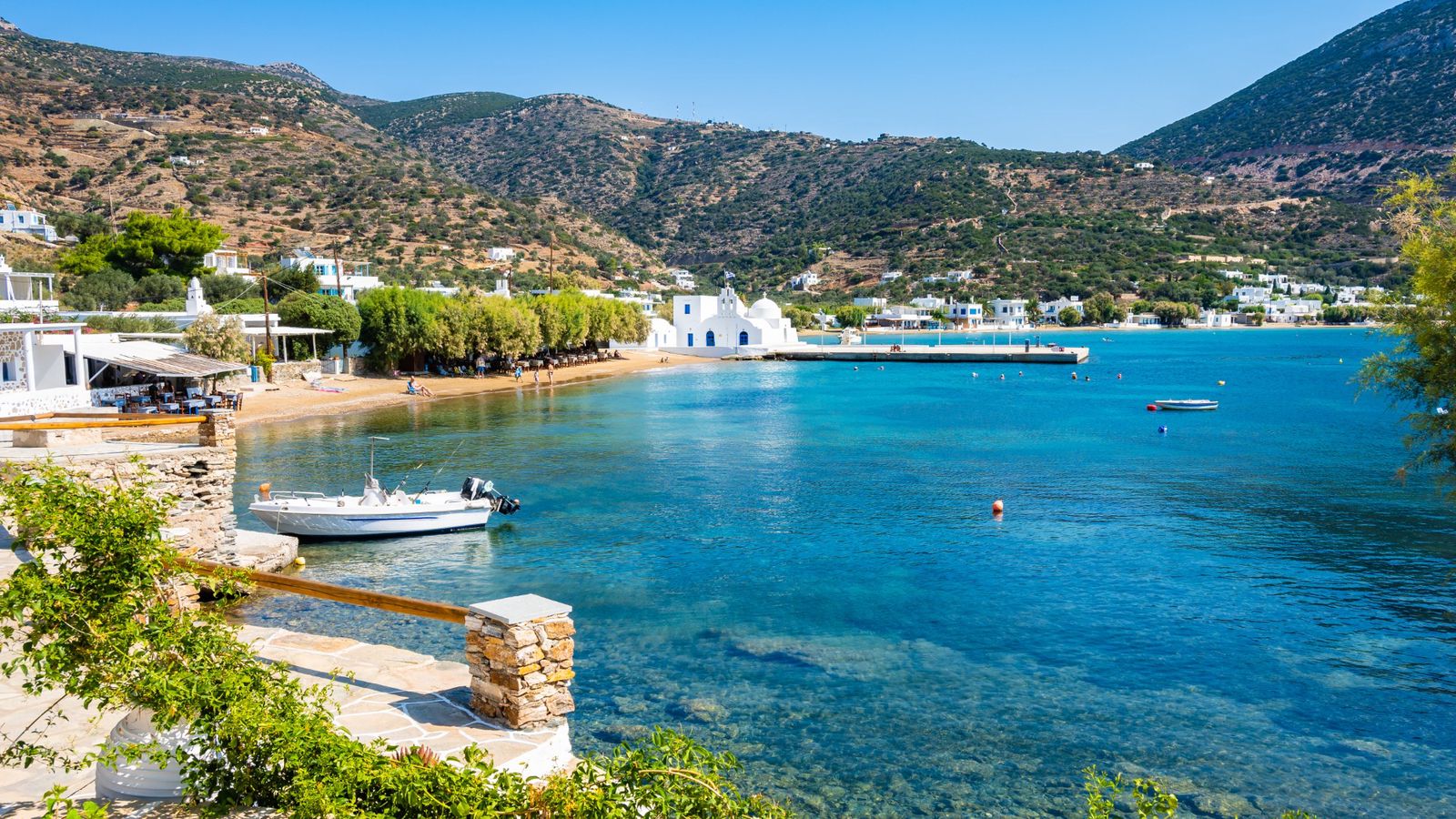
The Cyclades sit roughly in the center of the Aegean Sea, spread across an area of about 8,000 square kilometers in a rough circle — the name itself comes from the Greek word for circle, kyklos. There are 220 islands in the group, though only about 24 are permanently inhabited, and of those, fewer than a dozen are what most sailors would recognize as destinations. The gaps between them rarely exceed 25 to 30 nautical miles, which means you're almost always within day-sail reach of your next stop, even in modest conditions.
What sets the Cyclades apart from, say, the Ionian Islands or the Turkish Aegean is the combination of dramatic volcanic geology, exceptional summer wind consistency, a genuine maritime culture, and enough variety between islands that a 10-day trip can feel like visiting several different countries. The islands range from the cosmopolitan intensity of Mykonos and the volcanic drama of Santorini to the near-empty simplicity of Iraklia or Schinoussa, where the entire resident population could fit in a village taverna.
Sailing Conditions: Wind, Waves, and Difficulty
The Meltemi: The Wind That Defines Summer Sailing Here
Between late June and early September, the Cyclades are dominated by the Meltemi, a dry northerly or north-northwesterly wind that blows with remarkable consistency across the Aegean. This is a gift for passages heading south or east, and a genuine challenge heading north or west. The Meltemi typically builds through the morning and reaches its peak in the afternoon, often blowing Force 4 to 6 — 11 to 27 knots — with gusts to Force 7 or 8 in exposed channels during its stronger phases.
July and August bring the strongest Meltemi conditions. Force 5 to 6 afternoons are entirely normal, and the seas that build in open channels can be short, steep, and uncomfortable even if the wind speed itself isn't alarming. The Meltemi is a dry, warm wind and rarely brings rain or sudden violent squalls the way Mediterranean summer storms can in the western basins, but it demands planning. Going north in July against a strong Meltemi in a moderate cruising yacht is hard work — plan your itinerary to use it rather than fight it.
In May, June, and October, conditions are considerably gentler and more variable. This shoulder season is often the best time for less experienced crews, offering lighter and more predictable winds without the peak-season crowds.
Channel Effects and Local Hazards
The channels between islands accelerate and funnel the Meltemi, and the worst are well documented. The stretch between Paros and Naxos can kick up a nasty chop even in moderate conditions. The passage south toward Ios and Santorini, particularly the channel between Ios and Sikinos, is exposed and regularly unpleasant when the Meltemi is up. Keep an eye on your weather app, but also learn to read the sky — the Meltemi often announces itself with a particular clarity of light and a darkening of the water to the north.
Who Is the Cyclades Right For?
The Cyclades are suited to competent sailors who have offshore or coastal passage experience and are comfortable handling a yacht in 20 to 30 knots. That doesn't mean first-timers can't enjoy them — sailing school holidays and flotillas are popular here specifically because the conditions are reliable and the passages short — but it does mean you shouldn't arrive in high summer expecting Ionian-style gentle breezes. Budget extra time, plan anchorages with good shelter from the north, and if you're nervous about the Meltemi, book a May or October departure.
The Best Starting Points for a Cyclades Sailing Trip
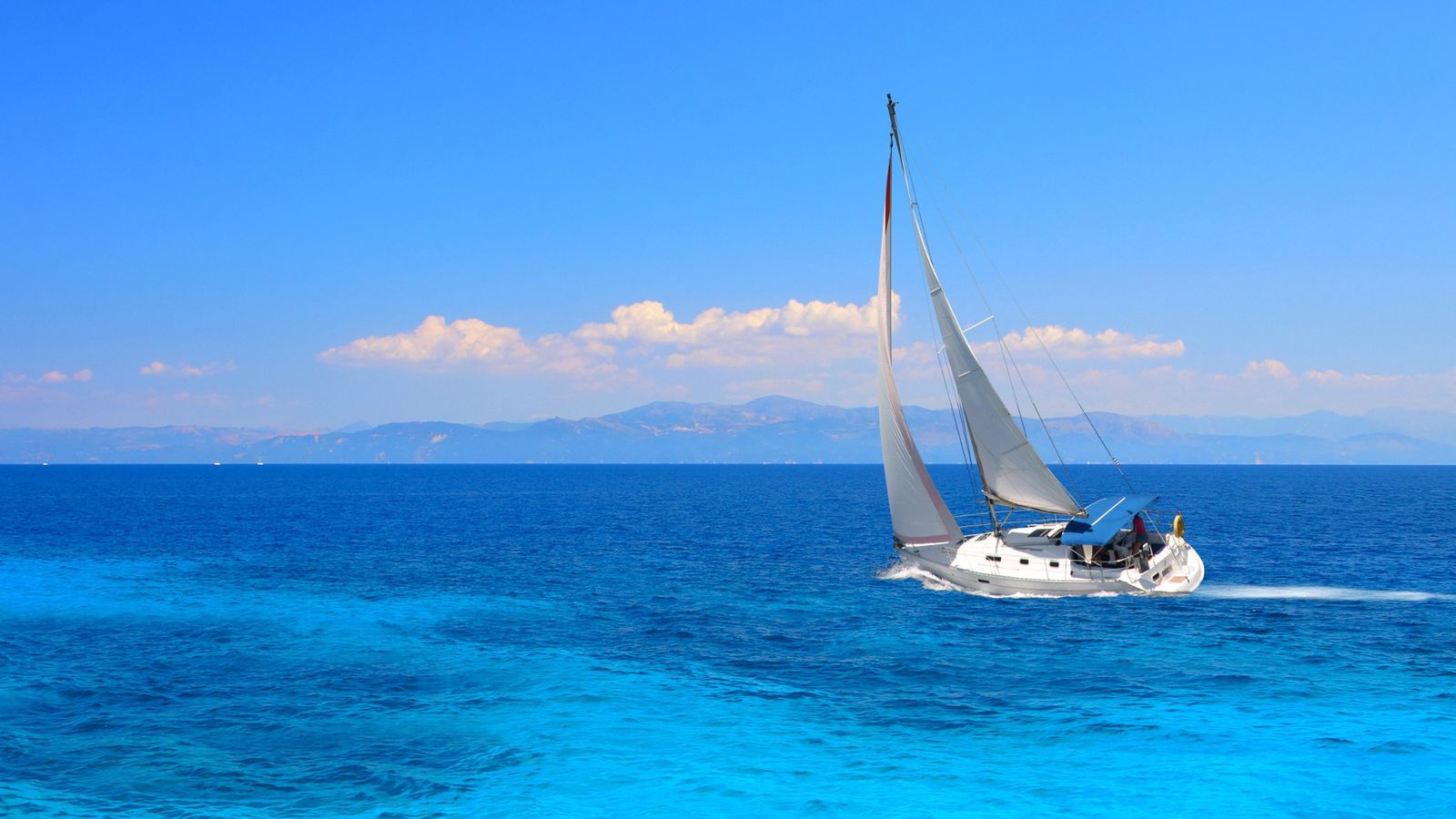
Choosing your base port matters enormously here because the Cyclades are spread out, and the prevailing Meltemi means you'll often be sailing south and east more easily than you'll return north. Your starting point shapes your whole itinerary.
Athens (Lavrion or Alimos Marina)
Lavrion, about 60km southeast of central Athens, is the most practical charter base for sailors planning to head straight into the Cyclades. It sits at the southern tip of Attica and puts you only about 40 nautical miles from Kea or Kythnos — a comfortable first day's sail. Alimos (also called Kalamaki), closer to central Athens, is an alternative with better amenities and easier access to the city for flights, but it adds a few miles to the first leg. Both are well-served charter companies. If you're flying into Athens and heading straight to the boat, Lavrion is the more seamless choice.
Mykonos
Starting in Mykonos works well if you want to head south through the heart of the Cyclades — down toward Paros, Naxos, the Small Cyclades, and Amorgos — and the Meltemi will largely be helping you. Mykonos Town marina can be tight and expensive in peak season, and the holding in the anchorage is variable. But as a starting point it gives you a sense of the Cyclades at their most glamorous before you escape toward quieter waters.
Syros
Ermoupoli in Syros is one of the most underrated starting points in the Aegean. It has a full-service marina, excellent provisioning, good haul-out facilities, and a genuinely beautiful neoclassical port town that has nothing in common with the typical tourist-island aesthetic. Syros is the administrative capital of the Cyclades, which means it functions as a real city rather than a resort, and the practical infrastructure reflects that. It's centrally located, making it easy to head in multiple directions depending on conditions.
Paros (Parikia or Naoussa)
Paros is geographically central and an excellent mid-trip resupply stop, but it also works well as a charter base for sailors who want to start in the heart of the archipelago. Naoussa in the north of Paros is a particularly charming and well-protected harbor. Paros also gives you quick access to both Naxos and the Small Cyclades to the south, as well as the less-visited western Cyclades to the northwest.
Mykonos: What the Party Island Is Actually Like from the Water
Mykonos has a reputation that precedes it by about 20 years of magazine covers and social media, and from a sailing perspective, the reality is both better and worse than you might expect.
The town is genuinely beautiful. The core of Mykonos Town — Little Venice, the windmills, the narrow lanes of the Kastro — is one of the most photogenic waterfronts in the Aegean, and arriving by boat in the early morning before the day-tripper ferries arrive is the best way to see it. The anchorage off town is exposed to the north and northwest and can become very rolly when the Meltemi is up. The new marina at Tourlos, about 1 nautical mile north of town, is better protected and has improved significantly in recent years, though berth fees in peak season are among the highest in Greece.
What Mykonos is not well suited to is lingering. In July and August, the island is at a full boil — helicopter transfers, mega-yachts on the town quay, beach clubs thumping at 200 beats per minute until 4am. This energy is exactly what many people want, and if that's you, enjoy it. But if you're looking for a quiet evening at anchor with a cold beer and a book, Mykonos in August is not your stop. One night is usually right for most sailing crews — see the town, have a decent dinner at one of the genuinely good restaurants away from the waterfront tourist drag, and move on south the next morning.
The contrast with neighboring Delos is worth noting. Delos, the uninhabited archaeological island just 2 nautical miles southwest of Mykonos, is one of the most significant ancient sites in the Greek world and is easily visited by dinghy or water taxi. You cannot stay overnight — it's a daylight-only protected site — but a morning visit followed by an afternoon departure makes for an excellent Mykonos day without engaging with the club scene at all.
The Quieter Cyclades: Where the Real Sailing Happens
The islands that most sailors remember longest from a Cyclades trip are rarely the famous names. They are the Small Cyclades — Iraklia, Schinoussa, Koufonisia, Donoussa — and the less-visited outer islands like Folegandros, Sikinos, and Amorgos. These are the places where the Cyclades rewards the sailor specifically because you can reach them in ways the ferry and day-tripper crowds cannot.
Koufonisia, for example, is a tiny island (you can walk across the main island in about 30 minutes) with a handful of very good tavernas, remarkably clear turquoise water in protected coves, and a social scene that runs on wine and sunset rather than bottle service. It's become more popular in recent years but remains manageable. Folegandros, southwest of Ios, has a clifftop chora — the main village — that is widely considered one of the most beautiful in the Cyclades, and the main harbor of Karavostasis is small but usable in good conditions. Amorgos, at the eastern edge of the group, is rugged and dramatic, with the famous Hozoviotissa monastery clinging to a vertical cliff above the sea.
Why You Should Think Carefully Before Sailing to Santorini
Santorini is the most famous of the Cyclades and looks, from any image you've ever seen of it, like the obvious sailing destination. The caldera — the submerged volcanic crater — is one of the most dramatic anchorages in the Mediterranean: a nearly circular lagoon ringed by 300-meter volcanic cliffs, with Fira and Oia perched on the rim above you. Arriving by boat, in theory, puts you at the heart of it in a way no hotel guest can experience.
In practice, the caldera anchorage is one of the most challenging and frustrating in the Aegean for sailors, and it deserves serious consideration before you commit to it as a stop.
The Holding Problem
The bottom of the caldera is deep, very deep, and the holding is notoriously poor. Depths at anchor run to 30, 40, even 50 meters in many areas, which means you need enormous amounts of chain out to achieve any reasonable scope — and even then, the volcanic sand and mud composition makes holding unreliable. Horror stories of anchors dragging in the caldera, particularly when the afternoon Meltemi funnels and accelerates over the caldera rim, are common. There is a small number of mooring buoys managed by local operators, but in July and August, competition for these buoys is intense, they can be expensive, and they fill before noon.
The Traffic Problem
Santorini is one of the busiest cruise ship destinations in the world, and the caldera anchorage reflects this. Large cruise tenders, tourist ferry boats, and countless day-charter catamarans use the same water you're anchored in. The wake traffic alone is a source of constant discomfort at anchor, and in peak season the caldera has a noise, crowd, and exhaust-fume atmosphere that is a very long way from the tranquil sailing anchorage the view from above suggests.
So Should You Skip Santorini Entirely?
The short answer is: yes. The caldera is a spectacular place to look at and a miserable place to leave your boat — deep water, poor holding, accelerating Meltemi gusts, and relentless tourist traffic mean you'll spend the visit watching your anchor instead of the view. Santorini makes far more sense as a land destination: base yourself ashore or come over on the ferry, and book a day trip or sunset cruise for the evening you want to see Oia light up. Let someone else's skipper deal with the caldera while you enjoy the view.
Suggested 7-Day Sailing Itinerary: Southern Cyclades Loop from Paros
This itinerary starts and ends in Paros, making it ideal for charter boats based there, and uses the Meltemi intelligently by getting the windward work done first — north to Mykonos and Tinos while the crew is fresh — before turning and running south and east back toward base. Total distance is approximately 150 nautical miles depending on detours.
Day 1: Paros (Naoussa) to Mykonos — 22nm
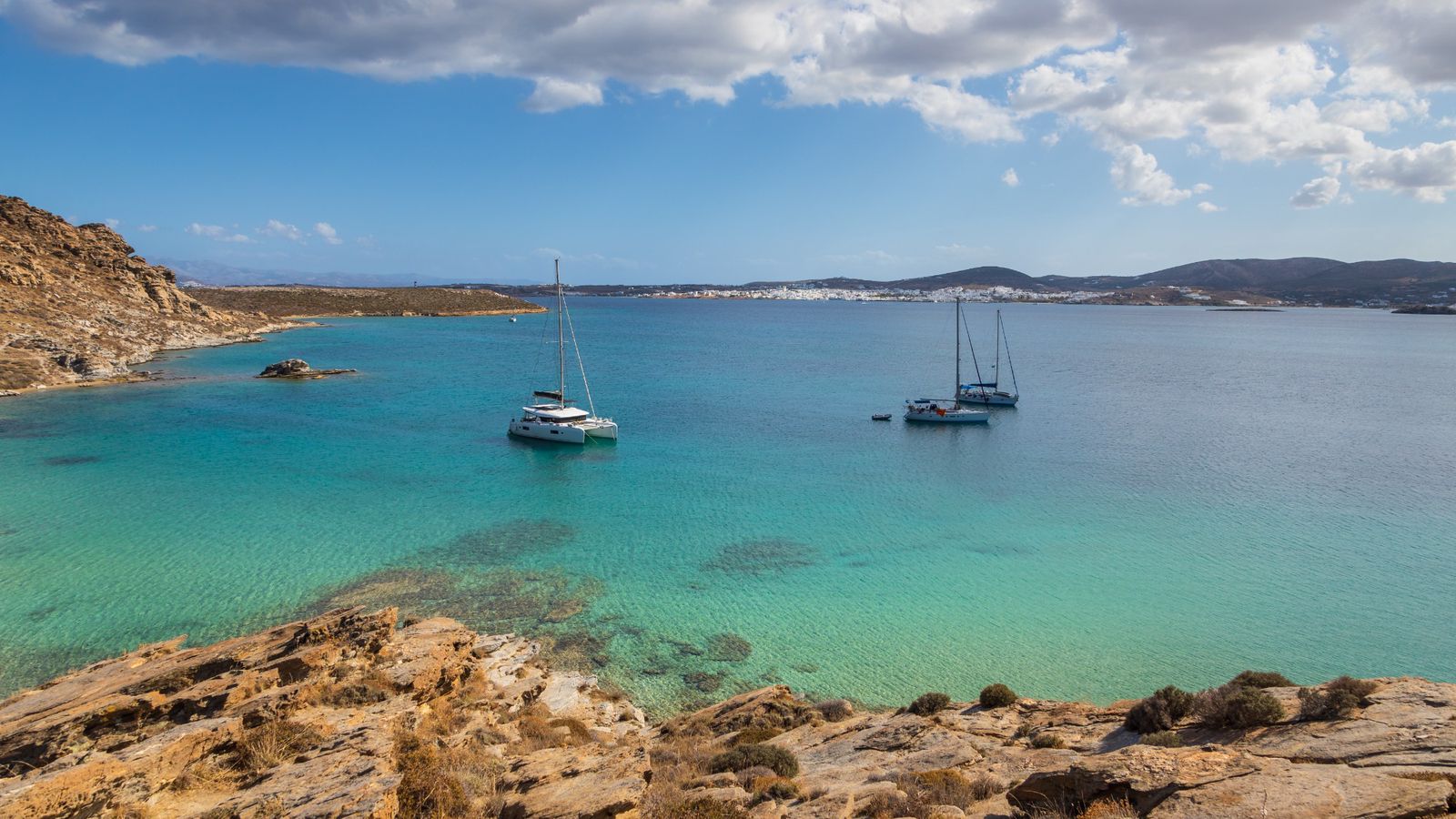
The hardest leg of the week, deliberately taken first. Sail northeast from Naoussa into the Meltemi while the crew is fresh and you have the whole week in hand to sit out a blow if it pipes up. It's a beat or a close reach depending on the day, but it's short, and it banks your northing early. Mykonos needs no introduction — book a marina berth ahead in peak season, because it fills, and expect the harbour to be busy and the prices to match. Get in, get tied up, and let the crew loose on the town.
Day 2: Mykonos to Tinos — 12nm
A short hop to the northern apex of the loop, and the turning point of the trip — from here on, the Meltemi is behind you or on the beam for the rest of the week. Tinos is everything Mykonos isn't: quiet, devout, and serious about food, with a string of marble-working villages up in the hills and some of the best eating in the Cyclades. The harbour is workable and the waterfront is genuine rather than staged. A good place to slow the pace before the run south.
Day 3: Tinos to Naxos (Town) — 30nm
Now the reward for Day 1. Turn south and run down the chain, optionally detouring to anchor off Delos for a few hours to see the archaeological site (day visits only — overnighting is prohibited). Carry on to Naxos, the largest and most fertile island in the Cyclades. Naxos Town has a good marina and a spectacular castle (the Kastro) rising above the old town, and the provisioning here is exceptional — local cheeses, potatoes, and citrus in the market near the port. Spend the evening in the backstreets below the Kastro.
Day 4: Naxos to Koufonisia — 18nm
An easy downwind hop southeast into the Small Cyclades and their shallow turquoise water. Anchor in the main harbour off Chora or in one of the small bays to the east. Swim, snorkel, eat grilled fish, sleep well. This is the Cyclades at their most uncomplicated and charming.
Day 5: Koufonisia to Amorgos (Katapola) — 22nm
A comfortable reach east to Amorgos, the easternmost of the main Cyclades and the far point of the loop. Katapola, the main port on the west coast, has good anchoring and a pretty waterfront. If you've the legs for it, take a taxi or scooter up to the Hozoviotissa monastery built into the cliff face above the sea — the views down onto your boat from 300 metres up are something you won't forget. The island has an austere beauty entirely different from the more polished tourist islands.
Day 6: Amorgos to Naxos — 22nm
Turn back west and reach across to Naxos with the Meltemi on the beam — a fast, satisfying sail rather than a slog. Pick a different anchorage or harbour from Day 3 if you fancy a change, or simply settle in and reprovision for the trip home. This repositioning leg is what keeps your final day easy.
Day 7: Naxos to Paros — 15nm
The shortest leg of the week and a deliberately gentle finish. The Paros–Naxos channel is a straightforward reach rather than a beat — it can be choppy in a fresh Meltemi, but it's short and you're across in a couple of hours, with no windward slog standing between you and the charter return. Aim to be tied up in Parikia or Naoussa with time to spare before handover.
Cost Expectations
The Cyclades are not a budget destination, and they have become noticeably more expensive since 2020 as demand has surged and the tourist infrastructure has adapted accordingly. As a rough orientation for summer 2024 and 2025 conditions:
Charter costs for a 40-foot sailing yacht in peak season (July–August) run approximately €2,500 to €4,500 per week bareboat, depending on the boat's age, condition, and equipment. Shoulder season (May–June, September–October) brings this down by 20 to 35 percent and also gives you better sailing conditions. Skippers and hostesses, if required, add to this.
Marina and quay fees in the Cyclades range from free or token amounts (€5 to €10) in smaller island harbors to €40 to €100 per night in Mykonos or Vlychada Santorini in peak season. Budget approximately €20 to €40 per night on average across a week.
Fuel is approximately €1.60 to €1.80 per liter for diesel as of recent seasons, and a typical week of sailing might use 80 to 120 liters depending on motoring time.
Eating ashore runs a wide range. A simple harbourside taverna lunch — Greek salad, grilled fish, carafe of local wine — costs around €15 to €25 per person on the less touristic islands. On Mykonos or in Santorini's caldera-view restaurants, the same meal may cost three to four times as much. Provisioning from supermarkets and local markets, as sailors have always known, dramatically reduces this.
Insider Tips from Experienced Cyclades Sailors
Tip 1: Use the Meltemi, don't fight it. It blows from the north, so the windward work is always the leg home — get your northing done first, while the crew is fresh and you have days in hand to sit out a blow. Knock out the northern islands early, then run south and back to base. Do it the other way around and your final day becomes a fuel-burning beat north in a July Meltemi.
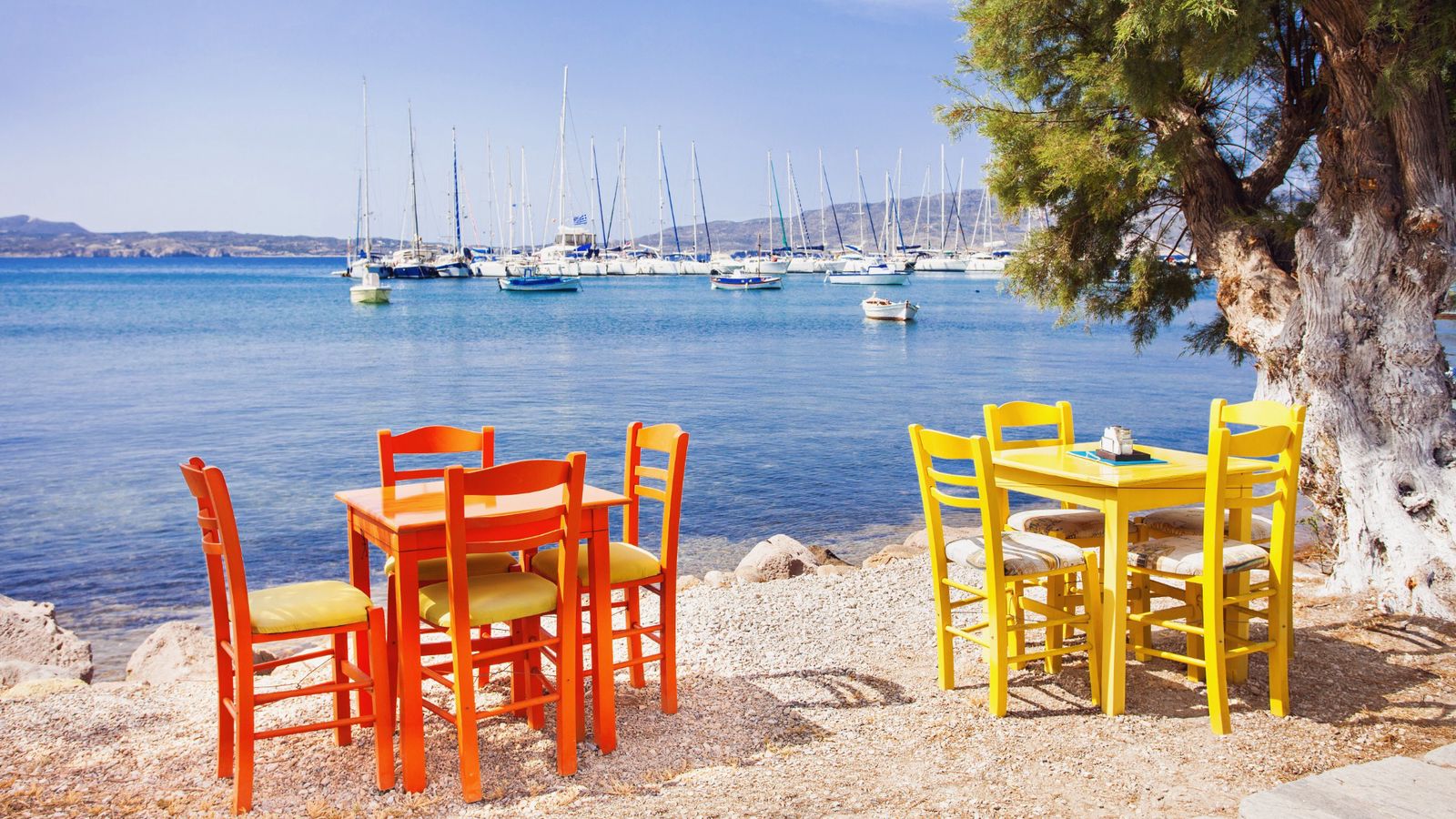
Tip 2: The best stops are the ones the ferries can't easily reach. The ferry network connects the major Cyclades islands efficiently and cheaply, which is wonderful for everyone except the sailor looking for somewhere uncrowded. The small harbors — Klima on Milos, the southeastern bays of Naxos, the back side of Sifnos, the various anchorages of Amorgos away from Katapola — are places where your ability to anchor and explore without depending on a ferry schedule is a genuine advantage. Lean into it.
Frequently asked questions
What is the best starting point for a sailing trip in the Cyclades?
The best starting points for a Cyclades sailing trip are Lavrion (near Athens) for direct access from the mainland, Paros for a central base in the heart of the archipelago, and Syros for excellent marina facilities and provisioning. Mykonos works well if you plan to head south with the Meltemi behind you. Your choice should reflect your intended itinerary direction, since the prevailing northerly Meltemi wind makes southbound passages much easier than northbound ones.
Why is sailing to Santorini so difficult?
Sailing into the Santorini caldera is challenging due to extremely deep water (30–50 meters in many areas), poor holding for anchors, intense Meltemi gusts funneling over the caldera rim, and heavy boat traffic from cruise tenders and tour boats. Mooring buoys exist but fill quickly in peak season. It is manageable with good planning — arrive early in the morning, grab a buoy immediately, and leave before noon the following day — but it should not be treated as a casual overnight anchorage.
What is the Meltemi wind and how does it affect sailing in the Cyclades?
The Meltemi is a strong, dry, northerly wind that blows across the Aegean from late June through early September, typically Force 4 to 6 with gusts to Force 7 or 8 in exposed channels. It builds through the morning and peaks in the afternoon. For Cyclades sailors it means southbound and eastbound passages are fast and rewarding, while northbound passages can be hard work. Planning your itinerary to move south first and return north in calmer morning conditions is the most practical strategy.
Is Mykonos worth stopping at on a sailing trip, or should I skip it?
Mykonos is genuinely beautiful and best visited as a one-night stop, arriving by boat in the early morning before day-tripper ferries arrive. In July and August the island is extremely busy, loud, and expensive, with berth fees among the highest in Greece and beach clubs running late into the night. It suits sailors who want one glamorous night before moving on, not those looking for a quiet anchorage. The nearby uninhabited island of Delos, 2 nautical miles away, is worth a daylight-only visit for its remarkable ancient ruins.
Which Cyclades islands are quietest and best for sailing away from the tourist crowds?
The quietest and most rewarding islands for sailors in the Cyclades are the Small Cyclades — particularly Koufonisia, Iraklia, Schinoussa, and Donoussa — along with Folegandros, Sikinos, and Amorgos. These islands have limited ferry connections, which keeps crowds manageable, and they offer excellent anchorages, good local tavernas, and an authentic Cycladic atmosphere that the more famous islands have largely traded away. Folegandros in particular is widely considered one of the most beautiful villages in Greece.
How much does it cost to sail the Cyclades for a week?
Peak season (July–August) bareboat charter costs for a 40-foot yacht in the Cyclades run approximately €2,500 to €4,500 per week, with marina fees averaging €20 to €40 per night across the group (up to €100 in Mykonos or Santorini). Diesel costs around €1.60 to €1.80 per liter. Eating ashore at a local taverna costs €15 to €25 per person on quieter islands, and two to four times more on Mykonos or Santorini. Shoulder season (May–June, September) reduces charter rates by 20 to 35 percent and generally offers better sailing conditions.


