Sailing the Sporades: Routes, Itinerary and What to Expect
Updated
The Sporades are what the Aegean looks like in your imagination — pine-covered islands, absurdly clear water, and reliable summer winds — without the crowds that have overrun better-known Greek destinations. Here is everything you need to plan a week aboard.
On this page

Why the Sporades Should Be on Every Sailor's Bucket List
The Sporades archipelago sits in the northwest Aegean, scattered off the coast of mainland Greece like a handful of green stones tossed into a deep blue sea. Unlike the bone-dry Cyclades to the south, these islands are draped in pine forests that run right down to the shoreline, filling anchorages with the scent of resin and salt. The water is among the clearest in the Mediterranean. The sailing is varied enough to keep experienced crews on their toes while remaining genuinely manageable for intermediate charterers. And the crowds — while present in July and August — never quite reach the intensity of Mykonos or Santorini.
The four main inhabited islands — Skiathos, Skopelos, Alonnisos, and Skyros — each have a distinct personality. Add in a string of uninhabited islets, the protected waters of the National Marine Park of Alonnisos, and reliable summer winds, and you have one of the Mediterranean's most rewarding week-long sailing destinations.
What Makes the Sporades Unique
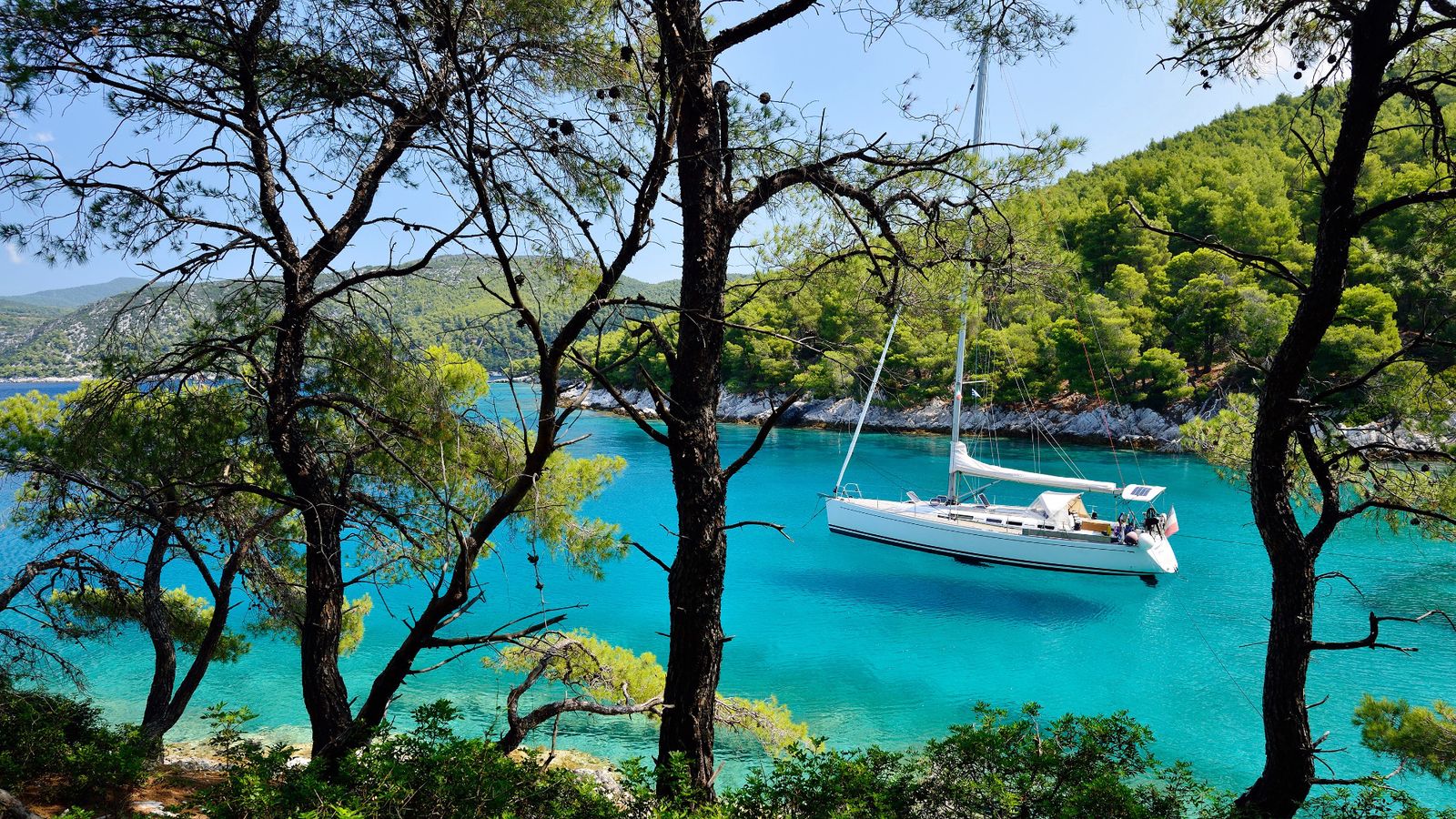
The combination of dense green vegetation and Aegean-blue water is the first thing that stops first-time visitors mid-sentence. These islands belong to a different visual grammar than most Greek sailing grounds. The forests of Aleppo pine, olive, and myrtle hold water through the summer, keeping hillsides lush into September — a striking contrast to the whitewashed, arid landscapes most people picture when they think of Greece.
The National Marine Park of Alonnisos Northern Sporades, established in 1992, is Greece's largest marine protected area and home to the last significant population of Mediterranean monk seals (Monachus monachus). Sailing through it carries a quiet sense of privilege. The park also protects dolphins, loggerhead sea turtles, and some of the cleanest water in the Aegean. There are zone restrictions on anchoring and fishing in certain areas, so it's worth downloading the park's current guidelines before you arrive.
The anchorages here tend to be sheltered, numerous, and varied. You can drop the hook in a pine-ringed cove one night and tie up in a lively harbor taverna the next. The seabed is generally good holding sand and weed, and depths in the main bays are forgiving for charterers still developing their anchoring technique.
Sailing Conditions: Wind, Weather, and Difficulty
The Sporades are governed in summer by the Meltemi, the prevailing northerly wind that sweeps the Aegean from roughly June through September. In the Sporades, the Meltemi is generally less ferocious than in the Cyclades — you can expect Force 3–5 most days, occasionally gusting to Force 6 in exposed passages. This makes for lively, satisfying sailing with good boat speed, without the relentless hammering that characterizes passages between, say, Paros and Santorini in August.
Wind direction is predominantly from the north or northeast, which means passages heading south are typically fast and comfortable, while northbound legs require more tacking or motoring depending on the boat's windward ability and the crew's patience. Plan your itinerary to exploit the downwind direction where possible.
The channel between Skiathos and the mainland, and the open water between Skopelos and Alonnisos, can be choppy when the Meltemi is building. Mornings are nearly always calm — the wind typically fills in between 11:00 and 13:00 and drops again after sunset. Experienced charterers quickly learn to move early, anchor before lunch, and spend the afternoon swimming.
July and August are the windiest and most crowded months. June and September offer softer conditions, less boat traffic, lower marina prices, and water that is still warm enough for hours in the sea. May is increasingly popular with sailors who don't mind occasionally cooler water and want the islands nearly to themselves.
Difficulty Assessment
The Sporades are an excellent choice for intermediate sailors — those with some coastal cruising experience who are ready to move beyond fully sheltered waters but aren't yet looking for serious offshore challenges. The distances between islands are short (rarely more than 15–20 nautical miles), the harbors are straightforward to enter, weather forecasting for the area is reliable, and help is never far away.
Absolute beginners should take a skippered charter or at minimum ensure one crew member has solid experience. The Meltemi can develop quickly and a beam-sea passage in 25–30 knots requires confident boat handling. Experienced blue-water sailors will find the Sporades a pleasurable change of pace — relaxed sailing by their standards, but beautiful and rewarding.
Getting There: Airports, Ferries, and Overland Options
Most charterers fly directly into Skiathos Airport (JSI), which is one of those legendary short-runway airports where the threshold begins just meters from the beach. Seasonal direct flights run from many northern European cities (London Gatwick, Manchester, Amsterdam, Vienna) from late April through October, making Skiathos the logical and most convenient base for a Sporades charter.
A genuinely worthwhile alternative is to fly into Thessaloniki Airport (SKG), rent a car, and drive south to Volos — the main ferry and charter hub on the mainland coast opposite the Sporades. The drive takes roughly two hours and passes through some spectacular scenery. If you leave time, a detour to the foothills of Mount Olympus — or even a quick stop in the village of Litochoro at its base — adds a memorable dimension to the trip. Standing below the mythological home of the Greek gods before sailing the Aegean is an experience worth the extra hour. Alternatively, a ferry runs directly from Thessaloniki to both Skiathos and Alonnisos, which is a more relaxed option if you'd rather arrive by sea.
Once in Volos, the main marina serves as the primary mainland base for Sporades charter companies. The city itself is worth an evening — Volos is known for its tsipouradika, small tavernas that serve local tsipouro spirit with plates of mezedes, one of the more distinctive drinking and eating traditions in Greece.
Alternative Starting Points for Extended Itineraries
If you have two weeks rather than one, several alternative mainland marinas open up considerably more interesting routing options. Nikiti in the Chalkidiki peninsula, Kavala, and Thassos are all viable bases. These add a long first and last day to a one-week itinerary — which most charterers find too much — but work well for two-week passages that can incorporate the Chalkidiki peninsula's three fingers, the island of Thassos with its marble beaches and green interior, and the volcanic, rugged Lemnos before arcing down through the Sporades. This is one of the most complete sailing circuits available in the northern Aegean and deserves serious consideration if your schedule allows it.
Suggested 7-Day Sporades Sailing Itinerary
This itinerary assumes a base in either Skiathos or Volos, a bareboat or skippered charter of 38–50 feet, and intermediate crew. Distances are approximate. Adjust departure times to exploit morning calms — sailing in the afternoon can be exciting but choppy.
Day 1: Skiathos to Skopelos Town
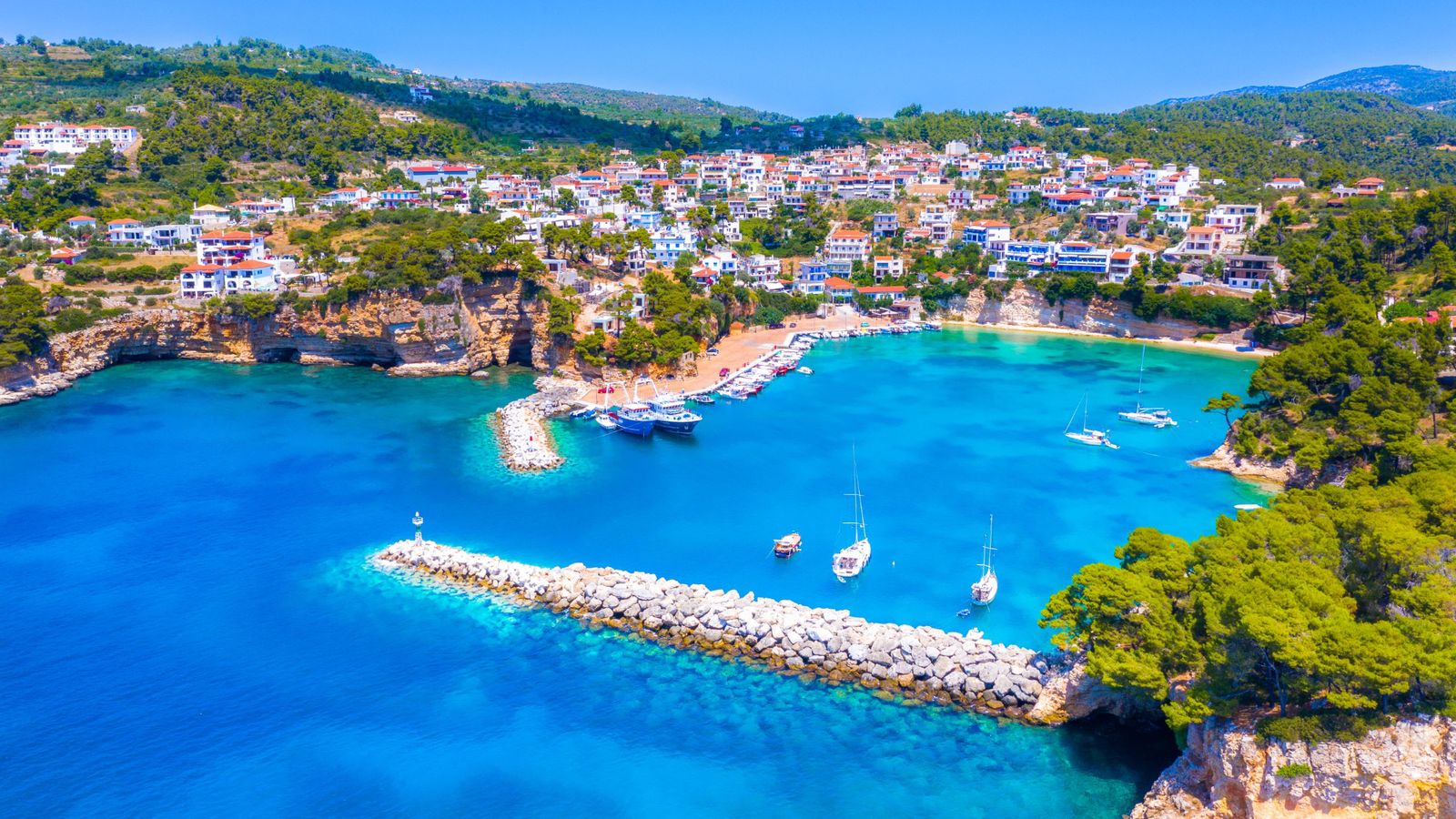
Collect the boat in Skiathos, complete the handover, stow gear, and clear the harbor by mid-morning. The passage to Skopelos Town is approximately 18 nautical miles and takes you along the northern coast of Skiathos and across the channel — a straightforward first leg that gives the crew a feel for the boat before anything more demanding. Skopelos Town is one of the most beautiful harbor towns in the Aegean: a dense cascade of white cubic houses climbing a steep hillside, topped by a ruined Venetian castle. Arrive early to secure a good berth stern-to in the main harbor. Dinner ashore is mandatory — Skopelos is famous for its plum products, local cheese pies (tyropsomo), and fresh fish.
Day 2: Skopelos Town to Glossa and Loutraki
A short morning sail of 8–10 nautical miles around the northern tip of Skopelos brings you to Loutraki, the small port below the hilltop village of Glossa. Glossa is arguably the most authentically Skopelitian settlement on the island — few tourists make it up the steep road, and the kafeneion on the main square operates at its own pace. The church of Agios Ioannis, built on a sea rock above Kastani beach, is recognizable worldwide as the chapel from the film Mamma Mia. Worth a small detour by dinghy or water taxi. The harbor at Loutraki is small — arrive early or anchor off with the dinghy ashore.
Day 3: Loutraki to Alonnisos (Patitiri)
From Loutraki, cross to Alonnisos — roughly 10–12 nautical miles — and make for Patitiri, the main harbor. This is your entry point into the National Marine Park. Alonnisos has a different, quieter energy than Skiathos or Skopelos — fewer tourists, more walkers and divers, and a local community that still feels genuinely engaged with the sea rather than simply servicing visitors. The old hilltop capital, Hora, was largely abandoned after a devastating earthquake in 1965 and has since been resettled by a mix of returned Greeks and Northern Europeans. It is worth an afternoon walk: the views over the park waters are exceptional. Back in Patitiri, the harbor has good tavernas and a small but well-stocked chandlery.
Day 4: Exploring the Marine Park — Kyra Panagia and Gioura
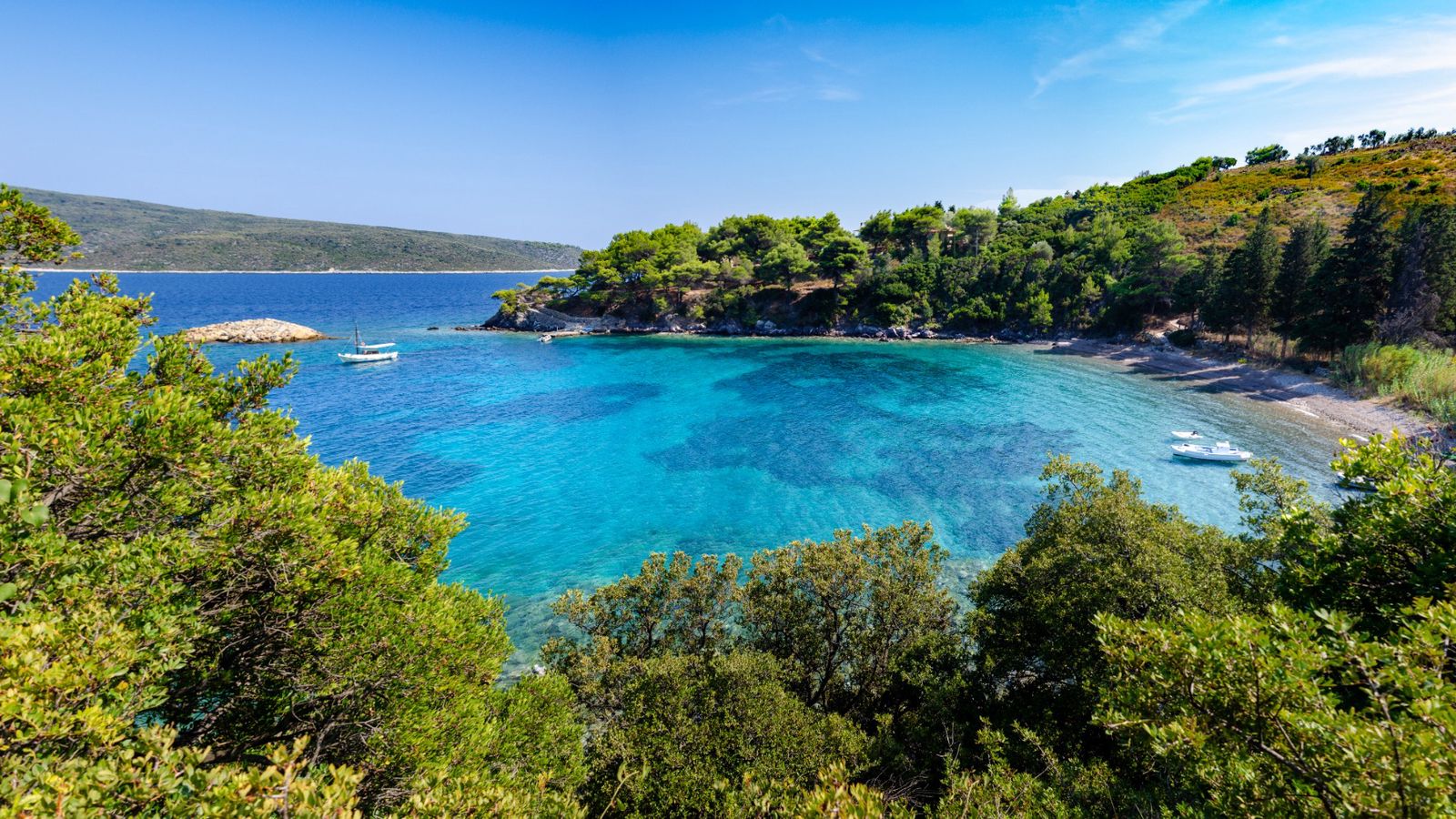
This is the day that separates a Sporades passage from every other Aegean itinerary. Sail north from Alonnisos into the core of the marine park. Kyra Panagia is an uninhabited island with a working monastery and an extraordinary double bay — Planitis and Agios Petros — where the holding is good and the water is startlingly clear. The monks (if present) occasionally sell honey. Depending on conditions and permits, you can continue further north toward Gioura, a wild, uninhabited island with a cave that houses a large colony of bats and — in myth — the Cyclops Polyphemus. Anchoring at Gioura requires a permit from the park authority; check current regulations before departure. Return to anchor at Kyra Panagia or push back toward Alonnisos for the night depending on the crew's comfort level.
[Image: a sailboat anchored alone in the crystal-clear blue-green water of a secluded Kyra Panagia bay, surrounded by low scrubby hills, midday light]
Day 5: Alonnisos to Skopelos — Stafylos or Agnondas
Leave the park and sail southwest along the southern coast of Skopelos, stopping at either Stafylos or Agnondas — two small bays on Skopelos's southern shore that are often missed by charterers who come and go only through the main town. Stafylos has a taverna at the beach and excellent snorkeling; Agnondas is a genuine working fishing harbor with a handful of tables under a mulberry tree, where the food is what you'd call unfussy. A Mycenaean tomb near Stafylos beach suggests this part of the island was inhabited and significant long before package tourism arrived.
Day 6: Skopelos to Skiathos — Kastani and Koukounaries
The penultimate day is a gentle sail back toward Skiathos, roughly 12 nautical miles from the southern tip of Skopelos. If the timing and wind allow, stop at Kastani Beach for lunch — also recognizable from Mamma Mia and generally agreed to be one of the finest beaches in the archipelago. From there, round Skiathos's western coast to anchor off Koukounaries, a long pine-backed sandy beach on the island's southwestern shore. Evenings here are atmospheric. If you want more action, push on to Skiathos Town for your last evening out.
Day 7: Return to Skiathos — Final Day
A relaxed morning — explore any remaining bays along the southern coast of Skiathos, of which there are many. Skiathos has over 60 beaches and some of the most dramatic sea-cave swimming in the Sporades. Return the boat to the marina in Skiathos Town by the agreed time, usually between 17:00 and 18:00. Most charter companies will store your luggage while you make the most of the evening ashore before a morning flight.
Key Stops: What to Know Before You Arrive
Skiathos
The liveliest and most developed island in the group. Skiathos Town has a good range of restaurants, well-stocked supermarkets, and active nightlife — all useful on departure and return days. The main harbor can be crowded in high season; the town quay is busy and loud until late. For quieter anchorages, the southern coast between Koukounaries and the airport offers several protected bays that fill up by midday but are often clear by early morning.
Skopelos
The most architecturally impressive harbor in the Sporades. Over 100 churches dot the hillside above town — a remarkable density even by Greek standards. The island produces excellent olive oil, prunes, and almonds; the local bakeries take these seriously. Skopelos Town marina has been upgraded and can accommodate larger yachts stern-to; there is a charge for berthing in high season.
Alonnisos
The quietest of the three main islands and the spiritual center of the marine park. Patitiri is a functional harbor town rather than a beautiful one, but the Hora above it more than compensates. Alonnisos attracts a disproportionate number of diving and snorkeling visitors, drawn by the park's exceptional visibility. The wreck of a 4th-century BC merchant ship in the park — one of the oldest wrecked cargo vessels ever discovered — was, until recently, closed to divers; access rules change periodically, so check locally.
Kyra Panagia
Uninhabited except for the small monastery of the Panagia. The twin bays are among the most serene anchorages in the Aegean. Bring everything you need — there are no services. The monastery church is occasionally open; leave a donation. The snorkeling off the rocks at the bay entrance is exceptional.
Skyros
Technically part of the Sporades group, Skyros sits further east and in isolation from the other islands — about 35 nautical miles southeast of Alonnisos. Reaching it requires a full open-sea passage and adds significantly to a one-week itinerary. Skyros has a unique culture, distinctive local pottery and furniture-making traditions, and is home to the rare Skyrian horse — a semi-wild breed of ancient lineage. For a one-week charter, Skyros is more appropriate as a destination in its own right or as part of a two-week circuit. For sailors willing to commit, however, it is extraordinary and completely unlike the other Sporades islands.
Mooring and Marina Tips
The Sporades are not the place to rely on finding a marina berth in August if you haven't called ahead. The main harbors in Skiathos Town, Skopelos Town, and Patitiri (Alonnisos) all have dedicated port police; stern-to mooring along the town quay or in the marinas is the norm. Call ahead in high season, particularly for Skopelos, which has the most limited space relative to demand.
Anchoring is generally free and well-practiced throughout the islands. A good anchor watch is sensible in the more exposed northern anchorages when the Meltemi is up. Holding in the main bays is predominantly sand over weed — usually reliable, but allow the anchor to set fully before shutting down. Many of the better anchorages have floating lines or lazy lines run from the shore; using these is common courtesy and keeps swinging room available for later arrivals.
Fuel is available in Skiathos Town, Skopelos Town, and Patitiri. Water is available at most harbors with a quay. Pump-out facilities are improving but not universally available; holding tanks are expected within the marine park boundaries and are increasingly enforced.
Cost Expectations
The Sporades sit in the mid-range of Mediterranean charter destinations. Bareboat charter costs vary significantly by season and boat size, but rough planning figures for a 40–42-foot monohull in high season (July–August) are in the range of €2,200–€3,500 per week from a Skiathos or Volos base. Shoulder season (June, September) reduces this by 25–35%. Flotilla holidays and skippered charters are also widely available and represent good value for less experienced crews.
Anchoring is free in most places. Stern-to town quay berthing typically costs €15–€35 per night for a 40-foot boat in high season. Fuel in Greece is taxed at full EU rates — budget accordingly if you plan to motor in calm conditions. Diesel runs roughly €1.60–€1.90 per liter.
Eating and drinking ashore is still excellent value by northern European standards. A full dinner for four with house wine, water, and dessert at a good harbor taverna will typically run €60–€90. Provisions from local supermarkets for cooking aboard are modestly priced. Fresh fish is good but not cheap — line-caught fish in the better restaurants can be expensive by weight; ask the price before ordering.
Three Insider Tips
Sail early, anchor before noon. The Meltemi is almost always weakest between dawn and 10:00. Experienced Sporades sailors leave harbor at first light, cover the distance in comfortable conditions, and are anchored and swimming by midday while later starters are beating into chop and spray. This single habit transforms the quality of the charter.
Carry the park regulations for Alonnisos. The National Marine Park of Alonnisos Northern Sporades has multiple zones with different anchoring, fishing, and motoring rules that change periodically. The park authority in Patitiri is helpful; stop in on Day 3 and ask for the current zone map. Local charter companies will have an up-to-date briefing sheet. Ignoring the zones is not only environmentally poor — it can result in a fine from the coast guard.
Don't skip the mainland connection. Volos as a base, or a pre- or post-charter night there, is genuinely worth the effort. The tsipouradika culture along the harbor front — where you order a carafe of tsipouro and receive a rotating series of small mezedes plates — is one of Greece's most convivial dining traditions and is almost unknown outside the region. The drive through the Pelion peninsula to reach the south coast ferry ports is spectacularly beautiful. Treating the journey to the boat as part of the trip rather than an obstacle sets the right tone for everything that follows.
Frequently asked questions
What is the best time of year to sail the Sporades?
The best time to sail the Sporades is June or September. These shoulder months offer warm, settled weather, lighter and more consistent Meltemi winds (typically Force 3–4 rather than the Force 5–6 common in August), significantly lower charter prices, and far less congestion in harbors and anchorages. The sea is still warm enough for comfortable swimming, and the islands retain their lush green appearance. July and August are viable but expect stronger afternoon winds, busier anchorages, and the need to call ahead for marina berths.
Are the Sporades suitable for beginner sailors?
The Sporades are best suited to intermediate sailors — those with solid coastal cruising experience who are comfortable in Force 4–5 conditions and can handle stern-to mooring in a busy harbor. Absolute beginners should choose a skippered charter. Experienced offshore sailors will find the area relaxing rather than technically demanding, but beautiful. The island spacing is forgiving (most passages are 10–20 nautical miles), weather forecasting is reliable, and shelter is always close at hand.
How do I get to the Sporades for a sailing charter?
Most Sporades charterers fly directly into Skiathos Airport (JSI), which has seasonal direct flights from many northern European cities. An excellent alternative is to fly into Thessaloniki (SKG), rent a car, and drive approximately two hours south to Volos — the main mainland ferry and charter hub. This route passes through spectacular scenery and allows a detour to Mount Olympus. Ferries also run from Thessaloniki directly to Skiathos and Alonnisos for those who prefer arriving by sea.
What wind conditions should I expect when sailing the Sporades in summer?
The Meltemi is the dominant wind in the Sporades during summer — a northerly or northeasterly wind that typically builds between 11:00 and 13:00, reaches Force 3–5 most afternoons, and drops after sunset. In the Sporades it is generally less intense than in the Cyclades to the south. Mornings are almost always calm, which is why experienced local sailors depart early and are anchored before the wind fills in. The Meltemi runs reliably from June through September, with July and August being the windiest months.
What is the Alonnisos Marine Park and what rules apply to sailing boats?
The National Marine Park of Alonnisos Northern Sporades is Greece's largest marine protected area, covering roughly 2,200 square kilometers of sea north and east of Alonnisos. It was established in 1992 primarily to protect the Mediterranean monk seal, one of the world's most endangered marine mammals. The park has multiple zones with different rules on anchoring, fishing, and vessel speed. Sailors should pick up the current zone map from the park authority in Patitiri and follow the restrictions carefully — they are enforced by coast guard and exist for legitimate conservation reasons.
How much does a sailing charter in the Sporades cost?
A bareboat charter of a 40–42-foot monohull in the Sporades costs roughly €2,200–€3,500 per week in high season (July–August), dropping 25–35% in June or September. Stern-to harbor berthing runs €15–€35 per night for a 40-foot boat. Diesel costs approximately €1.60–€1.90 per liter. Provisioning and dining ashore is good value — a full dinner for four with wine typically costs €60–€90. Budget an additional €100–€150 per week per boat for port fees, fuel, and incidentals on top of the base charter cost.


